
Mind the data gap – tracking coal mine methane
Ember Current – November 2025 Newsletter

When I joined Ember to work on coal mine methane (CMM) four years ago, the issue felt almost invisible. Hardly anyone was talking about it, and even less was being done to measure or address it. Building the first version of our CMM Data Tool just two years ago meant piecing together scarce information. What we uncovered was striking: most major coal-producing countries weren’t reporting one of their largest methane sources.
Today, as we launch the latest version of the tool, the global discourse on CMM looks very different, with some major emitters beginning to implement or initiate regulations specifically targeting it.
The data still tells a familiar story: a significant gap remains between what countries report and independent estimates. But now, you can also explore the key variables influencing each country’s CMM emissions and assess how they’re progressing toward reductions. It’s a resource designed to help you pinpoint where action is needed most and drive real, measurable emission cuts.
— Sabina Assan, Senior Coal Mine Methane Analyst
Seeing this newsletter for the first time? Scroll to the bottom of this page to subscribe and get Ember Current monthly – directly to your inbox!
Insights, analyses and commentaries
My top picks
Steel remains a difficult sector to decarbonise. While attention is growing around end-use emissions, one major emission source is still flying under the radar: methane from metallurgical coal mining.
Most mining and steel companies still don’t disclose methane data, let alone show how they plan to reduce it. That’s a problem. Methane emissions from coal mining can significantly inflate the climate impact of steel production— yet this risk remains largely ignored in corporate climate strategies and global regulation.
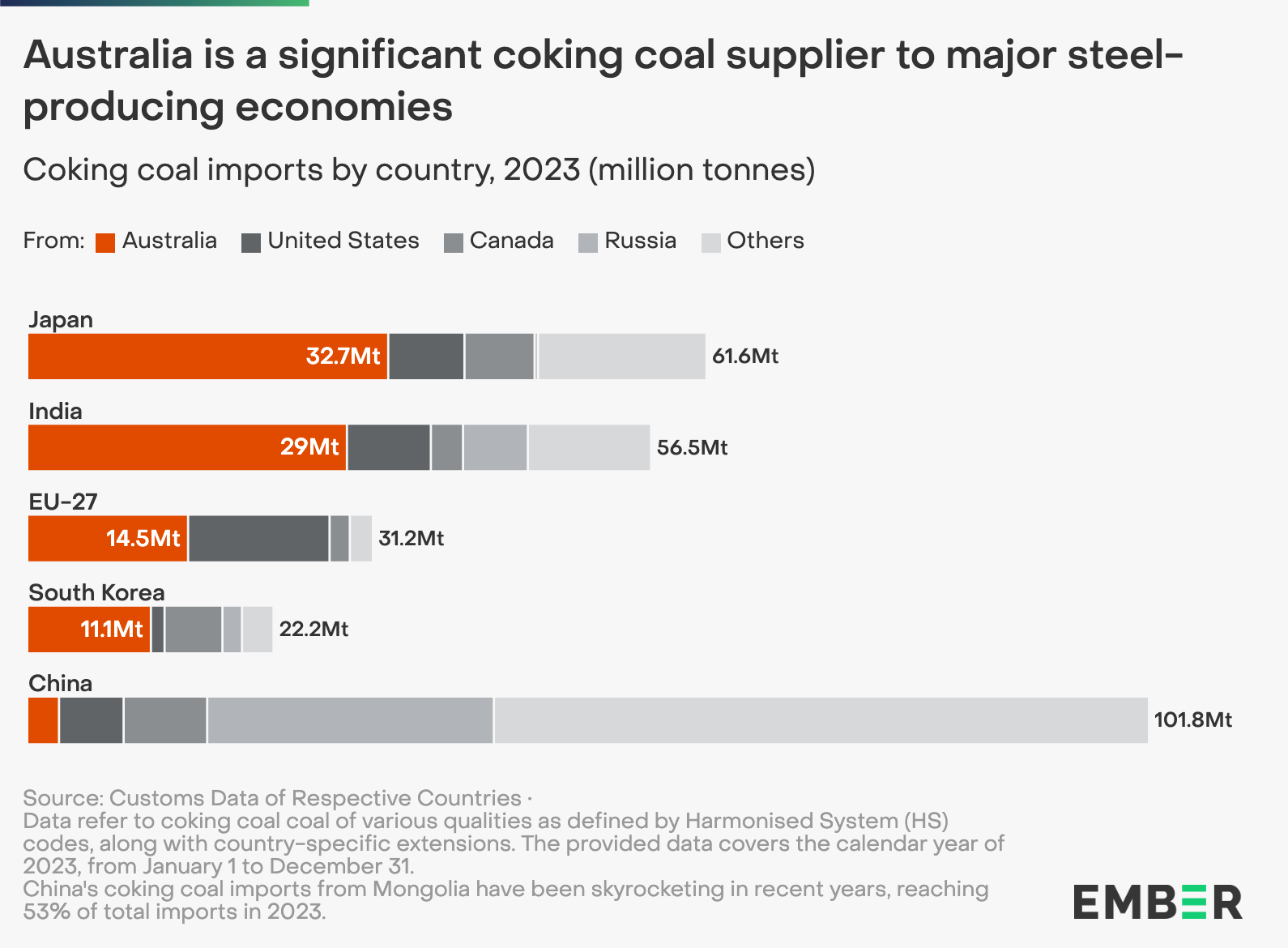
Last month, Ember dived into Australia—a vital player in met coal mining—and for the first time, directly linked methane emissions from specific mines to the steel companies buying from them.
Hidden impact of Australian coking coal in steelmaking
Methane from super-emitting coal mines can double steel’s short-term climate impact, yet this is largely unacknowledged in emissions reporting. Our report from September uncovers the hidden impact of this phenomenon.
It’s time for Europe to take stock of its abandoned coal mines – a major source of methane
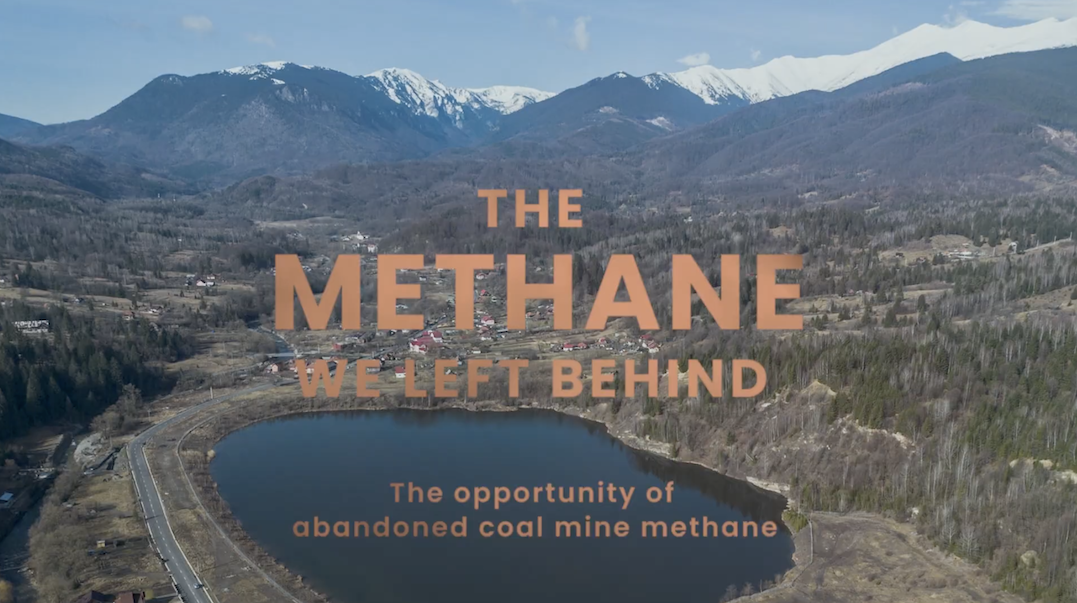
As Europe works to cut emissions across all sectors, a potent source of climate pollution has been leaking, unmeasured, from closed and abandoned coal mines. These mines represent one of Europe’s long-overlooked and, until recently, largely unregulated climate risks. Addressing it is one of the goals of the EU Methane Regulation, adopted last year.
To bring this emission source to light, Ember worked with photojournalists who travelled across coal regions to show how coal mine methane affects communities on the frontlines of Europe’s energy transition.
There’s more! Here’s what we published this month
- ASEAN’s low-carbon future flows through smart grids | Read the report
- Global Electricity Mid-Year Insights 2025 | Read the report
- Decoupled: how Spain cut the link between gas and power prices using renewables | Read the report
- Submission to NSW EPA: Climate change licensee requirements | Read the report
- Shockproof: How electrification can strengthen EU energy security | Read the report
- $8.7 billion coal subsidy contradicts Türkiye’s renewable goals | Read the report
Ember in the news
- Why Southeast Asia’s green energy boom hinges on smart grid investment | SCMP
- Spain’s Renewable-Energy Boom Loosens Gas’s Grip on Power Prices | Bloomberg
- Solar and wind power has grown faster than electricity demand this year | AP
What I’m reading
- Steel value chain emissions | Overlooked methane risk | Fidelity Australia
- Investors urge EU to uphold methane rules despite US pressure | Reuters
- Worldwide inference of national methane emissions by inversion of satellite observations with UNFCCC prior estimate | Earth ArXiv
Visual storytelling corner
Chart of the Month
Everything in the power system is connected – except how it is planned. How else would you explain the tangled web of processes used by EU countries to plan their future power systems, than as a tube map?
Over time, the EU’s planning approach for its electricity transition has grown into a patchwork of overlapping processes. Each tubeline in our October chart of the month represents one part of the process – functioning separately to deliver only one piece of the puzzle, rather than all heading towards one destination with a unified vision. The result is a set of plans that look connected on paper but are misaligned in practice. Yet stitching these processes back together is not enough to fix the fragmentation.
Learn how the European Grid Package presents an opportunity to streamline, align and integrate planning processes. You can download the infographic of the current system here or explore our scrollytelly walkthrough of the major stumbling blocks here.
Turning data into action
Data highlights

Launched last month, use this tool to explore the latest coal mine methane emissions, production data and policy context by country.

China earns more from clean tech exports than the US does from fossil fuel exports.
Explore the latest clean technology export data from China to get early insight into global clean energy transition trends.

By September, EU solar generation had already surpassed 2024’s total.
Total EU solar generation in 2024 was 301 TWh. By September 2025, it had reached 312 TWh.
Country spotlight
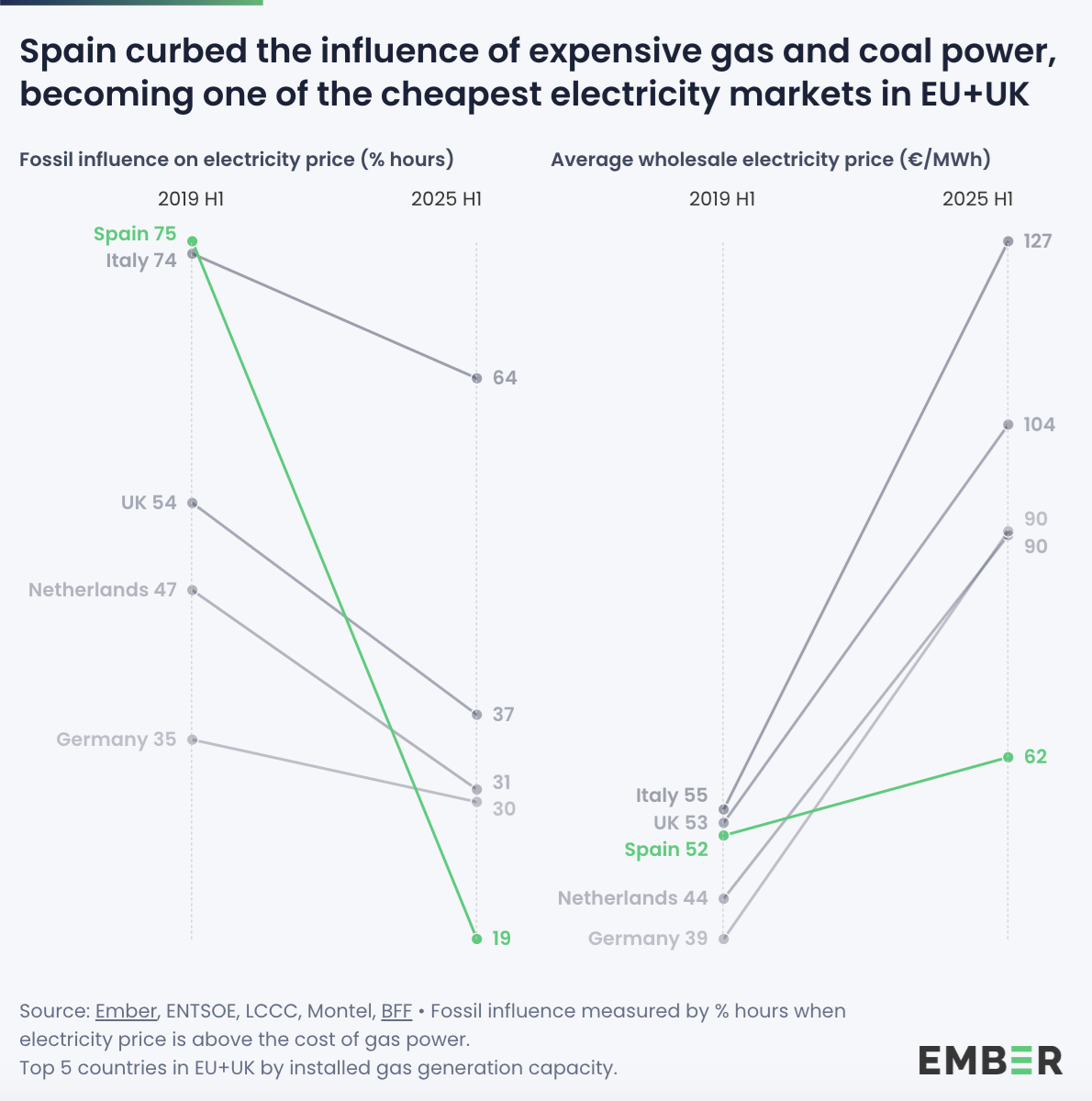
Surging wind and solar in Spain has turned the country into one of the cheapest power markets in Europe, reducing the influence of fossil generators on the electricity price by 75% since 2019. As a result, Spain’s wholesale electricity price was 32% lower than the EU average in the first half of 2025. However, investments in grids and clean flexibility have not kept pace, and Spain remains reliant on gas to solve grid constraints.
Ember Current is a revamp of an existing monthly newsletter delivered to our subscribers. Ember Current is written by a different one of our analysts each month, bringing you their own top picks of Ember’s insights and a little window into what has felt important to them over the course of the last few weeks. If you want to receive these updates each month, scroll to the bottom of this page and sign up! For queries and feedback, please reach out to [email protected].
Featured image credits
Jon Davison / Alamy stock photo
Acknowledgements
Sachin Sreejith, Sabina Assan, Ali Candlin, Libby Copsey, Chelsea Bruce-Lockhart, Claire Kaelin