The United States’ largest source of low-carbon electricity is nuclear (17%). Its share of wind and solar (19%) is just above the global average (17%), though it has been overtaken by China (22%) and remains far behind the European Union (30%).
The US relied on fossil fuels for 57% of its electricity in 2025 yet its power sector emissions intensity (384 gCO₂e/kWh) remained below the global average (458 gCO₂e/kWh), reflecting a relatively cleaner generation mix.
US power sector emissions have fallen since their peak in 2007 driven by the decline in coal power. Wind and solar played a key role in replacing coal power, and together they overtook coal power in 2024 for the first time. However, the use of fossil gas also grew, accounting for 40% of generation in 2025.
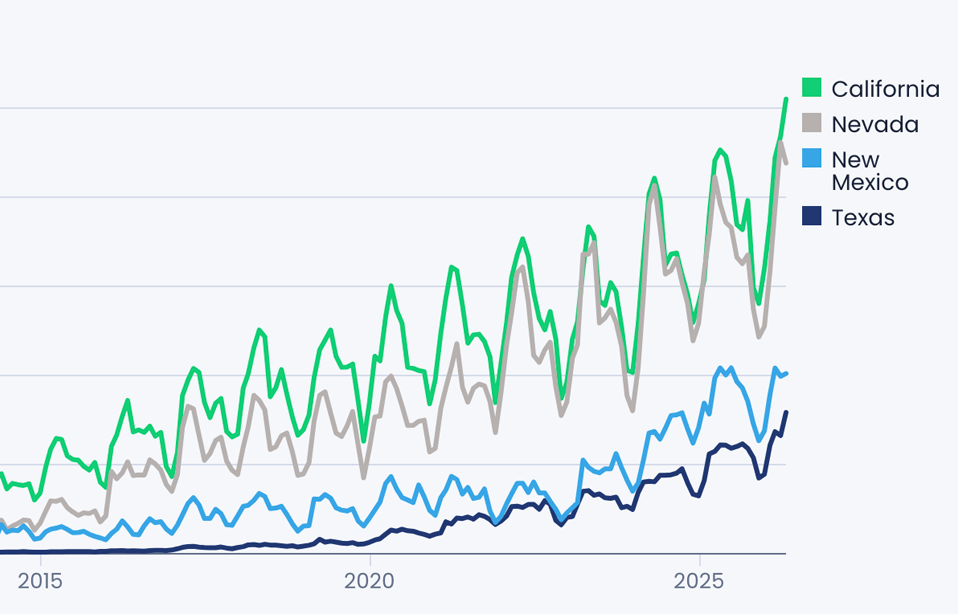
Solar remains the largest source of new generation additions in the US in 2025, supported by rapid growth in battery storage. It also met more than 60% of US electricity demand growth in 2025, highlighting its growing role in meeting rising electricity needs.
Federal policy support for clean energy became more uncertain in 2025 with mixed signals across federal and state levels.
Despite policy uncertainty, renewable deployment continued to expand across many US states. For example, Texas recorded the largest increase in solar generation in 2025, while in Florida solar growth exceeded demand growth and contributed to a fall in fossil fuel generation.
As electricity demand continues to grow, technologies that can be deployed quickly and at low cost are becoming increasingly attractive. The rapid buildout of solar and battery storage reflects these advantages and is likely to continue shaping the US generation mix.