Electric energy security꞉ how EVs are reducing oil import vulnerabilities | Ember

Electric energy security: how EVs are reducing oil import vulnerabilities

Electric car fleets have saved oil-importing countries $20 billion since the start of the US-Israel war with Iran, according to new data released by Ember.

14 Oct 2026
7 Minutes Read
Download PDF

Summary

As the Hormuz energy crisis continues to disrupt global oil supplies, countries with electric car fleets are meaningfully reducing their dependence on oil imports. Growing sales are increasing this impact.

While some countries are benefitting from long-standing strategies to enable EV uptake, others are passing new policies that will in time reduce oil import vulnerability and attract new investment in the EV supply chain. Against this backdrop, the US is increasingly becoming an outlier.

Key takeaways

01

Fully electric cars continue to gain popularity around the world.

49 out of 56 countries tracked by Ember recorded a record share of battery electric vehicle (BEV) sales so far in 2026. India, Chile, Australia and New Zealand have seen a rapid acceleration following the closure of the Strait of Hormuz.

02

EV car fleets are displacing oil demand, saving oil importers $20 billion since the start of the Hormuz energy crisis.

In the six months from March to August 2026, China saved an estimated $14 billion, with EU countries saving $3.1 billion.

03

New markets are overtaking the US, where growth has stalled.

Fifteen countries, including Brazil and India, overtook the US for BEV sales share in 2026.

Long-time leaders in BEV uptake like Norway and Denmark are being joined by new pioneers such as Viet Nam and Uruguay, as more and more countries implement successful policies to support the transition to electric vehicles. Countries with major car manufacturing sectors such as Brazil, India and Japan are all now seeing BEV sales increase considerably.

The Hormuz energy crisis has further accelerated uptake, with consumers increasingly concerned about the impact of high fuel prices. For countries reliant on oil imports, electric vehicles represent the most powerful lever for reducing this demand. The countries that have made a strategic effort to support electric vehicles are much better protected from the current crisis.

The countries that invested in electric vehicles before this crisis are now better protected and a growing number are following. Every electric car on the road reduces exposure to volatile oil markets, and as fleets grow, so does the protection against future supply shocks. The benefits of the global shift to electric cars extend beyond cutting emissions, with implications for energy security, economic resilience and how countries position themselves in a world where dependence on imported oil carries immense risks.

Electric cars continue to gain a foothold across the world

Falling technology costs, high fuel prices and policy direction are helping fully electric options gain a growing share of new car sales. Globally, BEV sales are up by 11% year-on-year for the first eight months of 2026 despite policy changes slowing EV uptake in the US and China, the two biggest markets in absolute terms. In contrast, sales of plug-in hybrid electric vehicles (PHEVs) have fallen by 12% and sales of internal combustion engine (ICE) vehicles are down by 6%.

As a result, BEVs have climbed to 18% of new car sales globally for the first eight months of this year, up from 16% in the same period in 2025. In the same period, the global PHEV sales share has fallen from 8% of new car sales to 7%. At a global level, mid-year sales share figures for electric vehicles are lower than the full-year values, since China, which has a high EV share and accounts for a large proportion of global EV sales, typically sees a surge in new car registrations towards the end of the year.


Sales records continue to be broken

Strong growth outside the US and China has been key to BEV sales continuing to rise globally. Excluding the US and China, global BEV sales have grown by an estimated 45% in January-August 2026, compared to the same period the year before. Of the 56 countries in Ember’s monthly EV sales tracker, 49 have seen a record battery electric vehicle (BEV) sales share so far in 2026.

For many leading countries, new records have been reached through the continuation of a trend, rather than the start of something completely new. Norway has seen a BEV sales share of 98% in the first eight months of 2026, having already exceeded 95% for multiple months in 2025. It is one of twelve markets in Ember’s EV sales tracker where BEVs have exceeded a third of new car sales so far in 2026. Four of the others are in Asia, including Nepal, Singapore, Viet Nam and China. Uruguay recorded a BEV sales share of 38% in the first eight months of 2026 and has become the leading market for electric car adoption in Latin America. The remaining markets are in Europe, including Denmark, Iceland, Finland, Sweden, Netherlands and Belgium. Supportive policy frameworks have given these countries a head start in protecting themselves from energy supply disruptions.

Other countries have seen an acceleration in BEV adoption in 2026 driven in large part by new policies implemented before the Hormuz energy crisis. The success of France’s social leasing scheme has helped lift its BEV sales share above 30% for the first time. Germany has also shown impressive sales growth, with new subsidies coming into force at the start of this year. South Korea introduced a new K-Mobility Global Leadership Strategy at the end of 2025 to help drive long-term competitiveness of Korean original equipment manufacturers (OEMs), which included new support for EV adoption domestically. As a result, sales of BEVs have doubled year-on-year and have made up almost a quarter of all new car sales in the country in 2026.


In other countries, the effect of the Hormuz energy crisis on the cost of fuel has resulted in a clear uptick in demand for BEVs from consumers, driving up sales share. India, Chile, Australia and New Zealand have all seen sharp increases in BEV sales following March 2026, with consumers heavily affected by rising fuel prices.

New manufacturing and investment

Many countries with rising EV sales are simultaneously developing new manufacturing capacity and growing their domestic electric vehicle industries. The rise in electric vehicle sales in the EU this year has been met in large part by new affordable models from European manufacturers. New models by Renault, Volkswagen and Skoda were the best-selling electric cars in Europe in July.

In Asia, domestic manufacturers are becoming major players in Viet Nam and India. VinFast already produced Viet Nam’s most popular car in 2025 and has expanded its production operations overseas opening new factories in India and Indonesia last year. Meanwhile, in the first half of 2026, domestic OEMs Tata and Mahindra made up over 60% of India’s EV sales.

In Latin America, Brazil is cementing its position as a regional manufacturing hub with the opening of BYD’s plant in 2025, with production capacity expected to be increased to 300,000 vehicles annually. New local content requirements are successfully driving this investment. Mexico announced the launch of domestic manufacturer Olinia this year, with production of its small car EV slated to begin in 2027.

EV fleets are helping reduce oil import bills around the globe

As countries adjust to a prolonged disruption to oil and gas supplies, transport electrification is providing a path to reduce oil import vulnerability. In the six months since the Hormuz energy crisis, electric car fleets in oil-importing countries are estimated to have displaced 200 million barrels of crude oil, with a value of $20 billion. Fully electric cars (BEVs) are responsible for the largest share of this figure ($16.5 billion), with the rest coming from PHEVs. This is in part because PHEVs are also powered by a combustion engine and there is real-world evidence that drivers end up relying on it more than manufacturers initially claim.

In September, oil prices once again climbed to over $100 per barrel for the first sustained period since May, meaning these figures are likely to rise over the rest of the year. Since the start of the year, the daily closing price of Brent crude has exceeded $100 more than 60 times, having last done so in 2022 following Russia’s invasion of Ukraine. This is compounded by an even more acute supply crisis in diesel and other refined products, where impacts on global oil flows have combined with attacks on refineries around the world. Globally, diesel use is concentrated in the trucking sector, but for certain markets such as Europe this has a considerable impact on car drivers too.


China and EU represent the largest share of oil displaced

Of global economies reliant on oil imports, China and the EU were the two markets where EV fleets displaced the largest amount of crude oil. In the six months since the start of the Hormuz energy crisis, electric cars displaced $14bn of crude oil in China, approximately three quarters of the total oil demand displaced by electric cars across all oil-importing countries. Beyond cars, China’s two and three wheelers and trucking segments are also undergoing rapid electrification, further adding to oil displacement.

EU Member States were responsible for a further $3.1bn of the crude oil displaced by electric cars between March and August 2026. Germany and France were the Member States with the largest value, at around $760mn and $560mn, respectively. However, when comparing oil displacement to each country’s oil consumption, Denmark emerges as a clear frontrunner in Europe. As of August 2026, Denmark’s current electric car fleet displaces 6.4 million barrels of oil per year, equivalent to 13% of the country’s oil consumption in 2025. Elsewhere in Europe, the United Kingdom’s electric car fleet displaced around $790mn of crude oil in the six months since the start of the Hormuz energy crisis.

Countries in the Association of South-east Asian Nations (ASEAN) combined displaced around $560mn of crude oil from their electric car fleets, with Thailand and Viet Nam the leading countries. In many countries in ASEAN, two and three wheelers play a more significant role, due to their much larger fleet sizes.

Energy security benefits combine with consumer savings

Beyond the savings to each country’s balance of trade from avoiding crude oil imports, consumers are avoiding dependence on expensive and volatile fuels. The price of diesel and petrol has risen even more acutely than that of crude oil, including in countries which have their own domestic oil production.

Even before the Hormuz crisis, BEVs offered savings in running costs, which have only widened under the current fossil supply disruption. Research has shown that in the EU, petrol car drivers are five times more affected by the closure of the Strait of Hormuz than drivers of a typical BEV. Meanwhile in the UK, BEVs are now up to nine times cheaper to drive than a petrol or diesel car.

Global leapfrog leaves US falling behind

As the global switch to electric vehicles continues to advance, some legacy auto markets are being left further behind. The United States, having rolled back its federal support for electric vehicles last year, has seen the BEV share of light-duty vehicle sales fall to 6% in the first eight months of 2026.

Of the 56 countries tracked in Ember’s monthly EV sales tracker, 49 are now ahead of the US for BEV sales share. Fifteen countries overtook the US for the first time this year, including Brazil, India, Italy, Malaysia and New Zealand.

Other large markets with major auto sectors are overtaking the US for BEV adoption. India, which had a BEV sales share of 2% in 2024, has seen a rapid rise in BEV sales and has had a higher BEV sales share than the US in every month since April. Brazil’s growing domestic manufacturing capacity for BEVs is seeing an increase in domestic sales. And Japan, for long a slow adopter of fully electric vehicles, has seen its BEV sales double in 2026, following the introduction of a new policy in January that helps consumers with the upfront costs of EVs.

Even before the Hormuz energy crisis, many emerging markets were leapfrogging ICE cars and increasingly adopting electric vehicles. As countries adjust to prolonged disruptions to fuel supplies, the urgency of this shift has increased. For many governments, the past year has shown that relying on oil for transport is an economic vulnerability.

Beyond reduced import costs, other benefits such as improved air quality and the growth of new industries built around EV manufacturing remain. For consumers, the cost of fully electric options continues to fall as manufacturers release new, more affordable models. As these trends continue, electric cars are likely to take an even larger share of new car sales across more markets.

Supporting materials

Methodology

This analysis is largely based on the data and methodology from Ember’s Monthly EV Sales Data. A full methodology, including sources as well as the detail around EV fleet impact calculations can be found on the dedicated dataset page on Ember’s website.

The monetary value of displaced crude oil since the start of the Hormuz Energy Crisis is calculated for each country based on the estimated electric car fleet oil displacement (as per the linked methodology) in each month, multiplied by the monthly average price of Brent crude in each month. Individual months are then summed together to create the six month total.

The data in the report is based on the available countries and regions in Ember’s dataset and is not exhaustive. World estimates are scaled estimates based on available economies.

Acknowledgements

Contributors

Nicolas Fulghum, Chelsea Bruce-Lockhart, Rashmi Mishra, Emily Nurse, Tito Das, Ardhi Arsala Rahmani and Patricia Angkiriwang.


Cover image

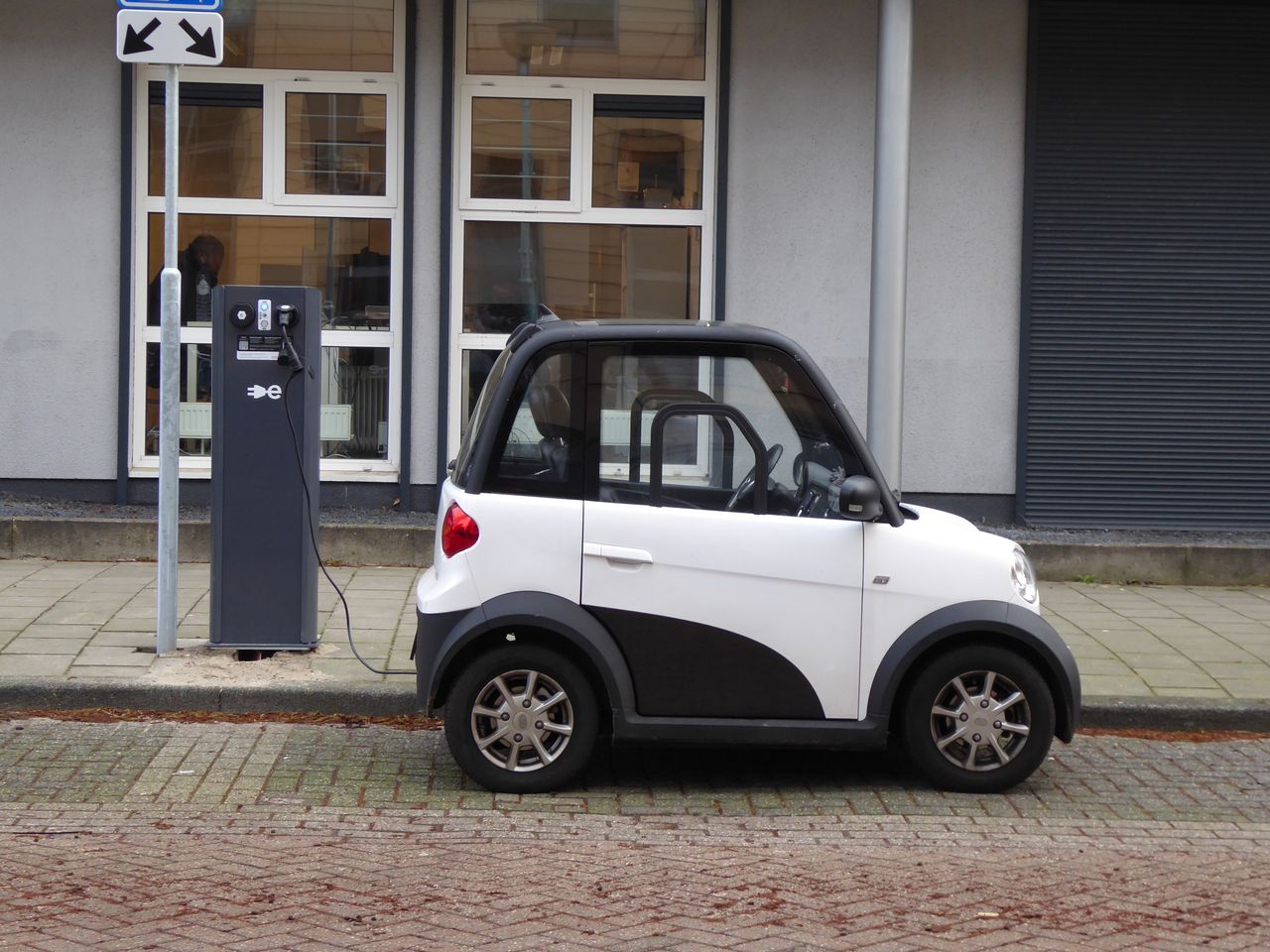
A white and black micro electric vehicle parked along a curb and connected to a public charging station on the sidewalk in front of a commercial building.

Credit: Timothy Huliselan / Pexels

Share