Bankable by design꞉ Financing ASEAN's energy system transformation | Ember

Bankable by design: Financing ASEAN’s energy system transformation

The energy transition’s financing bottleneck has shifted from raising capital to creating bankable assets.

7 Oct 2026
32 Minutes Read
Download PDF

Highlights

$72/MWh
Minimum electricity tariff for a 20 MWp solar project to achieve a 12% investor return at a 7% interest rate
0.5pp
Equity return increase per additional MW, for solar projects with capacity between 0.5-20 MWp
7.2–8.8%
Estimated returns in transmission projects are too low to meet private investors’ expectations

Executive summary

ASEAN’s energy transition financing problem has moved from raising capital to designing investable markets and assets

ASEAN has seen some success in getting capital to flow to utility-scale renewable energy projects. But that success does not extend downwards or outwards. Returns fall away sharply as project sizes shrink, storage sits at less than a third of the pipeline the region needs by 2030, and transmission earns single-digit returns that keep private capital away. Market design, more than capital or technology, is now the constraint for financing the region’s energy transition.

In recent years, ASEAN has become a credible destination for investments in renewable energy generation, especially large utility-scale projects. Over the past decade, solar capacity has risen to 39 gigawatts (GW) and wind to 9.6 GW. The region is eyeing beyond tripling that capacity, driven by Indonesia’s 100 GW solar ambitions and Viet Nam’s PDP 8 targets. Along with the growth of solar and wind, the markets and regulatory framework need to keep pace with the expanding role of energy storage and grids. Financing must also match the regional renewable energy aspiration goals and interconnection development targets.

Tailored interventions to the asset class and market would likely be the most effective way to close the bankability gap in ASEAN’s renewable and grid projects. Clearer offtaker arrangements, alongside new revenue streams for batteries providing flexibility and grid services, could make projects more attractive to investors. Changes are necessary to enable ASEAN to tap into global financial systems and affordable capital.

Dr Dinita Setyawati
‍
External Affairs and Strategic Impact Lead Asia, Ember

The financing bottleneck in ASEAN’s energy transition has shifted from raising capital to creating bankable assets. As the transition moves beyond utility-scale renewables, investment will increasingly depend on reducing transaction costs, monetising flexibility, and enabling infrastructure to earn returns that reflect its value to the power system.

Dr Alnie Demoral
‍
Energy Analyst, Ember

At the core of investment decisions is the fundamental balance between risks and opportunities. Investors render projects investable when profits supersede risks; the projects satisfy the technical conditions to operate and generate predictable revenue streams over their operational lifetime.

Even though funders and lenders aim regionally, in practice, they operate at a national level. Each ASEAN country possesses unique market structures with different modalities, from ring-fenced/vertically integrated single-buyer to competitive wholesale and retail markets.

This analysis finds that what complicates matters more is that ASEAN’s next phase of energy transition will move beyond utility-scale generation projects towards thousands of smaller distributed systems rather than a handful of large plants, on storage to absorb variable output, and on transmission to move power to where it is needed. The scale of this shift is already reflected in national and regional plans, including Indonesia’s ambition for around 80 GW of distributed solar and ASEAN’s need for 23–26 GW of energy storage by 2030. Currently, none of these assets fit the financing model that made utility-scale solar and wind bankable, and the analysis in this report quantifies the gap for each.

The financing challenge is therefore not about mobilising capital anymore but developing financing structures and market rules to cater to different characteristics of distributed renewable energy, storage, and transmission. The right approach will differ across ASEAN markets, but the common goal is to create more predictable and diverse sources of revenue that make these assets investable.

The most recent world event made us realise that it’s more compelling for energy transition from imported to indigenous energy sources, more particularly renewable energy. Energy security and sustainability are a must for a growing economy. While access to finance for utility-scale RE ventures has been resolved to some extent, this has also widened the gap on energy access between on-grid and off-grid markets. The shift to distributed energy resources (DER), is a solution to narrow the gap but also needs finance and policy support. DER creation and implementation potentially will be more efficient and effective if done by RE Small and Medium Enterprise (RE SME). These entities are all over the country and have a wider network and reach, relatively compared to big RE Developers. Aggregation of DER projects with financial and policy support will open a lot of potential developments to our RE SME members and contribute efforts on energy transition and create bankable assets.

Erel B. Narida
‍
President, Renewable Energy Association of the Philippines (REAP)

As Southeast Asia comes to rely on thousands of such systems to expand electricity access and strengthen local energy resilience, it is imperative to close the bankability gap across the facility, grid infrastructure, flexibility, and grid-services value of storage. This is particularly important given that project size is dictated by local electricity demand rather than investor preference. Some recommendations for closing the bankability gap include the following points:

  • Policy and financing mechanisms should address higher per-unit development and transaction costs, rather than relying on scale alone to improve returns.
  • Additional finance should be mobilised through financing structures capable of supporting large numbers of relatively small projects.
  • Project aggregation can help address this challenge by combining smaller projects into financeable portfolios. However, projects must first be technically, financially and institutionally ready for investment.
  • Storage provides value beyond the electricity it stores, including through the flexibility and grid services it can provide. Enabling revenue stacking can therefore improve the bankability of storage without relying solely on higher public subsidies.
  • Transmission projects can be less financially attractive, typically offering single-digit returns, because regulated tariffs are generally designed around cost recovery and provide limited scope for differentiated revenue models. Innovative financing and revenue mechanisms are therefore needed to improve their investment case.
  • Interventions should be tailored to the asset class and market, including procurement and standards reform.
  • Strengthening offtaker arrangements through dispatch priority, demand beyond the single-buyer model, and harmonised technical standards through the ASEAN Consultative Committee for Standards and Quality (ACCSQ) could widen the market for renewables without requiring additional public spending.
  • For distributed solar, aggregation into financeable portfolios and revenue-enhancement structures can help smaller projects overcome the threshold that conventional project finance cannot reach.
  • For storage and grids, revenue stacking across energy, ancillary services, capacity and congestion management markets, alongside financial guarantees and greater tariff flexibility, would let these assets earn something closer to the value they create.

As the ASEAN Power Grid advances and the region deepens energy connectivity and market integration through initiatives such as the Lao PDR – Thailand – Malaysia – Singapore Power Integration Project, these barriers will need a collective response. The Enhanced ASEAN Power Grid memorandum of understanding already sets out governance arrangements. What needs to be highlighted is a plan to pool investment behind specific asset classes: transmission, solar-plus-storage and wind-plus-storage.

Key takeaways

01

Transaction costs are becoming the main barrier to small distributed solar (<10MWp)

Project size is the dominant determinant of bankability. Increasing project size per additional megawatt (MW) can improve equity returns, or internal rate of return (IRR), by approximately 0.5 percentage points. In comparison, reducing interest rates from 9% to 5% improves IRR by only about 4.4 percentage points, indicating that cheaper finance alone cannot overcome the structural disadvantage of small projects.

02

A 20 MWp solar project’s average profit returns of 13.2%

At a constant interest rate of 7%, a 20 MWp utility-scale project would deliver equity returns of 13.2%. To reach a 12% return, the electricity tariff would need to be $72 USD per Megawatt-hours (MWh). This is broadly consistent with country-level estimates of $74/MWh for Indonesia, $76/MWh for the Philippines, and $71/MWh for Viet Nam. This suggests that utility-scale solar can already attract investment at tariffs close to prevailing market levels, provided financing conditions remain stable.

03

Battery storage deployment remains constrained by limited revenue opportunities

ASEAN is estimated to require 23–26 GW of energy storage by 2030 under regional energy-transition scenarios, guiding the ASEAN Plan of Action for Energy Cooperation (APAEC) 2026-2030, yet only around 7 GW of projects have been publicly announced. Our assessment of market readiness across five countries finds the Philippines and Singapore furthest ahead, Viet Nam and Indonesia in transition, and Malaysia at an early stage, a 51-point spread driven by market frameworks rather than any ability to deploy storage. No country in the region has established a dedicated capacity market, and comprehensive revenue stacking remains underdeveloped everywhere.

04

Transmission returns of 7.2–8.8% fall below the returns needed to attract private capital

An illustration from the planned Sarawak-West Kalimantan connector, spanning 128 km with a transmission capacity of 230 MW and a unit capex of $1.6/kW-km, yields an equity IRR of 7.2-8.8%. This falls below the 12% equity return benchmark used in this report, leaving a gap of around 3.2–4.8 percentage points for private investors. Transmission creates value by enabling renewable integration, reducing congestion and strengthening energy security, but those benefits accrue to generators, consumers and the wider system rather than to the asset. Regulated tariffs based on cost recovery leave little room to capture it.

Chapter 1

State of bankability of ASEAN’s renewable energy projects

Bankability of utility-scale renewable energy projects in Southeast Asia is improving. Across the 50 utility-scale renewable energy projects which have reached financial close, what still varies between markets is the creditworthiness of the offtaker, the technical standards a project has to meet, and the tariffs a project competes against.

The availability of finance for renewables is often argued not to be the region’s main barrier. If that is right, something else must explain why the transition has moved so slowly. Identifying it matters, because it determines whether policy should concentrate on raising more capital or on clearing the obstacles that stop existing capital from being deployed.

Capital has certainly been moving. Over the past decade, ASEAN has deployed various financing schemes in clean energy technology, through commercial, bilateral and multilateral means, such as Indonesia’s Just Energy Transition Partnership (JETP) and Asian Development Bank (ADB) financial package for grids. However, the current investment landscape still falls short of the required $281 billion USD annually by 2035 to achieve a full transition.

How far that capital reaches depends on where it is going. ASEAN economies have various levels of renewable energy sector maturity, with each market ranked differently. Some became easier markets to invest in, while others veered into volatile territory, where transparency and accountability needed to scale. The Philippines ranked fourth in BloombergNEF’s Climatescope index for clean power investment attractiveness. Viet Nam, Thailand, Malaysia and Indonesia follow in the top 35.

Market maturity matters because it shapes how easily a project becomes bankable. Bankability refers to aspects of a project that make it sufficiently profitable, satisfy technical conditions to operate and are able to attract financing. Put simply, it means reducing uncertainties for lenders and funders to ensure project implementation and profits.

In ASEAN, project bankability is embedded in the ASEAN Plan of Action for Energy Cooperation (APAEC) 2016–2025, which includes it as a key priority for energy transition. In the region, the engineering upfront of clean energy technology’s bankability is readily available. Technological security is evolving, the supply chain is maturing and engineering models are advancing. This has largely helped capital flow to several utility-scale projects. Yet commercial and regulatory risks remain.

1.1 ASEAN has largely solved utility-scale project finance in several local markets

The portfolio of 50 utility-scale non-fossil energy projects examined in this study was selected to provide a representative view of utility-scale project investment across ASEAN and suggests that capital is flowing to these projects. Investments ranging from approximately $25 million to more than $3.6 billion have been mobilised for solar, wind, geothermal, hydropower, pumped storage and battery energy storage. These projects demonstrate that both commercial and public capital are capable of financing utility-scale generators when project risks are appropriately allocated and managed.

The figure below compares project investment intensity and installed capacity across the 50 projects. Solar projects show relatively consistent investment intensity across different project sizes, while geothermal and hydropower show greater variation. Some relatively small geothermal projects are among the most capital-intensive in the sample, while hydropower projects show larger variations in investment intensity, likely reflecting site-specific costs.

The same figure also shows that not all technologies follow the same financing pathway. Geothermal projects consistently require higher investment levels than solar or wind, despite their comparatively smaller capacities. The higher investment intensity of some geothermal projects reflects the additional costs and risks associated with exploration and early development. Extending revenue contracts alone is insufficient to overcome geothermal’s major barrier, which is resource uncertainty during exploration and early development. MDB participation and concessional finance can help absorb these early-stage risks, enabling projects to progress to final close and further development, allowing ASEAN to unlock its substantial geothermal potential as a source of reliable, low-carbon power.

The next figure explains how this gap has been addressed in practice. Only 18% of solar and wind projects involved multilateral development bank (MDB) participation or concessional finance. By contrast, 64% of geothermal projects received MDB support and over half benefited from concessional financing. This higher level of development finance reflects the role of MDBs and concessional capital in addressing geothermal’s exploration risk and helping unlock projects that may otherwise struggle to secure commercial financing.

Institutions such as the Asian Development Bank, World Bank, JICA, JBIC and AIIB therefore do more than provide capital. Their participation signals that technical due diligence has been completed, governance arrangements are acceptable, and project risks have been sufficiently mitigated, thereby crowding in commercial lenders that would otherwise be reluctant to finance high-risk projects.

Hydropower and pumped storage exhibit a distinctly different financing profile because they provide utility that extend beyond power generation. Public-private partnerships financed 50% of hydropower projects and 20% were entirely state-led. Meanwhile, all three pumped storage projects were developed by state-owned utilities, with all of them receiving MDB support and 67% benefiting from concessional finance. The investment chart also shows considerable variation in hydropower investment intensity, consistent with the site-specific infrastructure and development requirements of these projects.

The financing experience of solar and wind projects points to revenue certainty as the key condition underpinning bankability for commercially mature technologies. Most projects in the sample are supported by 20–25-year feed-in tariffs, utility PPAs, auctions, or corporate PPAs, providing predictable long-term revenue streams that have enabled private investment across ASEAN. This suggests that, once technology and project risks are well understood, securing predictable revenues is more important to bankability than the availability of finance itself. Geothermal remains an important exception, where exploration risk continues to require MDB participation and concessional finance. Beyond generation, future investment is increasingly shifting toward system infrastructure, including transmission, storage, and grid flexibility. This remains more dependent on public support and targeted de-risking mechanisms.

While at a broad level utility-scale projects in ASEAN appear to have been solved, individual markets and countries have varying levels of risk, with projects still not reaching financial close. What separates the projects that reach financial close from those that do not lie in whether the offtaker is creditworthy, whether technical requirements can be met at reasonable cost, and whether the tariff reflects the true cost of the alternative.

1.2 Offtake risks, technical standards and tariffs remain challenges, and vary across markets

In many ASEAN power markets, including Indonesia, Viet Nam, and Malaysia, electricity procurement runs through a single-buyer model, meaning independent power producers can generate power, yet state-owned utilities remain the sole offtakers deciding what gets built and dispatched.

As a result, the creditworthiness of the offtaker needs to be satisfactory for developers or financiers to invest. If the primary electricity offtaker, in a single-buyer market model, is mired in debt or has low financial ratings, then the magnitude of risks and uncertainties remains difficult to predict.

This single-buyer structure creates a critical dependency. Renewable deployment accelerates or decelerates based on the state utility’s own procurement preferences, rather than following market demand dynamics. Since utilities are typically evaluated on delivering the lowest-cost power, they tend to favour independent power producers offering the lowest tariffs.

Varying technical standards across ASEAN’s markets is another hurdle to project bankability. Renewable deployment across the region still relies on nationally defined technical requirements, so equipment certified in one market may need re-testing in another.

The gaps are widest in the fastest-growing technologies like floating solar and wind. In floating solar, for example, mooring and anchoring requirements remain largely project-specific and governed by developer and insurer guidance rather than national standards. For wind, grid code requirements such as fault ride-through and reactive power support differ across the region.

The electricity tariffs that renewable energy competes against fossil fuels are another stumbling block for bankability in some markets. Fossil fuel subsidies in countries such as Indonesia are intended to maintain the affordability of electricity. However, it also reduces renewable energy’s competitiveness against coal, masking the true cost of coal-fired power and locking in dependence.

Governments have been introducing carbon pricing to steer away from the use of fossil fuels. For example, Indonesia introduced a carbon tax applied to coal-fired power plants at $2.10 USD per tonne of CO2e in 2025, well below the range suggested by the World Bank and IMF of $30–100 USD per tonne of CO2e for developing countries. Singapore has raised its carbon tax from $5 to $25 SGD per tonne in 2024, with further increases planned toward $45 SGD by 2026.

We have yet to see whether these mechanisms could propel industry innovation and a transition towards low-emission technologies sufficient to trigger a transformation into sustainable business operations.

Outside Indonesia, other countries such as Malaysia, the Philippines and Viet Nam have benefited from advances in photovoltaic, wind turbine and battery storage technologies. These have driven down costs and improved performance, enabling renewables to claim a growing share of electricity generation. Policy frameworks have evolved accordingly as markets now employ competitive auctions in place of earlier feed-in tariffs, alongside renewable portfolio standards and cross-sector coupling mechanisms that provide market signals favouring clean energy investment.

Chapter 4 explores in greater detail how the remaining issues for utility-scale projects can be resolved, while Chapters 2 and 3 focus on where the larger bottlenecks are for financing ASEAN’s energy transition.

Chapter 2

Distributed renewable energy faces significant financing challenges

Distributed renewable energy is set to play a much larger role in the next phase of ASEAN’s energy transition. But financing 100 projects of 1 MW is not the same as financing a single 100 MW project. Conventional financing mechanisms alone will not make such projects bankable. Lowering interest costs helps close the gap, but gains are limited by small project sizes. Our modelling shows cutting the financing rate from 9% to 5% lifts equity IRR for distributed solar projects by only about 4.4 percentage points.

Over the past decade, capital has been mobilised at scale for utility-scale renewable energy projects, supported by increasingly mature technologies, predictable revenue mechanisms, and growing investor confidence.

As deployment expands, the financing bottleneck is shifting from raising capital for individual projects to financing large numbers of smaller, geographically dispersed renewable energy systems. Distributed renewable energy continues to face structural barriers arising from higher transaction costs that conventional financing mechanisms alone cannot fully overcome.

2.1 Transaction costs continue to constrain distributed solar development

From a financing perspective, developing a single 100 MW solar project is easier than financing 100 separate 1 MW projects, despite both delivering the same installed capacity. Large projects benefit from economies of scale because the fixed costs of project preparation, legal documentation, due diligence, financing and lender oversight are spread across a larger asset base, reducing financing costs per unit of installed capacity.

Distributed renewable energy projects, by contrast, require many of these activities to be repeated for each installation, contributing to higher transaction costs and making access to institutional finance more challenging.

This challenge is becoming increasingly important across Southeast Asia, where renewable energy expansion will depend on thousands of small-scale projects rather than a limited number of utility-scale plants. Indonesia’s long-term energy strategy envisages approximately 100 GW of solar capacity, with around 80 GW expected to be deployed through distributed systems across more than 80,000 villages.

Likewise, the Philippines aims to achieve 100% household electrification by 2028, developing distributed renewable energy systems across the service areas of 121 electric cooperatives, many of which operate in geographically isolated and dispersed communities. Achieving these targets depends not only on reducing technology costs but also on improving the efficiency of developing and financing large numbers of relatively small projects.

Beyond equipment costs, distributed solar projects also face development and transaction costs that do not change much with project size. This puts smaller projects at a disadvantage given that equipment costs may fall with scale, but many development steps have to be repeated for each installation. Reducing these costs is therefore important to help distributed solar scale up.

2.2 Cheap finance can only partially close the gap to bankability, and larger projects gain more

Whether a project is 1 MW or 100 MW, the same fixed development and financing costs apply. They therefore represent a much larger share of total investment for smaller projects, which weakens their financial attractiveness even though they use the same mature technology as their utility-scale counterparts.

To quantify this effect, this report developed a representative techno-economic model covering utility-scale to distributed solar photovoltaic (PV) projects. The model evaluated the combined effects of project capacity, PPA tariff, and financing interest rate on Equity Internal Rate of Return (IRR), a key return measure used by developers and lenders to assess bankability.

Rather than varying each factor independently, the model used Response Surface Methodology (RSM) to evaluate their combined effects and interactions efficiently. The three factors were selected because they represent key levers available to policymakers and financiers: project capacity (0.5–20 MW), PPA tariff ($0.060–0.090 USD per kWh), and financing interest rate (5–9%). These ranges were selected to reflect commercially realistic conditions for distributed and medium-scale solar in Southeast Asia. A Box-Behnken experimental design was used to generate the scenario set, with the results fitted to a response surface to capture the non-linear interactions between the variables and the effect of economies of scale.

The results indicate that all three variables influence project bankability, but with different magnitudes and characteristics. Across the evaluated range, each additional megawatt of installed capacity increases equity IRR by approximately 0.54 percentage points on average, while every $0.01 USD per kWh increase in the PPA tariff raises equity IRR by around 4.25 percentage points. Conversely, each 1 percentage-point increase in the financing interest rate reduces equity IRR by approximately 1.11 percentage points.

The impact of capacity, however, is strongly non-linear. Under mid-range tariff and financing assumptions, increasing capacity from 1 MW to 2 MW adds roughly 1.2 percentage points to equity IRR, whereas increasing capacity from 19 MW to 20 MW adds almost no additional return. Under the same tariff and financing assumptions, a 0.5 MW project generates only 2.6% equity IRR compared with 13.1% for a 20 MW project.

Tariff support also has a smaller effect on the smallest projects. A $0.01/kWh tariff increase raises equity IRR by approximately 5.1 percentage points for a 20 MW project, compared with around 3.4 percentage points for a 0.5 MW project. As a result, the 0.5 MW project does not reach a 12% equity IRR anywhere within the modelled design space. Even under the most favourable combination tested (a $0.090/kWh tariff and 5% financing rate), it achieves only around 10%.

In simpler terms, a small distributed project operating under the same tariff and financing conditions as a larger project will generally generate substantially lower investor returns because it cannot capture the same economies of scale. But on the other hand, a remote community project also cannot simply be enlarged to improve its economics, as its size is often determined by local demand and grid conditions. Closing this bankability gap therefore requires policy and financing mechanisms that compensate for the higher per-unit development and transaction costs of smaller projects, rather than relying on scale alone to improve returns.

The second analysis shows that cheaper financing alone cannot close this gap. Lower borrowing costs improve profitability across all project sizes, but by considerably less than greater scale does. The contour plots indicate that reducing the financing interest rate from 9% to 5% increases Equity IRR by only about 4.4 percentage points, whereas increasing project capacity across the evaluated range can improve returns by more than 10 percentage points. Even under favourable financing terms, very small projects continue to generate lower returns than larger projects facing the same electricity tariff.

This has a direct implication for distributed renewable energy, where project size is dictated by local electricity demand rather than investor preference. As Southeast Asia comes to rely on thousands of such systems to expand electricity access and strengthen local energy resilience, the challenge shifts from mobilising additional finance to designing financing structures capable of supporting large numbers of relatively small projects.

Within the evaluated design space (0.5–20 MW capacity, $0.060–0.090/kWh PPA tariff, and 5–9% financing interest rate), project capacity consistently emerges as the dominant structural determinant of bankability because it improves returns through economies of scale that cannot be replicated solely by cheaper debt or higher tariffs.

Chapter 4 highlights some of the financial tools available to make distributed renewable energy projects bankable despite their inherent challenges owing to their smaller sizes.

Chapter 3

ASEAN’s next investment challenge is monetising flexibility and grid network value

Batteries store power until there is demand, and transmission lines carry it to demand centres. Investment in both is necessary to reach high shares of renewables in the power system. The problem is that neither is currently paid for the economic and operational value they enable. Until market design catches up, this infrastructure will continue to rely on public balance sheets.

As ASEAN moves beyond financing renewable generation, attention must turn to the infrastructure that makes high shares of renewable energy possible. Battery storage and transmission networks provide flexibility, reliability and network capacity that benefit the entire electricity system. Unlike solar and wind projects, however, these assets cannot rely on electricity sales alone to recover their investment costs. Instead, their commercial viability depends on market and regulatory frameworks that recognise and remunerate the services they provide.

3.1 Battery storage remains constrained by limited revenue capture

The ASEAN Renewable Energy Long-term Roadmap estimates that ASEAN will need 23–26 GW of energy storage by 2030, increasing to 105–145 GW by 2045 across its transition scenarios. That deployment is essential to provide the flexibility and grid services that higher shares of variable renewable energy require, while maintaining power system reliability.

Current deployment remains well below these modelled requirements. This report reviewed publicly announced utility-scale energy storage projects across ASEAN and identifies an approximately 7 GW pipeline expected by 2030, less than one-third of the storage capacity estimated in the Roadmap scenarios. The pipeline includes both battery and pumped-storage hydropower projects, reflecting the growing role of energy storage in supporting renewable energy integration and grid flexibility.

Batteries can shift electricity from periods of high renewable output to periods of higher demand, while also responding quickly to changes in system conditions. These capabilities allow storage to provide flexibility, balancing and other grid services that support the reliable integration of variable renewable energy.

The technical role of energy storage is increasingly recognised, but deployment across ASEAN remains uneven and concentrated in a small number of countries. To understand why, this report compares four enabling dimensions of market readiness: regulatory recognition, revenue mechanisms, procurement pathways and investment certainty. A review of the regional literature and policy frameworks identifies these as recurring conditions that support commercially viable energy storage investment.

The ESMRI indicates that the Philippines (86.9%) and Singapore (83.5%) possess the most mature enabling market conditions for utility-scale energy storage in ASEAN. In comparison, Viet Nam (51.3%) and Indonesia (52.1%) remain in transition and Malaysia (35.8%) is at an earlier stage of market development. The 51-point gap between the highest- and lowest-scoring countries is driven not by the ability to deploy storage but by the maturity of the market frameworks that enable storage to operate as a commercially viable asset.

The largest differences emerge in revenue mechanisms and investment certainty, which together account for more than half of the weighted index. The Philippines and Singapore allow battery storage to participate in wholesale electricity markets, ancillary services, and energy arbitrage. Meanwhile, Viet Nam and Indonesia continue to rely primarily on utility or system-operator procurement with limited opportunities for market-based revenues. None of the five countries has established a dedicated capacity market, and comprehensive revenue stacking remains underdeveloped across the region.

Regulatory recognition has progressed faster than market commercialisation. The form that recognition takes varies in ways that matter for how “ready” each market actually is.

Viet Nam’s Electricity Law 2024 encourages battery energy storage system (BESS) deployment paired with renewables and requires storage capacity to align with national power development plans. However, as of mid-2026, a dedicated framework defining storage as a standalone asset class was still described as a forthcoming reform rather than an existing one.

Malaysia’s recognition is narrower. It rests on BESS safety guidelines issued by Malaysia’s Energy Commission and on the MyBeST procurement programme, which tenders standalone battery assets but neither instrument amounts to market rules that integrate storage into grid codes or wholesale participation.

Indonesia has incorporated battery storage into national power planning through PLN’s RUPTL, yet implementing tariff mechanisms for BESS-hybrid plants was only finalised in June 2026, leaving a gap between planning-stage recognition and operational market access.

In all three countries, these measures are implemented through planning documents, procurement programmes, or project-specific policies rather than comprehensive market rules that define storage as a fully bankable market participant. As a result, regulatory recognition has not yet translated into equivalent improvements in investment certainty or commercial revenue opportunities.

The matrix suggests that the next phase of ASEAN’s energy storage market development depends more on establishing market mechanisms that enable storage to generate predictable and diversified revenue streams. This finding is consistent with FESSIA‘s observation that commercial market design, rather than technology readiness, has become the principal constraint to scaling utility-scale battery deployment across the region.

3.2 Bankable grids need investment, financial guarantees and fewer tariff restrictions

Unlike solar or wind projects, transmission grid infrastructure does not generate revenue by selling electricity. It creates value by enabling renewable energy integration, reducing congestion, improving reliability and strengthening energy security. These benefits are shared across generators, consumers and the wider electricity system rather than flowing directly to the transmission asset. As a result, investors often cannot capture the full value that transmission creates, making revenue recovery and project bankability more difficult than for conventional power generation.

Transmission grids are sunk assets and capital-intensive in nature, in which incurred costs cannot be recovered. Therefore, it is more profitable for these assets to be regulated than under a competitive basis.

The planned Sarawak-West Kalimantan connector illustrates the economics. The line spans 128 km with a transmission capacity of 230 MW and a unit capex of $1.6/kW-km, this yields an estimated capex of $44.2 million, over an assumed asset economic life of 25 years, generating equity IRR between 7.2%-8.8%. This matches findings from Climate Policy Initiative, recognising that with the current corporate finance structure in Indonesia, transmission projects are limited in terms of financial attractiveness, usually with single-digit returns, impacted by a restricted, regulated tariff based on cost recovery that limits the variability of revenue models.

Most ASEAN countries employ a single state-owned system operator in charge of planning, operating, financing and maintaining transmission assets. Lao PDR and the Philippines have been developing new assets with minority ownership stakes held by the private sector to reduce the investment burden for the public sector, while maintaining control over state assets.

The state ownership of transmission networks creates a challenge in remuneration and profit allocation because the public investment model has no routes for lines, substations and storage facilities to be auctioned in bundles or individually. Further regulatory clarification is also needed on three points: the tax treatment applied when assets are transferred to the trustee for management; asset return, governing how managed assets are returned to the beneficiary; and recourse of assets or liabilities.

Where transmission investment follows a public-private partnership model, bankability hinges on a clear business model, supported by stable governance, land acquisition easement and dispute resolution mechanisms. Easement is the right to use land for planning, operation and maintenance of transmission lines.

Chapter 4

From financing renewable generation to financing the future of ASEAN energy systems

The constraints identified in the preceding chapters have remedies, most of which have already been tested in the region. These include reforming how a single buyer procures, aggregating small projects into financeable portfolios, and paying for storage for the services it provides. What works differs by market, and the test of each is whether clean power reaches those who need it the most.

ASEAN’s financing challenge is shifting from funding clean electricity generation capacity to financing the assets, business models and market arrangements that a high-renewable electricity system needs. This shift requires policy to evolve with it, and pooling of renewable energy investment, particularly as ASEAN is preparing for deeper energy connectivity and market integration.

Strengthening bankability now depends on more than reducing financing costs and improving access to capital, but also on creating regulatory certainty, lowering transaction costs for distributed projects, and establishing market mechanisms that recognise the value of flexibility, reliability, and network services.

Unlocking finance at speed and scale depends on regulatory certainty, but the form that certainty takes differs by market. Each ASEAN power system operates independently, with its own tariff structure, grid code and procurement rules. Therefore, interventions cannot be uniform across countries.

Assumptions carried from one market can also be misleading. The presumption that industrial tariffs should be expensive to generate utility revenue does not hold in every case. For example, in Viet Nam, industrial rates sit close to residential rates during standard hours, yet the country has become a destination for high-value manufacturing, major infrastructure development and financial market reform. Other markets apply tiered structures that raise the unit charge as consumption rises.

What matters for system-wide decarbonisation is whether clean electricity can reach those who need it the most.

4.1 Procurement and standards reform could improve utility-scale bankability across ASEAN

Vertically integrated electricity systems where generation assets are mostly fossil fuels might potentially constrain the bankability of utility-scale renewable energy projects in ASEAN. Finance has been flowing to such projects, as Chapter 1 shows, but issues remain. In such market mechanisms, one way forward is dispatch priority, or the merit order for electricity dispatch at a given time. Such a merit order can drive preference for renewable energy and level the economic playing field for tariff competitiveness.

System-wide decarbonisation also requires stronger demand for renewables from more than just one buyer. Industry, households, and commercial users could be brought into the transition to influence utility procurement decisions via mechanisms such as Virtual Power Purchase Agreements (VPPA).

This shift is already visible. Viet Nam, Thailand and Malaysia have each introduced direct power purchase agreements that allow corporate customers to buy renewable electricity directly from generators. This allows manufacturers such as Samsung to procure renewable electricity directly and decarbonise their supply chains.

Common technical standards across ASEAN would reinforce this shift. Renewable energy deployment in the region still relies on nationally defined technical requirements, so equipment certified in one market may require re-testing in another. Harmonising standards and conformity assessment for clean energy technologies through the ASEAN Consultative Committee for Standards and Quality (ACCSQ), building on the IEC (International Electrotechnical Commission) standards already referenced in most national codes, would lower compliance costs and shorten procurement timelines for the buyers these new mechanisms are meant to serve.

4.2 Distributed solar projects call for financing beyond conventional tools and more inclusive policy support

Small projects such as distributed solar plants face more difficulty securing finances than utility-scale projects. Distributed solar is more complex than utility-scale projects during development and operations due to fragmented ownership and multiple site installations. They also require higher upfront capital while lacking economies of scale, resulting in higher per-watt financial risks.

Section 2.2 demonstrates that improving project bankability requires more than reducing financing costs. Lower interest rates and higher electricity tariffs improve project returns, but neither fully offsets the structural disadvantages of smaller project sizes. The next challenge for policymakers is therefore not simply mobilising additional capital, but addressing the underlying barriers that prevent distributed renewable energy projects from becoming investment-ready.

Financial aggregation has emerged as a promising solution for scaling distributed renewable energy. One model presented in a UNDP report is Winch Energy, which aggregated multiple mini-grid projects into a single investment portfolio. This allowed due diligence, legal structuring and financing arrangements to be undertaken once at the portfolio level, instead of at the individual project level. The model mobilised a $16 million limited recourse loan but also required nearly two years to reach financial close and involved approximately $2 million in legal and transaction costs. Despite the additional preparation required, aggregation enabled a financing scale that would have been difficult to achieve through individual project financing.

The Local Utility Project Accelerator (LUPA) initiative in the Philippines illustrates the same dynamic. Project aggregation is often proposed as the solution for improving the financeability of distributed renewable energy, yet LUPA is currently focused on helping electric cooperatives navigate the earlier stages of project development, rather than aggregating projects into investment portfolios. Participating electric cooperatives are at different stages of readiness, hold different investment priorities, and need different levels of technical and financial support before their projects are mature enough to be financed at all.

This suggests that project aggregation should not be viewed as the starting point of distributed renewable energy finance, but rather as the outcome of successful project preparation. Before projects can be aggregated, individual electric cooperatives must first become technically, financially, and institutionally ready for investment.

Unconventional financing tools for such projects should be made available to bridge these financing gaps. Depending on what financial aspect needs to be addressed, examples of unconventional tools are grouped as follows:

  • Risk-sharing mechanisms: Credit guarantees, first-loss capital, political risk insurance
  • Capital mobilisation mechanisms: Blended finance, concessional loans, green bonds, project aggregation
  • Revenue enhancement mechanisms: Renewable Energy Certificates (RECs), carbon credits, Results-Based Financing, long-term PPAs

For example, the P-REC (Peace Renewable Energy Certificate) Aggregation Facility in Africa provides upfront financing to mini-grid developers in exchange for future rights to renewable energy certificates, which are sold to corporate buyers. In 2026, the African Development Bank and Nordic Development Fund each committed $5.65 million, creating a $11.3 million facility that is expected to support 71 MW of renewable energy capacity and provide first-time electricity access to approximately 856,000 people across 14 African countries.

The facility is enabled by Distributed Renewable Energy Certificates (D-RECs), which represent the environmental attributes of electricity generated by distributed renewable energy systems such as mini-grids and solar home systems. Unlike conventional RECs, D-RECs capture additional social and development benefits and can command significantly higher prices, reportedly exceeding $100/MWh compared with around $1–15/MWh for standard voluntary RECs. This creates an additional revenue stream that can improve project bankability and attract investment into distributed renewable energy projects.

4.3 Revenue stacking is one of the highest-leverage policy reforms across ASEAN

The ESMRI results suggest that the next phase of ASEAN’s storage market development depends less on procuring additional projects than on enabling storage assets to capture the full value of the services they provide.

Policy priorities differ by market maturity. In the Philippines, storage already participates in wholesale electricity and ancillary service markets. The next reform should focus on explicit revenue stacking rules that allow batteries to optimise across multiple services, free of regulatory restrictions designed for conventional generation. As renewable deployment accelerates, further opportunities could emerge through congestion management and local flexibility markets, allowing storage to compete alongside network investments in addressing grid constraints.

For Singapore, the priority is to maximise the value of existing storage assets by expanding market products that reward fast-response flexibility and enable revenue stacking. As regional electricity trade develops, these arrangements could also support greater flexibility across interconnected power systems.

Viet Nam and Indonesia have largely completed the policy shift of recognising storage within national power planning, but commercial deployment continues to depend primarily on utility procurement. The next step is to progressively open electricity and ancillary service markets to standalone storage, initially through pilot programmes before broader market participation. That would diversify project revenues beyond fixed procurement contracts while allowing regulators to build operational experience with market-based storage services.

In Malaysia, the priority is to transition from project-specific initiatives such as MyBeST toward permanent market rules that recognise storage as a distinct market participant. Establishing transparent qualification, dispatch and settlement arrangements for storage would provide greater investment certainty than reliance on periodic procurement programmes alone and create a more scalable framework for private investment.

Across ASEAN, enabling revenue stacking is one of the highest-impact reforms to improve project bankability without increasing public subsidies. As renewable penetration increases, storage markets will also need to evolve beyond energy arbitrage to congestion management, local flexibility and regional electricity trade.

Supporting materials

Methodology

A. Assessment of the financing trends of 50 utility-scale non-fossil energy projects in ASEAN

Financing trends were assessed through a project-level review of publicly announced utility-scale non-fossil projects across ASEAN. The project list is non-exhaustive and was compiled to identify financing patterns and illustrate how these projects were financed across the region. The assessment compiled information on project technology, installed capacity, investment value, financing structure, project sponsors, off-takers, power purchase agreement arrangements, and the participation of multilateral development banks, development finance institutions, export credit agencies, and concessional finance. Information was obtained from publicly available project announcements, company disclosures, regulatory filings, MDB and DFI databases, and government publications.

B. Assessment of solar project size, PPA rate, and interest rate on equity IRR

A Response Surface Methodology (RSM) was employed to quantify the combined effects of project scale, electricity tariff, and financing cost on the financial viability of solar PV projects. RSM was selected because it enables simultaneous evaluation of multiple interacting variables while requiring substantially fewer simulations than a full factorial experimental design. The analysis was performed using Design-Expert 360 (by State-Ease Inc., USA), applying a three-factor, three-level Box-Behnken Design to develop a second-order response surface relating project characteristics to Equity IRR.

The three independent variables were selected to represent the principal technical and financial drivers of solar project bankability:

Project capacity: 0.5–20 MWdc
Power Purchase Agreement (PPA) price: USD 0.060–0.090/kWh
Financing interest rate: 5–9%

The PPA range was established based on representative utility-scale solar tariffs observed across ASEAN markets, while the financing interest rate range reflects commercially available project finance conditions for renewable energy investments.

For each experimental run, a discounted cash flow model was used to calculate the Equity IRR assuming a representative ASEAN solar project with fixed technical parameters, including a Global Horizontal Irradiance of 5 kWh/m²/day, performance ratio of 0.8, 25-year project life, 70:30 debt-to-equity ratio, 15-year loan tenor, and 0.5% annual module degradation. Installed capital cost and annual operation and maintenance (O&M) cost were estimated using an economies-of-scale relationship,

K = Kref(S/Sref)-b

where K is the unit cost at project capacity S, Kref is the reference cost at capacity Sref, and b is the economies-of-scale exponent (b = 0.09). The reference cost at 10 MW was estimated from the representative utility-scale solar cost ranges for Other Asia reported by IRENA (2025), while the scaling relationship was subsequently used to estimate unit costs for other project capacities.

The grid projects’ equity IRR was calculated using these assumptions, a nominal cost of debt of 7% and a nominal cost of equity of 10–12%, with gearing (debt/RAB) set at 60%-70% over a 15-year debt tenor. On the operating cost side, OPEX is assumed at 2% of year 1 capex. The regulatory control period begins in 2026 and is modelled over 10 years. Annual energy transmitted is assumed in line with the transmission capacity.

C. Energy Storage Market Readiness Index (ESMRI) Calculation

To compare the maturity of enabling market conditions for energy storage deployment, this report develops the Energy Storage Market Readiness Index (ESMRI). The index evaluates four dimensions that are consistently identified in the literature as prerequisites for commercial energy storage deployment: 1) regulatory recognition, 2) revenue mechanisms, 3) procurement pathways and 4) investment certainty. Together, these dimensions capture the institutional and market conditions that enable energy storage to participate in electricity markets and attract private investment.

The assessment comprises 13 indicators derived from a review of national legislation, electricity market rules, grid codes, procurement frameworks, and government energy strategies across the five selected ASEAN countries. Each indicator is assigned one of three scores: 2 if the enabling condition is established, 1 if it is emerging or partially implemented, and 0 if it is absent.

To prevent dimensions containing more indicators from disproportionately influencing the overall assessment, each dimension is first normalised by its maximum attainable score before applying category weights. The weights reflect the relative importance of each dimension in supporting commercially viable energy storage deployment, with revenue mechanisms (35%) receiving the highest weight, followed by regulatory recognition (25%), procurement pathways (20%), and investment certainty (20%). The overall ESMRI score is then normalised to a 0–100 scale, where higher scores indicate more mature enabling market conditions. The ESMRI is calculated as:

ESMRI = ∑j=14 wj (∑i=1nj Sij / 2nj) * 100%

where Sij is the score assigned to indicator i within dimension j, nj is the number of indicators in each dimension, and wj is the corresponding category weight. The index is intended as a comparative analytical tool for assessing market readiness rather than an absolute measure of energy storage market maturity.


Acknowledgement

Contributors

Ember: Aditya Lolla, Tito Das, Chelsea Bruce-Lockhart, Shabrina Nadhila, Shiyao Zhang, Giang Vu, Jivan Zhen Thiru, Ardhi Arsala Rahmani

We thank our external reviewers at Black & Veatch

Cover image

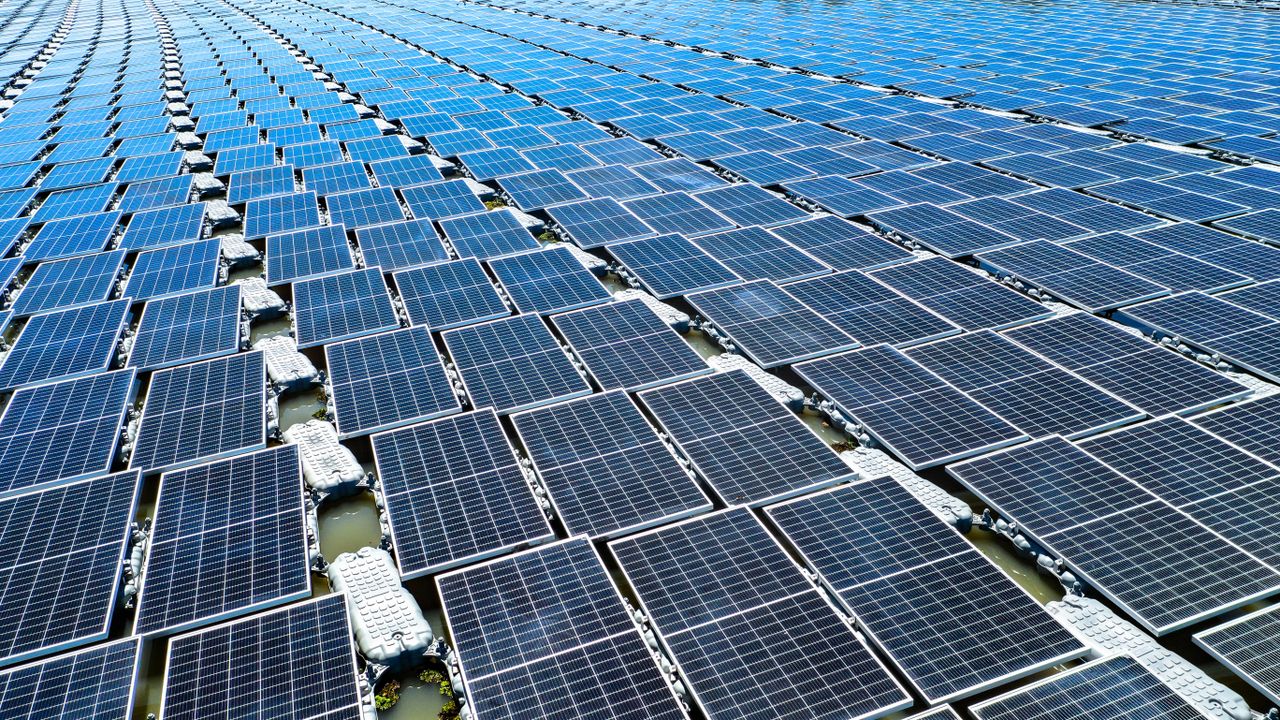
An aerial photograph showing rows of photovoltaic solar panels mounted on floating platforms over water in Pasir Mas, Kelantan, Malaysia

Credit: Abdulazis Hasan / Pexels


Share