
Recommendations
Based on our analysis, we make the following recommendations to accelerate the subnational electricity transition.
1. Create strong and predictable demand for clean electricity
The states should ensure timely policy updates, preparing revised policies in time before expiry, and prioritise the conversion of draft rules into in-force regulations to maintain investor confidence and support long-term renewable market growth.
Strengthen renewable energy targets and demand signals: States should align their power procurement planning and DISCOM operations with the Ministry of Power’s revised Renewable Consumption Obligation (RCO) targets, ensuring on-ground implementation across all renewable segments — wind, hydro, distributed renewables (≤10 MW), and other sources. By embedding RCO trajectories into procurement strategies, states can accelerate renewable energy deployment, reduce fossil fuel dependence, and provide a predictable, long-term demand signal for clean energy investors. Additionally, monitoring and reporting mechanisms should be strengthened through standardised quarterly compliance reporting, centralised digital tracking of procurement, and independent verification processes to enable timely corrective actions where RCO targets are lagging.
Prepare power systems for new sources of electricity demand: States should implement, track and regularly update their resource adequacy plans, ToD tariffs, and green energy open-access frameworks to create predictable demand for variable renewables, hybrid projects, and energy storage. Growing demand for electricity is increasingly coming not just from electric mobility and green hydrogen, but also from the rapid expansion of data centre infrastructure. India’s data centre electricity demand is projected to grow almost five-fold from 13 terawatt hours (TWh) in 2024 to 57TWh by 2030, lifting data centres’ share of national electricity demand from around 0.8% to 2.6%.
States should proactively map and forecast demand to avoid supply bottlenecks and ensure that this new energy demand is met through clean energy sources. Better demand-side mapping and planning will help integrate these new loads smoothly, ensure grid reliability, and support a steady pipeline of clean-energy capacity.
2. Strengthen DISCOM financial health
States should address structural and financial challenges limiting DISCOMs’ renewable procurement. As highlighted in the 13th PFC Integrated Rating Report, many DISCOMs face high debt, delayed subsidies, operational inefficiencies, and tariff-revenue mismatch. Financial stress intensified in FY2024, with collection efficiency declining from 97.56% in FY2023 to 96.51% in FY2024, contributing to a deterioration in aggregate technical & commercial (AT&C) losses, while billing efficiency continues to remain below 90% at the all-India level.
States should deploy performance-linked financial support, ensure timely subsidy payments, implement regular cost-reflective tariff revisions, and strengthen billing and collection systems through digitisation, smart metering and feeder-level monitoring. These measures reduce risk perception and enable DISCOMs to drive renewable energy demand effectively.
3. Leverage direct benefit transfer (DBT) reforms to rationalise tariffs
States should adopt DBT for electricity subsidies under the 2025 Electricity Act amendments, which mandate cost-reflective tariffs, remove hidden cross-subsidies, and allow explicit budgeting for vulnerable consumers. DBT ensures subsidies reach beneficiaries, stabilises DISCOM finances, improves revenue adequacy, and reduces financial risk, enabling long-term renewable procurement and grid investment. Transparent subsidy flows also enhance accountability and accelerate renewable integration.
However, DBT implementation poses challenges, including incomplete consumer databases, uneven bank account linkage, and administrative coordination gaps, which can delay rollout and temporarily affect low-income consumers. Addressing these through phased implementation, robust grievance mechanism, and targeted awareness programmes can ensure effective and equitable subsidy delivery while supporting renewable integration.
4. Market enforcement and procurement design
The introduction of market designs, like market-based economic dispatch (MBED) and well-designed capacity markets, will modernise India’s power sector by providing long-term signals for investment in grid flexibility, improving overall resource adequacy, and enabling system-wide optimisation across states. However, implementing MBED and capacity markets poses challenges, including the need for robust grid data, advanced forecasting, coordination across states, and capacity-building for regulators and DISCOMs to ensure transparent, efficient market operation.
Peer-to-peer (P2P) trading represents an emerging market design innovation that enables direct transactions between producers and consumers, improves consumer participation, enables distributed renewable energy adoption and optimises demand–supply matching at a granular level. Regulatory frameworks that explicitly enable P2P trading can foster competition, lower transaction costs, and support the integration of renewable generation. States like Delhi, Uttar Pradesh, and Karnataka have already taken steps toward P2P trading regulations. The concept is still evolving and requires supportive regulatory frameworks and advanced IT infrastructure but has the potential to complement existing market mechanisms and accelerate the transition toward more participatory and decentralised energy systems.
5. Strengthen demand-side management (DSM) for a smarter, flexible power system
Effective DSM is essential for balancing India’s increasingly renewable-heavy power system and reducing the need for costly peak-time capacity additions. States must accelerate the deployment of smart meters, automate demand response programmes, and promote ToD tariffs that incentivise consumers to shift usage towards solar-rich daytime hours. Large commercial and industrial consumers, including IT parks, data centres, and manufacturing clusters, should be integrated into structured DSM programmes to provide flexible load that aligns with renewable generation patterns. These measures shift loads from peak to off-peak periods, reduce system costs, minimise renewable curtailment, and enhance grid stability.
Artificial Intelligence (AI) and advanced analytics can optimise DSM by anticipating demand spikes and managing variable renewable output. While data centres and emerging high-growth loads add additional electricity demand, AI can help balance these loads efficiently, exemplifying the principle of “AI for energy, energy for AI”. By combining real-time consumption data, weather forecasts, and renewable generation patterns, AI enables predictive load shaping, smoother integration of renewables, and more flexible, resilient grid operations.
6. Accelerate distribution and transmission grid build-out, and improve grid-forming flexibility
Grid readiness remains one of the most binding constraints for renewable energy expansion. Several states have renewable-rich regions where projects face delays due to inadequate or unsynchronised transmission infrastructure. Addressing this challenge requires states to assume a more proactive role in planning and commissioning intra-state networks, ensuring they are aligned with renewable energy project timelines and central transmission planning frameworks. In addition, states need to prioritise strengthening distribution grid infrastructure by upgrading lines, transformers and substations to enable efficient evacuation of renewable energy and distributed solar, reduce congestion and losses, and ensure reliable integration of higher shares of variable generation.
The recent amendments to the Electricity Rules and the central government’s expansion of Green Energy Corridors (GOCs) provide an enabling policy framework, but states must internalise these changes into their own project-development cycles. Integrating dynamic system studies, including load flow, transient stability, and renewable intermittency analyses, into routine planning will help states better understand their reserve requirements.
Strengthening ancillary service markets is equally critical for grid flexibility. Today, ancillary procurement remains limited in scale and scope, leading to higher reliance on thermal units for reserves. Expanding services such as frequency response, ramping reserves, and fast-response services and ensuring fair compensation would help states build the flexibility necessary for integrating variable renewable energy at much higher shares.
7. Scale up storage and flexibility services
Meeting India’s renewable energy goals will be impossible without rapid acceleration of storage deployment. States must accelerate deployment of energy storage both battery energy storage systems and pumped storage hydropower to meet growing renewable capacity and prevent curtailment. The National Electricity Plan (NEP) estimates that India needs an energy storage capacity of 73.9GW by 2031-32, with storage of 411.4GWh to integrate planned renewable energy capacities. This includes 26.7GW/175.2GWh of pumped hydro storage plants and 47.2GW/236.2GWh of battery energy storage systems.
States need to prioritise awarding new BESS and PSP tenders, expediting land and water clearances for pumped storage, and streamlining approvals for storage-linked renewable projects. To unlock this, states must leverage central policies, including inter-state transmission charge waivers for storage projects (extended until mid-2028), and integrate storage deployment in their energy planning and procurement frameworks.
In addition, newer procurement models are emerging as important tools to accelerate storage deployment and system flexibility. Firm and Dispatchable Renewable Energy (FDRE) tenders, peak power tenders, and round-the-clock (RTC) renewable contracts explicitly value availability during non-solar hours and peak demand periods, creating stronger commercial signals for pairing renewables with storage. States should actively adopt and scale such next-generation tenders in their procurement portfolios, tailor them to local demand and grid conditions, and align them with resource adequacy planning to ensure that storage deployment is both timely and system-relevant.
8. Unlock decentralised renewable energy
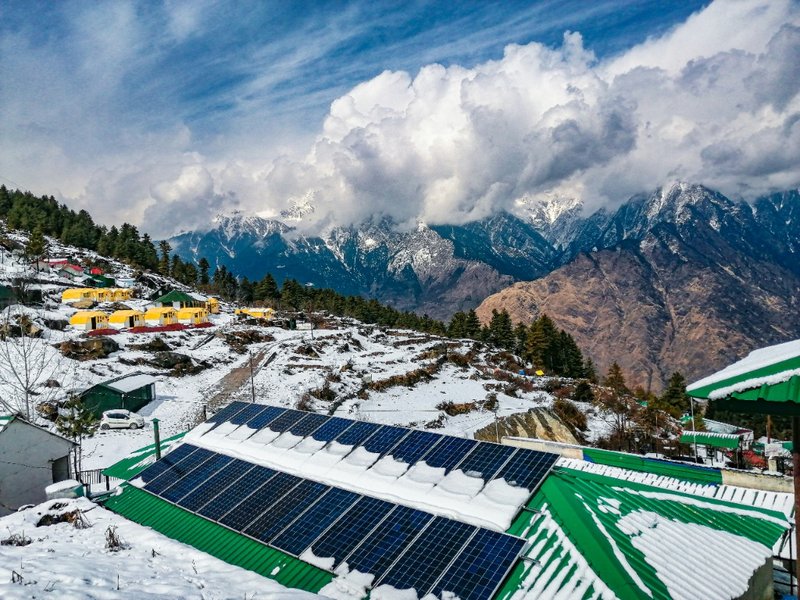
While India’s renewable energy growth has been driven primarily by large utility-scale projects, decentralised renewable energy remains an underutilised opportunity. Such an approach would strengthen DISCOM finances by reducing technical losses, support rural economies through improved power quality, and generate local employment opportunities. Distributed solar, agricultural feeder solarisation, and community energy models can significantly complement grid-scale additions. Simplifying metering, enforcing ToD exports, and introducing performance-based incentives for DISCOMs will accelerate adoption.

Related Content