

UK biomass phase-out is now in sight
The wind-down of large-scale biomass power plants has begun, with total generation set to halve from 2027. The development of a clean power system by 2030 will cut the longer term role for biomass power.
16 Apr 2025
28 Minutes Read

Table of Contents
Executive summary
Read
+
Analysis
Read
Falling subsidies mark the beginning of the end
Read Section
Next steps in the longer-term wind-down of biomass subsidies
Read Section
Supporting materials
Read
Highlights
55%
Electricity generation at Drax set to fall by 55% compared to pre-crisis levels
£1.2mn
The new subsidy value is estimated to be worth £1.2 million per day to Drax
< 2%
Under a clean power pathway, capped generation from Drax falls to less than 2% of total generation by 2030
Executive Summary
Biomass subsidy cut moves the UK one step closer to a phase out
The announcement of a new subsidy package for the UK’s largest biomass generator will build resilience by cutting costs, emissions and imports until 2031, delivering Clean Power 2030 will secure longer-term reductions.
The UK government recently announced the heads of terms of a new subsidy for large-scale biomass generation at Drax Power Station from 2027-31. From April 2027, the new subsidy package should see subsidies fall to around £1.2mn per day, with generation falling by 55% to provide just 1.8% of UK electricity supply in 2030. Emissions will fall to around 5.8 MtCO2e annually, though Drax will remain the UK’s largest emitting power station.
Drax currently receives subsidies worth on average £2mn per day, generating around 4% of the UK’s annual electricity demand from wood pellets that are almost entirely imported from overseas. Generation and pellet imports are now set to be cut, meaning that the UK is less exposed to fuel price fluctuations in volatile global markets. From 2027 onwards, further restrictions on earnings will also be implemented. Drax must generate at a minimum capacity factor of 22% even during an energy price spike, and an ‘excess-profits’ windfall levy mechanism will be introduced.
The UK has the opportunity now to further cut the imports, subsidies and emissions associated with biomass power by delivering Clean Power 2030 and planning for a streamlined strategic reserve. Homegrown wind and solar accompanied by energy storage systems reduce the near-term need for more polluting sources of reserve power, improving the UK’s energy resilience and export potential. The UK government can contribute towards the phaseout through a successful upcoming Contracts for Difference auction and securing alternative forms of flexible and dispatchable energy, before committing to any unabated biomass or bioenergy with carbon capture and storage projects in the 2030s.
The biomass wind-down will start saving consumers money and at the same time cut imports. The challenge now is to build the modern efficient power system which can leave behind biomass power completely.
Analysis
Biomass generation at Drax is set to halve, with further reductions on the table
New conditions are in place to reduce generation and subsidies at Drax power station. Further reductions are possible to create a longer term phase out of expensive, polluting large-scale biomass power plants.
On 10th February 2025, the UK government announced a decision on the level of future support for biomass generators for the period April 2027 to March 2031, following a year-long consultation period. The existing subsidy mechanisms for large-scale biomass will end in 2027, including both the Contract for Difference (CfD) which supports one of the four units at Drax power station, and the Renewables Obligation (RO) scheme which supports the remaining three.
The existing scheme will be replaced by a new CfD scheme for all four units, which will reduce the overall subsidy and generation from Drax power station by around 50%. This is a large change and means that, in line with a Clean Power 2030 pathway, Drax will supply just 1.8% of total electricity generation in 2030. However, there is an opportunity to further limit the emissions and costs to the consumer from 2027 onwards. 2027 to 2031 should be seen as the beginning of a wind-down for the role of large-scale unabated biomass in the UK’s power mix, as it will be increasingly displaced by the development of clean power and clean flexibility. The post-2031 settlement must be limited in order to minimise energy security risks and rises in energy bills.
Falling subsidies mark the beginning of the end
Generous subsidies to date have made Drax the UK’s largest emitter
Though the subsidy package for Drax is set to change, until 2027 large-scale biomass burning at Drax will continue to receive an average of £2 million per day, adding £10 to an average household’s annual energy bill. Over 99% of wood pellets burned at Drax power station in 2024 were imported, the majority from North America. Reliance on imports presents an energy security concern, with the price of pellets jumping during the 2022/23 energy crisis, to 34% above the pre-crisis average.
The high level of subsidies, as well as the reliance on expensive international imports makes Drax an expensive source of power. Power from Drax is at least 70% more expensive than wind and solar, based on the most recent CfD strike prices. The announced subsidy package will cut power generation and subsidies at Drax, but the power price from large-scale biomass will remain high.
Emissions from Drax are also set to reduce in line with a fall in subsidised generation. If Drax maximises its subsidised generation allowance, its emissions will fall by 55%, to around 5.8 MtCO2e, compared to an annual average of 12.57 MtCO2e between 2021 and 2024. While this is a large reduction, compared to the existing fleet of generators, Drax would remain the UK’s largest emitting power station across the subsidy period.
The new subsidy announcement increases the strike price but cuts overall subsidy
The strike price of the proposed 2027-31 CfD mechanism is elevated, rising to £113 from £100/MWh (in 2012 reference prices). Although the price per unit has increased by 13%, the subsidised generation volume is likely to reduce by around half (-55%). The new subsidies will only cover up to 27% of total potential generation, and without additional periods of high power prices and low pellet prices, Drax is less likely to generate unsubsidised electricity.
The new CfD introduces new constraints on generation and profits
The generating behaviour of the units at Drax is incentivised differently depending on the subsidy scheme and market price. Drax’s three units under the current RO scheme are incentivised to maximise generation up to an annual allocated volume, effectively operating as baseload, as the RO subsidy is earned regardless of power price in the wholesale market. The behaviour of the CfD unit is different, as the top-up payment varies with the reference market price. Although this has typically incentivised stable generation similar to the RO, it is more variable and needs to be higher than operating costs to incentivise generation. When the market price is higher than the strike price, generators pay back to consumers. During the energy crisis, Drax curtailed its own generation during such times, depriving consumers of an estimated £639 million in foregone payments.
Perhaps to avoid a repeat of the curtailed generation during the energy crisis, the new 2027-31 subsidies are ‘collared’. To receive payments after April 2027, Drax must generate at an average capacity factor of at least 22%, and up to a maximum of 27% on average. This cap is split seasonally, with over two thirds of the allowance during winter. This will push most of Drax’s generation into the higher demand months. Overall, generation at Drax is forecast to halve, as to date capacity factors have averaged 64% outside of the energy crisis years.
The capacity factor maximum is set at 16% during the six ‘summer’ months from April to September, and 38% in the remaining six ‘winter’ months. The respective minimum capacity factors are 11% and 33%. The minimum capacity factor level is enforced through a payment penalty, reflective of any generation shortfall multiplied by 35% of the market reference price over the period. The limits on generation encourage Drax to prioritise generation during times of high demand, while the minimum collar ensures that Drax continues to generate during a potential price spike.
Other additional mechanisms were also announced, including changes to the sustainability criteria, and an “excess-profits” windfall levy mechanism. Profits can be clawed back at a rate defined across two lower and upper thresholds: 30% for earnings above £160mn and 60% for those above £200mn.
Overall, the new scheme introduces additional subsidy and generation constraints. This phase down in the use of large-scale biomass power plants goes hand in hand with a reduced role for high polluting plants, as they will be replaced by cheaper clean power generation out to 2030.
Constrained biomass generation will be concentrated into high-price periods
The maximum and minimum capacity factors introduced under the new CfD proposals will change the generating behaviour of Drax. The CfD subsidy top-up for Drax is decided by the difference between the set ‘baseload market reference price’ which is static for 6-month ‘summer’ and ‘winter’ periods, and Drax’s strike price. On top of this subsidy, generators look to maximise the sale price of electricity, and concentrate generation into the highest priced periods. Additionally, Drax has reported some physical operational limits which will likely affect its generation behaviour, including annual maintenance periods, a minimum up-time period of around 6 hours, and physical pellet storage constraints.
To achieve the best market value for its generation Drax will likely look to generate in the periods of highest wholesale price. In a typical year, high price periods coincide with low-wind generation and high gas power generation during the winter. This mechanism is designed to reduce the overlap of expensive biomass generation with low-cost clean power. However, a small overlap will likely remain due to the operating conditions at Drax, and because there will remain an information gap between forecasts and actuals for power price and renewable generation. Although this is the potential behaviour during standard price behaviour across the year, during the extreme events it becomes very difficult to forecast when the highest price periods will be. For example, in 2021 the maximum spot price occurred in the summer period, not winter.
Subsidies are set to fall, but variable wholesale power prices will determine by how much
The transitional subsidy announcement stated that the annual subsidy will be around half of the historic level. However, historic subsidies have been highly variable, and dropped considerably during the energy crisis as power prices increased. In 2022-2023 the CfD subsidy dropped below zero due to the high price of power, while RO subsidies stayed high, resulting in a subsidy of between £550-600 million per year. Before the energy crisis the CfD unit typically received £230-340 million per year, making the typical total subsidy package around £850-950 million, with variation each year depending on the generation levels and wholesale prices. In 2023, Drax received £601m total in public subsidies, which increased to £869m in 2024.
The subsidy top-up for the 2027-31 period depends on the wholesale price. Taking the average wholesale price over the last 8 years, the subsidy would be worth around £430 million per year. With lower wholesale prices, Drax will receive a larger subsidy top-up, and in this way act as a drag on potential price reductions below its strike price.
Since 2017, average winter prices have ranged from £40/MWh at the lower end, to £200/MWh during the energy crisis, meaning that the eventual subsidy could be within a wide range. Based on historic ranges, the subsidy value could be between £300 and £650 million per year. This would total an average of £1.8 billion across the four year period, £1.2 million per day.
If there were to be another 2022/23-style energy crisis with similar price spikes, the subsidy package would reduce significantly as Drax would be required to pay back to the consumer. Drax’s generation behaviour may change at this time, and may operate at the lower end of its permitted capacity factor range of 22%, to reduce its costs. However, because of the raised strike price in the new package, wholesale power prices would need to rise to above £154/MWh (2024 prices) before Drax would pay back to the consumer. In contrast, solar farms built under the most recent CfD auctions will pay back to the consumer on wholesale prices above £70/MWh.
With the first stage of the wind-down now in motion, focus moves to 2031
To confirm the wind-down in biomass generation, the post-2031 settlement must ensure that the lowest cost, homegrown solutions are prioritised to guarantee the energy security benefits of any investment.
The delayed promise of carbon capture and storage at Drax
Bioenergy with carbon capture and storage (BECCS) is assumed in reporting by the Climate Change Committee (CCC) to be a necessary source of ‘negative emissions’, offsetting residual aviation emissions in a net zero economy. However, in reporting for the 7th Carbon Budget, the CCC noted that BECCS is one of the most expensive carbon abatement technologies, and reduced the scale of BECCS previously assumed in the 6th Carbon Budget. Furthermore, by 2050 wood pellet imports are reduced to almost zero, despite a forecasted increase in the near term. This change highlights a continued uncertainty in how and when negative emissions technologies may be delivered in the UK.
UK BECCS projects have been delayed to date, raising the potential risks and costs of overreliance on this technology. BECCS at Drax was initially planned to start in 2027 as the initial subsidies came to a close, but was delayed to 2030 and is now further-delayed to at least the early 2030s. After the 2027-31 subsidy package was announced, Drax stated that they expect to reduce BECCS investment without further policy support, and have progressed alternative business models including selling its waste ash. This increases the political risks associated with BECCS, as uncertainties around its deliverability are added to existing concerns about the real carbon emissions and the price of consumer support required. However, it also raises the opportunity for other low-carbon and negative emissions technologies to be developed simultaneously.
Important steps for the future of BECCS will take place before 2031
There are several decision points that will affect the long-term potential for generation at Drax, in time for negotiations around the post-2031 settlement. Ensuring that more resilient and low-cost alternatives are prioritised is key to ensuring that the biomass phase out continues. Firstly, progress towards a clean power system will reduce the role for Drax between now and 2031. Secondly, the inclusion of Drax in the CCUS cluster sequencing process is a necessary milestone for Drax to develop BECCS. The government has not yet confirmed the policy support for BECCS at Drax, and the cost-effectiveness or emissions reductions are yet to be demonstrated at scale.
There are several risks facing the interim development of BECCS before 2031. Drax was not included in the initial Track-1 funding for the first two CCUS clusters. Recent announcements for funding only supported the existing Track-1 projects, and including Drax in the cluster process may require a significantly increased budget owing to the size of the power station. In December 2024 the government stated that its carbon storage ambitions were not achievable, and has not yet set a new, lower target. Linked to this, a revised government Carbon Budget Delivery Plan is due in spring 2025, which will clarify immediate policies and timelines for CCUS delivery. Until further details are known, the longer-term biomass wind down remains uncertain and at risk of delay if BECCS support continues.
There are currently several process and budgetary hurdles to BECCS at Drax, but key decisions are coming up which will affect the long-term wind down. In the interim, smaller pilot projects and innovation sites such as in the two CCUS clusters can be prioritised, without the need for committing to expensive and delayed large-scale BECCS at Drax.
Next steps in the longer-term wind-down of biomass subsidies
Cutting generation at Drax will reduce subsidy levels, emissions and the imports of wood pellets from abroad. However, further reductions are needed to limit the subsidy burden on consumer bills and address energy security risks.
Clean power 2030 remains critical to the biomass phaseout
Clean power deployment will cut the volume of high demand periods which coincide with low renewable generation, limiting the need for expensive back-up. However, power demand is forecast by NESO to rise beyond 2030, meaning that continued deployment of additional clean power generation after 2031 is required to ensure the longer-term phaseout of large-scale biomass.
Ensuring the future CfD auctions are successful is critical therefore to a phaseout of large-scale biomass power. The AR5 CfD auction in 2023 the UK failed to secure any new offshore wind projects, meaning that there has been a deployment lag. The AR7 auction in 2025 should seek to support a large capacity of new projects for delivery before 2030. Efforts to reduce the development time of wind and solar generators may mean that additional auctions can also help support the 2030 target.
Review the maximum and minimum capacity factors before 2031
The seasonal capacity factor should be reviewed at regular intervals as increasing clean power deployment makes overlap between low-carbon renewables and Drax more likely. By 2031, a significant capacity of new solar PV and wind power is expected to be supported by a CfD subsidy far lower than the 2027-31 biomass strike price. The summer season cap in particular could be reduced sooner without affecting system resilience in the near term, followed by reductions in winter.
Clean flexibility will cut the need for expensive biomass power
Alternative sources of flexible power, including batteries and long-duration energy storage systems, reduce the near term need for more polluting sources of dispatchable power. Baseload power generation is part of the solution, but delays in the development of Hinkley Point C nuclear power station mean that only Unit 1 is forecast to be operational by 2031.
Government is yet to announce policy direction for a strategic power reserve, however more recent developments such as life-extension works at existing nuclear power plants, new long-duration energy storage support schemes, and the current policy of keeping the existing gas fleet operational out to 2030 mean that a more streamlined and flexible power reserve is being built, without the need for large-scale biomass.
BECCS still presents significant risks
The support mechanisms for BECCS and other engineered carbon removals have not yet been defined, however the total subsidies required are likely to be in the hundred of millions, estimated at £1.7bn in annual subsidy requirement. The delays and high costs raise the opportunity for other low-carbon and negative emissions technologies to be developed alongside.
Although current plans for net zero by 2050 rely upon greenhouse gas removals, given the delays, the high cost and the potential real carbon emissions from BECCS, there’s an urgent need to limit generation at Drax, to understand other routes to provide genuine negative emissions, and to build a resilient clean power system without overreliance on high polluting back up generators.
Supporting materials
Downloads
Download the full report.
Methodology
Public subsidies for Drax
Ember calculation for impact on residential energy bills: Total annual subsidy divided by residential/industrial split of energy bills, divided by number of households. Ember takes the ROs subsidy earnings figure as reported in Drax’s annual reports. The CfD figure is taken from the LCCC reporting on the payments it provides to each generator. The CfD value can be negative if the market reference price is higher than the generator strike price.
Earnings above the CfD strike price
The earnings are taken from the energy generated per day multiplied by the average market reference price (IMRP). This is a daily approximation, as a weighted average IMRP is not available by generation type, but at a weekly or monthly level can show the seasonal trends clearly.
Value of the 2027-2031 subsidy
A simple earnings model was created, taking historic IMRP values to understand the range of potential power prices. We took the interquartile range of the IMRP split by summer and winter months, the strike price scaled to 2024 values from the LCCC, and assumed Drax generates at its maximum seasonal capacity factor. This gives a range between £41.2/MWh and £88/MWh for summer, and £48.3/MWh and £112.2/MWh in winter.
Acknowledgements
Contributors
Frankie Mayo, Josie Murdoch, Phil MacDonald
Cover image
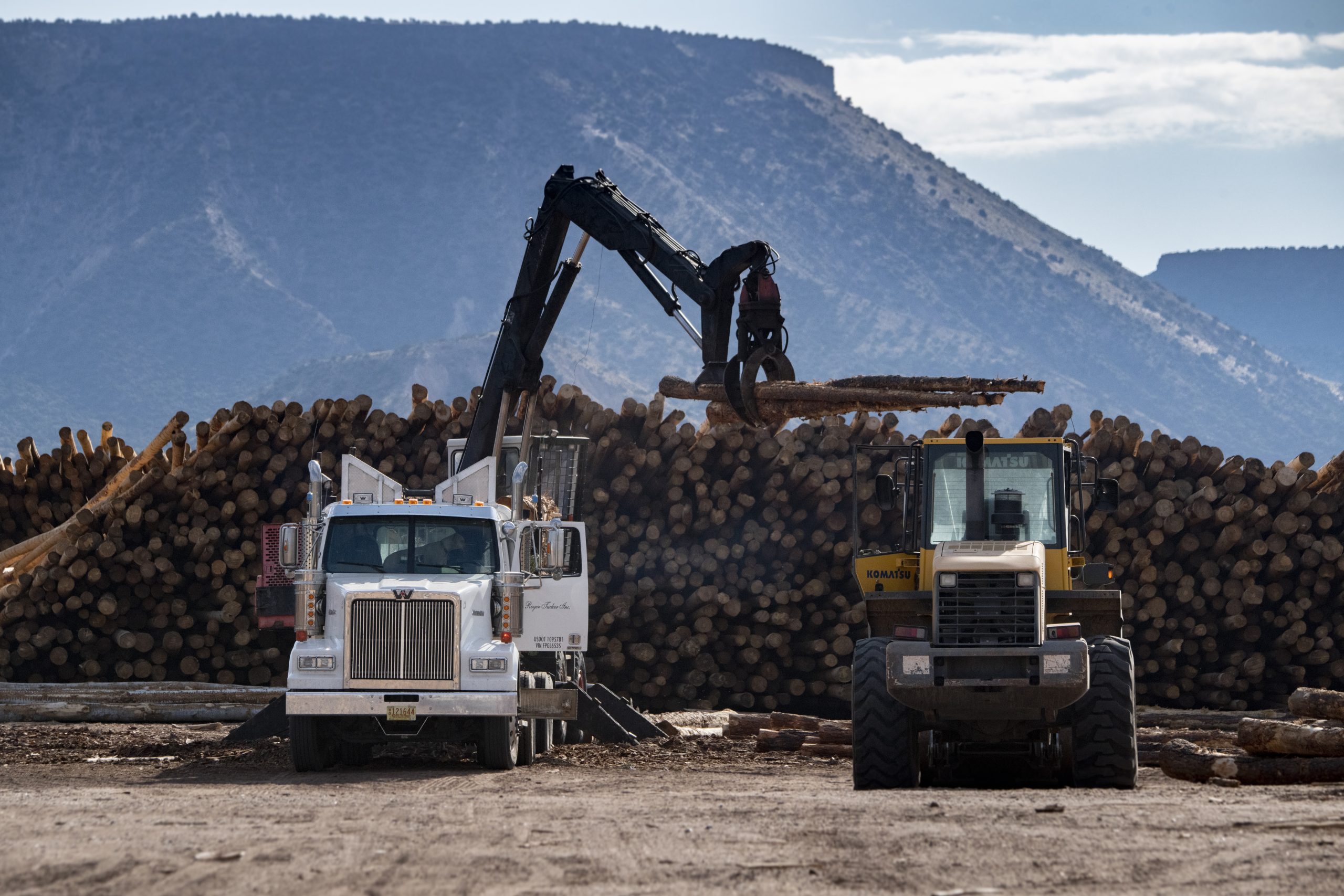
Loads of timber from restoration sites being offloaded at Walatowa Timber Industries (WTI) mill, United States.
Credit: “20190910-OPPE-LSC-0228” by USDAgov is marked with Public Domain Mark 1.0.
Related Content
Analysis
Bankable by design: Financing ASEAN's energy system transformation
06 October 2026
Analysis
Renewable Caribbean: towards energy independence
01 October 2026
Analysis
Methane doesn't read the label
30 September 2026

Analysis
Annual coal mine methane emissions are linked to tens of thousands of deaths
30 September 2026