

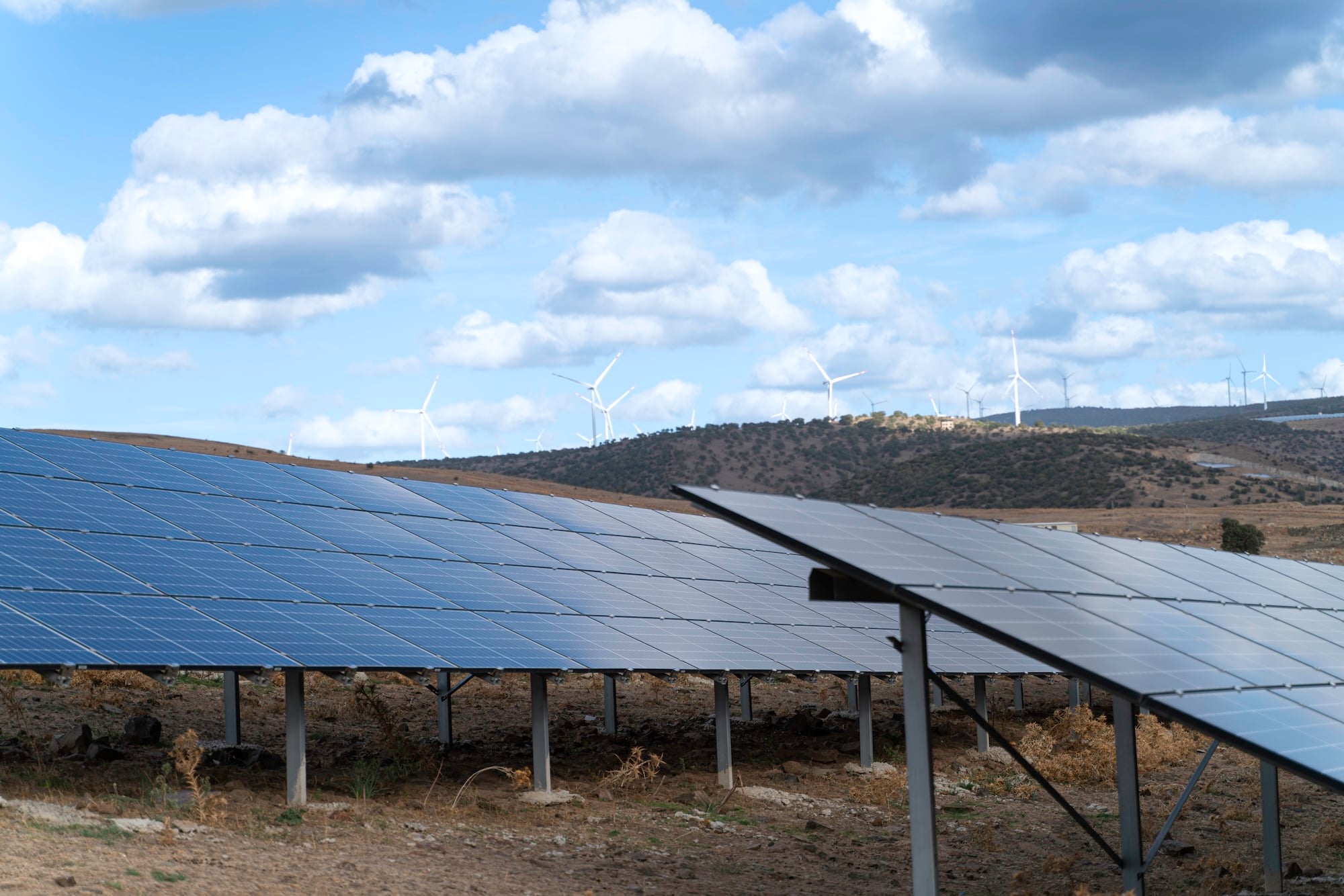
Türkiye Electricity Review 2026
Wind and solar made up 22% of Türkiye’s electricity generation in 2025. Meanwhile, coal remained the largest power source at 34%, with two-thirds supplied by imports.
Available in: Türkçe
8 Apr 2026
17 Minutes Read

Table of Contents
Executive summary
Read
Supporting Materials
Read
Highlights

22%
Wind and solar share in generation in 2025 in Türkiye
$1.8bn
Annual average economic cost of drought on electricity generation in Türkiye

33 GW
The battery project pipeline to be integrated with new wind and solar power plant projects in Türkiye

Executive summary
Wind and solar reach 22% of power generation, but coal leads at 34%
In Türkiye, electricity generation has shifted rapidly over the past three years, marked by accelerated growth in solar energy and record wind installations in 2025. Wind and solar combined generated 22% of electricity, helping to limit the pressure on natural gas imports caused by drought-driven declines in hydroelectric generation. However, coal remains the largest source of electricity generation at 34%, with two-thirds of this production relying on imports. While Türkiye still lags behind many European countries in renewable energy share, it stands out with its expanding battery project pipeline.
In recent years, Türkiye has achieved significant growth in wind and solar energy. However, when other renewable sources such as hydropower and geothermal are included, the share of renewables in electricity generation still lags behind European countries. On the other hand, Türkiye is by far the regional leader in wind and solar energy among countries in the Middle East, Central Asia, and the Caucasus. The global fossil fuel crisis experienced for the second time in the past four years has further highlighted the importance of the transition to clean energy. In this context, Türkiye—set to host the COP31 summit—has the opportunity to take on a leading role in the regional energy transition.
Key takeaways
01
Wind installations reach record levels as solar grows strongly for the third consecutive year
Solar installations reached a record 4.8 GW in 2023, and new installations have remained close to this level over the past two years. As a result, solar electricity generation has doubled in the last two years. Wind capacity additions hit a record 1.9 GW in 2025. However, combined wind and solar additions of 6.5 GW still fall short of the 8 GW required annually to meet the 2035 target.
02
Wind and solar reached a record 22% of electricity generation, but remain below the European average
Driven by record installation over the past three years solar generated 11% of electricity, nearly matching wind generation. Together, wind and solar now account for 22%. However, when compared with Europe’s 24 highest electricity-generating countries, Türkiye ranks 15th for wind, 14th for solar, and 16th for renewable energy. By contrast, Türkiye is by far the leader compared to countries in the Middle East, Caucasus, and Central Asia.
03
Drought creates an average annual cost of $1.8 billion
Data from the past 30 years shows that drought has caused a persistent decline in hydroelectric generation in Türkiye. The average electricity production of the country’s three largest dams—Atatürk, Karakaya, and Keban— was 29% lower over the past decade than in 1996–2005. This shortfall has been compensated by gas generation, increasing reliance on energy imports. As a result, drought leads to an average annual increase of $1.8 billion in fossil gas imports, rising further during energy crises and drier years. Supporting hydroelectric plants with hybrid solar installations is therefore crucial for supply security.
04
Two-thirds of coal electricity comes from imports
In 2025, coal accounted for 34% of electricity generation, with about two-thirds supplied by imports. No new coal plants have been commissioned since 2022, and none are under construction. As a result, growth in coal generation has slowed. After reaching a record 122 TWh in 2024, it declined slightly to 121 TWh in 2025. However, a purchase guarantee for domestic coal plants starting in 2026 may increase their utilisation rates and lead to a new record in coal generation.
05
Türkiye surpasses EU countries in battery project pipeline
Since 2022, new wind and solar plants with storage must install battery capacity that equals their installed capacity. The total allocated battery capacity for these projects has reached 33 GW. In comparison, EU countries with the largest battery capacity, including both operational capacity and project pipelines, have around 12-13 GW, less than half of Türkiye’s. Türkiye’s battery project pipeline corresponds to 83% of its current wind and solar capacity (40 GW).

Related Content
Analysis
How the Philippines' rooftop solar surge can flip the energy emergency script
28 May 2026
Analysis
Rewiring Resilience: AI for Climate-Adaptive Power Grids in Asia-Pacific
21 May 2026
Analysis
Transmission gaps are beginning to constrain India's rapid renewables integration
19 May 2026
Analysis
British power prices are increasingly independent from gas
13 May 2026