Transmission gaps are beginning to constrain India's rapid renewables integration | Ember

Transmission gaps are beginning to constrain India’s rapid renewables integration

India had to curtail 300 GWh of renewable energy in Q1 (Jan-March) 2026 due to transmission constraints, accounting for nearly two-thirds of the total curtailment across the national grid.

19 May 2026
23 Minutes Read
Download PDF

Highlights

25%
Share of transmission projects planned for completion by FY2026–27 but are delayed by more than one year.
20 GW
Renewable energy capacity likely to face connectivity delays of over four months in FY2026-27.
300 GWh
Renewable energy curtailed due to transmission constraints in the first quarter of 2026 (January–March)

Executive summary

Grid constraints risk slowing India’s electricity transition

India’s renewable buildout is now outpacing the expansion of the electricity grid to evacuate it. In the first quarter of 2026, transmission constraints accounted for nearly two-thirds of all renewable energy curtailment at 300 gigawatt-hours (GWh). This growing mismatch between fast-moving solar projects and slower-moving transmission infrastructure is now the most critical operational risk to the country’s 2030 target of 500 gigawatts (GW) of non-fossil electricity.


Over the past five years, India has delivered only about 80% of its annual transmission targets. The shortfall has fed a growing backlog. For the financial year (FY) 2026–27, the government estimates the requirement of 61,411 circuit kilometres (ckm) of additional Inter-State Transmission System (ISTS) capacity by FY2029–30.

Execution risk now sits at the heart of the problem. Around one in four ISTS schemes nationwide faces a delay of a year or more. Right-of-way disputes, fragmented land ownership, forest and biodiversity clearances, and a thin global supplier base for high-voltage direct current (HVDC) components are the primary causes. These are structural issues that capital alone will not resolve quickly.

Compounding the problem is the nature of India’s renewable energy buildout. Rajasthan in the Northern Regional Grid and Gujarat in the Western Regional Grid house the bulk of the country’s utility-scale solar and wind capacities. Such concentration of capacities, combined with delayed transmission and evacuation infrastructure, is producing long queues at key pooling stations. On average, projects awaiting commissioning in FY2026–27 face connectivity delays of four to five months, with some Rajasthan stations experiencing significantly longer wait times.

The mismatch between renewable energy deployment and transmission timelines will persist under a business-as-usual approach. Long-term planning reforms need to move towards a model where generation and transmission are co-optimally planned, rather than transmission planning constantly reacting to the generators’ needs. At the same time, gradually introducing stronger market signals will be important to guide generation siting decisions, improve network utilisation and ultimately support cost-optimal system expansion.

Battery energy storage systems (BESS) at renewable pooling stations is the most credible near-term lever. The technical and infrastructural pieces for BESS integration are in place, but the gap in the lack of regulations and a commercial case can inhibit its deployment for transmission augmentation and associated curtailment avoidance.

Two regulatory measures can unlock this. First, an intermediary government-backed entity could aggregate power from T-GNA (Temporary – General Network Access) projects and contract it to BESS developers, removing the contracting risk that comes from plants entering and exiting the T-GNA queue. Second, BESS can be procured as a transmission asset just like any other grid element, with capacity payments socialised across states in the same way as transmission charges.

With the levelised cost of storage at INR 4.0–4.5/kWh (USD 44–50/MWh) and solar at around INR 2.5/kWh (USD 28/MWh), the combined delivered cost lands at INR 7–8/kWh (USD 78–89/MWh) – well below the INR 10/kWh (USD 111/MWh) that many states currently pay for peak power. Enabling such regulatory mechanisms could be among the fastest interventions for reducing transmission constraint-related renewable energy curtailment.

Besides BESS-based transmission services, other near-term measures can also help decongest the grid. Regulatory reforms such as harmonising curtailment compensation frameworks and streamlining intra-state connectivity procedures can encourage a shift towards intra-state project deployment, thereby easing pressure on already congested ISTS corridors. In parallel, technologies such as dynamic line rating (DLR) and reconductoring can enhance the transfer capacity of existing lines and help defer new transmission build out by a few years as well.

India’s renewable energy curtailment arising from transmission constraints is beginning to reach materially significant levels. Much of this stems from the growing mismatch between the pace of renewable energy deployment and the readiness of transmission infrastructure. Over time, the system will need to move away from generation-led transmission planning towards a model where generation and transmission are co-optimally planned and executed.

Duttatreya Das
Energy Analyst, Asia, Ember

Key takeaways

01

Transmission buildout is running 20% behind plan

India has met only about 80% of its annual transmission targets over the past five years, and the FY2026–27 ISTS target has now risen to 25,146 ckm. One in four major schemes is already running a year or more behind schedule.

02

20 GW of renewable capacity faces connectivity delays exceeding four months in FY2026–27

Lack of connectivity for renewable projects has a material impact on finances. Plants connecting under T-GNA earn no compensation when curtailed, and a 6- to 12-month delay can cut project internal rate of return (IRR) by 100–200 basis points.

03

300 GWh of renewable energy curtailed due to transmission constraints in Q1 2026

Out of the 470 GWh of renewable energy curtailment observed across inter-state projects in the first quarter of 2026 (Jan-March) , around 300 GWh was attributable to transmission constraints, particularly across the Northern and Western regional grid pooling stations. This was about 1.5-2.0% of total renewable generation for the ISTS plants in these regions.

04

Pooling stations already have 236 GW of BESS connectivity for relieving transmission constraints

Battery storage at pooling stations is the fastest available fix to resolve transmission constraints. Roughly 3–4 GW of two-hour storage would absorb most of the curtailed generation, against 236 GW of plug-and-play BESS headroom already available at major pooling stations. The technical pieces are in place; the gap is regulatory and commercial.

Chapter 1: Transmission progress and shortfalls

Transmission expansion in India has fallen short of planned targets in recent years

Over the past five years, India has achieved only about 80% of its transmission buildout targets on average. This has resulted in a growing backlog even as demand for new transmission continues to rise.


India’s transmission network spans about 503,661 circuit km (ckm). It comprises the national grid, referred to as the inter-state transmission system (ISTS), and the intra-state transmission system (InSTS), within states that connect to the distribution system. The national grid connects India’s five regional power grids: Northern, Western, Southern, Eastern and North Eastern.

The latest National Transmission Plan (2022) seeks to expand the network to 648,190 ckm by the fiscal year (FY) 2031-32. This implies annual additions of around 24,000 ckm. Meeting this goal will be critical to integrating India’s target of 500 gigawatts (GW) of non-fossil capacity by 2030.

The challenge is that the targets are significantly higher than historical build rates. Transmission planning timelines have traditionally synchronised with thermal capacity, which typically takes 36-60 months to come online. In contrast, renewable energy projects start much faster, often within 12–18 months. As a result, transmission development has consistently lagged behind renewable energy deployment.

1.1 Evaluating progress

Over the past five years (FY2021-22 to FY2025-26), India has met about 80% of its transmission planning targets on average. Annual additions have been around 13,000 ckm, against a target of roughly 16,230 ckm across ISTS and InSTS. This persistent shortfall has led to a large backlog of pending projects. Combined with new generation and rising demand, the annual requirement has increased sharply. For FY2026-27, the target for the ISTS component alone has risen to about 25,146 ckm. The government’s own estimate pegs the total additional ISTS requirement to be 61,411 ckm by the end of FY2029-30. In addition, there will be InSTS requirements, though these are harder to assess as India is only beginning to mandate transmission adequacy at the state level.

Electricity demand in India has grown steadily over the past five years and is likely to continue rising, driven by economic growth, electrification and increasing consumption across sectors. New sources of demand, such as green hydrogen and data centres, are also emerging as key drivers of transmission demand. At the same time, India plans to add about 280 GW of solar and 140 GW of wind capacity by 2030. Given that renewable energy deployment is largely in states with favourable resources and land availability, a large and rapid buildout of transmission infrastructure is necessary to move power from generation centres to demand hubs.

Designated utilities, at both the national and state levels, undertake transmission planning in India. At the national level, the Central Transmission Utility (CTU) is responsible for identifying clear transmission expansion plans and developing transmission lines across inter-regional corridors. It implements the plans through five-year planning cycles under the National Electricity Plan, with annual updates to reflect evolving system needs.

At the state level, State Transmission Utilities (STUs) undertake similar planning. They focus on ISTS network development aligned with the geography of local demand and generation patterns.

A range of supportive policy mechanisms has enabled progress in transmission expansion. Notably, the Green Energy Corridor (GEC) programme has played an important role by providing capital subsidies and concessional financing to support the development of InSTS infrastructure in critical renewable-rich zones.

1.2 Assessing shortfalls

Despite detailed long-term planning and the initiation of tendering processes, transmission buildout has frequently encountered execution challenges. These delays arise from a range of factors across both the ISTS and InSTS. These issues tend to be more pronounced in ISTS projects, given the scale of infrastructure involved.

An assessment of major ISTS transmission schemes scheduled for commissioning in FY2026-27, comparing their scheduled commercial operation dates (SCOD) with currently expected timelines, can potentially highlight the extent of these delays. While actual commissioning timelines may continue to shift due to ongoing execution risks, this analysis uses current expected delivery timelines as the basis for estimating average delays. Therefore, it reflects a conservative view of the likely slippages.

Projects range from no delays to slippages extending beyond three years. A closer view across regional power grids, Northern (NR), Western (WR), Southern (SR) and Eastern-North East (ER/NER), shows important variations in execution performance.

The share of transmission schemes with commissioning dates still on schedule in FY2026-27 remains limited across all regions. On average, about 25% of transmission projects nationwide face delays of one year or more.

  • Share of projects delivered on time: WR has the highest share of projects completed on schedule (22%), followed by SR (17%) and NR (16%), while ER/NER is unlikely to see any projects delivered on time (0%).
  • Share of projects delayed by at least by one year: ER/NER has the highest share of projects facing delays of around one year (50%), followed by SR (23%), NR (22%), and WR (20%).

However, NR, WR, and SR have a larger share of transmission infrastructure, reflecting denser demand centres and the presence of major renewable energy zones, which drive higher buildout requirements. Across these regions, the majority of delays range between 4 and 12 months.

Key execution challenges continue to constrain transmission buildout.

Right-of-Way (RoW) issues remain the most significant bottleneck, driven by increasing land requirements for higher-voltage lines, fragmented land ownership and misalignment in compensation structures. Land acquisition for substations also adds to delays, particularly when private (or common) land is involved. Some of these challenges can often escalate into litigation, significantly increasing both project delays and associated costs.

Forest and environmental clearances further extend timelines. Delays in obtaining forest clearances, along with requirements like Gram Sabha (village-level administration) consent under the Forest Rights Act, significantly slow project execution. Additional biodiversity-related restrictions, such as those linked to the Great Indian Bustard in Rajasthan, have also led to costly design changes, like undergrounding of lines.

High voltage direct current (HVDC) projects, used for long-distance, high-capacity power transfer with lower losses, face delays due to a limited global supplier base for critical components like converter stations, leading to longer procurement wait times.

Chapter 2: Connectivity and evacuation constraints

Even a few months of transmission lags can significantly limit the evacuation of renewables

With grid connectivity becoming increasingly contested and renewable energy capacity concentrated around a few pooling stations, even short transmission delays in specific corridors can constrain evacuation. This can limit access for renewable energy plants to the grid, resulting in either no connectivity or only partial access under temporary network access regulations.


India’s renewable energy planning has identified key states across the NR, WR and SR for large-scale capacity development, along with development of ISTS transmission corridors to evacuate the power. Rajasthan in NR, Gujarat, Maharashtra, and Madhya Pradesh in WR, and Andhra Pradesh, Karnataka, Tamil Nadu, and Telangana in SR form the core renewable energy hubs. Apart from better resource availability, these states provide easier access to land parcels from a regulatory and commercial standpoint.

These regions are planned to host most utility-scale solar and wind capacity, with ISTS networks built to evacuate power from these resource-rich zones to demand centres across the country. The installed renewable energy capacity (solar with 43.7 GW and wind with 12.5 GW) connected to the ISTS as of March 2026 is distributed as follows: NR (solar -26.35 GW, wind -0.97 GW), WR (solar -10.90 GW, wind -6.35 GW), and SR (solar -6.71 GW, wind -5.21 GW). Adding to this, around 192 GW of transmission capacity is currently under implementation, with a further 72.6 GW under planning through 2030 to accommodate the upcoming renewable energy capacity additions.

The growing concentration and scale of renewable energy capacity in a few regions are creating congestion in key transmission corridors, necessitating additional lines and continuous network augmentation. The generation profile of plain-vanilla solar further amplifies this challenge as infrastructure must be sized for peak output hours (typically 12:00–14:00), resulting in lower utilisation during the rest of the day.

At the same time, the mismatch in timelines between rapid renewable energy deployment and relatively slower transmission buildout, often lagging by 12–24 months, makes parallel planning difficult. Execution delays due to factors beyond the control of planners or policymakers further exacerbate this gap, creating bottlenecks for new renewable energy capacity that is ready for commissioning but unable to evacuate power.

2.1 Delayed grid connectivity

The General Network Access (GNA) framework governs access to India’s national transmission grid. The Central Electricity Regulator Commission’s Connectivity and General Network Access to the Inter-State Transmission System Regulations, 2022, introduced the framework to align with the vision of “one nation, one grid, one frequency.” This framework provides non-discriminatory grid access by requiring developers to specify only the capacity and time blocks for injection, removing earlier constraints such as the identified off-takers’ location, akin to one-to-one demarcation of transmission corridors. The earlier regime was not conducive to renewable energy integration, given its distributed and variable nature.

In principle, transmission planning aligns with renewable energy project development timelines. Ideally, transmission systems are often expected to be ready in advance to enable testing and smooth integration. This process culminates in the granting of GNA to projects, ensuring full access to the ISTS grid upon commissioning.

However, persistent transmission delays have disrupted this alignment. Many projects enter a pipeline where they are either unable to inject power due to a lack of GNA or can only inject partially through temporary GNA (T-GNA), which permits access only when spare transmission capacity is available. As a result, a growing pipeline of projects faces effective delays, either through a complete lack of access or constrained, partial evacuation.

Renewable energy pooling stations in NR, particularly Rajasthan, and in WR, especially Gujarat, are witnessing some of the largest connectivity queues. For FY2026–27, renewable energy projects in India are expected to face average connectivity delays of 4–5 months beyond their commissioning timelines. Around 20 GW out of 45 GW of projects could see delays extending beyond four months. This is most acute in Rajasthan’s pooling stations. Over 12 GW of solar and wind capacity in Rajasthan (NR), and around 8 GW in WR and SR combined, face such delays. This not only creates financial stress for developers but also results in system-level opportunity costs due to unutilised generation capacity.

This connectivity mismatch is expected to be temporary at the project level, as new transmission lines are commissioned and plants eventually receive access. However, given the persistent misalignment in timelines between renewable energy deployment and transmission buildout, this gap is likely to continue as new projects enter the pipeline and face similar delays.

The issue may further intensify with the record pace of solar and wind additions, driven by policy and regulatory focus on the development of new projects in these few key zones. As a result, transmission expansion is likely to keep lagging behind, turning this into a structural infrastructure challenge rather than a one-off delay.

2.2 Challenges for renewable energy evacuation

Delays in commissioning associated transmission infrastructure result in projects receiving temporary access to the grid. Plants that are ready ahead of transmission readiness typically get T-GNA, allowing injection only when spare grid capacity is available.

India’s grid operator, Grid Controller of India (GRID India), began reporting transmission margin availability from late November 2025. This analysis considers the period from December 2025 until March 2026. Given that margin data are reported primarily during periods of acute congestion and not consistently across all days, the estimates on renewable energy curtailment we present are conservative. They reflect minimum levels of available transmission margins and, consequently, conservative estimates of renewable energy generation that could not be injected or had to be curtailed across pooling stations.

Renewable energy curtailment in India’s ISTS network occurs under two broad frameworks. The first arises from transmission constraints (or lack of T-GNA margins), where limited network margins lead to non-scheduling of renewable energy. In such cases, generators typically do not receive any compensation, as they do not have firm network access rights. This posits significant commercial risk for a developer. For instance, a 6- 12-month delay in a solar project can reduce the project’s internal rate of return (IRR) by 100-200 basis points compared to a no-delay scenario. This is driven by the loss of early-period cash flows, along with the accumulation of interest during construction as payment schedules are deferred. With Indian renewable energy auctions becoming increasingly competitive, even minor delays or deviations from planned timelines can significantly impact project viability metrics.

The second is curtailment for grid security reasons under mechanisms such as emergency Tertiary Reserve Ancillary Services (TRAS), where ISTS renewable energy plants are backed down to maintain system stability – particularly during peak solar generation hours when coal-based power plants face operational inflexibility. However, such curtailment receives compensation and poses lower commercial risk. Given India’s renewable energy plants operate under the ‘must run’ framework, any backing down happens through the emergency TRAS route and is liable for compensation.

Some curtailment also occurs at the intra-state (InSTS) level. Unlike emergency TRAS-related curtailment, these volumes are typically not compensated, as they fall outside the purview of centrally governed grid security mechanisms. This has been excluded from the study due to the limited availability of reliable data.

Ember’s analysis estimates total renewable energy curtailment at around 470 gigawatt-hours (GWh) in the first quarter (Q1) of 2026, of which nearly 300 GWh was attributable to transmission constraints while the remaining 170 GWh was linked to system inflexibility. Regionally, the Northern region (NR) accounts for about 178 GWh and the Western Region (WR) for around 122 GWh of curtailment. For renewable energy plants concentrated in the ISTS pooling stations in NR and WR (37.25 GW solar, 7.32 GW wind), this translates to roughly 1.5-2.0% of potential generation lost during the quarter due to transmission constraints. No transmission constraint-related curtailment was observed for pooling stations in the Southern Region (SR), indicating limited or no lag between renewable energy project commissioning and transmission infrastructure readiness. This is partly because the SR has not witnessed the same scale of rapid renewable energy buildout seen across pooling stations in the Northern Region (Rajasthan) and the Western Region (particularly Gujarat).

However, despite the relatively small share of curtailed generation in percentage terms, the absolute volume of renewable energy affected is significant due to the high concentration of capacity in these zones. Beyond the opportunity loss for the system from unutilised generation, this also introduces significant commercial risk for project developers, which can slow the overall momentum of renewable energy deployment.

Curtailment due to transmission constraints has been increasing over recent months, with a sharp rise observed in March, driven by rapid renewable energy capacity additions without commensurate transmission readiness. Notably, India lost around 34 GWh of renewable energy generation on 30 March 2026 due to insufficient transmission margins. By analogy, this is equivalent to the daily power consumption of about 5 million middle-class, urban households in India.

This curtailed energy could also have displaced expensive coal- and gas-based generation during high-demand afternoon hours of March and April 2026. In turn, this may have reduced reliance on costly natural gas imports or freed up domestic gas supplies for higher priority uses outside the power sector, particularly at a time when spot gas prices were nearly twice the levels prevailing before the geopolitical unrest in West Asia.

Chapter 3: Addressing transmission bottlenecks

Addressing transmission bottlenecks

A combination of regulatory and market reforms can help navigate transmission-related challenges


The mismatch between renewable energy deployment and transmission timelines is likely to persist in the near term, given the scale of upcoming capacity additions. Short-term operational reforms can help alleviate immediate constraints. However, addressing these bottlenecks structurally will also require a broader set of long-term grid reforms.

3.1 Short-term operational improvements

Several operational reforms can be implemented to address evacuation constraints and the resulting renewable energy curtailment. These measures can help bridge the immediate gap while enabling the broader course correction needed to better synchronise generation and transmission planning.


Beginning the process of decongesting ISTS corridors

Over the last 4–5 years, India’s renewable energy capacity additions have become increasingly concentrated in a few states, particularly Rajasthan and Gujarat. This has been driven by factors such as ISTS transmission charge waivers, relatively easier access to large land parcels, and the development of structured grid connectivity procedures. While this concentration has improved economies of scale and enabled the development of large-scale renewable projects at record-low prices, the model is increasingly running into transmission buildout and evacuation constraints.

A number of operational reforms can improve investment interest in intra-state (InSTS) transmission networks and support a more decentralised renewable energy buildout closer to demand centres. For instance, compensation mechanisms linked to curtailment under emergency TRAS currently apply mainly to ISTS-connected plants. This creates a distorted incentive structure that encourages more concentration within ISTS corridors. A more uniform curtailment and compensation framework across both ISTS and InSTS connected projects could help reduce this imbalance.

Transmission and connectivity planning at the state level also requires significant administrative improvement. This includes clearer long-term planning visibility and better disclosure around connectivity allocation processes, associated charges, and updated substation capacity availability. Currently, only a few states have well-documented systems and publicly available data on these aspects. This remains a major barrier for planning project development.


Using batteries for transmission-as-a-service

Given batteries’ role as the “multitool” of the power sector transition, innovative use cases can unlock additional value, with transmission-as-a-service being one such application to help manage grid congestion.

The average curtailment across key renewable energy zones in the Northern and Western regions has been around 6–8 GWh, with occasional spikes to higher levels. Under typical conditions, absorbing most of the curtailed energy linked to T-GNA constraints would require roughly 3–4 GW of battery energy storage systems (BESS) with a 2-hour duration. This is not a small requirement, particularly against India’s BESS target of 34.7 GWh by FY2027.

Most existing BESS targets primarily consider its role in balancing demand and supply, and often overlook use cases that may appear unconventional but can still offer strong commercial value.

BESS deployed specifically for congestion management could deliver significant system-level benefits. This includes absorbing power from stranded renewable energy assets that face evacuation constraints and deferring capital expenditure on new transmission infrastructure in the near term — creating a multipronged benefit. However, existing market and regulatory structures create several bottlenecks that could limit such deployment without dedicated regulatory support.

Standalone BESS developers face uncertainty in contracting with projects under T-GNA, as these plants transition to full connectivity within a few months, making such arrangements of very short-duration. Additionally, long-term PPAs still largely anchor India’s power market, making it difficult to finance storage projects that rely on merchant revenue or short-term power purchase contracts. While some BESS deployment may emerge given that market-based arbitrage opportunities are attractive, scaling this model is likely to be uncertain without clearer long-term revenue visibility. Additionally, current regulations governing non-solar hour GNA restrict BESS assets from procuring power from the exchanges, therefore limiting operational flexibility. Collectively, these factors constrain the deployment of standalone BESS towards addressing grid congestion.

There are several regulatory pathways of how BESS can function as a virtual transmission augmentor by bridging short-term evacuation gaps.

One potential structure for enabling BESS deployment is through an intermediary entity, for instance as the CTU or a CTU-backed institution. Given its visibility on upcoming capacity additions and transmission constraints, such an entity could aggregate power from projects facing T-GNA restrictions and contract it with BESS developers, on a back-to-back basis – similar to what SECI does for long-term power purchase agreements. This would provide power supply certainty for BESS operators, removing the need to repeatedly identify and contract with individual plants as they enter and exit the T-GNA queue.

The second alternative can be deploying BESS as a transmission asset. This model can mirror how transmission infrastructure is developed and remunerated, with storage assets treated similarly to other grid elements – like transmission schemes or substations. The cost recovery can follow a capacity payment mechanism, apportioned across states based on their demand (GW), much like existing transmission cost recovery. It removes commercial risk for BESS developers by ensuring fixed capacity payments, while also avoiding the need for a single counterparty to contract the asset, as costs are socialised across grid participants.

Under either structure, BESS assets participating in such procurement frameworks could be mandated to absorb curtailed T-GNA-linked renewable generation on a priority basis, while retaining flexibility to source additional power from bilateral contracts or power exchanges whenever spare charging capacity is available. BESS developers should retain the flexibility to discharge power through the most value-accretive avenues like bilateral PPAs, power exchanges, and ancillary service markets. Such operational flexibility would improve BESS asset utilisation and also maximise the value of otherwise curtailed energy.


The economics of such a proposition is also compelling. With the levelised cost of storage (LCOS) in the range of INR 4.0–4.5/kWh (USD 44–50/MWh) and solar generation costs at around INR 2.5/kWh (USD 28/MWh), the combined delivered cost of stored renewable power is approximately INR 7–8/kWh (USD 78–89/MWh), inclusive of transmission charges. This remains below the peak power procurement costs of around INR 9-10/kWh (USD 100-111/MWh), or sometimes more, frequently faced by many states.

Many large Indian utilities often rely on power exchanges during peak demand hours (18:00–20:00) to procure marginal power for balancing demand. During these periods, exchange prices rise sharply. The limits of exchange-based power procurement during peak demand periods are also becoming evident. Despite prices hitting market caps, supply availability has remained constrained, with more than 10–20 GW of demand going unmet in several instances during March and April of 2026.

Therefore, regulations enabling BESS to operate as a transmission support service can create a strong commercial case for storing solar energy that cannot be evacuated during daytime hours and shifting it to evening peak demand periods.


Application of grid-enhancing technologies

The CTU should identify transmission corridors where grid-enhancing technologies (GETs) can be deployed to increase power transfer in congested corridors. While conventional upgrades such as transformer augmentation and substation expansion remain important, a wider deployment of strategic transmission optimisation technologies is also required. Although the CEA has already proposed several directional measures, clearer corridor-level prioritisation and detailed execution pathways would be necessary.

Technologies such as Dynamic Line Rating (DLR) and High-Temperature Low-Sag (HTLS) reconductoring can significantly increase the thermal rating of existing transmission lines, enabling higher power delivery. Such upgrades can increase transfer capacity by 25–50% or more, particularly in hotter regions where thermal constraints are more binding. Many of these infrastructural upgrades can typically be implemented within 1–3 years. These measures also help avoid challenges related to right-of-way acquisition and new transmission development in environmentally sensitive or densely populated regions.

3.2. Long-term planning reforms

Grid planning in India will require a range of long-term planning reforms to prevent the build-up of large connectivity queues, the growing mismatch between generation and transmission infrastructure, and the associated rise in renewable energy curtailment. There is no single solution to this challenge; instead, it will require a coordinated, multi-pronged approach.


Co-optimisation of generation and transmission planning

India’s transmission planning framework has historically evolved around generation planning. This approach worked well in a thermal-dominated system, where power plants were often located relatively close to demand centres. However, with renewable energy projects increasingly being developed in regions optimised for land availability, often far from load centres, a significant overhaul in transmission planning approaches is now required.

Transmission development and generation siting need to be planned in parallel- a co-optimised approach, rather than transmission merely responding to project siting decisions. Greater emphasis should also be placed on developing renewable capacity closer to demand centres, including at the intra-state level, that reduces excessive concentration in a few corridors.

Over the long run, many of these challenges ultimately need to be addressed through stronger market and locational signals. If renewable energy projects continue to overcrowd specific regions and transmission corridors, the system must be able to signal congestion and incentivise developers to diversify project locations. India’s recent regulatory developments around congestion charges and connectivity auctions are important initial steps in this direction, moving away from a purely administrative allocation approach.

Over time, both generation and transmission planning will need to evolve toward frameworks that increasingly respond to pricing and congestion signals. Developers should be incentivised to locate projects where power delivers higher system value, similar to regional or zonal pricing frameworks used in several international markets. In the long term, such mechanisms can help better align generation and transmission investments with system needs, improve network utilisation, and enable least-cost system expansion.


Co-locating renewables with storage as a mandate

The growth of solar capacity across ISTS pooling stations has been rapid due to the modular nature of solar projects and their relatively short construction timelines. However, this has also resulted in substantial transmission infrastructure being developed for evacuation from these regions, much of which remains underutilised outside solar generation hours. Against nearly 43.7 GW of ISTS solar capacity deployed across key pooling stations (in NR, WR and SR), India currently has less than 2 GWh of operational BESS capacity.

This creates not only a grid-integration challenge, but also leads to poor utilisation of transmission corridors, which are designed primarily to handle evacuation during daytime solar peaks. Co-locating storage with solar can improve transmission asset utilisation, easing congestion and reducing curtailment. Plain vanilla renewable projects on ISTS corridors should increasingly be avoided, with greater policy priority for storage-linked projects. Moreover, India’s renewable energy auction models also need to evolve to have more standalone BESS on the generation side to capture these inefficiencies.

The third amendment to the Connectivity and GNA Regulations has enabled BESS deployment by allowing separation of connectivity between solar and non-solar hours. This allows battery storage to utilise non-solar hour GNA, creating an opportunity to rapidly integrate BESS without requiring fresh connectivity approvals.

This is particularly relevant for large renewable energy pooling stations that already have substantial non-solar hour transmission capacity in place — for instance, Khawda in WR (~35.2 GW), Bikaner in NR (~32.3 GW), and Bhadla in NR (~27.6 GW) — creating a significant opportunity for co-located BESS deployment without requiring major additional transmission infrastructure.

Supporting materials

Methodology

Calculation of transmission and evacuation delays for renewable projects

The report collates data from multiple sources, primarily the Central Electricity Authority’s (CEA) regional transmission monitoring reports. The analysis focuses on projects under the Inter-State Transmission System (ISTS) that are scheduled for commissioning in FY2026–27 and assesses their current implementation status, including construction progress and expected delays.

The study estimates transmission and evacuation delays by comparing the originally scheduled commissioning timelines with the latest reported progress and expected completion dates for each project.

Similarly, renewable energy evacuation and connectivity status are assessed using data from the Central Transmission Utility of India Limited (CTUIL), including General Network Access (GNA) monitoring information. The analysis considers renewable energy projects that are either expected to be commissioned or have been granted GNA in FY2026–27, and evaluates whether associated transmission connectivity infrastructure is likely to be available on time.


Calculation of curtailment due to transmission constraints

Renewable projects operating under Temporary GNA (T-GNA) are assessed for transmission-related curtailment. Solar and wind generation profiles are constructed using Global Solar Atlas and Global Wind Atlas data and compared with available transmission margins. Curtailment is estimated as the difference between potential generation and available evacuation capacity.

Acknowledgement

Contributors

Ember: Neshwin Rodrigues, Matt Ewen, Wilmar Suarez, Jivan Zhen Thiru, Tito Das, Ardhi Arsala Rahmani.

Cover image

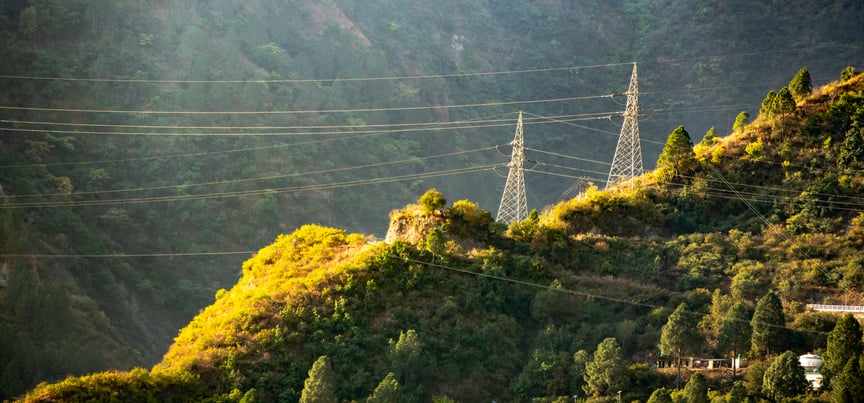
Power transmission towers and lines crossing green mountain ridges in India under morning light.

Credit: promicrostockraw / Getty Images Plus

Share