

Currents beneath currents: Overcoming ASEAN’s subsea power cable governance challenges
The engineering know-how required for subsea transmission is already well established, but strong governance is the enabling force that propels the projects forward.
19 Jun 2026
13 Minutes Read


About
As the ASEAN Power Grid advances, subsea links are emerging as a solution in enabling renewable energy integration, strengthening energy security and supporting regional electricity trade. This report examines the governance challenges shaping the development of cross-border subsea power cables in ASEAN and draws on lessons from Europe’s experience with electricity interconnection to identify practical solutions. This highlights areas where existing regional mechanisms may be strengthened to support more complex cross-border infrastructure, serving as a practical reference for policymakers and stakeholders.
Southeast Asia has abundant renewable energy resources, but they are unevenly distributed. Regions with strong solar, wind, hydro or geothermal potential are not always those facing the fastest growth in electricity demand. Meanwhile, rising power consumption from economic development, electrification, data centres and AI infrastructure is increasing the need for reliable, affordable and low-carbon electricity supplies.
Subsea power cables could help bridge this gap. By connecting power systems across borders, they can enable electricity trade, strengthen energy security, lower system costs and unlock investment in renewable energy resources that might otherwise remain stranded. They would also allow countries to leverage their complementary strengths, enabling hydropower, geothermal, solar and wind resources across countries to support regional demand rather than being constrained by national borders. Yet despite ASEAN’s geography that makes subsea interconnections particularly valuable, the development of cross-border subsea power cable projects has remained limited. The ASEAN Interconnector Masterplan Study III identified 18 new and existing interconnectors needed to more than double the region’s interconnector capacity from its current 7.7 gigawatts by 2040, a scale that underscores how far the region still has to go.
Europe offers a useful reference point: similar drivers have underpinned the development of one of the world’s most advanced cross-border electricity interconnection systems. The region’s experience underscores the importance of regional coordination, equitable cost allocation and integrated planning in navigating the complexities of cross-border subsea cable deployment. However, given ASEAN’s distinct institutional context, this analysis highlights the need to strengthen existing agencies and platforms through a phased, adaptive approach across three areas:
- Regional planning. Coordination mechanisms and institutional frameworks exist, but more continuous and structured planning is needed to guide the prioritisation and sequencing of interconnection projects based on system-wide needs.
- Cost allocation. Bilateral arrangements and negotiations have enabled early progress, but may be less suited to larger projects involving multiple jurisdictions. More systematic, benefit-based approaches could help improve investment alignment.
- Maritime coordination. As subsea cables intersect with increasingly congested marine environments, coordination beyond the energy sector becomes more important. Strengthening marine spatial planning and cross-sectoral engagement can reduce permitting risks and support more timely project implementation.
To unlock the full potential of subsea power cables, ASEAN will need governance frameworks that are both robust and adaptive, capable of coordinating increasingly complex cross-border projects while evolving alongside the region’s energy transition and electricity market needs.
Cross-border subsea power cables as a governance challenge
Cross-border subsea power cables represent the next frontier for ASEAN’s evolving power system, particularly as countries seek to expand regional electricity trade and accelerate renewable energy integration.
Established engineering already supports subsea transmission; however, project success depends largely on how effectively countries coordinate across jurisdictions, which aligns regulatory frameworks, market rules, permitting processes, codes, and standards.
1.1 Subsea power cables: beyond the engineering
As electricity systems become more interconnected and increasingly reliant on renewable energy, subsea power cables are playing a growing role in modern energy infrastructure. These are electricity transmission lines installed beneath bodies of water that enable connections between geographically separated power systems, linking offshore generation to onshore grids and facilitating cross-border electricity exchange within and even among multiple countries.
By enabling electricity to flow across borders in response to demand and price conditions, subsea interconnectors support a more efficient use of generation resources while enhancing security of supply. They allow countries to draw on neighbouring systems during periods of shortage, reducing exposure to domestic supply constraints, improving overall system resilience and lowering total system costs by enabling access to lower-cost generation and reducing the need for redundant reserve capacity.
An analysis of High-voltage Direct Current (HVDC) interconnectors linking Great Britain with neighbouring markets, such as the Interconnexion France–Angleterre (IFA 1) and BritNed, shows their significant economic impact. The links generate commercial trading values of approximately €375 million per year. When including forward trading, capacity value and ancillary services, that figure rises to around €500 million annually. They also show additional social welfare gains of €25 million per year in infra-marginal surplus (the extra profit or benefit a producer gains on all units sold before the very last unit), not captured in market revenues.
Interconnectors are also becoming increasingly important to renewable energy integration. As renewable resources are unevenly distributed and often located far from demand centres, expanded transmission capacity enables these resources to be accessed and balanced across a wider regional system. Especially for archipelagic regions like Southeast Asia, cross-border subsea power links are not merely supportive but essential for achieving both system reliability and decarbonisation objectives.
From a technological perspective, the feasibility of subsea electricity transmission is already well established. Existing systems are capable of operating over long distances and across deep-water environments, using a range of configurations suited to different system requirements. The central challenge in developing cross-border subsea interconnections lies not in engineering feasibility, but in whether the necessary institutional and regulatory conditions are in place to support coordinated development.
1.2 Cross-border subsea projects face governance challenges that technical design cannot resolve
Cross-border subsea interconnectors are complex transnational infrastructure projects characterised by large capital investments, long development timelines and the need for coordination across multiple jurisdictions, institutions and stakeholders. Even where individual links are relatively short in distance, their cross-border nature creates governance and coordination challenges that extend beyond technical design and engineering execution. As such, their development often depends as much on political and institutional alignment as on technical feasibility.
This complexity is driven by several interrelated characteristics. First, the high upfront costs and long asset lifetimes create strong dependence on regulatory stability and predictable cost recovery. Second, these projects bring together multiple actors, including governments, regulators, system operators and investors, each operating under different priorities and constraints. Third, while the benefits of interconnection are often shared across countries, costs may be unevenly distributed, creating persistent challenges in aligning investment incentives.
The result is a class of projects that can be regionally beneficial yet nationally difficult to advance. The Great Sea Interconnector, previously called EuroAsia Interconnector, illustrates this challenge. Proposed in the early 2010s to connect the electricity systems of Israel, Cyprus and Greece through a long-distance subsea HVDC cable. Despite strong EU-level support in a Project of Common Interest designation and substantial funding commitments, the project has faced persistent delays. Project progress has been complicated by evolving ownership structures, including the transfer of development responsibilities to a new project promoter, alongside difficulties in securing stable financing and investor confidence. Regulatory and political uncertainty has also been compounded by diverging national positions, including reservations from Cyprus regarding project viability and financing commitments, as well as ongoing investigations into potential irregularities during the project’s development phase.
These challenges reflect the inherent interdependence of interconnected electricity systems, where decisions taken in one jurisdiction can generate cross-border impacts. This interdependence means that subsea interconnectors cannot be planned or developed in isolation; rather, they require alignment across national planning processes, regulatory frameworks and market structures. Without such alignment, even well-supported projects risk prolonged delays, cost escalation or eventual non-realisation.
1.3 Maritime domain adds a further layer of governance complexity
Cross-border subsea interconnectors face a governance challenge that terrestrial infrastructure does not: they are built in shared sea space.
Subsea interconnectors must traverse territorial waters, exclusive economic zones and, in some cases, multiple national jurisdictions and contested areas. This introduces a spatial dimension of governance that extends beyond the electricity sector, requiring coordination not only among energy institutions but also with maritime authorities responsible for shipping, fisheries, environmental protection, offshore activities and subsea telecommunications infrastructure.
Consequently, infrastructure planning must account for competing uses of marine space, as well as environmental and regulatory constraints that vary across jurisdictions. Decisions on cable routing, landing points, maintenance operations and project timing must therefore balance technical feasibility with regulatory approvals and stakeholder interests across multiple domains. In addition, delivery timelines may also be affected by supply-chain constraints, including limited global manufacturing capacity for specialised subsea cables and installation assets, reinforcing the importance of early planning and coordinated procurement.
These cross-sectoral and spatial interactions introduce additional uncertainties into project development, a challenge also evident in the Great Sea Interconnector project, where the longstanding Greece–Turkey maritime disputes and overlapping jurisdictional claims in the Eastern Mediterranean have complicated survey activities and introduced further uncertainty into implementation.
In contested areas, this complexity increases as no single authority may have universally recognised control. This raises fundamental questions over who has the mandate to approve projects and which legal or regulatory framework governs their development.
In the absence of coordinated marine spatial planning, such complexities can lead to delays in permitting, increased project risks and suboptimal infrastructure design. This maritime dimension reinforces that subsea interconnections are not solely about aligning electricity systems, but also about managing interactions across sectors and jurisdictions within shared spatial environments. As projects expand in scale and ambition, the ability to integrate maritime considerations into planning and coordination processes becomes increasingly critical. Recognising this added layer of complexity helps explain why governance frameworks must evolve beyond conventional energy sector coordination, and provides a foundation for examining how other regions have approached similar challenges.
Europe’s experience provides lessons on subsea interconnection governance
Europe provides one of the most developed examples of cross-border electricity interconnection governance, and how governance has evolved offers valuable lessons for ASEAN.
2.1 Energy security, market integration and renewables drive cross-border interconnection in Europe
Energy cooperation has long been central to the European integration project. Early forms of collaboration in strategic sectors can be traced to the establishment of the European Coal and Steel Community in the 1950s, which laid the institutional foundation for later forms of economic and energy cooperation across Europe.
Cross-border electricity interconnection in Europe also evolved through a series of practical infrastructure projects linking national systems. Early efforts were often driven by domestic system needs, but many projects already required coordination across national boundaries. Notable examples include the Italy–France link through the SACOI (Sardinia-Corsica-Italy) system, as well as subsequent projects such as the IFA 1 link and the Skagerrak link developed and operating from the 1970s onward. These interconnectors enabled electricity exchange between neighbouring systems, enhancing supply reliability while allowing countries to capitalise on differences in generation capacity and resource availability.
Over time, European energy policy has increasingly formalised and expanded these developments around three strategic objectives: 1) strengthening security of supply, 2) promoting electricity market integration, and 3) supporting the deployment of renewable energy. Achieving these goals required electricity systems to operate across borders, making cross-border transmission infrastructure a central policy priority.
Today, Europe hosts one of the world’s most mature subsea interconnection networks. As of 2025, there are around 25 operational submarine power interconnectors connecting European electricity systems across the North Sea, Baltic Sea, English Channel, Mediterranean and surrounding waters, with a combined transfer capacity of approximately 22,290 MW and an aggregate route length of about 7,607 km.
Recent decades have seen the emergence of larger, longer and more strategic projects that connect complementary generation systems and strengthen regional resilience. The Viking Link between the United Kingdom and Denmark, commissioned in December 2023, is currently Europe’s longest operational submarine interconnector at around 765 km, while IFA 1 remains among the highest-capacity links at 2,000 MW. Other major assets, such as the North Sea Link (second longest) and NordLink (third longest), each rated at 1,400 MW, demonstrate how submarine interconnection is increasingly used to integrate hydropower, wind generation and geographically diverse demand centres. These projects illustrate how Europe has moved from relatively short regional links toward increasingly large, strategically significant cross-border energy corridors.
To support these objectives, the European institutional architecture for electricity infrastructure development gradually expanded to include multiple governance layers. These include the European Commission, which sets policy direction; Agency for the Cooperation of Energy Regulators (ACER), which facilitates regulatory cooperation; the European Network of Transmission System Operators for Electricity (ENTSO-E), which coordinates transmission planning; and national governments and regulators, which remain responsible for project approval and implementation.
Importantly, participation in aspects of this framework is not limited to EU member states. Non-EU countries such as Norway, Switzerland and the United Kingdom can also participate through technical synchronisation, market cooperation and planning arrangements, demonstrating that cross-border electricity coordination can extend beyond these supranational frameworks.
2.2 Governance challenges require innovative policy responses
Despite the existence of institutional frameworks for coordination, early cross-border interconnection projects revealed significant governance challenges. In response, the governance of electricity infrastructure in Europe evolved into a multi-level institutional framework that combines EU-level coordination with national implementation.
A central component of this framework is the ENTSO-E, an association of transmission system operators across Europe which plays a key role in long-term grid planning. The primary instrument is the Ten-Year Network Development Plan (TYNDP). This plan identifies future infrastructure needs and evaluates candidate transmission projects across the region. It assesses infrastructure gaps, modelling future demand and generation patterns and identifies projects to strengthen cross-border electricity flows. Projects identified in the TYNDP may subsequently qualify as Projects of Common Interest (PCI).
The PCI framework is another important governance instrument supporting cross-border energy infrastructure. Projects designated as PCIs are considered strategically important for European energy policy and may receive benefits such as accelerated permitting procedures, enhanced regulatory coordination and access to financial support through the Connecting Europe Facility (CEF).
Regulatory coordination is supported by ACER, established under EU’s Third Energy Package. ACER strengthens cooperation among national regulatory authorities, monitors market transparency, and facilitates dispute resolution in cross-border infrastructure development.
Beyond formal institutions, regional cooperation platforms have also emerged to address context-specific coordination challenges. The North Seas Countries’ Offshore Grid Initiative (NSCOGI), for example, brings together governments, regulators, transmission system operators and industry stakeholders to coordinate offshore grid development. Such platforms enable information exchange, alignment of planning approaches and identification of joint infrastructure opportunities.
Over time, NSCOGI was strengthened and formalised through the 2016 Political Declaration on Energy Cooperation between the North Seas Countries. This upgraded the initiative into the North Seas Energy Cooperation (NSEC). This cooperation is a broader and more institutionalised framework that expanded the scope from offshore grid planning to include offshore renewable deployment, market design and maritime spatial planning. Offshore hubs and hybrid projects, such as the North Sea Wind Power Hub (NSWPH), have been advanced through this regional cooperation platform. In fact, because of the strong internationally coordinated drive, NSWPH is currently being studied, modelled and developed as a strategic concept within ENTSO-E’s TYNDP.
Additional governance tools have been introduced to ensure the efficient operation and utilisation of cross-border infrastructure. These include regulatory monitoring mechanisms, competition enforcement and market-based rules such as Use-It-Or-Lose-It provisions, which prevent the underutilisation of transmission capacity. Together, these instruments contribute to improving market efficiency and ensuring that interconnection capacity is effectively used.
These policies and institutions form the backbone of European electricity infrastructure governance in response to development challenges. While national governments and regulators retain authority over domestic decisions, regional-level mechanisms provide the coordination needed to align planning, regulation and investment across borders.
2.3 Governance challenges in subsea interconnection development are evolving
European governance frameworks have significantly improved coordination through institutions such as ACER, ENTSO-E and the PCI framework. However, more recent interconnection projects show that governance challenges have not been fully resolved. Instead of resolutions, these issues have evolved alongside increasing technical and institutional complexity.
Projects such as Kriegers Flak (Denmark–Germany) illustrate this shift. As a hybrid project combining cross-border transmission with offshore wind integration, it blurs the boundary between transmission and generation. This creates regulatory ambiguity in areas such as asset classification and, critically, cost allocation.
For example, uncertainty arises over whether offshore connection assets should be regulated as transmission infrastructure, eligible for network tariff recovery or treated as generation-related facilities to be financed by wind developers. Similarly, costs associated with shared offshore substations, export cables and onshore reinforcements may not align with national benefits. This raises questions over how expenses should be divided between participating countries, transmission system operators and renewable project developers. Additional complexity may also emerge in determining whether revenues should come from congestion rents, regulated network charges or electricity market participation linked to offshore wind output.
In the absence of structured allocation frameworks, cost-sharing often defaults to case-by-case negotiation between participating countries, increasing transaction costs and contributing to project delays. This limitation has driven the development of more formalised cross-border cost allocation mechanisms within the EU, including the cross-border cost allocation (CBCA) framework.
These challenges become more pronounced in large-scale initiatives such as the North Sea Wind Power Hub, which introduces a higher level of governance complexity, as coordination must extend beyond bilateral arrangements to multi-country planning, cost-sharing and regulatory alignment.
These experiences highlight that the development of subsea interconnection infrastructure in Europe has not followed a single, fully coordinated trajectory. Instead, it has progressed through a gradual process of institutional learning, policy adaptation and incremental project development. Early interconnectors were primarily driven by technical and reliability needs. In contrast, more recent projects increasingly reflect market integration and renewable energy objectives. As infrastructure has evolved, so too have the governance challenges associated with it.
Even after several decades of institutional development, European governance frameworks remain adaptive rather than complete. Emerging infrastructure types, such as hybrid interconnectors and offshore grid systems, continue to expose gaps in existing regulatory and institutional arrangements. This underscores that governance systems must evolve in parallel with technological and market developments, rather than being treated as static solutions.
Governance pathways for subsea power cable development in ASEAN
For ASEAN, Europe’s experience highlights that governance frameworks must be both robust and adaptive. While strong institutional structures and coordination mechanisms are essential, they must remain flexible to accommodate evolving technologies, market designs and cross-border complexity. Continuous learning and adaptive policy design will be critical to supporting long-term regional electricity integration.
3.1 Emerging role of subsea interconnections in Southeast Asia
Regional electricity interconnection has long been a strategic priority in Southeast Asia through the ASEAN Power Grid (APG), a key component of regional energy cooperation. The APG aims to enhance energy security, enable cross-border electricity trade and support the transition towards low-carbon energy systems.
However, progress has been gradual and uneven. Existing interconnections remain concentrated within subregions, particularly in mainland Southeast Asia, and have yet to form a fully integrated regional network. Multilateral power trade is still emerging, with only a few pilot initiatives in operation.
The Lao PDR–Thailand–Malaysia–Singapore Power Integration Project (LTMS-PIP) represents a key milestone as the region’s first operational multilateral electricity trading arrangement. While modest in scale, it demonstrates the feasibility of multilateral trade and highlights the potential for scaling regional market integration, particularly as interest grows in subsea transmission to support renewable energy exchange.
Southeast Asia’s geography plays a central role in shaping interconnection needs. Several ASEAN member states, including Indonesia and the Philippines, are archipelagic, with electricity systems distributed across multiple islands. As a result, subsea transmission is already critical for domestic system integration and can be extended to support cross-border connectivity.
The Philippines, for example, has long used HVDC interconnections to link its major island grids, demonstrating that subsea transmission technologies are doable in the region.
At the same time, the expansion of renewable energy is reinforcing the need for cross-border transmission. Resources are unevenly distributed, with hydropower concentrated in the Mekong subregion, alongside growing solar capacity and emerging offshore wind potential. Integrating these resources at scale requires transmission networks capable of connecting resource-rich areas with demand centres across borders.
Energy security provides an additional driver. ASEAN economies remain exposed to global fuel price volatility, particularly for imported fossil fuels. Cross-border electricity trade can diversify supply sources and improve system resilience.
ASEAN’s regional electricity integration is supported by a multi-layered institutional framework involving policy-makers, regulators, utilities and technical coordination bodies. At the policy level, the ASEAN Ministers on Energy Meeting (AMEM) provides high-level direction, while the Senior Officials Meeting on Energy (SOME) oversees and reviews regional energy cooperation activities.
Technical coordination for the APG is led by the Heads of ASEAN Power Utilities/Authorities (HAPUA), supported by the ASEAN Power Grid Consultative Committee (APGCC) and the ASEAN Power Grid Special Task Force, which facilitates APG implementation and multilateral power trade initiatives. Regulatory cooperation is supported through the ASEAN Energy Regulators Network (AERN), while the ASEAN Centre for Energy (ACE) serves as the APG Secretariat, providing technical, analytical and coordination support. These institutions perform complementary roles with the overarching objective of implementing the APG Memorandum of Understanding signed in 2007 and the enhanced MoU signed in 2025.
ASEAN has therefore established a strong institutional foundation for advancing regional interconnection. However, as projects increase in scale and complexity, further coordination in planning, investment and regulatory processes is required. This will help to reduce risks and support more efficient implementation.
3.2 Institutional gaps in regional subsea power link development
3.2.1 Structured regional planning and priority setting
Cross-border interconnection in Europe initially developed through bilateral projects, similar to the current trajectory observed in ASEAN. However, over time, these projects were increasingly guided by coordinated regional planning processes, such as the Ten-Year Network Development Plan, which identifies priority interconnections based on system-wide needs rather than bilateral opportunities.
In the absence of a regional planning mechanism, project development tends to be driven by factors such as financing availability, political alignment or short-term commercial viability. These are important considerations, but they may not always result in infrastructure that optimises the performance of the regional electricity system as a whole.
More structured approaches to prioritisation allow projects to be assessed based on broader system value, including contributions to reliability, renewable integration and future network expansion. This supports better sequencing of investments, reduces the risk of fragmented development and provides clearer signals for investors.
In the current structure, regional planning is primarily supported by the ASEAN Interconnection Masterplan Study (AIMS), which outlines scenarios and candidate projects for the ASEAN Power Grid. However, as a periodic study, AIMS mainly informs discussions, while project development remains driven by national priorities. Similarly, HAPUA plays an important coordination role, but its functions are facilitative and do not extend to the systematic evaluation or prioritisation of projects at the regional level.
ASEAN currently lacks a dedicated mechanism for the continuous assessment and prioritisation of cross-border interconnection projects. This highlights the need for a more structured regional planning framework to guide investment and sequencing, particularly as subsea interconnections introduce greater system complexity.
3.2.2 Cost allocation and benefit sharing
Cost allocation in ASEAN interconnection projects is typically addressed through negotiated arrangements. Each country finances domestic infrastructure, while cross-border costs are recovered through mechanisms such as power purchase agreements (PPAs), transmission tariffs or wheeling charges.
In relatively simple bilateral projects, such as the Lao PDR–Thailand hydropower trade, this model has been effective. Generation is developed in Lao PDR, while Thailand secures long-term supply through PPAs, with transmission costs embedded in agreed tariffs. Costs are therefore allocated through commercial arrangements.
In more complex arrangements, such as the LTMS-PIP, wheeling charges are applied by transit countries to recover the use of their grid infrastructure. While effective for utilising existing networks, this results in a “stacked” cost structure, with each jurisdiction applying its own tariff methodology.
However, these approaches become more limited for new interconnection projects. Unlike existing grid utilisation, such projects require significant upfront investment, raising questions regarding how costs should be allocated among participating countries.
This concern is further amplified in the context of subsea interconnections, where subsea cables may traverse shared maritime spaces, introducing additional considerations related to environmental impacts, marine biodiversity and competing economic uses. Both the benefits and externalities of the subsea infrastructure are distributed across multiple jurisdictions, making it more difficult to determine how costs, risks and impacts should be shared.
This demonstrates that usage-based mechanisms alone may not adequately reflect the broader system value of interconnection. There is, therefore, a growing value in exploring a more structured and transparent approach to cost allocation in ASEAN. Negotiation will remain necessary, but a common framework can reduce transaction complexity, improve alignment among participating countries and support investment in more complex, multi-country interconnection projects.
3.2.3 Marine spatial planning and coordination
As previously discussed, subsea interconnection introduces a spatial dimension of governance, requiring coordination beyond the electricity sector. While the United Nations Convention on the Law of the Sea (UNCLOS) provides the legal foundation for maritime infrastructure, including subsea power cables and may support dispute resolution, coordination in practice would still rely on additional mechanisms beyond this framework.
Existing energy institutions support planning and coordination, but their mandates primarily focus on electricity systems and do not extend to the broader spatial and cross-sectoral coordination required in maritime environments. Thus, the key aspects of subsea infrastructure development, such as marine zoning, environmental impact assessment and alignment with other maritime uses, are addressed through separate national processes. These are often undertaken on a project-by-project basis, which can slow the resolution of cross-border and cross-sectoral issues.
Similar challenges have been encountered in Europe, particularly in the development of offshore grids and hybrid interconnection projects in the North Sea. In response, marine spatial planning has been used as a key tool to integrate energy infrastructure with other maritime activities, complemented by regional cooperation platforms such as the NSCOGI, which bring together energy, maritime and regulatory stakeholders to support coordinated planning, alignment of permitting processes and joint development of offshore infrastructure.
Without integrated marine spatial planning and coordination mechanisms, the increasing density of maritime infrastructure may present challenges for efficient, timely and coordinated development of subsea interconnections across countries in the region.
3.3 Near-term institutional pathways for subsea interconnection governance
3.3.1 Operationalising and strengthening ASEAN Power Grid Generation and Transmission Planning function
The development of a regional planning function for APG has been under discussion for several years. The Study on the Formation of the ASEAN Power Grid Generation and Transmission Planning (AGTP) Institution, initiated in 2018, proposed a coordinated framework for system planning across ASEAN. The study outlines the need for a dedicated regional body to aggregate national plans, assess supply–demand balance and guide the development of cross-border interconnections based on system-level considerations.
Building on this, more recent work on the enabling agreement for ASEAN power grid institutions further clarifies the role of AGTP as a core planning function within a decentralised institutional structure. In this framework, AGTP is tasked with establishing rules, methodologies and procedures for regional system planning. These include demand forecasting, assessment of supply capacity and identification of interconnection requirements across ASEAN member states.
The proposed institutional framework positions AGTP as a central component of ASEAN Power Grid governance, operating under the APGCC alongside other functions such as market operation and system coordination.
The AGTP framework introduces functions analogous to those observed in more mature regional systems. These include the identification and assessment of priority interconnection projects (similar in concept to Europe’s Projects of Common Interest) and the development of long-term network planning processes. The AGTP is expected to evaluate whether each ASEAN member state maintains sufficient supply capacity to meet projected demand over a 10-year planning horizon.
Operationalising these functions represents a critical next step. In the near term, strengthening AGTP could focus on establishing a regional planning cycle that integrates national power development plans into a consolidated ASEAN-level assessment, the introduction of common methodologies for cost-benefit analysis and the systematic approach to the identification of priority interconnection corridors, including subsea links.
Within this context, the enhanced APG MoU further reinforces the need to operationalise regional cooperation through the establishment of APGCC Task Forces on policy, regulatory, and technical aspects to support APG development. These task forces represent an important step toward strengthening coordination, and this paper supports ongoing efforts to strengthen these institutional arrangements. However, further strengthening of these arrangements through a more clearly delineated and dedicated regional planning function would enhance coordination and provide greater continuity, particularly for long-term generation and transmission planning.
Strengthening and operationalising the AGTP function (or a similar institutional model) should not duplicate existing task force mandates. Instead, it should consolidate and formalise planning responsibilities into a continuous, coordinated function. This would support more structured and continuous regional planning, as well as more transparent and evidence-based priority setting.
3.3.2 Exploring the applicability of cross-border cost allocation (CBCA) frameworks
The application of CBCA in Europe remains an evolving area, shaped by ongoing efforts to integrate offshore renewable energy, develop hybrid interconnection projects, and address increasing system complexity. With the formalisation of the Brunei Darussalam-Indonesia-Malaysia-Philippines Power Integration project (BIMP-PIP), ASEAN could similarly benefit from initiating studies on such mechanisms, particularly in preparation for new multilateral infrastructure.
In the European context, CBCA entails allocation of investment costs among participating countries based on the distribution of project benefits, rather than solely on the physical location of assets or infrastructure usage.
Cross-border cost allocation (CBCA) was introduced in the Regulation on guidelines for trans-European energy infrastructure (TEN-E Regulation) as a regulatory instrument to facilitate the implementation of Projects of Common Interest. Cost allocation decisions are primarily made at the national level. They are guided by a harmonised analytical framework, including ENTSO-E’s cost-benefit analysis (CBA) methodology and ACER’s recommendations on good practices. As part of the process, project promoters (entities responsible for developing, building and/or operating a PCI) submit investment requests to the relevant national regulatory authorities (NRAs), which jointly assess the project and agree on the allocation of costs across participating Member States. ACER plays a primarily coordinating and supervisory role, providing guidance on the assessment process and acting as a last-resort decision-maker in cases where NRAs are unable to reach an agreement within a defined timeframe.
CBCA implementation in Europe highlights four key considerations for ASEAN. First, benefit-based allocation requires robust, agreed-upon methodologies, including shared assumptions about demand, generation and cross-border flows. Second, uncertainty must be managed, since long-term investments are sensitive to changing policies, markets and technologies and therefore require flexible, scenario-based approaches. Third, asymmetric benefits may create “net losers,” making compensation mechanisms and balanced benefit-to-cost allocation important for equity. Finally, effective institutional arrangements are essential, requiring coordination among regulators, agreement on methodologies and mechanisms to resolve disputes.
CBCA is not yet formally explored in ASEAN, and cost allocation continues to rely primarily on bilateral negotiation. However, the increasing complexity of interconnection projects, particularly those involving multiple jurisdictions and subsea infrastructure, suggests growing value in exploring more structured approaches to cost allocation. Although CBCA has become increasingly salient for multi-country projects, the mechanism is not limited to such cases. It may also be relevant for bilateral interconnectors where project costs and benefits are unevenly distributed between participating countries.
A phased approach may be more appropriate than immediate implementation. This could begin with the development of common guidelines for cost–benefit analysis, followed by pilot applications in selected interconnection projects, such as the proposed Singapore-Sumatra interconnection. These pilots could then inform wider application to more complex multilateral initiatives, such as the BIMP-PIP. Over time, such efforts could support the development of a more transparent and consistent framework for allocating costs and benefits across countries.
Exploring the applicability of CBCA in ASEAN reiterates the need to establish and strengthen the AGTP function. The proposed AGTP framework includes a dedicated working group on common transmission and capacity mechanism design, which could serve as a platform to advance regional discussions on third-party access and wheeling arrangements. The same working group could also initiate studies on the applicability of emerging cost allocation and benefit sharing mechanisms in tariff design, as discussed above.
3.3.3 Deepening the Submarine Cable Working Group role under the AGTP function
Recognising the growing importance of subsea interconnection, ASEAN has begun to move in this direction. This includes a Submarine Cable Working Group and associated development framework, aligned with the APGCC Task Forces established to operationalise the Enhanced APG MoU. This provides a useful foundation for strengthening cross-sectoral coordination on subsea infrastructure.
However, the governance requirements for subsea interconnection extend beyond environmental considerations alone. As discussed, subsea infrastructure introduces additional dimensions of maritime security, spatial use of sea areas, cable routing and maintenance and interactions with other marine activities. These factors require coordination across multiple jurisdictions and sectors.
Drawing from international experience, including Europe’s approach to offshore grid coordination and marine spatial planning, the mandate of such a working group could be further developed into a more focused Working Group under the AGTP function. This platform could support the development of regional guidelines for subsea cable routing, facilitate coordination of permitting processes across countries and provide inputs to planning studies to ensure that maritime considerations are systematically integrated into interconnection development.
The working group could also coordinate with relevant maritime and non-energy stakeholders, including authorities responsible for shipping, fisheries and subsea telecommunications infrastructure. It would support the resolution of cross-border issues such as routing conflicts and jurisdictional overlaps, and develop guidance on risk management, covering the maintenance, repair and protection of subsea assets. The working group could further facilitate capacity-building activities to support ASEAN Member States in planning and implementing subsea interconnection projects.
Conclusion
Governance frameworks, rather than technological feasibility, currently limit the development of cross-border subsea cables in ASEAN. These frameworks include coordinating planning, aligning incentives and managing cross-border complexity. While this report outlines key institutional pathways, their effectiveness depends on clear prioritisation and sequencing.
Europe’s experience shows that governance frameworks for cross-border interconnection do not emerge fully formed. They develop incrementally, through a combination of structured regional planning, evolving cost allocation mechanisms and progressively deeper coordination across sectors and jurisdictions. What made that evolution possible was not the replication of a single model, but the establishment of continuous, adaptive institutions capable of responding as complexity grows.
Sequencing matters. In the near term, strengthening and operationalising the AGTP function should be the primary priority. A continuous and structured regional planning process would enable the identification of priority interconnection projects, better alignment of national plans and stronger investment signals. Without such a mechanism, development is likely to remain fragmented and driven by bilateral or ad hoc considerations.
Building on this foundation, ASEAN can progressively explore cross-border cost allocation mechanisms, beginning with pilot applications. Developing common methodologies for cost–benefit analysis and benefit sharing will be essential for enabling investment in more complex, multi-jurisdiction subsea projects.
As project pipelines expand, strengthening maritime coordination, potentially through a dedicated working group under AGTP, will also be important to align infrastructure with broader spatial and environmental considerations.
This phased approach reflects ASEAN’s institutional context and underscores that governance must evolve incrementally to support a more integrated regional electricity network.
Successfully implemented cross-border subsea power cables could deliver benefits beyond electricity trade. Much like transport corridors and digital connectivity transformed trade and economic cooperation in previous decades, cross-border electricity networks could form the backbone of a more integrated ASEAN energy future. These networks would enable deeper regional cooperation, accelerating clean energy investment and supporting emerging green industries, ultimately reinforcing ASEAN’s transition towards a more resilient and sustainable energy community.
Supporting materials
About Ember
Ember is an independent energy think tank that aims to accelerate the clean energy transition with data and policy. Its vision is a clean, electrified energy system for all. It gathers, curates and analyses data on the global energy system, publishing this openly and accessibly. It uses data-driven insights to shift the conversation towards high impact policies and empower other advocates to do the same. Founded in 2008 as Sandbag, it formerly focused on analysing and reforming the EU carbon market, before rebranding as Ember in 2020. Its diverse team brings together energy analysts, data scientists, communicators and team-builders based around the world in over 20 countries, including Australia, Brazil, Colombia, Germany, India, Indonesia, Poland, South Africa, Türkiye, the UK and the US.
Acknowledgements
Ember: Aditya Lolla, Richard Black, Shiyao Zhang, Reynaldo Dizon, Taiki Asato, Ardhi Arsala Rahmani
Department of Energy: Dir. Michael Sinocruz, ADir. William Quinto, Christine Ibarra-Basco, Jane Peralta
ASEAN Centre for Energy: Nadhilah Shani
Cover Image
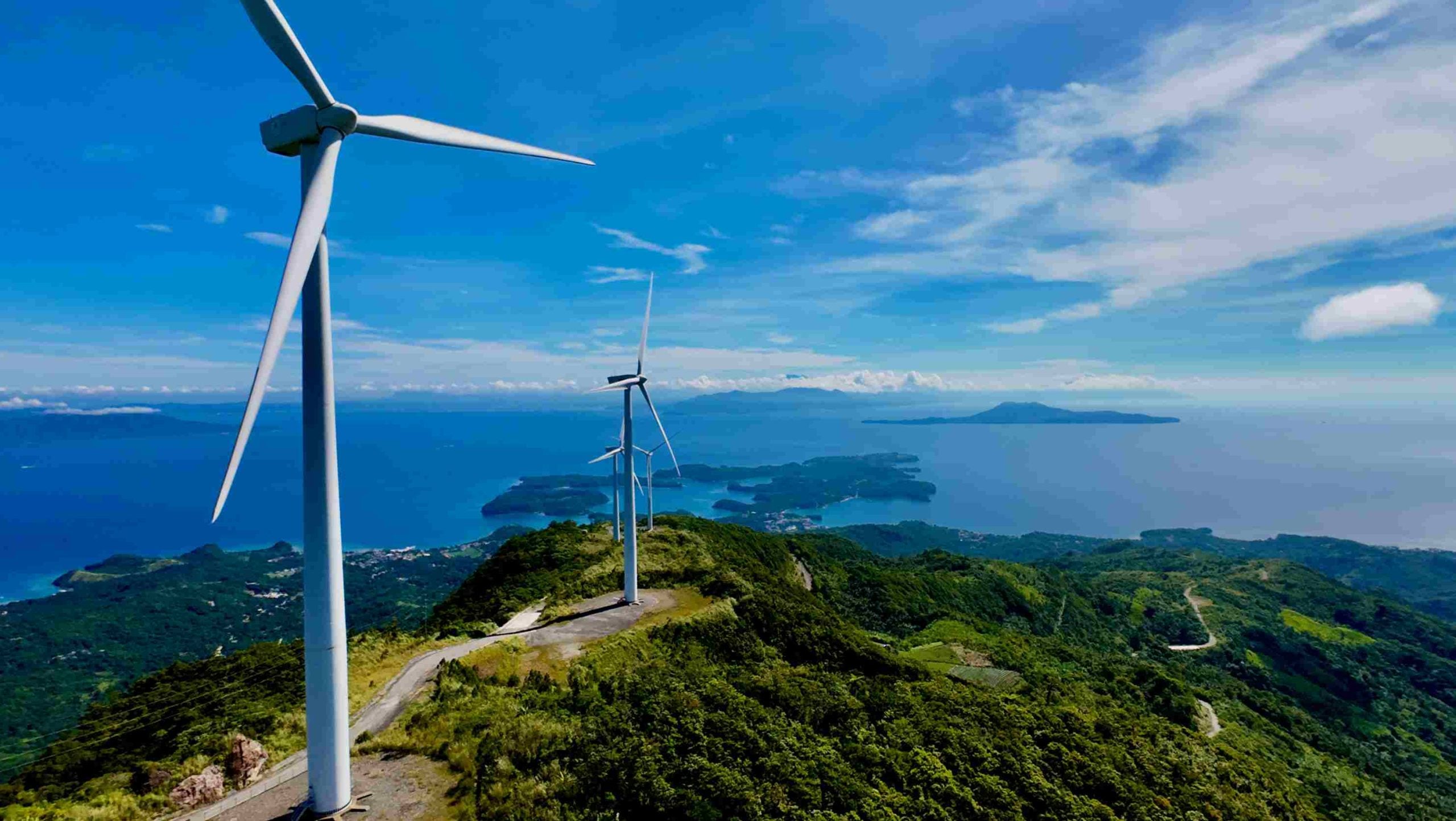
Aerial view of wind turbines positioned along a mountain ridge overlooking the coast and sea in the Philippines.
Credit: Diman Diver/ Getty Images Plus
Related Content

Analysis
A quarter of EU power came from solar for the first time in June
14 July 2026
Analysis
UK's largest emitter Drax reports record emissions in 2025
09 July 2026

Analysis
Energy Institute Statistical Review of World Energy
30 June 2026
Analysis
The solarisation of Pakistan’s energy economy
25 June 2026