Shaping a resilient power system in ASEAN | Ember

Shaping a resilient power system in ASEAN

Anchoring policies around renewables, storage and grids can be a game-changer in scaling flexibility and resiliency.

23 Jul 2026
25 Minutes Read
Download PDF

Highlights

64%
Share of ASEAN’s installed power capacity still coming from fossil fuels, leaving centralised systems exposed to disruption
22%
The interconnection between Catanduanes and Luzon could meet up to 22% of the island’s electricity demand by 2030
250 MW
Coal capacity that 600 MW of solar paired with 720 MWh of battery storage could replace in earthquake-prone Central Sulawesi

Executive summary

Distributed, modular renewable networks build system-level resilience across ASEAN

ASEAN’s power systems face two distinct threats that are often, mistakenly, treated as one: chronic climate stress that gradually erodes the output of fossil fuel, hydro, and renewable assets alike, and acute disaster shocks that can destroy generation and transmission infrastructure outright. Distributed renewable networks handle both threats better than centralised fossil fuel systems.

Distributed renewable networks have a structural advantage. When something goes wrong, these networks can isolate the damage and keep running, rather than failing all at once. Case studies from Indonesia, the Philippines, and Viet Nam show what this means in practice, and the report sets out what ASEAN governments need to do to build it at scale.

ASEAN sits in one of the most disaster-prone parts of the world. Earthquakes, volcanic eruptions and tsunamis are common, and floods, storms and landslides are becoming more frequent and severe. Several major coastal cities are also sinking and facing rising seas. Yet most of the region’s electricity still comes from fossil fuels, running through systems built around a small number of large plants. When one part of the centralised system fails, the damage tends to spread, and that makes it unsuitable for a region facing rising disaster risk.

The first threat is gradual. By 2030, Southeast Asia is projected to face weather extremes as 1.5C degrees global warming to hit by the 2030s, and rising temperatures are slowly reducing how much power plants can generate, year after year. Thermal and nuclear plants are hit hardest, with capacity factors potentially falling by up to 4% under high-warming scenarios.

This doesn’t mean renewables are problem-free. Solar and wind output changes hour to hour depending on the weather. This short-term ups and downs is a separate issue from long-term climate damage, and it’s why grids need storage, interconnection, and smart infrastructure: not because renewables are vulnerable to climate change, but because their output needs to be managed and balanced in real time. Renewables hold up better against climate change, and they need better grid infrastructure to work well.

The second threat is sudden. When an earthquake, typhoon, or flood damages a power plant or transmission line, repairs typically happen one piece at a time, often leaving entire regions without power for days. Distributed renewable networks behave differently: when one part is damaged, the rest can keep running, and the damaged section can be repaired separately rather than holding up the whole system.

Building resilience at this scale means ASEAN governments need to plan for it as a system, not asset by asset. That means embedding energy planning into regional disaster frameworks like ASEAN’s Agreement on Disaster Management and Emergency Response, and investing in the interconnection, grid flexibility, and storage that let distributed renewables work together as one resilient network.

As we confront intensifying climate and system risks across Southeast Asia, strengthening power system resilience must be at the core of ASEAN’s energy transition. Ember’s report underscores that scaling investments in renewables, storage, and grid interconnection are not only pathways to decarbonization, but essential safeguards against disruption – an approach already evident in the Philippines, from Catanduanes to the Palumbanes Islands. As AMEM-SOME Chair in 2026, we call for deeper regional cooperation to build power systems that can withstand, adapt, and rapidly recover from future shocks.

Felix William B. Fuentebella, J.D.
GSC Undersecretary and Philippine Senior Official on Energy (SOE) leader

This report makes a timely and compelling case that ASEAN’s energy transition must be designed around resilience as much as decarbonisation. By showing how renewable energy integration, storage, grid interconnection, and diversified energy supply can reduce exposure to fossil fuel disruption, hydropower variability, and climate-driven shocks, the report offers practical guidance for building power systems that can withstand worsening extremes. As El Niño and broader climate risks intensify across Southeast Asia, the report provides an important roadmap for ASEAN governments to strengthen preparedness, protect energy security and accelerate a more resilient clean energy future.

Brian Eyler
Energy, Water, Sustainability Program Director, Southeast Asian Program Director, The Stimson Center

ASEAN has witnessed a sweeping account of natural disasters. Power system resilience is central to a supportive ecosystem to unlock the potential of the green economy. Expanding renewable energy and strengthening grids are not technical afterthoughts – they are essential ideas that deserve a place at the centre of policymaking and decision-making across ASEAN.

Dr Dinita Setyawati
Senior Energy Analyst, Asia, Ember

Key takeaways

01

Wind and solar across ASEAN are projected to lose less than 1% of output even under the most extreme warming scenarios by 2030, far less than fossil fuel and nuclear plants face under milder warming

Even under a high-emissions, 4-5C warming scenario, ASEAN’s wind and solar projects are projected to see only minor output losses by 2030, with wind around 0.7% (112 GWh) and solar under 0.2% (70 GWh), and annual capacity factor declines of less than 0.2 percentage points. This is far smaller than the losses thermal and nuclear plants are expected to face under far milder warming.

02

The Catanduanes case shows that interconnection planning can speed electricity recovery during disasters

The island’s electricity supply has been repeatedly disrupted by typhoons due to its isolated, diesel-dependent grid. A planned 58 MVA interconnection with Luzon, once built, is projected to supply up to 22% of the island’s demand by 2030, illustrating how infrastructure decisions made years in advance shape recovery speed during future events.

03

In Central Sulawesi, planned coal expansion sits alongside documented earthquake exposure

A 7.4-magnitude earthquake in 2018 disabled the Panau coal plant and required rehabilitation of 1,192 distribution units, yet the province’s energy plan includes 2.25 GW of additional coal capacity by 2030. Ember’s modelling indicates that 600 MW of solar paired with 720 MWh battery storage could offset 250 MW of that planned coal capacity.

Chapter 1

System-level resilience vital for ASEAN to withstand future shocks

Various energy assets are not immune to climate risks and disaster shocks. Solar, wind, gas, coal and hydro could sustain physical damage during disruption. However, distributed renewable networks can prevent cascading blackouts and are vastly faster to repair than centralised fossil fuel plants.

1.1 Why threats matter in ASEAN

ASEAN sits in several tectonic plates that are part of the “Ring of Fire” where earthquakes, volcanic eruptions and tsunamis induced by geophysical factors have frequently occurred. Climate variations have increased the frequency and the intensity of these occurrences. The Philippines, Indonesia, and the Malay Peninsula each experience an average of more than 2.5 landslide events, while Myanmar records the highest average casualty rate at 10.89 deaths per event, exceeding other countries in the region. Hydro-meteorological disasters, including droughts, landslides, floods in Southeast Asia have increased significantly, with the highest number of recorded events occurring in 2020 and 2021, compared with previous years. At the same time, several major cities have experienced relative sea level rise and, in some cases, subsidence below sea level at the rate as high as 20-28 cm/year, increasing their vulnerability to flooding.

Impacts of climate change

The increasing climate threats present a dual challenge for power system operators. Rising temperature, rainfall and heatwaves are some of the climate variables that heightened the impacts. It can add pressures and disrupt operations of coal, gas, wind and solar power plants, at the same time, increasing reliance on electricity during summer months. By 2030, between 1.2-1.4C degrees increase in warming levels are expected in Southeast Asia. Such temperature increases are expected to affect power generation capacity and stability of plants to deliver consistent electricity, affecting interannual variability.

Impacts of natural disasters

Natural disasters pose significant risks to energy technologies by disrupting both generation and transmission infrastructure.

Tropical cyclones can damage electricity distribution networks, including solar photovoltaic (PV) systems. With lead times averaging around three years, compared with about up to 10 years for coal plants, solar can be deployed more quickly. Once rebuilt, solar can supply energy to local communities and essential services while the restoration of electrical transmission is undergoing. When faced with floods, droughts or earthquakes, solar can still operate given the attachment to the support system is properly installed.

Wind farm operations may be temporarily halted due to the physical impacts of typhoons on turbines. However, once the typhoon has passed, and the infrastructure is rebuilt, sophisticated power-grid controls can be installed to adjust renewable energy penetration level.

Coal and gas can sustain damages during earthquakes, typhoons, floods and volcanic eruptions. Failure of these plants can lead to severe situations and casualties, especially where supporting fuel supply infrastructure is damaged. For example, land-route fuel distribution was affected in post-flooded Aceh, postponing the recovery of electricity service. Throughout 2011–2017, climate-induced events disrupted the operations of coal, and gas power plants in Indonesia, resulting in losses exceeding $60 million USD.

Other risks

The growth in connected devices and distributed energy resources, such as distributed generation, electric vehicles, and behind-the-meter storage, is expanding the potential cyberattack surface of electricity systems. The fundamental principles of cyber resilience should be tailored to suit the electricity system. These include adjusting to real-time operational requirements, cascading effects within and across systems and encompassing new technology mix as well as legacy assets.

For example, the 2015 attack on the Ukraine power grid was the first confirmed cyberattack specifically targeting an electricity network with system-wide impacts. Attackers gained access and manually shut down substations, causing 30 substations to go offline and leaving approximately 225,000 people without power.

As data centre operation grows in ASEAN, the countries face rising exposure to cyber risks. Potential impacts include data breaches, electricity denial, supply disruptions, operational interference, and even physical damage to equipment.

Other threats, such as the recent Gulf conflict, have exacerbated energy security concerns in ASEAN countries that depend on oil and gas imports, underscoring the need for resilience to anchor economic growth in homegrown renewable energy.


1.2 Renewables strengthen system-level resilience

All energy technologies are exposed to climate change and subjected to production anomalies. Different generation technologies face distinct vulnerabilities. Facing disruptions, distributed renewable-based systems can help the region achieve system-level resilience. Their modular networks can prevent cascading blackouts and are vastly faster to repair and redeploy than centralised fossil fuel plants.

Compared with thermal power plants, hydropower, solar, and wind are expected to experience much smaller reductions in capacity factors.

Nuclear plants that rely on cooling water temperature and availability will experience output reduction. Fossil gas Combined Cycle Power Plants (CCPP) that are most commonly used in ASEAN, are sensitive to changes in temperature. Under temperature rise, the overall efficiency and generation capacity of the plants will decrease, unless special cooling systems are installed. For example, at 2C degrees warming, the capacity factor of nuclear and thermal power plants can decrease by up to 2%. In a hotter scenario, the capacity factor can change up 4%. Coal quality will also likely deteriorate, as heavy precipitation affects coal mining operations.

Rising temperature impacts on hydropower will vary depending on geographical location. Countries in the Mekong region that experience extreme drought conditions can bring service continuity issues to hydropower. Increase in temperature may also impact the water levels of hydropower dams, reducing electricity output. Hydro is subjected to continuous decline, up to 5.9% by end of century in Mainland Southeast Asia (Cambodia, Lao PDR, Myanmar, Thailand and Viet Nam). Hydro capacity factor reduction is estimated to be <0.07% annually under extreme drought conditions. Our analysis shows the annual value loss in hydropower in the five countries is around 489 GWh, amounting to $14.7 million USD in the year 2030.

Based on extreme scenario analysis from Repath data, wind shows varied variability across selected markets, with capacity factor changes ~0.2 percentage points (pp). However, there is variation among countries, ranging from 0.05 – 0.4 pp. The overall yield variations for wind is projected to be 0.7% across projects, reaching 112 GWh in 2030.

Wind power plants are also considered a cost effective means of electricity supply to densely populated coastal areas under different climate change variations.

Under a high emission, 4-5C degrees representative concentration pathway (RCP) 8.5 scenario, solar generation exhibits greater climate resilience, with yield variations around 70 GWh in 2030, or ~0.2%. Solar capacity factor variations across projects are ~0.04 pp. Variations between countries ranging from 0.02-0.1 pp. The impact of climate change on solar projects varies spatially with higher variability observed in Malaysia and Singapore. Currently, solar photovoltaic (PV) plants are constructed to withstand severe and extreme weather conditions to ensure a safe and consistent performance.

Chapter 2

Designing resilience into ASEAN’s power systems

Power system resilience can be attributed to its ability to anticipate disruption, absorb shocks, recover rapidly and adapt during emergencies.

Taking into account projections of future climates under different emission pathways, there are escalating challenges they post for future power systems with high dependence on fossil fuels. Geopolitics and supply disruption further exacerbates the risks in securing fossil fuel supplies.

With 64% of installed capacity coming from fossil fuel, ASEAN’s power system faces resiliency challenges. Most ASEAN countries deploy national grids that are built for centralised generation. Historical review of major electricity outages shows that the centralised nature of power systems are more vulnerable to damage than distributed generators that are able to be isolated during the recovery process. Moreover, most of the ASEAN grid infrastructure is often inadequate and prone to disruptions.

Transmission and distribution losses offer a useful indicator of this vulnerability. Cambodia recorded the largest loss in 2017 at 19%. The causes of these outages were a combination of climate impacts and faults in the transmission system. Myanmar, which has been facing power shortages, recorded a 15% transmission and distribution loss in 2017. To put this figure in context, China and Australia averaged electricity loss about 4-4.5% during the same period. In 2017, South Australia implemented load shedding amid extreme temperatures, which led to high electricity demand and coincided with factors including thermal generation outages and inaccurate forecasts.

This underscores the importance of resilience as a central element for a well functioning power system. A power system is considered resilient when it includes the following elements.

2.1 Anticipate disruptions – early warning buys time

When multiple typhoons hit Thailand in June–July 2011, around 66 provinces were affected by record flooding, including the Bangkok metropolitan area. In response to the disruption, investors have focused on strengthening anticipatory capacity across industrial estates by deploying lifeline systems and AI-enabled forecasting to better anticipate impacts, at the same time optimising system dispatch operations and predictive maintenance.

Anticipation of high impact events is not only about sensing risk. It also requires operationalisation of demand flexibility during emergencies to adjust the timing or level of electricity consumption in response to system conditions, price signals, or grid needs. These resources allow system operators to manage peak stress more effectively. Hence, instead of relying solely on additional generation capacity, flexible demand can help maintain system balance during contingencies, reducing the risk of widespread outages and easing restoration efforts.

This is particularly relevant in ASEAN, where cooling demand is rising rapidly as temperatures increase and incomes grow. Peak loads often coincide with extreme heat, tightening reserve margins precisely at the time when thermal plants may be operating at reduced efficiency. Efficiency standards, smart thermostats, and load-shifting measures can moderate these peaks. Even small reductions in peak demand can significantly reduce the likelihood of cascading failures in island and geographically fragmented systems.

Electrification also enables proactive strategies to build resilience. For example, industrial electrification can provide demand response during grid stress as ASEAN’s industrial hub represents large, concentrated loads. Structured interruptible agreements (such as Philippine’s Interruptible Load Program) or time-of-use pricing can allow temporary adjustments in consumption during emergencies, lowering reliance on expensive peaking generation and reducing exposure to fuel price volatility.

2.2 Absorb shocks – balancing demand during shocks

In May 2026, a blackout in Sumatra lasting up to 17 hours, caused by severe weather, disrupted electricity supply across the region. Vendors in traditional markets, food stalls, and souvenir centres were forced to close early, while automated teller machines also stopped functioning, resulting in losses for micro, small, and medium-sized enterprises. A resident in Langkat reported power cuts lasting up to 23 hours, with households experiencing extreme heat and loss of cooling, while some food stall owners lost up to 70% of their daily income.

Distributed solar prevents cascading regional blackouts and modular assets are much faster to repair and redeploy than centralised fossil coal plants. Solar and battery can help maintain access to electricity for lighting, refrigeration, communication, and water pumping despite broader grid failures.

A resilient power system possesses buffer capacity that can maintain critical functionality while absorbing high-impact events without total collapse.

The contrast between centralised and distributed systems becomes most evident during disasters.

Solar technology has relatively minor climate change sensitivities with more robust structures and mounting, as well as advancement in tracking outputs. For each temperature rise of 1C degree , output typically decreased up to 0.5%.

Integrating storage into utility solar facilities could give the benefits of flexibility and help stabilise the electric grid. Solar plus storage can power critical infrastructure during grid outages, ensuring quicker post-event recovery.

Storage can also enable a decentralised approach towards energy supply infrastructure, as a distributed generation, when paired with solar or other renewable generation. This type of energy system is less expensive to maintain and can alleviate constraints posed by a centralised approach. The distributed generation produces electricity at a closer point of use, flexible to pair a wide range of energy resources and storage at economically competitive prices compared with conventional energy systems.

2.3 Recover rapidly – backup power fostering rapid recovery

The Philippines, no stranger to earthquakes, volcanic eruptions, and typhoons, has built backup power capacity to deliver electricity where it is needed most.The government deployment of solar-powered Mobile Energy Storage (MES) units, equipped with 9.18 kWp solar panels, a 60 kVA hybrid inverter, and 102.4 kWh of battery storage, to enable immediate off-grid power supply to command centres, hospitals, and other critical facilities during emergencies or in remote areas. These units have already demonstrated their effectiveness by providing electricity in typhoon-affected areas of Cagayan and in remote islands in Palawan.

Rapid recovery is a key dimension of resilience recognised in the ASEAN Agreement on Disaster Management and Emergency Response.

One important enabler is the use of renewable energy during the restoration process via a hybrid system and smart operation. The hybrid system may integrate wind turbines, solar PV and electrical vehicles into the grid, and use an intelligent optimisation algorithm (IOA) to manage the control, the load data and meteorological data of the system. The IOA could manage the system energy balance and fulfill the minimum total cost of the system.

Another key enabler of a resilient distribution network, innovative use of storage has been deployed in different cases to power-proof regions from disasters. For example, mobile energy storage systems, composed of mobile vehicles, battery systems and power conversion systems, can help expand electricity distribution by serving as flexible resources to optimise power dispatch.

2.4 Flexibility – the ultimate defence

In November 2025, Viet Nam, Thailand, Malaysia, Indonesia and the Philippines experienced catastrophic flooding, landslides, storm surges and high winds from monsoons and multiple typhoons. The lack of forecasting systems in those countries and limited electricity market access in rural areas represent key weaknesses. These are the areas where dramatic improvements can become cost-effective means to increase regional grid flexibility.

As the backbone of the power system, transmission grids are traditionally designed based on ad-hoc basis, rather than optimised to current and future load profiles. Capacity constraints can reduce the necessary power that should be delivered through the network. Therefore transmission and interconnection planning is vital to enhance the adaptive capacity of the power system, diversifying energy sources and rerouting electricity when one area is affected by shortfalls.

In ASEAN, long distance transmission lines and high voltage facilities are at risk of damage related to climate stressors, including wildfire, lightning, temperature rise and others.

Solutions aiming to mitigate climate risks to grid infrastructure require strong financial support that could be sourced from disaster recovery budgets. For example, developing microgrids-connected setup established with utility interconnection, to disperse electricity deployment, and maintain energy supply to critical facilities, can be financed through multiple budget strands. Interconnected mini grids can be interconnected and isolated with the main utility lines as needed, creating flexibility for system operators. Their value has been demonstrated in extreme weather events, where microgrids have enabled communities and industrial zones to self-supply electricity, reduce strain on damaged infrastructure and accelerate recovery. When integrated with smart grid technologies, they can isolate faults, prioritise critical loads and support faster system restoration, while also lowering emissions and improving overall efficiency.

ASEAN countries are actively deploying microgrids to provide electricity for underserved communities. To date, 11 microgrids have been built in the Philippines, serving about approximately 10,000 households. Indonesia also deployed microgrids in the tourism island of Nusa Penida, Bali to replace diesel generators with solar plus battery systems.

Across these four dimensions: anticipation, absorption, recovery, and adaptation, a common thread emerges: the technologies driving ASEAN’s clean energy transition are the same ones that strengthen resilience. Solar, storage, flexible demand, and smart grid infrastructure are not only lower-carbon options; they are also more robust under the conditions ASEAN is increasingly likely to face. Integrating resilience into energy planning is therefore not a separate agenda. It is the same agenda, pursued with greater urgency.

Chapter 3

Mapping impacts across selected cases

Snapshots from Indonesia, the Philippines and Central Viet Nam demonstrate grid expansion and renewables uptake will increase energy infrastructure resilience, with the additional benefit of energy access.

Case study 1: Indonesia – Solar plus battery relieve impacts after earthquake

Indonesia’s continued reliance on coal power plants exhibits vulnerability to earthquakes. Coal plants are at earthquake risks. As many as 67 coal power plants with a total capacity of 8.9 GW in operation in earthquake-prone areas in Indonesia. About 6.9 GW additional capacity of coal power plants and 41 smelter facilities are under construction, seeking permits, or planned, further increasing exposure to seismic risk. Mining sites are also exposed to seismic risks, with 104 concessions vulnerable to earthquakes.

When a 7.4-magnitude earthquake hit Central Sulawesi, Indonesia in 2018, it caused prolonged damage to Panau coal-fired power plant, with a total capacity of 30 MW across two units (2 × 15 MW).

In response to the power outage, Indonesia’s state electricity company PLN sent emergency diesel generators to affected areas. Electricity was finally restored, which took rehabilitation efforts to cover 1,192 electricity distribution units. At that time, power supply was supported by two operational power plants: the Silae Diesel Power Plant (PLTD Silae) and the Poso Hydropower Plant (PLTA Poso). In addition, the system was reinforced by the Sidera–Silae, Silae–Pasangkayu, Sidera–Talise, and Parigi transmission lines.

Despite the prolonged, costly and social opposition to rebuilding of the coal plants, the government plans to expand their deployment. Under the Regional Energy Master Plan (RUED), Central Sulawesi is expected to add 2.25 GW of coal capacity by 2030 to power households and industrial demand. Most nickel smelters, concentrated in Central, South and Southeast Sulawesi are currently powered by mostly captive coal power plants and partly on-grid electricity.

The province could benefit from developing solar and batteries as an alternative to coal. Solar farms have higher resilience compared to thermal power plants in the event of natural disasters, contributing to the adaptability and rapid recovery capacity to the power system. Solar and battery systems could also help serve critical loads for instant black start.

Our analysis shows, deploying just 10% of the solar potential and rooftop solar, alongside battery storage, could slow the growth of fossil-fuel generation and increase domestic supply of electricity. The province has an estimated 6 GWof solar potential, with capacity factors around 16%, benefitting from stable weather conditions and consistent sunlight throughout the year. Deployment of 600 MW of solar and 720 MWh battery storage can offset 250 MW of coal capacity, or 1.4 TWh of coal generation in 2030, enabling a freeze of coal asset additions to curb emissions.

Solar expansion can also power the captive operation once new interconnections are in place. The government’s projection shows electricity production will more than double from 1.7 TWh to 2.5 TWh, between 2025 and 2030, taking into account industrial, commercial and household needs. Within Sulawesi island, a transmission line infrastructure project is currently being prepared to connect northern with southern parts that can help channel clean energy to the demand centre, and provide electricity for communities currently sparse from access.

Solar plays an important role for a rapid recovery. Combined with batteries, solar can bolster resilience by affording supplementary electrical power during service disruption and facilitating rapid responses to fluctuations in energy supply and demand. Transmission lines, if equipped with smart grid technologies can enhance overall adaptability and robustness of the system.

Case study 2: The Philippines – Grid interconnections accelerate power system recovery after typhoon

The Philippines’ exposure to natural disasters raises questions on how to improve the system’s ability to respond to shocks. At the end of 2025, the Philippines was hit by earthquakes and storms that caused disruption in electricity supply. This added pressure to the market operator that saw system-average prices jump to almost 50% in October, climbing to $77/MWh USD from $52/MWh. Average supply in October was 19 MW, lower than 20 MW the prior month.

Catanduanes province in the Philippines is susceptible to tropical cyclones, which hit the island regularly, strongest include typhoon Nina in 2016 and typhoon Rolly in 2020. After the typhoon struck, the island experienced power deficiency, attributed to heavy reliance on hydropower and non-operating power plants that was impaired. Electricity generation can decline by 6–8% in the year following a typhoon.

In the province, FICELCO (First Catanduanes Electric) cooperative manages the purchase and distribution of electricity. The electricity generation is sourced from 1.84 MW hydro, 9.3 MW diesel and 0.5 MW solar-diesel hybrid. FICELCO regularly opens bidding for power supply procurement. However, with electricity demand rising by 2.6% per year, the island will need to secure additional supply to meet the forecasted 70 GWh of generation.

Strengthening interconnection offers a clear solution. The planned interconnection with Luzon, with 58 MVA capacity, will help Catanduanes gain access to more reliable and competitive generation sources, supplying as much as 22% electricity needed by 2030. The interconnectors will be essential in re-energised the system, providing black start services with the help of hydro, geothermal and solar from Luzon grid.

At the national level, the country is advancing plans to expand interconnection through coordinated power system development and transmission buildout initiatives.

These include sharing reserve margins and renewable energy resources, optimising power flows more economically, enabling more efficient dispatch, and improving overall system reliability. They also reduce exposure to localised disruptions, help stabilise prices, and enable faster recovery following extreme events, thereby strengthening the system’s ability to withstand, absorb, and adapt to future shocks.

Case study 3: Viet Nam – Grid upgrade and demand flexibility can minimise curtailment and maintain stability

In the case of Viet Nam, past curtailment reflects the need to upgrade grid flexibility, transmission interconnection and constraints in the transmission system. These constraints not only reduce efficiency, but also weaken the system’s ability to respond to shocks. Deployment of smart grid and storage would alleviate curtailment by enabling more flexible dispatch measures to improve system operation during disruption.

Ember analysis shows the total solar curtailment in 2020 was about 405 GWh, with associated cost of around $26 million USD and an average rate of 4.2%. The total recorded curtailment is equivalent to half of the average monthly solar generation of 0.8 TWh. A combination of rising solar generation, limited grid flexibility and storage infrastructure led to periods of oversupply, making curtailment necessary to maintain grid stability.

At the same time, falling hydro generation has been met with rising coal and gas outputs. In November 2020 when solar curtailment was 3%, coal output rose by about 40% from the previous month, reaching 10 TWh, while hydropower generation declined by 25%. The increased use of coal suggests potential cost savings of$175,296 USD if this generation were replaced by solar power.

Upgrading transmission infrastructure, along with smart grids and battery storage, would enable the grid to capture the full potential of solar capacity.

National data shows natural disasters accounted for 4,027 medium-voltage grid incidents in the Central region. Grid upgrade and interconnection are important to anticipate the future priority expansion of renewable energy in the Central region, including wind, solar, hydro and transmission projects.

For example, the province of Gia Lai alone will have a renewable energy capacity of about 9,657 MW by 2035. Ninh Thuan province is also playing a designated role to become one of national renewable energy centres, which has the highest number of completed solar power projects in the country when feed-in-tariff was first introduced in 2019. These locations have been the hotspots of recurring floods in the past.

The central region’s load profile in late 2020 was suppressed by storms and severe floodings, on October 28, the average load dropped to 1,655 MW, well below the annual average of 2,348 MW, as Typhoon Molave (Category 12) approached the Da Nang–Phu Yen area. In October, 5,934 emergency incidents were recorded, resulting in 82 GWh of lost output, with an average duration of 38 hours and affecting 12 million customers. Recovery efforts focused on restoring system operations and disbursing cashless electricity bill collection to support service continuity.

Further deployment of demand flexibility, such as priority-based load shedding, rescheduling of generations, and voltage regulation could ensure proactive solutions for a flexible system. After a severe weather event, load recovery strategies can be executed once the hybrid systems are in place.

The deployment of renewable energy in Central Viet Nam will increase generation diversity and can enhance local supply resilience during large-scale outages. Renewable energy combination with energy storage systems and smart grid systems can also buffer the country from fuel import volatility and price changes.

Chapter 4

Aligning energy and disaster planning can improve access, supporting just transition

To strengthen resilience across ASEAN’s power systems, energy planning must increasingly integrate climate risk to improve anticipation of disruptions.

Integrating energy consideration into ASEAN’s disaster risk management frameworks would simultaneously strengthen power system resilience and advance more equitable energy access, particularly for communities in disaster-prone regions. Achieving this requires action across four areas: anticipation, absorption, recovery and adaptation.

Anticipation: Early forecasting can improve the accuracy of energy supply and demand predictions, enabling predictive maintenance and more efficient system dispatch. It also allows system operators to develop protective strategies in advance, strengthening preparedness and enabling more effective demand flexibility during emergencies.

Absorption: Deploying distributed solar and storage at critical infrastructure can help maintain power during outages. Climate change has a minimal impact on solar generation, which can help meet vital energy requirements during service disruptions. Solar and storage can also introduce economic benefits in the form of outage costs reduction, long-term electricity savings and environmental attributes from emission reduction.

Recovery: Mandating interconnection planning that includes black start capability could enable systems to restart more quickly after failures. During long outages, distributed energy resources (DER) systems could effectively maintain critical loads for instant black start.

Adaptation: energy considerations should be explicitly embedded in the ASEAN Agreement on Disaster Management and Emergency Response (AADMER), which is not explicitly integrated into DRM frameworks. Embedding energy in the AADMER framework would require greater cross-pillar and cross-institutional coordination, to ensure energy needs are approached in tandem with disaster relief efforts and management, under various authoritative sectoral bodies in ASEAN.

The inclusion of energy management within disaster management programmes would offer several benefits, including:

  • Stronger cross-sectoral governance. Institutionalise a cross-sectoral governance approach at both national and subnational levels to better harmonise coordination. This includes systematically assessing renewable energy potential alongside climate risks to identify the most suitable technologies for specific regions, while ensuring that energy infrastructure is designed to withstand hazard exposure.
  • Deeper regional cooperation. Partnerships and innovative mechanisms for regional cooperation can be strengthened. Expanding clean power sharing, multilateral electricity trade, and collaborative investment frameworks can strengthen planning for resilience. Such efforts should be grounded in local knowledge and inclusive stakeholder engagement, enabling coordination among emergency responders, power system operators, planners, and affected communities.
  • A larger and more diversified pool of funding. DRM activities in ASEAN remain underfunded, relying heavily on contributions from member states and development partners. Integrating energy into DRM frameworks can attract greater private sector participation, supporting not only clean energy deployment but also disaster preparedness and emergency response capacity.

Essentially, gearing ASEAN towards realising a just and inclusive energy system, including more equitable infrastructure in disaster-prone regions, as well as improved system reliability and energy access.

Supporting materials

Methodology

Power production factors

We use Repath data to estimate changes in solar and wind power production factors, across selected projects in ASEAN. Capacity factors are assumed at 20% for solar and 30% for wind, and the corresponding percentage changes are applied to calculate projected generation levels in 2030. The calculation includes 20.8 GW of solar projects and 5.8 GW of wind projects.

Hydropower losses are calculated based on IEA assumptions of a decline in hydropower capacity factors, averaging 0.07% year-on-year across five countries. The resulting reduction in generation (MWh) is then estimated and multiplied by the levelised cost of electricity (LCOE) with assumption to inflation rate and capital costs in 2030, to calculate the total value loss.

Indonesia’s Central Sulawesi

Solar deployment in Central Sulawesi is modelled conservatively at 10% of the province’s estimated 6 GW technical solar potential, yielding an assumed installed capacity of 600 MW. A capacity factor of 16% is applied to estimate annual electricity generation. The battery analysis uses Excel modelling tool, extracting the solar profiles from Renewables.ninja. The battery duration is assumed to be 4 hours with a round-trip efficiency of 90%.

Projected solar output is then assessed against planned coal capacity additions as outlined in the Provincial Energy Development Plan, with the objective of estimating the extent to which solar generation could offset coal-based electricity supply.

Climate-related impacts on solar generation are incorporated using Repath climate projection data. The results indicate that climate impacts reduce annual solar output by less than 0.1 GWh, suggesting minimal climate-related generation losses under the modelled scenario.

The Philippines’ Catanduanes and Palumbanes

Projected electricity demand for 2030 is estimated using a compound annual growth rate (CAGR) of 2.6%, applied to the 2020 baseline electricity output (MWh) reported in the official power supply plans for Catanduanes and Palumbanes Islands, Philippines. The projection assumes steady demand growth over the period 2020–2030 without structural demand shocks.

The potential volume of electricity transmitted through interconnection is calculated under a set of technical constraints. First, projected maximum power consumption in 2030 is used as the upper demand bound. Second, transmission capacity is derived from a 58 MVA interconnection rating, applying a power factor assumption of 0.85 to convert apparent power (MVA) into real power (MW). Finally, the analysis assumes that the interconnection infrastructure is fully operational and available for dispatch during the assessment year.

Viet Nam

Solar curtailment data in 2020 was retrieved from vRE Curtailment Summary and Recommendations. The levelised cost for solar in 2020 was assumed to be $66/MWh.

Acknowledgement

Contributors

Ember: Aditya Lolla, Lam Pham, Matt Ewen, Giang Vu, Reynaldo Dizon, Jivan Zhen Thiru, Shiyao Zhang, Tito Das, Ardhi Arsala Rahmani, Raul Miranda, Duttatreya Das, Muyi Yang, Richard Black.

We thank Repath and The United Nations Economic and Social Commission for Asia and the Pacific (UNESCAP) for generously providing their datasets and reviewing the report.

Cover image

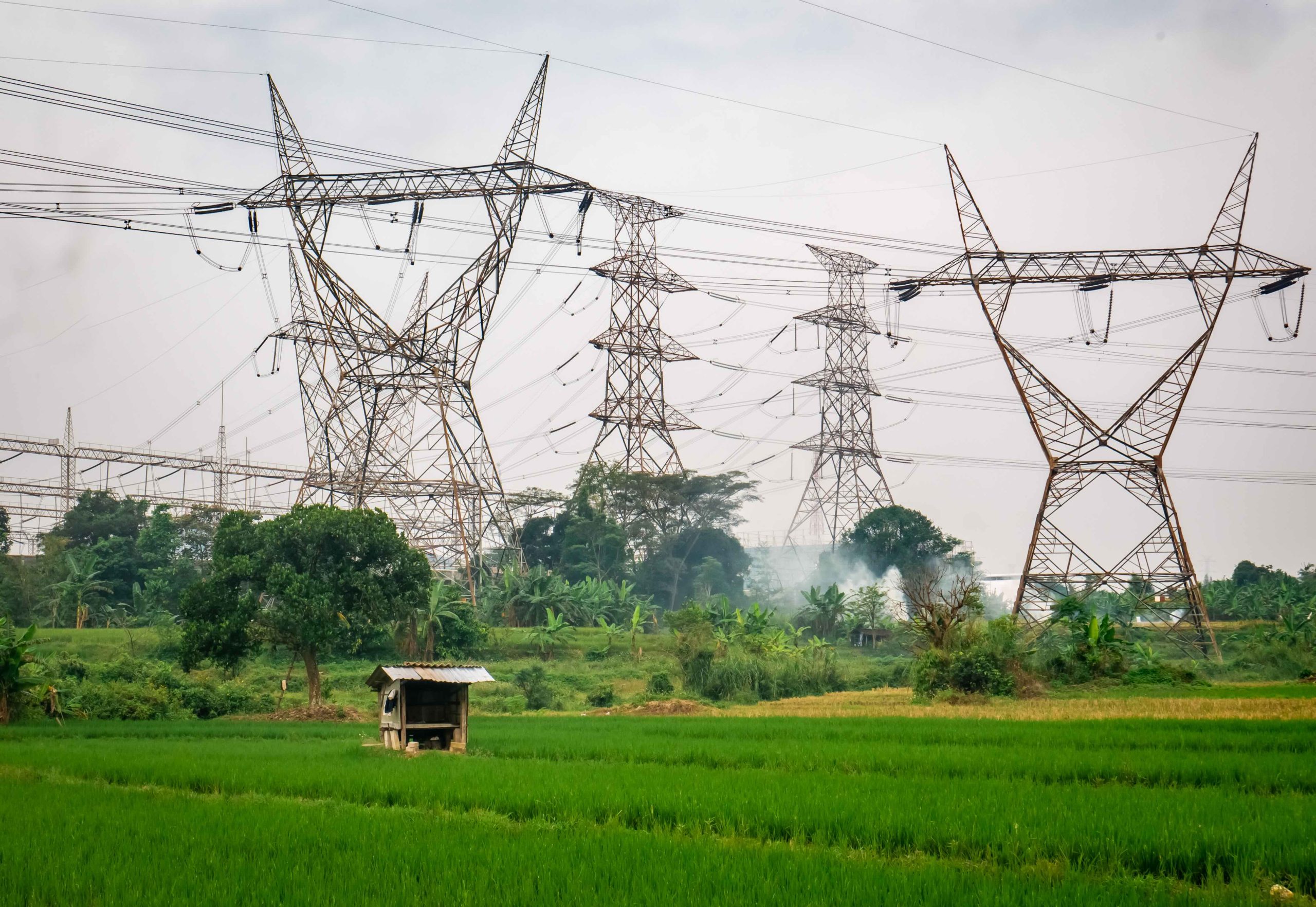
High-voltage electricity pylons carry power cables across a rural landscape featuring green rice fields, trees, and a small wooden shelter in Indonesia.

Credit: Rio Prastyo / Getty Images Plus

Share