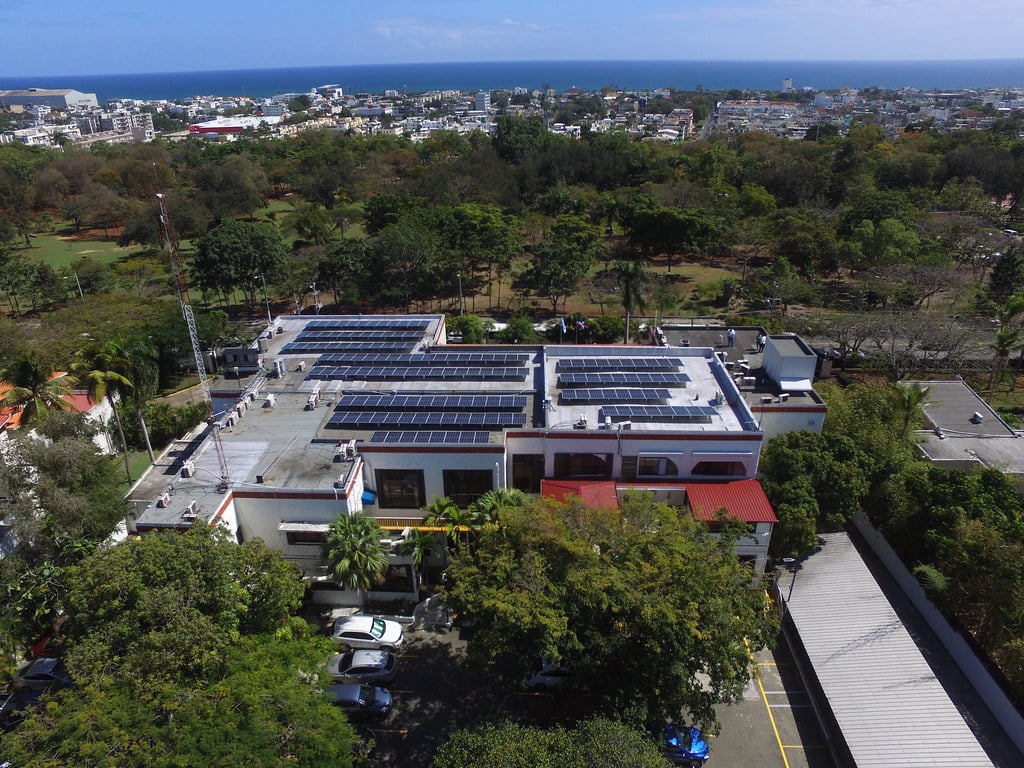
Plugging storage into India's rooftop solar revolution | Ember

Plugging storage into India’s rooftop solar revolution

Rooftop solar is now growing rapidly in India, and in the process, it is lowering daytime demand and increasing daytime solar exports. Adding battery storage alongside rooftop solar can turn these phenomena into a source of distributed flexibility.

22 Oct 2026
17 Minutes Read
Download PDF

Summary

A battery subsidy delivered through the existing PM Surya Ghar: Muft Bijli Yojana scheme can turn India’s residential rooftop solar boom into a distributed flexibility resource for the grid. By offering a subsidy on battery capital expenditure to even half of current scheme’s target for approximately INR 280 billion in the next tranche, India could build 15-25 gigawatt-hours (GWh) of storage capacity across households, in what could be a win-win for both consumers and the electricity grid.

Rooftop solar is growing rapidly in India, with households increasingly driving this expansion. Its impact on the grid depends in part on who installs it. Commercial and industrial (C&I) consumers typically size rooftop solar systems to align with their electricity demand, allowing them to consume most of their solar generation on-site. Households, by contrast, tend to consume less electricity during the day and more in the evening. As a result, they export a larger share of their solar generation to the grid during the day and draw electricity back after sunset.

These behind-the-meter exports are decentralised and difficult to forecast or control yet can aggregate into significant volumes at the system level. Battery storage alongside rooftop solar offers a way to manage these exports by shifting surplus generation from solar hours to periods of higher demand. However, the current net metering framework with unrestricted banking and time-blind withdrawal of solar generation reduces the financial incentive for households to add storage. The mechanism treats a unit exported during solar hours as equal to a unit drawn in the evening, though representative market prices can differ six-fold between the two. Net metering regime also affects electricity distribution companies (DISCOMs) as households are billed only on their net consumption, the units removed from their bills are the most expensive ones at the top of the tariff slabs, so DISCOM revenue falls by more than an estimate based on the average tariff would suggest. Overall, even though the system-level value of reducing daytime exports can be significant, the current net metering mechanism does not facilitate the same. This creates a case for incentivising the batteries.

As rooftop solar penetration grows, metering and settlement mechanisms will also need to evolve. Plugging batteries unlock a phased policy evolution, which better aligns consumer economics with system needs and will create a more sustainable path for India’s rooftop solar boom.

India’s rooftop solar boom is an opportunity to get ahead of the grid challenge, rather than wait for it to arrive. With more than 5 million households already adopting rooftop solar under PM Surya Ghar, we should be building storage alongside that capacity, not years later. The experience of markets like Australia and the US shows that as rooftop solar scales, its value increasingly depends on when its electricity is used, not just how much it generates. India can learn that lesson early, making batteries a win for consumers and the grid.

Key takeaways

01

Rooftop solar accounts for 19% of India’s total installed solar capacity as of July 2026, concentrated in ten Indian states.

India’s total installed solar capacity reached 164.6 GW in July 2026, of which 30.7 GW comes from rooftop solar capacity, i.e., one in every 5 GW of solar capacity is on rooftops. This rooftop solar share tripled since 2019 from 6% to 19%, demonstrating a significant growth led by Gujarat, Maharashtra, Uttar Pradesh, Rajasthan, Kerala, Tamil Nadu, Haryana, Madhya Pradesh, Karnataka and Andhra Pradesh.

02

Residential consumers now account for half of India’s rooftop solar capacity

Residential rooftop solar capacity under PM Surya Ghar: Muft Bijli Yojana stood at 14.9 GW across 5 million households as of July 2026, with ~88% of it concentrated in ten states.

03

Daytime solar exports from residential rooftops can come down by 85-90% by incentivising battery storage integration

Adding a 5-kWh battery to a 3-kW rooftop system can drastically cut daytime solar exports. However, under the current metering mechanism, it stretches the household’s payback period from around 3.3 years for solar alone to over 9 years, building a case for financial incentive to the households. For example, a 50% subsidy for battery storage under the PM Surya Ghar: Muft Bijli Yojana can cut the payback period down to under 7 years.

India’s rooftop solar story is unfolding at scale but remains diverse across states

Over the past decade, utility-scale projects drove India’s solar power growth. As recently as the fiscal year (FY) 2019, rooftop solar accounted for only around 6% of installed solar capacity despite its high potential. But since 2024, after the launch of the PM Surya Ghar: Muft Bijli Yojana, rooftop solar has surged especially in the residential consumer category. By July 2026, rooftop solar capacity grew three-fold to 30.7 GW, taking its share in India’s total solar capacity of 165 GW to nearly 19%. The share makes it increasingly relevant to the operation and planning of the power system.

Policies had been trying to encourage rooftop solar adoption for some time. In 2014, the roll-out of the Grid Connected Rooftop and Small Solar Power Plants Programme (RTS programme) and the National Solar Mission’s set target of 40 GW by 2022 are examples of the policy push. However, for many years, capacity addition remained subdued, constrained by a lack of consumer awareness, high upfront costs and limited access to affordable financing. Rooftop solar was also not sufficiently cost-effective, particularly for residential consumers, to be an attractive investment without targeted subsidies.

For commercial & industrial (C&I) consumers, however, rooftop solar has been a low-hanging fruit, especially for C&I consumers with access to finance, available rooftop space, and a commitment to decarbonisation.

Installation in the residential category only picked up significantly and widely after the announcement of PM Surya Ghar: Muft Bijli Yojana in 2024. The scheme aims to install 10 million rooftop solar systems and provides residential consumers a capital subsidy of INR 30,000 per kW for the first 2 kW, and INR 18,000 per kW for additional capacity up to 3 kW, subject to a ceiling of INR 78,000 per system. The amendment to the Electricity (Rights of Consumers) Rules also exempted systems up to 10 kW from technical feasibility studies, placed the cost of any distribution system strengthening for systems up to 5 kW on the distribution company. It also halved the commissioning timeline to fifteen days.

Rooftop solar is growing unevenly in states, and its grid impact depends on both scale and prosumer mix

India’s 30.7 GW of rooftop solar capacity as of July 2026 is highly concentrated, with more than 85% installed across just ten states. Gujarat and Maharashtra alone account for close to 45% of the national total, with installed capacity of 7,518 MW and 5,975.8 MW, respectively. The next tier of states, Uttar Pradesh, Rajasthan, Kerala, Tamil Nadu, Haryana, Madhya Pradesh, Karnataka, and Andhra Pradesh, each host between 900 MW and 2,400 MW, while the remaining states and union territories together add up to just over 4,291 MW.

This concentration persists largely because of a variation in retail supply tariffs across states, state-level rooftop solar policies, and overall ecosystem and prosumers’ spending capacity. States use a mix of interventions such as capital subsidies, generation-based incentives and building mandates to drive rooftop solar adoption.

As a result of uneven expansion of rooftop solar across states, system planners now need to factor in a new element to keep the electricity grid stable. The rate of rooftop solar capacity addition and scale of rooftop solar capacity relative to a state’s own peak demand, which may or may not coincide with solar hours, needs monitoring.

As of July 2026, Kerala, Gujarat and Maharashtra had rooftop solar capacity equivalent to 35%, 26% and 18% of their respective peak demand recorded between April and July 2026, compared with 11% nationally. As this share rises, the gap between daytime solar generation and evening demand can widen, increasing the need for grid flexibility and making these states more likely to face balancing challenges ahead of others.

Residential systems export surplus by day and draw from the grid in the evening, while C&I systems consume most of their solar on site

Narrowing the lens to the residential segment under PM Surya Ghar: Muft Bijli Yojana shows that rooftop solar capacity stood at 14.9 GW as of July 2026, covering 5 million households and accounting for almost half of India’s overall rooftop solar capacity. Of this, ~88% is in just ten states.

Gujarat and Maharashtra lead in total rooftop solar installations. But, when it comes to the residential segment, the leaderboard changes. Assam and Odisha are among the top ten states for residential rooftop installations but are not in the top ten list when C&I installations are also included. Similarly, while Tamil Nadu and Karnataka are prominent states when it comes to total rooftop solar installations, they are outside the top ten in residential installations, suggesting C&I installations weigh heavily in these states. Notably, in Andhra Pradesh, Uttar Pradesh and Kerala, rooftop solar capacity additions have picked up in recent years, and more than 50% of total rooftop capacity is coming from residential installations.

The consumer category mix matters because residential and C&I consumers have different electricity consumption patterns relative to solar generation. C&I consumers typically have greater overlap between electricity consumption and solar generation, and their rooftop systems are strategically sized to maximise on-site consumption. This reduces surplus generation exported to the grid and, consequently, the temporal mismatch between solar generation and electricity consumption. Household electricity demand, by contrast, is typically lower during solar hours and higher during non-solar hours, particularly in the evening. As a result, the grid effectively acts as a “nearly free virtual battery” for residential prosumers, absorbing surplus daytime generation and supplying electricity when household demand rises.

As residential rooftop solar scales, therefore, states with a higher share of residential prosumers such as Kerala, Gujarat and Maharashtra could see greater volumes of daytime exports followed by evening imports, increasing the importance of grid flexibility.

As rooftop solar penetration rises in states, both the scale and prosumer mix will matter for the grid. States where rooftop solar accounts for a larger share of peak demand are already encountering grid integration challenges. At the same time, the consumer categories driving rooftop growth will shape how it interacts with the grid, including how much generation is consumed on-site and how much is exported.

The rapid expansion of residential rooftop solar under PM Surya Ghar: Muft Bijli Yojana, alongside existing net metering arrangements, makes this interaction increasingly important to examine. The question for states is therefore shifting from simply how much rooftop solar is being added to how that growing capacity is affecting the grid.

Growing rooftop solar is reshaping daytime demand and exposing the limitations of net metering

Rooftop solar is beginning to change the demand pattern the grid sees, as well as its magnitude. During solar hours, consumers meet part of their electricity demand behind the meter, reducing the net load seen by distribution companies (DISCOMs) even though their underlying consumption remains unchanged.

The scale of this change is already becoming material in states with significant rooftop solar deployment. Kerala illustrates this clearly. Residential installations cover more than 50% of the state’s total rooftop solar capacity, reaching 2.3 GW of total installed capacity in July 2026, equivalent to 35% of the state’s highest recorded evening peak demand of 6.48 GW between April-July 2026. Given that this peak occurs outside solar generation hours, the growing rooftop solar capacity significantly reduces daytime net demand while providing no support in serving the evening peak.

The implications also depend on the metering arrangement used to settle rooftop solar generation. India follows several metering and settlement arrangements, including gross metering, net metering, virtual and group net metering, and net billing, with their adoption primarily under the purview of state regulations. Among these, net metering remains widely popular and under the central framework, it is permitted up to 500 kW or the sanctioned load, whichever is lower, subject to state-level regulations.

The following section focuses on residential rooftop solar installations, where the implications of existing net metering arrangements become particularly relevant as rooftop solar continues to scale in this category.


Two emerging limitations of net metering evident in the residential rooftop solar segment

The implications of net metering are layered, including the time of electricity exchanged with the grid, the cost of electricity at different times of the day, and the structure of retail tariffs. The following section discusses two aspects that are particularly relevant for the residential rooftop solar segment.


Net metering has a flat, time-blind crediting along with an uncapped banking facility for residential prosumers

Net metering does not distinguish between the time at which solar generation is exported and the time at which it is drawn back from the grid i.e. one-to-one netting. A unit of solar electricity injected around noon offsets against a unit consumed during the evening, even though the cost and value of serving those two units can differ substantially. Market clearing prices in the day-ahead market (DAM) illustrate this mismatch where prices tend to fall to touch the floor price (~1.56 per unit in July 2026) during hours of high solar generation, while they rise sharply (approximately six-fold) during evening hours reaching INR 10 per unit cap, when consumers return to the grid. Consequently, a DISCOM may credit daytime exports, when electricity is comparatively cheaper, against evening consumption that may need to be procured at a materially higher market price.


Net metering removes households’ most expensive units from the bill

Under net metering, households are billed only on their net imports from the grid, that is the units they draw minus the units their rooftop system exports, while their actual consumption remains the same. Because residential tariffs rise with consumption, the units first removed from the bill are the most expensive ones, at the top of the tariff slab.

The effect goes further in states where households below a threshold qualify for free or subsidised units, such as Delhi, Punjab and Karnataka. There, net metering can move a household into a lower slab or a subsidy scheme without any reduction in actual consumption.

The net metering regime was well suited to the early phase of rooftop solar, when its purpose was to make systems attractive to households. As adoption grows, the current regime becomes increasingly hard to sustain.

In Maharashtra, for example, a household consuming 450 units a month will have to pay the applicable energy and wheeling charges of INR 16.64 per unit for the last 150 units. If the household installs a 3 kW rooftop solar system that generates approximately 350 units and these units are netted against its overall consumption, billed grid consumption falls to around 100 units. The consumer therefore pays the rate for 1–100 unit slab, where the applicable energy and wheeling charge is INR 5.56 per kWh. As a result, the discom loses its highest-priced sales to that household: net metering offsets the 350 most expensive units the household would otherwise have been billed for at a higher tariff.

Overall, net metering benefits higher-consumption households the most, while the resulting revenue loss to DISCOMs is partly borne by consumers without rooftop solar, many of whom are lower-income households unable to install it. A time-bound battery incentive, offered alongside reforms to how rooftop exports are settled, could ease the transition for existing prosumers while reducing this recurring cost for other consumers.

Integrating batteries with rooftop solar to enable policy evolution while sustaining growth

The two limitations of the net metering mechanism explored earlier require different responses. The temporal mismatch between rooftop generation and consumption is a question of how electricity is metered, settled, and ultimately shifted across time, while tariff-slab impact is fundamentally a tariff-design issue.

For the latter, the existing tariff structure may not adequately account for the distinct consumption profile and grid interaction of the net metering consumers, requiring an alteration of tariff slabs and the recovery of infrastructure-related costs. The Central Electricity Authority (CEA), in its recent recommendations on tariff redesign, has proposed creating a separate tariff category for net metering consumers, with differentiated fixed, variable and time-of-day (ToD) charges to recognise their distinct pattern of electricity injection and drawal from the grid. Such a framework could help address the tariff-slab shift highlighted in the previous section by ensuring that the tariff applicable to net metering consumers is not determined solely by their after-netting consumption. This would allow tariff design to address the revenue implications of rooftop solar.

The following section explores ways to manage the temporal mismatch between rooftop generation and consumption.

One clear solution is to deploy battery energy storage at the distribution system level and/or behind the meter. These batteries can absorb excess solar generation during the day and shift it to periods of higher evening demand, thereby reducing reliance on grid banking while also helping address the operational challenges faced by DISCOMs.

States such as Kerala and Maharashtra have already begun exploring rooftop solar–battery storage hybrid systems. Uttar Pradesh also issued a tender to install hybrid rooftop solar systems on government buildings. In early 2025, the Central Electricity Authority (CEA) also suggested that DISCOMs could mandate two hours of storage alongside rooftop solar systems.

While distribution-level storage can help DISCOMs manage the system-level impacts of rising rooftop solar penetration, this section focuses on behind-the-meter batteries, where storage can directly help residential consumers manage the mismatch between rooftop solar generation and electricity demand.

At the residential consumer level, batteries can store surplus rooftop solar for later use, increasing self-consumption and reducing reliance on grid banking. However, under the existing net metering and settlement regime, residential consumers have limited economic incentive to pair rooftop solar with battery storage, as surplus generation can continue to be exported to the grid and banked, removing the immediate financial value of storing it locally.

Internationally, the U.S. and Australia have undertaken policy reforms to support greater adoption of solar-plus-storage systems. For example, in California, metering reform was combined with targeted financial support for solar-plus-storage. The state moved away from net energy metering (NEM) 2.0, which provided retail-rate compensation for exports, to a net billing mechanism that better reflects the grid value of exports and encourages customers to store daytime solar for use during higher-value evening periods, NEM 3.0. This metering reform was complemented by targeted storage incentives, which increased adoption of solar-plus-storage systems in the residential category.


A subsidy to make battery storage viable and enable future policy and regulatory changes that unlock its value

To illustrate how batteries can help, we modelled a 3 kW rooftop solar system for a household consuming around 350 units a month. Under the current metering and settlement mechanism, the system costs INR 1,65,000, which reduces to INR 87,000 after the INR 78,000 PM Surya Ghar capital subsidy, resulting in a payback period of 3.3 years.

Adding a 5 kWh battery increases the overall capex to INR 2,27,000 while reducing daytime exports by around 85-90%, equivalent to 1,600-1,800 units annually shifted to evening hours. This arrangement creates a clear mismatch in benefits. The consumer receives no incremental financial benefit, while the grid gains a substantial operational benefit. This gap builds a case for a targeted storage incentive.

The payback period for the rooftop solar-plus-battery hybrid system increases to around 9 years. This longer payback period would make rooftop solar-plus-storage systems less attractive to households. However, with a subsidy on battery capex, for example at 50%, the payback period reduces to 6.3 years.

Building battery storage today alongside rooftop solar capacity will benefit the system in managing the increasing rooftop solar capacity and prepare the residential rooftop solar owners for likely future policy and regulatory changes, including a cap on solar export banking or, restrictions on withdrawing banked solar during peak hours. Batteries would also enable consumers to participate in demand response programmes.

Enabling introduction of a banking cap on the exported solar generation

In the Indian context, the current net-metering and settlement framework allows households to bank their entire surplus rooftop solar generation with the grid. As the framework evolves to gradually reduce permissible banking through a cap, the value of storing surplus daytime generation would increase. Battery storage installed alongside rooftop solar would enable households to adapt to such policy and regulatory changes.

For example, with a 40% cap on permissible banking and residual solar exports compensated at INR 2/kWh, a rooftop solar-plus-battery system would have a payback period of 9.4 years without a subsidy. For instance, if a 50% battery capex subsidy is provided, the payback period reduces to 6.5 years. If this subsidy is further reduced to 25%, the payback period would become around 8 years.


Enabling a restriction on withdrawing banked solar during peak hours

At present, net metering does not differentiate between peak, off-peak and normal hours for solar export and withdrawal. If the framework evolves to restrict the withdrawal of banked solar during peak hours, say between 6–10 pm, battery storage could allow consumers to meet peak-hour demand through stored solar generation rather than purchasing electricity at higher retail tariffs. For example, along with the withdrawal restriction, if a 20% surcharge is applied on the base tariff during peak hours, a rooftop solar-plus-battery hybrid system would have a payback period of 8.3 years. With a subsidy, this payback period would reduce, for example, a 50% subsidy on battery capex in this scenario would reduce the payback period to 5.7 years. Even with a 25% subsidy, the payback period reduces to around 7 years.

In conclusion, the two measures are complementary. The subsidy addresses the upfront investment barrier, while building battery infrastructure prepares the system for future policy and regulatory evolution.


Battery storage subsidy can be integrated into the existing rooftop solar incentive framework

One approach to integrate a battery storage incentive is to club it with the existing PM Surya Ghar: Muft Bijli Yojana framework, thereby allowing central support to be passed through to eligible residential consumers installing rooftop solar with battery storage. If the next tranche of PM Surya Ghar: Muft Bijli Yojana aims at subsidising hybrid systems even for half of the target of the current scheme i.e. 5 million households, it could create 15–25 gigawatt-hours (GWh) of distributed storage capacity with a financial support of around INR 280 billion.

The incentive could be structured around eligible battery capacity or a defined share of storage-system cost, with appropriate technical and performance conditions. Such an approach would ensure that the additional cost of storage required to support the evolution of net metering arrangements does not disproportionately fall on households.

At the state level, governments can follow Tamil Nadu‘s and Bihar‘s recent precedent of topping up the central subsidy, but direct that top-up specifically towards closing the battery capex gap rather than supporting rooftop solar costs alone.

Together, these measures allow residential rooftops to scale not only as a source of generation, but as a distributed flexibility resource for the power system, while creating greater scope for the evolution of metering and settlement arrangements.

Supporting materials

Methodology

The analysis uses rooftop solar installation from the Ministry of New and Renewable Energy (MNRE) – Physical Achievements portal (as of July 2026) to assess the growth and geographic distribution of rooftop solar in India. Further, capacity added under PM Surya Ghar: Muft Bijli Yojana was collected from the scheme’s portal (data last collected on 5 August 2026) to reflect upon state-level distribution of residential rooftop solar installations.

The potential volume of electricity exported from rooftop solar to the grid is estimated using a representative self-consumption assumption informed by publicly available sources and might vary from state to state.

Representative solar and non-solar time slots and a representative month from power exchange (IEX) are used to compare electricity procurement prices for DISCOMs to inform on the impact of non-differential treatment of electricity exported under the net metering mechanism across solar and non-solar hours.

The economics of a conventional 3-kW rooftop solar system are modelled against a 3-kW rooftop solar system paired with 5 kWh of battery storage, including the impact of different incentive levels on payback periods. Detailed model assumptions and calculations are provided in the accompanying Excel sheet.

Acknowledgements

The author would like to particularly thank Chandana Sasidharan and Anand RM for exploring this sub-sector and providing invaluable insights in the initial phase of this report.

The author would also like to thank Ember’s colleagues for their valuable comments and contributions – Neshwin Rodrigues for providing initial feedback and reviewing the report and Aditya Lolla for his final review; Tito Das, Shiyao Zhang and Ardhi Arsala Rahmani for communications support; Matt Ewen for providing data support and feedback; and Jivan Zhen Thiru and Reynaldo Dizon for support in data visualisation; special thanks to Sarah Brown for her initial feedback on the concept of this report.


Cover image

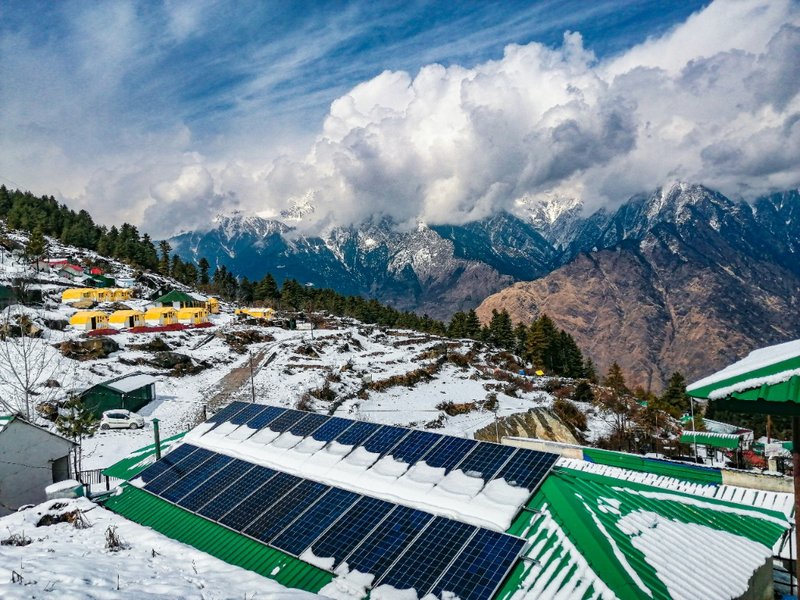
Rooftop solar panels on a hillside overlooking dome tents and mountain peaks in Auli Laga Salude, Uttarakhand, India.

Credit: Deepak Mehra / Unsplash

Share