Storage target ambition is rising, but not fast enough to reach the goal | Ember

Storage target ambition is rising, but not fast enough to reach the goal

2030 battery and energy storage targets have nearly tripled since COP29 but remain far below the 1,500 GW pledge.

15 Oct 2026
8 Minutes Read
Download PDF
Katye Altieri
Electricity Transition Analyst (Global)
Ember

Summary

Storage targets have nearly tripled since the COP29 Global Energy Storage and Grids Pledge, but still trail the pledge, and do not reflect the rapidly rising installations of batteries.

The COP29 Global Energy Storage and Grids Pledge calls for 1,500 GW of storage by 2030. Governments have nearly tripled the sum of national 2030 storage targets since COP29. But the increase in global storage targets is due almost entirely to one update and a new target. China has new battery and pumped hydro targets in its 15th Five-Year Plan, and the EU has its first bloc-wide storage target. Even with this increase, targets still fall short of the 1,500 GW global storage pledge and Bloomberg New Energy Finance (BNEF) market forecasts for 2030.

Deployment of storage capacity is outpacing existing policy targets. Storage additions hit a record 118 GW in 2025, including 108 GW of battery storage. If that pace were sustained through 2030 with no acceleration, energy storage would reach 1,020 GW, more than the sum of current national targets. Additions have been growing at almost 80% a year since 2020, which is much faster than the modest growth needed to hit the full 1,500 GW storage pledge. Storage additions are at least in part being driven by the dramatic declines in battery costs.

Countries with ambitious storage targets tend to have ambitious solar targets too. But several of the world’s biggest solar markets still have no 2030 storage target. Given the important role of storage in supporting renewables deployment, national storage targets can signal investment certainty and ensure grid stability.

Almost all of the increase in global storage ambition since COP29 comes down to two economies: China and the EU. Most other major solar markets still haven’t set a 2030 storage target at all. And that’s a missed opportunity, because storage targets give investors the certainty to build.

Key takeaways

01

Storage targets have almost tripled since COP29 but still fall short of the global energy storage and grids pledge.

The current assessment of global storage targets for 2030 is 822 GW, which is a 190% increase over the sum of targets prior to COP29. The global energy storage and grids pledge calls for 1,500 GW of storage by 2030.

02

Storage deployment is already outpacing what governments have committed to.

In the past five years battery additions alone have increased seventeenfold. Global storage additions in 2025 were 118 GW, more than what is needed to meet targets. The rate of additions can slow fivefold and still meet the global pledge.

03

Solar and storage targets are rising together, but some big solar markets still lack storage targets.

Countries with large storage targets tend to also have large solar targets. But only 12 of the top 20 solar capacity countries for 2025 have 2030 storage targets.

Global storage targets have increased, but fall short of the COP29 pledge

The Global Energy Storage and Grids Pledge, signed by 74 countries at COP29, targets a sixfold increase in global storage capacity to 1,500 GW by 2030. Energy storage smooths supply, helps grids absorb variable wind and solar generation and provides services to keep a renewables-heavy grid stable. Storage, along with grid infrastructure, is a critical enabler that supports the goal of tripling renewables capacity agreed to at COP28, ensuring capacity translates into generation.

In 2023, Ember launched the Global Renewable Target Tracker to track national ambition towards a global tripling of renewables. The tracker includes 98 countries and the EU as a bloc, covering 97% of global renewable capacity. The tracker has now been expanded to include storage targets for 32 countries and the EU.

The sum of 2030 storage targets for all included countries and the EU is currently 822 GW. This is a 190% (2.9x) increase from the sum of storage targets that was assessed at COP29 in 2024 when the global storage pledge was agreed. This marks a substantial acceleration in ambition since the storage pledge was agreed.

This still leaves a shortfall between current national targets and the 1,500 GW global storage pledge. The sum of national storage targets also falls short of 2030 forecasts for storage by BNEF, which suggests that 1,200 GW of batteries alone will be deployed by 2030. Although storage ambition has increased, governments are not setting targets aligned with market expectations, or the global storage pledge, which is aligned with the 1.5C pathway.


Battery additions are driving a boom in global storage capacity

In the past five years, battery additions alone have increased seventeenfold, which has resulted in a tripling of the world’s storage capacity in just five years. Global energy storage additions were a record 118 GW in 2025, of which 108 GW were batteries. This is a 40% increase over 2024 additions. China accounted for over half (54%) and the US a further 16%. Cumulative global installed energy storage capacity is 430 GW as of 2025.

To put this rapid rise into context, global battery storage additions went from ~10 GW to 100 GW in four years (9.5 GW in 2021 to 108 GW in 2025), while it took solar 9 years (17.9 GW in 2010 to 103 GW in 2019), and wind 15 years (10.8 GW in 2005 to 110 GW in 2020).

Given that global energy storage capacity is 430 GW as of 2025, reaching the sum of national storage targets of 822 GW would require 78 GW of storage additions each year from 2026 to 2030. This is well below the annual storage deployment of both 2024 and 2025. The current pace of deployment is well ahead of what governments have committed to, such that storage target ambition could be increased.


Battery additions need to ramp up to meet the global storage pledge, but at a fraction of recent growth rates

In the IEA NZE Update scenario, battery storage is expected to account for 1,200 GW by 2030. Battery storage is therefore expected to supply about 90% of the growth needed to hit the full 1,500 GW storage pledge.

Global storage additions need to be 214 GW per year from 2026 to 2030 to go from the current capacity of 430 GW to the global pledge of 1,500 GW. This is almost double the record-setting 2025 value of 118 GW, and more than the BNEF forecast of 158 GW for 2026 (which excludes pumped hydro).

However, storage additions, thanks primarily to battery additions, have been growing rapidly. Battery storage costs have fallen by roughly 20% per year on average over the past decade. Battery storage annual additions have been growing rapidly, with an annual growth rate of almost 80% since 2020. To meet the 1,200 GW of battery storage needed by 2030, annual additions only need to grow at about a fifth of that rate. Battery additions have roughly doubled every year since 2020, but growth has slowed to 1.4x from 2024 to 2025. BNEF is forecasting 158 GW in 2026, a 1.5x increase over 2025. Given these additions, reaching 1,200 GW of battery storage in 2030 only requires another 1.4x increase over the next four years.

China and the EU now account for 80% of the world’s national storage targets

Of the 98 countries and the EU in the Ember 2030 Global Renewable Target Tracker, 33 have a 2030 storage capacity target. Since COP29 when the pledge was agreed, eight countries and the EU have either increased the value of their 2030 storage targets or declared new targets. The biggest changes were China increasing its target by 330 GW in the 15th Five-Year Plan (from 130 GW to 460 GW), and the EU declaring a new 200 GW bloc-wide target. Currently, China and the EU anchor over 80% of the world’s national storage targets.

Below we give a brief account of national storage targets for the top eight countries grouped by the size of their 2030 target, focusing on countries with more than 20 GW targets. Five of the eight have increased their target since COP29, with China and the EU being the most significant changes, while three have not changed.

China – updated

China’s 15th Five-Year Plan for the Development of a New-Type Energy System (2026) sets explicit 2030 targets of 300 GW of new-type energy storage, which is mostly lithium-ion battery storage and 160 GW of pumped hydro — 460 GW combined, the largest and most detailed national storage target of any market covered here. China has outpaced recent targets, reaching its 2025 storage goal of 30 GW two years early. Battery storage in China is a key part of effective grid integration and gaining maximum value from rapidly expanding renewable capacity.

EU – new target

The EU’s first Tripartite Agreement on Energy Storage (June 2026) sets a bloc-wide 2030 target of 200 GW. The storage agreement aims to reduce gas demand and make better use of renewable capacity. As the first-ever such agreement for storage, it brings together a diversity of stakeholders to create investment for the energy transition and long-term economic growth.

Australia – updated

AEMO’s 2026 Integrated System Plan projects 33 GW of storage by 2030, up from 18.6 GW (2022) and 29.7 GW (2024) in earlier editions. This is a technical system-planning projection rather than a binding government target. Battery energy storage is in part to be used as dispatchable capacity in support of Australia’s 82% renewables by 2030 target.

India

India’s National Electricity Plan 2022-32 projects battery storage capacity and pumped storage for FY2026-27 and FY2031-32. These are used to derive 2030 targets of 31.8 GW of battery storage capacity and 19 GW of pumped storage. The storage targets are modest compared to the 319 GW solar target, reflecting batteries’ role in short-duration peaking rather than bulk generation.

UK – updated

The UK’s Clean Power 2030 Action Plan (December 2024) sets a battery range of 23–27 GW by 2030. The same plan separately specifies a 4–6 GW range for long-duration energy storage (LDES, e.g. pumped hydro and compressed air).

Spain

Spain’s finalised National Energy and Climate Plan (NECP), approved by royal decree, September 2024, sets a 2030 storage target of 22.5 GW, split conceptually into 12.5 GW of daily/weekly-duration storage and 10 GW of seasonal storage, without a fixed battery/pumped-hydro split.

Italy

Italy’s finalised NECP (July 2024) targets 15 GW of battery storage plus 7.5 GW of pumped hydro by 2030. Storage is targeted to help integrate renewables and is procured centrally in Italy through Terna MACSE auctions. The first successful auction in 2025 far exceeded expectations, with the next even larger auction scheduled for November 2026.

Viet Nam – updated

Viet Nam’s revised Power Development Plan 8 (April 2025) sharply raised its 2030 storage ambition up to 16.3 GW of battery and 6.0 GW of pumped hydro, up from 0.3 GW and 2.4 GW respectively in the 2023 plan — one of the largest relative increases of any market in this review. The revised PDP 8 tripled Viet Nam’s solar ambition and required utility-scale solar to include at least 10% battery capacity.

The country profiles highlight that although the increase in storage targets is significant, it is really down to two large economic regions. China and the EU alone account for almost all of the new target capacity since COP29. Three of the eight largest markets, India, Spain and Italy, have not increased their targets since the pledge was signed. Spain, Italy, and the other EU members will have to meet the EU-bloc wide target. The overall tripling of storage targets is two markets, not a large-scale shift in how governments are planning for storage.

Storage and solar targets are more powerful together

Batteries turn solar from cheap daytime electricity into dispatchable, round-the-clock power. Because solar generation peaks at midday while demand runs all day, batteries store the midday surplus and release it during evening and overnight peaks. This reduces curtailment and grid stress.

The IEA tripling aligned scenario has 1,500 GW of storage, with batteries accounting for 90% of the growth to 1,200 GW, and 6,101 GW of solar in 2030. This is a ratio of 4:1 solar to storage capacity and 5:1 solar to battery capacity. In 2025, over 6:1 ratio of solar to battery additions was achieved, for every 6 MW of solar added 1 MW of batteries were added. Recent Ember research estimates that 34% of new solar could be shifted to the evening due to new battery capacity added in 2026.

Places with large storage targets tend to also have large solar targets. More than half, 17 out of 33 with storage targets, have at least a 4:1 ratio for 2030 solar to storage targets. This highlights the close coupling of solar and storage, and suggests that countries planning for a lot of solar capacity are looking to maximize its efficiency in the future.

However, it is also true that many countries with a lot of solar capacity today still lack storage targets. Of the top 20 solar capacity countries in the world as of 2025, eight of them do not yet have 2030 storage targets.

The lack of storage targets has not stopped the deployment of cheap storage in the largest solar markets. The US has installed roughly 52 GW of utility-scale batteries, Germany has about 30 GWh of battery storage installed, and Saudi Arabia just connected the world’s largest single battery project at 7.8 GWh, on their way to a 48 GWh target by 2030. Chile added enough battery storage in 2026 to shift more than three-quarters of their new daily solar generation into non-sunny hours. Market drivers and grid needs are driving storage installation, but a storage target would still help signal to investors and ensure the right amount and type of storage is installed where and when it is needed.

Other large solar markets lag in both storage targets and installations. Poland‘s storage capacity, 1.5 GW, is 85% legacy pumped hydro rather than new batteries, Austria has a 3.2 GWh battery fleet although plans to increase storage to 8 GW are in the works, and Switzerland (1.6 GWh) and Brazil (0.7 GWh) also have small amounts of storage. These countries are not yet making the most of their installed solar, and storage targets could help push for battery installations by incentivising investors.


Storage has a critical role to play in supporting the clean energy transition

The clean energy transition relies on global goals being realised, including the COP28 global tripling of capacity and the COP29 global energy storage and grids pledge. Another key component, electrification, is central to the COP31 agenda, with Türkiye’s presidency pushing a 35-by-35 Global Electrification Pledge to lift electricity’s share of final energy demand from around 20% to 35% by 2035. The electrification pledge can only deliver its promised climate and energy-security benefits if new demand is met by renewables and backed by the grids and storage needed to ensure reliability.

Storage ambition has risen sharply since COP29, but almost entirely because of China’s new energy system plan and the EU’s Tripartite Agreement on Energy Storage. Most other countries have not significantly increased storage targets. But storage deployment is outpacing policy as the market is already installing storage faster than current national targets require. Given rapidly falling battery costs, the 2030 storage goal is achievable at a fraction of the growth rates the sector has already delivered this decade.

Storage targets can play a role in ensuring the global pledges deliver. Enough storage, in the right places and on the right timeline, backed by clearer government signals will give investors confidence to put capacity where the grid actually needs it.


Supporting materials

Acknowledgements

Contributors

Patricia Angkiriwang, James Blackwell, Leo Heberer, Frankie Mayo, Raul Miranda, Lauren Orso, Lam Pham, Ardhi Arsala Rahmani, Neshwin Rodrigues, Rini Sucahyo, Wilmar Suarez.


Cover image

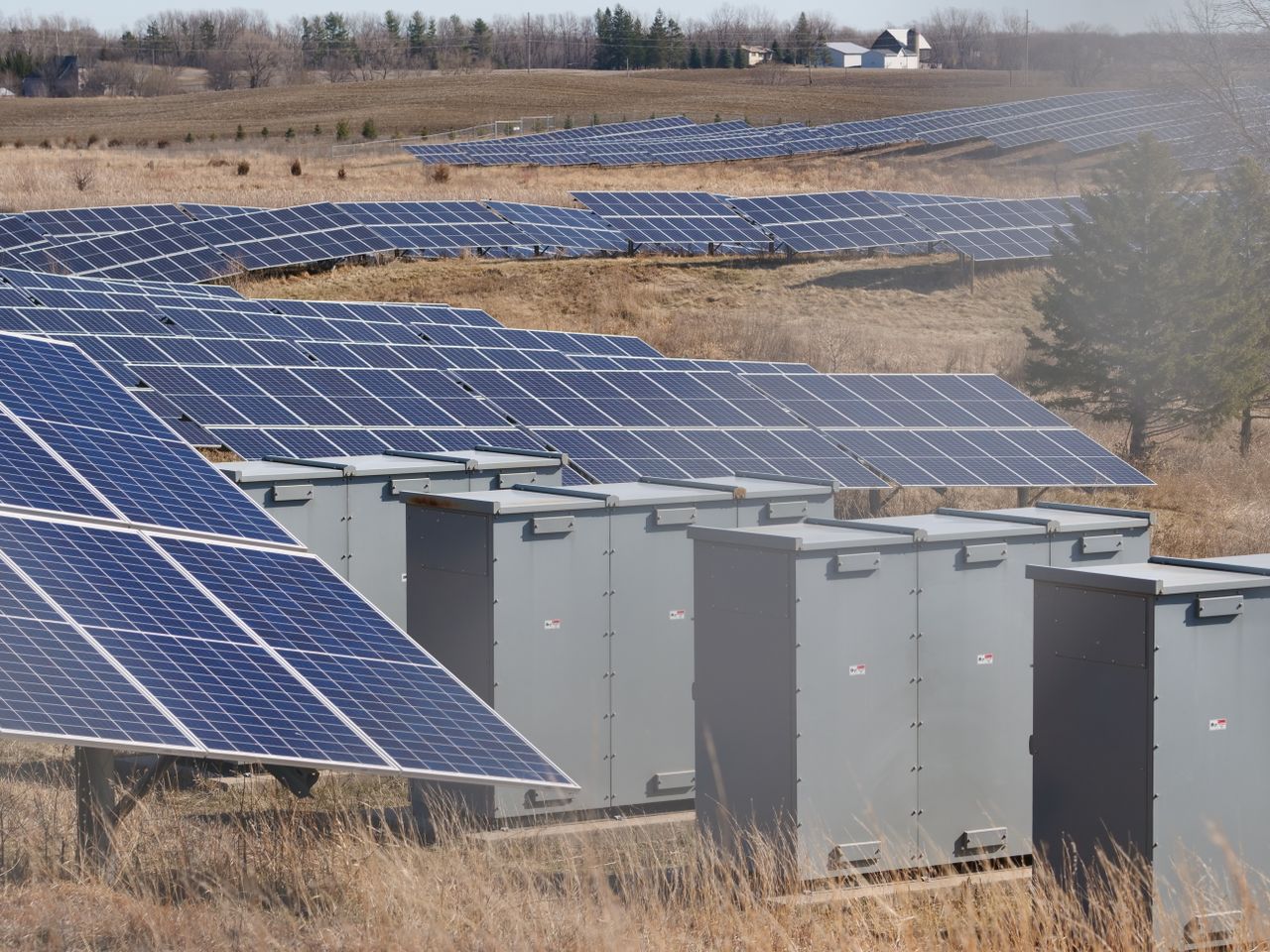
A ground-mounted solar panel installation positioned across rolling terrain in a rural area. Several gray electrical enclosures stand in the foreground among dry grass, with agricultural fields and farm structures visible in the background.

Credit: Giant Asparagus / Pexels

Share