
Chapter 1:
2024 at a glance
In this chapter
The EU power sector in 2024
Fossil power declined again in 2024, despite increases in electricity demand and EU power exports. A record year of solar growth contributed most to fossil decline, lifting solar above coal for the first time. Fossil gas power fell for the fifth year running, and was lower than wind power for a second year. Solar growth and a recovery in hydropower meant renewables accounted for nearly half (47%) of EU power generation and clean sources reached 71%, both record highs.
1.1
Solar reaches record highs while nuclear and hydro bounce back
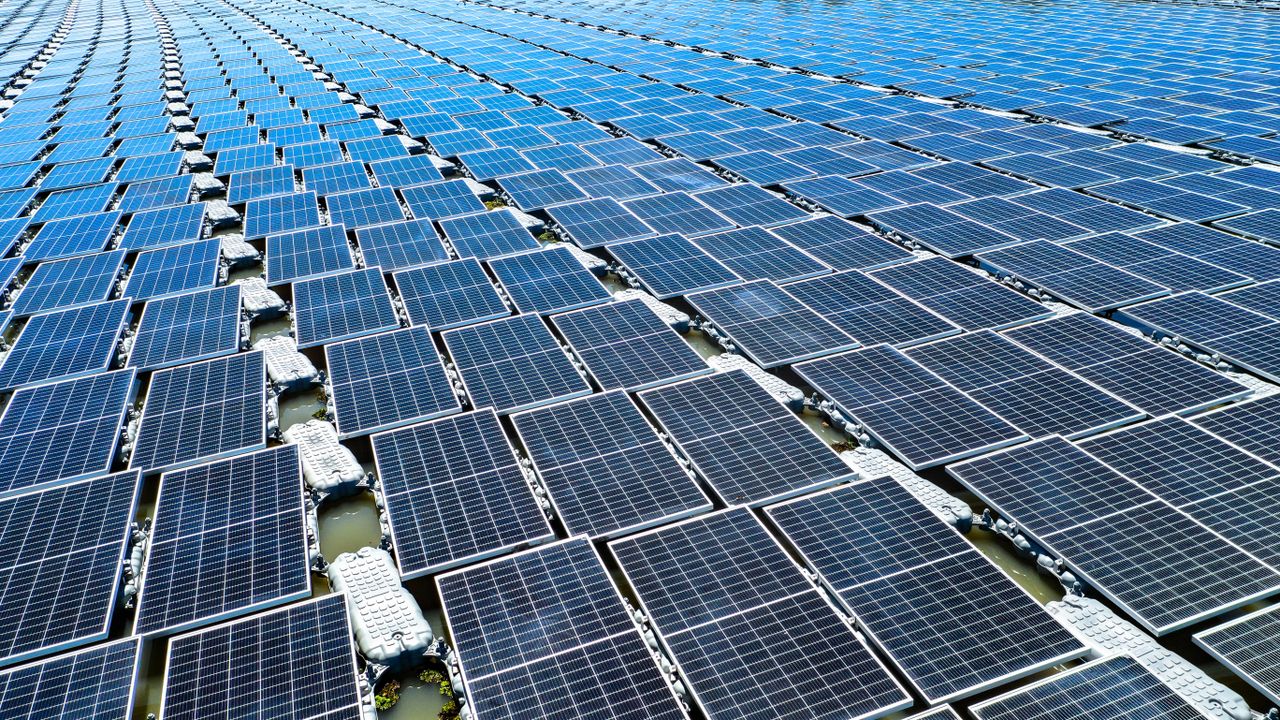
Solar was the fastest growing EU power source in 2024, with generation 22% (+54 TWh) higher than 2023. This increase was due to a record amount of new capacity additions (66 GW), and despite slightly lower solar irradiance compared to 2023. Solar was therefore the single biggest driver of reduced fossil power in 2024. It provided 11% of EU electricity (304 TWh), overtaking coal (269 TWh) for the first year ever.
Wind power generation remained similar to 2023 levels at 17% of EU power (477 TWh). Additions of wind capacity continued, but were offset by less favourable wind conditions. Even so, wind remained the second largest source of EU power behind nuclear, widening its lead over gas (established in 2023). Wind and solar together reached a record share of 29% of the EU’s power mix in 2024. This helped push renewables to nearly half (47%) of total EU electricity generation.
Hydro and nuclear generation increased by 32 TWh (+10%) and 29 TWh (+5%) respectively, reaching shares of 13% and 24%, completing rebounds from their 2022 lows and pushing clean sources to a record 71% of the EU power mix. Hydro generation benefited from above average rainfall patterns across most of Europe, despite droughts in southeast Europe. The increased nuclear output can largely be explained by fewer outages in France.
1.2
Fossil power falls to a historic low across the EU
In 2024, EU fossil generation declined by 75 TWh (-9%) compared to 2023, falling to its lowest level for more than forty years (793 TWh). While not as large as the record fossil collapse between 2022 and 2023, the fall happened despite a small rise in power demand of 31 TWh (+1%) and an increase in net exports to non-EU countries (totalling +15 TWh, with notable increases of +11 TWh to the UK and +4 TWh to Ukraine).
Coal and gas power fell by 16% and 6% respectively, compared to 2023. This caused EU power sector emissions to fall by 9% to an estimated 585 million tonnes of CO2, less than half their 2007 peak.
Coal generation fell to below 10% (9.8%) of EU power (269 TWh) for the first time in decades. It decreased in 16 of the 17 countries that still used it in 2024, and is now marginal or absent in most systems, making up less than 5% of the electricity mix in 16 Member States. The EU’s remaining coal power is highly concentrated in just two countries, Germany (39%) and Poland (34%), but even they saw coal generation fall by 17% and 8% respectively year-on-year.
Gas generation declined for the fifth consecutive year, falling to 16% of EU power (430 TWh). Its decline was also widespread, occurring in 14 of the 26 countries with gas power, including three of the top four gas burning EU countries: Italy (-2%), Spain (-19%) and the Netherlands (-5%).
1.3
Small increase in demand after two years of sharp decline
In contrast to the previous two years, which saw sharp declines in EU power demand, an increase of 31 TWh (+1%) was observed in 2024. While small, the recovery was consistent across the EU, seen in 22 out of 27 Member States, and it occurred in every quarter. Germany was a notable exception, with demand remaining almost the same as 2023, still 11% below 2019 levels. Total EU power demand remained low compared to pre-crisis levels (5% lower than 2019). It is too early to say whether this year’s rebound marks a new era of increasing power demand, which is expected due to growth in electrification, data centres, air conditioning and more.

Related Content