
Chapter 2:
Greening data centres
In this chapter
Energy efficient data centres powered by clean electricity are key for sustainable growth
Current renewable targets may not drastically lower grid emission intensity. More solar and wind deployment is essential to meet around 30% of data centre power demand before battery storage is needed.
2.1
Critical components in data centres shape their power supply strategies
Data centres are built to handle large volumes of data and traffic with minimal latency, relying on continuous electricity to support round-the-clock operations.
Latency
Latency means the time required to pass data from one point on a network to another.
As ASEAN’s data centre growth accelerates with the AI boom, power supply strategies for AI-driven data centres may differ from traditional data centres to meet their unique operational demands. AI workloads require specialised infrastructure, including high power capacity, higher-density racks and additional hardware like liquid cooling. These data centres are typically owned by hyperscalers or wholesale providers, storing enormous amounts of data and consuming significantly more electricity.
The power consumption of data centres depends on two factors: the IT load and the facility load. IT load includes the total power required for equipment such as servers, storage devices and network switches, while facility load refers to the power consumed by supporting systems like lighting, cooling and electrical equipment. Both are equally important when planning power supply strategies.
Data centre power consumption is influenced by overall system performance, which depends not only on equipment efficiency but also on software architecture, resource allocation and operational settings.
The performance of supporting equipment, especially cooling, should not be undermined. According to Deloitte, a staggering amount is required to operate computing, servers and cooling systems in AI data centres. It is estimated that cooling alone can account for 39% of a data centre’s total energy consumption, while computing and servers consume 40%.
ASEAN’s tropical climate makes cooling an even more important factor in data centre power demand. The International Energy Agency (IEA) estimates that ASEAN’s electricity demand will grow by 4% annually from 2024 to 2035, partly due to rising air conditioning use, which will account for 30% of the region’s electricity consumption by 2035. As data centres rapidly expand, they risk further intensifying this trend. This underscores the need for advanced cooling technologies and region-specific design solutions tailored to Southeast Asia’s conditions.
2.2
Leveraging ASEAN’s solar and wind power resources is key to meeting data centres’ demand for emissions-free electricity
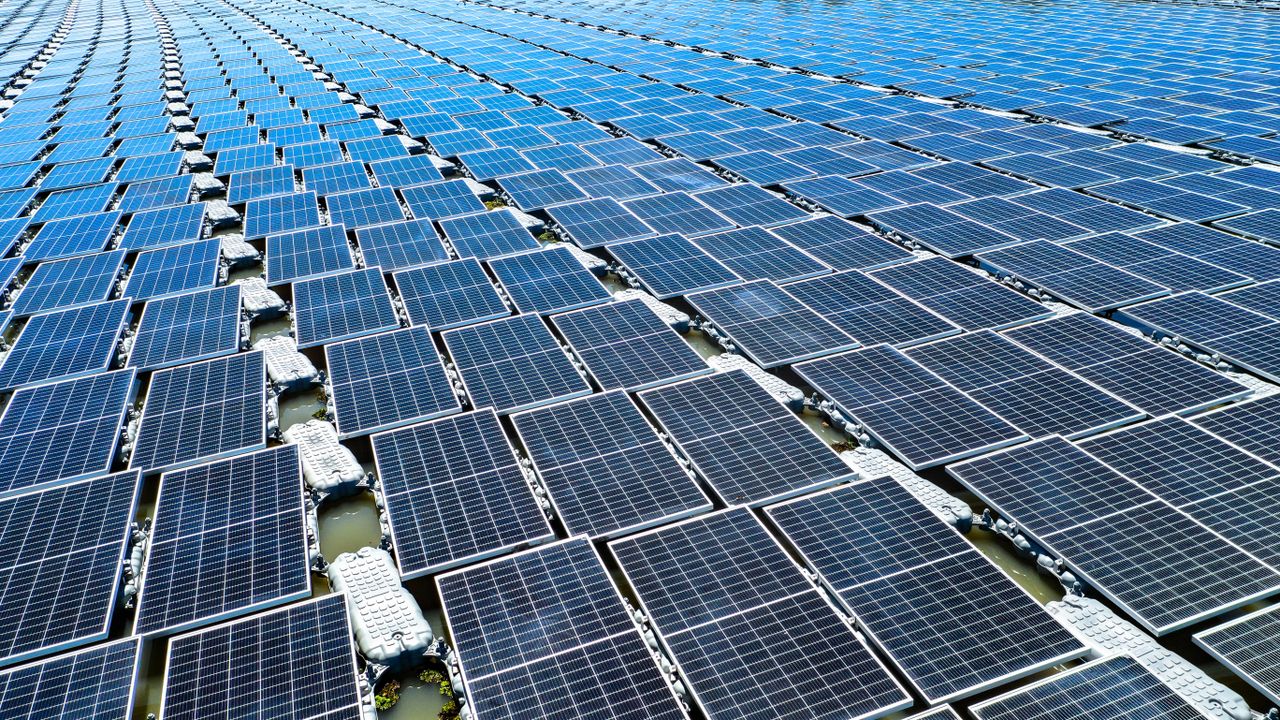
The data centre industry has multiple pathways to decarbonise its supply chain. Integrating solar and wind and adopting storage solutions like batteries are among the most immediate steps to reduce its carbon footprint. Beyond powering data centres with solar and wind, this transition can also drive broader grid decarbonisation in the regions where these facilities operate.
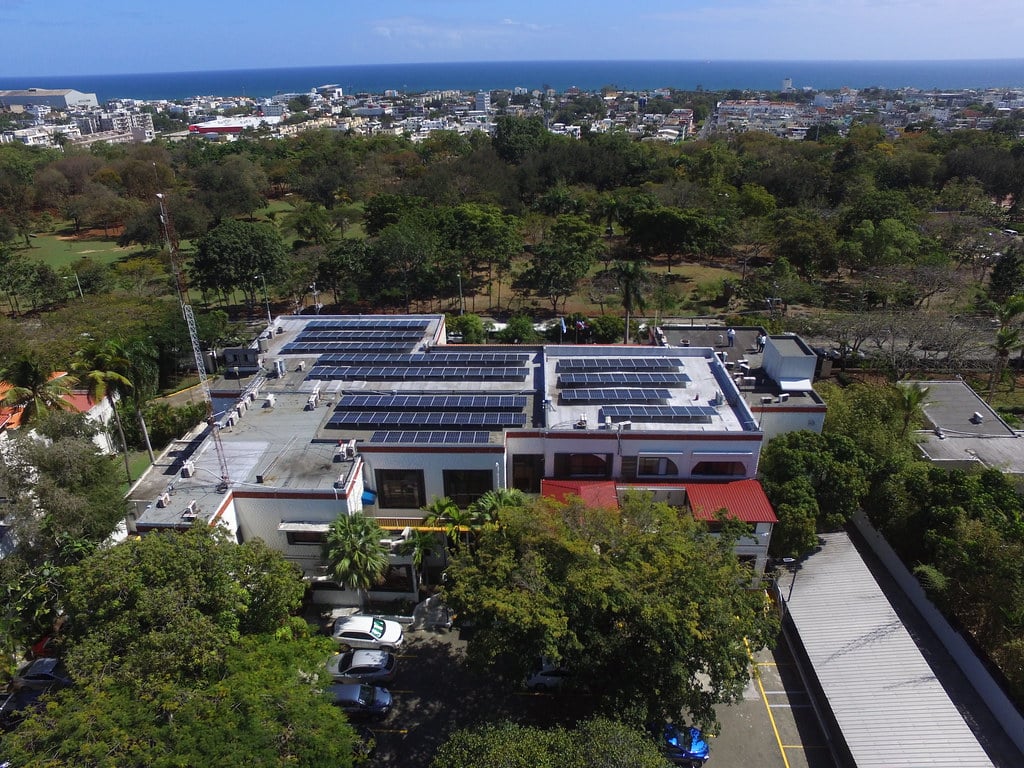
Data centres have several options to procure renewables. Following global practices in corporate renewable procurements, companies can source renewables by drawing electricity from the grid and purchasing unbundled RECs, contracting virtual or physical PPAs with power generators, or subscribing to the utilities’ green tariff mechanisms. Since data centres are mostly located in big cities, physical/on-site PPAs, installing power plants at the location where the power is consumed, are less accessible to the industry due to limited space.
Not all countries have fully interconnected national grids, making clean power sourcing for data centres dependent on the availability of solar and wind within their respective grids. Indonesia’s primary data centre hub is in Greater Jakarta, connected to the Java-Madura-Bali (JAMALI) grid, while Malaysia’s is in Johor, linked to the Peninsular Malaysia grid. Indonesia’s secondary hub, Batam City, is located in the Riau Islands province, part of Sumatra. In contrast, the Philippines, Thailand and Singapore operate fully interconnected national grids, allowing data centres to draw power from across the country.
Current renewable energy targets set by governments for grids powering data centre hotspots are not reducing grid emission factors quickly enough.
Singapore’s grid emission factors are the lowest among the countries assessed, though declining slowly by 4.9%, from 0.48 tCO2e per MWh in 2019 to 0.45 tCO2e per MWh by 2030. Indonesia’s JAMALI grid, already highly carbon-intensive, is projected to improve only slightly, dropping 9.4% from 0.78 to 0.70 tCO2e per MWh over the same period. Peninsular Malaysia and Thailand are expected to reduce their grid emission factors by 17% and 12%, respectively. These trends underscore the urgent need to fast-track the power sector transition to support data centre decarbonisation.
Solely relying on fossil-fuel-intensive grids will jeopardise data centres’ sustainability goals. Governments should expand opportunities for data centres to procure solar and wind power through supportive mechanisms, helping attract more investments from the industry.
Abundant solar and wind power resources have been identified in key grid locations supplying data centre hubs across the five countries. This highlights opportunities for data centres to ramp up solar and wind to supply clean electricity to the same grids they draw from.
Utilities can increase the uptake of solar and wind and sell electricity directly to data centres through green tariffs, unbundled RECs, or PPAs. Other mechanisms involving public and private power generators can also enable more solar and wind energy deployment, allowing them to sell electricity directly to customers distributed via the utilities’ grids.
Based on power consumption estimates and solar and wind potential, the five ASEAN data centre hubs could meet at least 30% of their electricity demand in 2030 with grid-based electricity from wind and solar, before battery storage is even needed. This indicates that high battery costs are not an immediate barrier to adopting these electricity sources for data centres.
Battery storage will still play a vital role in meeting more electricity demand over the medium to long term. The declining price of lithium-ion batteries is expected to drive broader adoption. The World Bank forecasts that 10 GW of storage capacity could be realised in ASEAN within just three years, highlighting the growing importance of storage in accelerating the energy transition.
As data centre capacity continues to grow, close collaboration between industry players and governments is essential to scale up solar and wind energy supply, reduce emissions and stay aligned with national energy transition targets. While owning power generation assets is not preferable to data centre operators, they can help bring indirect investments to solar and wind projects by being an off-taker in a corporate PPA. Accelerating the integration of solar and wind into national grids, especially in the five key country hotspots, will be crucial to shifting the data centre sector’s power demand onto a cleaner, more sustainable path.
2.3
Energy efficiency is another key lever for ASEAN’s data centre decarbonisation
Decarbonising data centre electricity is most effective through a dual approach. Along with increasing solar and wind power supply, enhancing energy efficiency within operations is equally important. Beyond sustainability reasons, energy efficiency can also influence business decisions, not only because of market pressure around environmental performance, but also due to increasing energy costs and evolving regulatory requirements. Investment in sustainable data centres should therefore focus not only on grid supply, but also on the development of energy-efficient facilities.
Energy efficiency plays a crucial role in reducing the required solar and wind power capacity by optimising operations and curbing excessive energy demand. With efficiency measures in place, the required amount of solar, wind and battery installation may be lower than previously estimated.
Like other types of infrastructure, data centres go through several stages of development before operations begin. Among these, the design phase is the most crucial in determining data centre power consumption, as it requires holistic planning to avoid steep increases in electricity use as capacity expands. It is therefore essential to set energy efficiency goals, typically measured by Power Usage Effectiveness (PUE), during the planning phase, before construction of the data centre begins.
Power Usage Effectiveness (PUE)
The PUE is a term used to describe how efficient data centre operations are, calculated by dividing the data centre’s total power consumption by the IT load. A PUE closer to 1 or below indicates higher energy efficiency.
Cooling is the crucial factor driving energy efficiency in supporting equipment
Power consumption from cooling systems is one of the key drivers of energy efficiency in data centres. This means cooling is the most crucial factor for supporting equipment to reduce energy consumption.
In the region’s tropical climate, cooling systems account for a significant share of power consumption, as they must run continuously to maintain optimal temperatures. The system can be improved by implementing air flow management and cooling technologies.
Optimising air flow management lowers electricity requirements to run the fans that circulate air for cooling. Designing the layout and ventilation for optimal airflow in a large data centre can amount to 10% of the total investment cost, yet the payback period is relatively short, only two to three years.
Well-designed air flow can allow the separation of cold and hot air flow paths. This can help raise the operating temperature set points to a higher degree, reducing the intensity of mechanical cooling equipment needed in data centre halls. Every one degree Celsius increase in set points can save around 4.3 to 9.8% of the electricity required for cooling. Singapore began a pilot trial in government data centres to increase the operating temperature from 22 degrees and below to 26 degrees Celsius and above.
Other than air flow management, several cooling technologies are being introduced in the data centre industry, currently at different stages of development. Immersion cooling is one of the most prominent mechanisms. The technology can reduce power consumption by around 40% compared to traditional cooling methods. It replaces the need for air cooling with thermally conductive dielectric fluid in which servers are submerged, absorbing the heat component. The technology is included in Singapore’s data centre roadmap and adopted by ST Telemedia, a Singapore-based data centre provider. However, some challenges in implementing this technology need to be addressed as the adoption grows.
Efficiency from software optimisation has become the new trend, shaking up the data centre market and bringing significant energy savings
Efficiency in IT equipment is mainly driven by technological improvements and software optimisation. Historically, IT equipment efficiency has improved as technology develops and computer capacity and energy performance increase, making the ICT sector grow exponentially.
In the data centre industry, innovation in hardware architecture and the consolidation of hyperscale and cloud have driven efficiency in data centres, resulting in relatively flat power demand from 2015 to 2019 despite tripled workload demand. However, since 2020, data centre power demand has started to surge due to reaching the saturation point and slower efficiency development.
However, experts believe that innovation will continue, not only for hardware (chips, transistors and more) but also for software efficiency. Given that AI is new in the market, investments can drive more innovation in making AI data centres more efficient.
It is yet unclear as to how data centre power demand is likely to rise in the coming decade. With software optimisation in AI training models and hardware utilisation, a new AI assistant, DeepSeek, proved to be more energy-efficient. The approach results in lower electricity demand and smaller power enhancement, estimated to be around 95% more efficient than traditional AI training methods. This is expected to shake the data centre market, pushing it to become more energy efficient in order to remain competitive. However, as AI becomes more affordable and accessible, increased adoption could also drive higher overall demand. This dual trend highlights the need for proactive strategies to balance efficiency gains with the potential surge in digital energy use.

Related Content