1.2 Solar plus battery could supply 90% of national electricity demand economically
In India, solar has the potential to become a dominant source of electricity. Ember’s modelling shows that solar plus batteries could supply 90% of India’s electricity demand at a levelised cost of electricity (LCOE) of INR 5.06/kWh ($56/MWh). While higher shares, including 100%, are technically possible, moving closer to 100% would be costlier. Each additional percentage point from 90% requires increasingly more solar and storage, leading to higher system costs. Moreover, with other existing and planned clean sources such as wind, hydro and nuclear, the country would not need 100% solar.
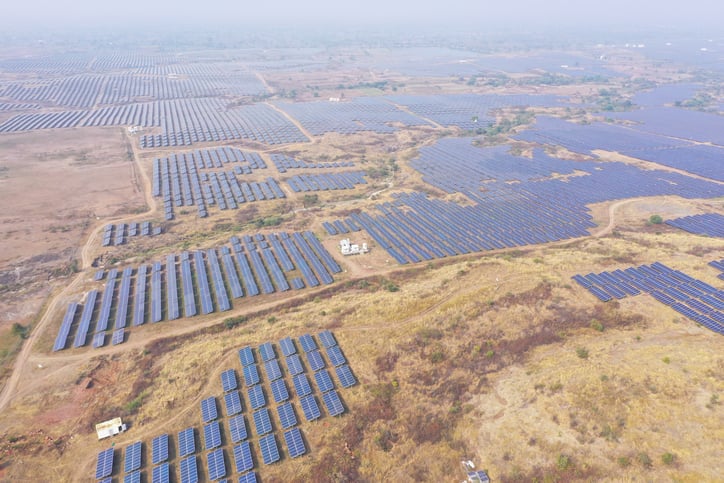
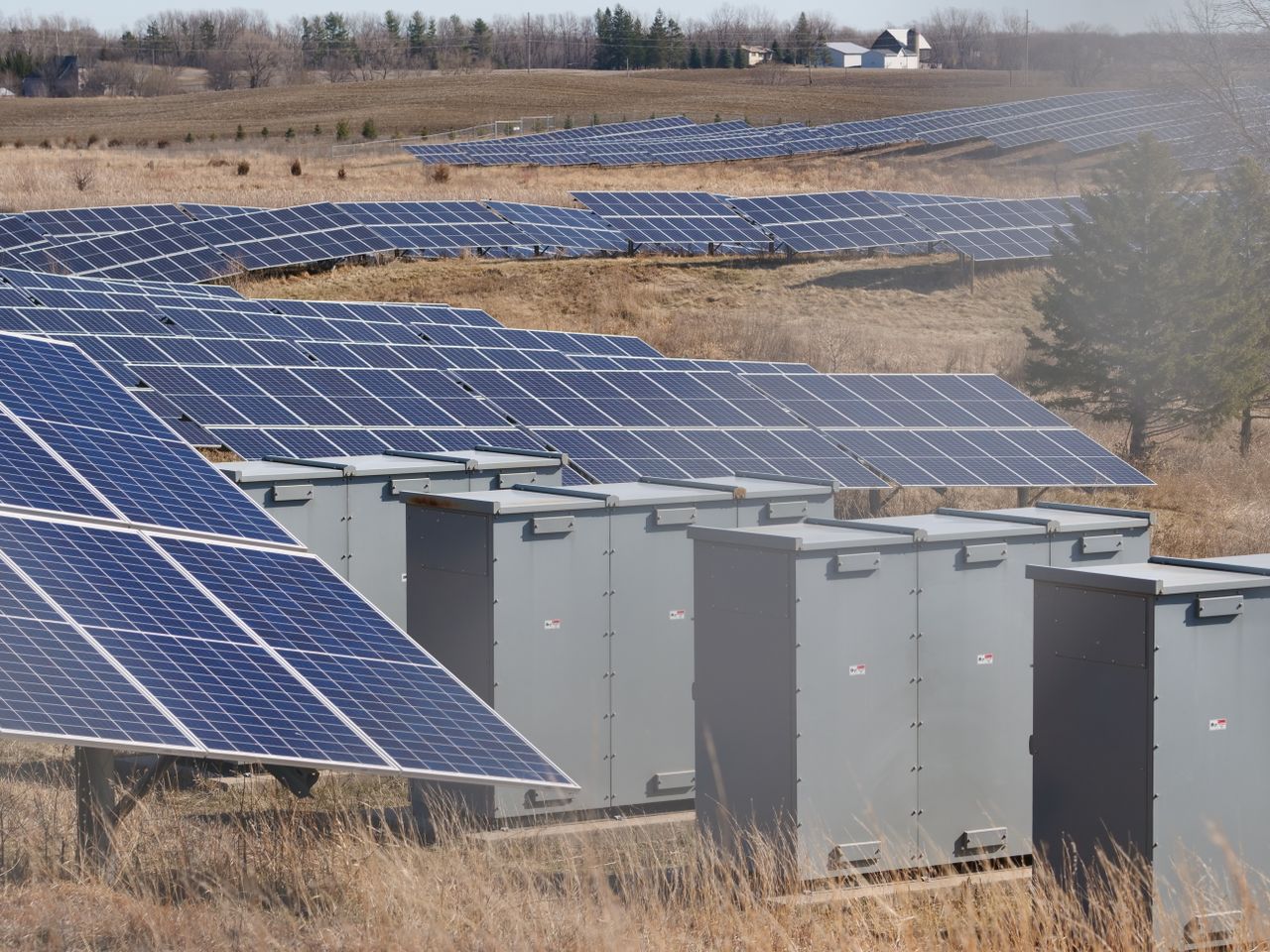
In 2024, electricity demand was just over 2,000 terawatt-hours (TWh). Meeting 90% of this requires 930 GW of solar capacity – less than one-third of India’s 3,343 GW of estimated feasible ground-mounted solar potential. It also requires around 2,560 gigawatt-hours (GWh) of battery storage. In other words, 4.9 GW solar capacity and 13.5 GWh battery capacity for every 1 GW annual average demand load.
During January-April, when solar radiation is typically above the annual average, batteries can shift abundant daytime solar into the evening and night so that solar and storage meet 100% of demand almost every day. During peak summer (May–June), when demand is around 10% above average, they still meet about 88% of demand.
The biggest challenge comes during periods when solar output is weak for several consecutive days. Batteries can move solar generation from daytime to after sunset, but they cannot carry large amounts of solar output across extended cloudy spells. This is why the main constraint is not battery capacity itself, but lower solar generation during the monsoon months. In July, when cloudy monsoon conditions severely reduce solar output, solar and batteries meet 66% of demand.
In practice, India’s power system would rely on a broader mix of resources, with solar able to play a central role. Tapping into India’s wind resources is key as wind generation typically strengthens during the monsoon, partly offsetting lower solar output. Determining the optimal pathway requires a deeper system modelling exercise than the scope of this report.