The IEA’s 800-page World Energy Outlook was released today, and hidden away in it is explosive new research on methane leaks from coal mines, writes Ember Electricity Analyst Dave Jones. In this blog, we try to make sense of the IEA research, and the implications that follow from it.
What does the IEA research say?
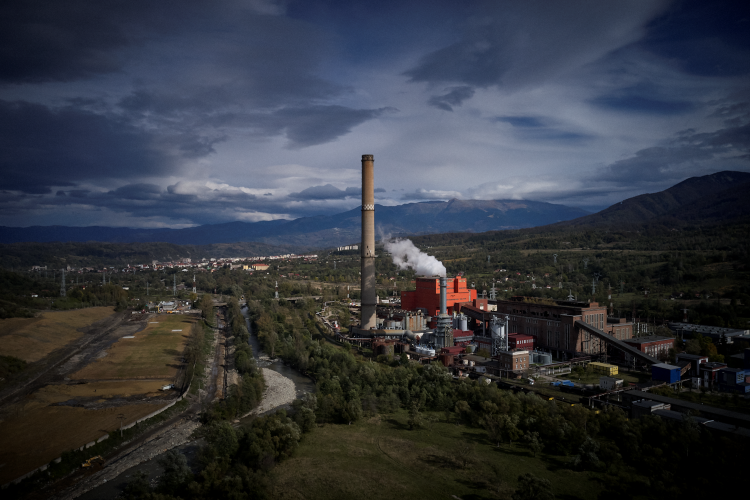
The IEA estimates that 40MT of methane leaked from global operational coal mines in 2018. This compares to an estimate of 80MT emitted by the oil and gas sector. Methane is a potent greenhouse gas. According to the IEA analysis, 40MT of methane emitted by coal mines is equivalent to around 1,200 MT CO2-eq, broadly similar to the current level of total annual emissions from international aviation and shipping combined.
Accounting for the new estimates of methane emissions, on average, the production of coal results in just over 0.3 tonnes of CO2-eq indirect emissions for every tonne of coal equivalent (tce) produced. This compares to a global average of 2.9 tonnes of CO2 emitted when that coal is burnt. Therefore, average lifecycle emissions are 10% higher than the direct CO2 emissions from burning coal.
But the average hides a huge variation at the level of individual mines. For the worst 10% of mines, indirect emissions are 3 x higher than the average. For these mines, indirect emissions (including methane leaks) average 1 tonne of CO2 equivalent per tonne of coal equivalent. Lifecycle emissions could be up to 34%(!) higher than the direct CO2 emissions from burning the coal. Conversely, the best-performing 10% of mines have upstream emissions of “only” 3%.
Therefore, coal lifecycle emissions are 31% higher for coal sourced from the worst coal mines, than from the best-performing mines.
In fact, the methane leaks from the worst mines will cause almost as much warming as the direct CO2 emissions from burning coal, when measured over 20 years.The IEA calculates the CO2 equivalent impact of methane over a 100 years timescale, but they make explicit that the warming potency of methane increases from x30 to x85 vs. CO2 when measured over 20 years instead. So although upstream emissions from the worst coal mines add 34% to overall emissions over 100 years, this becomes 98% when measured over 20 years, relative to the CO2 from burning the coal directly.
Coal mines in Russia, Poland and China have the worst upstream emissions.
China’s enormous volume of coal mined and large share of deep mines (>100m) – means it is by far the largest source of upstream emissions in absolute terms of the coal producing nations.