1. All-in BESS projects now cost just $125/kWh as of October 2025
Battery storage has moved past its infancy, driven by rapid factory scale-up, fierce competition and oversupply that has pushed costs sharply down. Across global markets outside China and the United States, the total capex to build a large, long-duration utility-scale BESS project is around $125/kWh, comprising $75/kWh for the core equipment shipped from China and around $50/kWh for installation and grid connection.
1.1 Expert interviews and auction results suggest $125/kWh is the latest all-in BESS project capex
Outside the US and China, a BESS project is now being built for around $125 per kWh all-in, with core equipment sourced from China and engineering, procurement and construction (EPC) services and grid connection included. This represents real-world project prices, derived from recent auction results in Saudi Arabia, India and Italy, as well as interviews conducted by Ember in October 2025 with experts working on BESS projects across global markets, including Saudi Arabia, Italy, India, Australia, Mexico, Romania, Croatia, and Türkiye.
1.1.1 Core equipment costs around $75/kWh to deliver from China
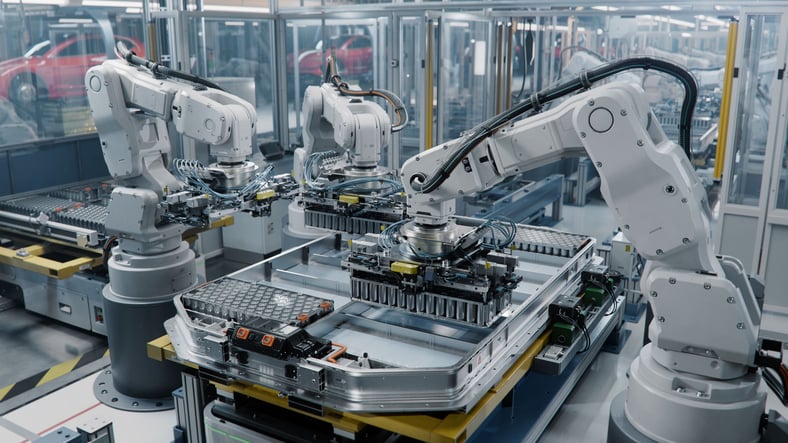
Core equipment – mainly the BESS enclosures, the Power Conversion System (PCS) and the Energy Management System (EMS) – costs around $75/kWh when delivered from China, for countries with low import duties. This cost is per unit of usable battery capacity. Manufacturers typically oversize the installed capacity by at least 10%, allowing them to guarantee a 0–100% state of charge operating range.
The price of Lithium Iron Phosphate (LFP) battery cells for stationary energy storage applications has dropped to around $40/kWh in Chinese domestic markets as of November 2025. These cells are further integrated into battery enclosures, which house 5-6 MWh of cells in 20-foot containers. The enclosures account for close to 90% of the $75/kWh core equipment cost for long duration projects, with PCS and EMS costs making up around 10%.
The $75/kWh applies to larger, four-hour or longer BESS projects. Smaller projects may not get such competitive quotes from Chinese manufacturers. Additionally, total equipment costs are 10–15% cheaper for four-hour projects because several components are sized to power (MW) rather than energy (MWh), meaning the cost is spread over more storage hours. Beyond four hours, however, the marginal savings become progressively smaller.
Core equipment costs can reach $100/kWh or higher in markets with higher tariffs, stricter standards (such as safety certifications), or local content requirements (though in India, local PCS and EMS prices are competitive with China).
1.1.2 Installing and connecting the battery costs about $50/kWh
The EPC services and grid connection required to turn this equipment into an operational project can vary widely, but typically costs around $50 /kWh. This assumes land is provided by a tendering utility or purchased at a low cost.
The largest variation in costs comes mainly from the grid connection fee. This results in costs ranging from as little as $30/kWh with inexpensive grid connection to $100/kWh in extreme cases, with more typical values around $50/kWh, according to experts. However, when the battery storage is built at an existing solar plant or installed behind the meter, the grid connection cost becomes negligible.
1.1.3 Evidence from the auctions
There is clear evidence from three recent auctions that helps corroborate the all-in capex cost estimate of $125/kWh.
Two recent auctions in Saudi Arabia were priced at around $120/kWh. The Tabuk and Hail projects awarded equipment supply contracts in August 2025 of $179–183 million for 2.45 GWh each, or just $73-75/kWh. The EPC contracts added another $116–118 million, or $47–48/kWh.
Italy’s MACSE tender in October 2025 closed at €13/kWh per year. Expert interviews indicate this corresponds to a capex of around $120/kWh, with an approximate $70/$50 per kWh split between core equipment and EPC. As a sense check of the $120/kWh figure: at €13/kWh per year, it would take around eight years to recover the capex before applying a discount rate (vs a 15-year contract horizon). Italian auctions also allow some additional revenue streams, which would shorten the payback period even further.
India concluded several BESS auctions in 2025 with various scopes and clearing prices. One example is the RVUNL auction (1GW/2GWh), which cleared at 177,500 INR/MW/month. This is equivalent to $12/kWh/year, around 20% lower than the Italian auction price.
However, developers in India receive a CAPEX subsidy of 1.8 million INR/MWh (just over $20/kWh), which helps explain the lower price compared to Italy. Expert discussions suggest that current BESS prices are close to $120 /kWh. Some auctions even suggest capex below $100/kWh, although expert interviews suggest these cases reflect developers’ expectations of future battery price reductions.