

Reward abatement, not accounting changes
Ember’s response to the 2026 Annual Progress Advice Consultation, with recommendations focussing on strengthening methane abatement, improving the integrity of the Safeguard Mechanism, and accelerating emissions reductions from Australia’s coal sector.
7 Aug 2026
7 Minutes Read

Ember welcomes the opportunity to provide input to the 2026 Annual Progress Advice. Our response focuses on coal mining facilities, which account for about 24% of Safeguard emissions and are dominated by methane, which has an outsized near-term climate impact.
Emissions from Safeguard coal mining facilities show a declining trend in FY25. However, this is mainly driven by operational disruptions from underground mines, not real abatement. Over the same period, the use of offsets rose by 40%, while the aggregate Safeguard baseline tightened by approximately 13%.
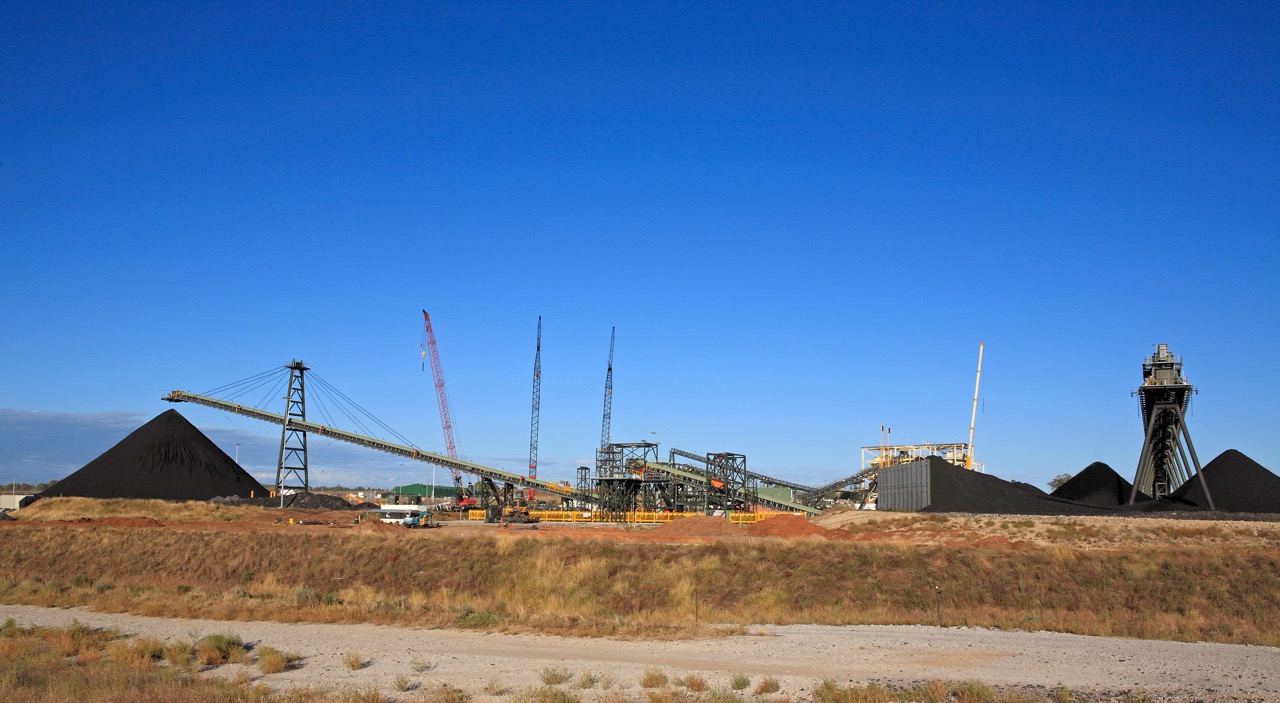
Open-cut coal mines, which account for over 49% of coal mining emissions, can use Method 2, which under its current design, may result in lower reported emissions and, in some cases, enable the issuance of Safeguard Mechanism Credits (SMCs). Independent satellite and aircraft-based assessments, on the other hand, suggest that open-cut mines in the Bowen Basin emit substantially more methane than currently reported.
We recommend the Authority pursue four actionable reforms:

Apply steeper decline rates to methane-intensive facilities
This would create a stronger incentive to accelerate deployment of methane abatement technologies and deliver faster climate benefits.

Apply like-for-like methane offsetting and a phased offset cap
As coal mines emit more methane, the residual emissions should be met by purchasing methane-abatement credits, not CO2. The scheme should also implement a declining cap of offset use to incentivise onsite abatement, with facilities that rely heavily on offsets required to justify their continued use by demonstrating credible onsite abatement plans.

Strengthen measurement and baseline integrity
Company-led emissions estimates, including any change of method or emissions factor, and SMC issuance must be independently verified to ensure the integrity of the scheme.

Support hard-to-abate methane sources
Several abatement technologies are currently less commercial, such as VAM and open-cut mitigation. Thus they require targeted support, such as industrial decarbonisation funding or carbon market incentives, to attract first movers.
Specific responses to the 2026 Annual Progress Advice
Ember welcomes the opportunity to provide inputs to the Climate Change Authority’s 2026 Annual Progress Advice. Our submission focuses on the coal mining sector, a major contributor to Safeguard-covered emissions, particularly on the outsized climate impacts of its methane emissions.
Question 2
What signs are you seeing of emissions reductions across industries, businesses, households or investors? What barriers or delays to abatement are you observing?
In FY25, the total emissions from Safeguard facilities showed a slight decline of 2.3%. However, this was largely driven by the oil and gas sector, which reduced output and, in part, emissions intensity.
Emissions from coal mining fell by 0.6 MtCO2e or roughly 3.5%. The decline is mainly attributed to operational disruptions at several underground mines, not abatement. For example, there was a mine explosion at Grosvenor, safety concerns at Integra, as well as operational issues at Tahmoor.
We identify two main barriers for coal mine methane (CMM) abatement projects. First, the substantial increase in offset use suggests that the coal sector is prioritising offsets over real onsite abatement projects to achieve compliance. The use of offsets increased by 40% in FY25, while aggregate Safeguard baseline declined by 13%. Second, baseline design and insufficient verification allow companies to adopt estimation methods that lower their reported emissions, without any actual abatement measures. We discuss this further in Question 8.
Question 3
What do you see as the top priorities for climate policy reform and why?
We recommend three priorities, especially on coal mining emissions.
First, prioritise methane abatement. Methane is a short-lived greenhouse gas, but it has a warming potential more than 82 times that of carbon dioxide over 20 years. Acting on methane now delivers the fastest and most cost-effective near-term climate benefits.
Second, strengthen offset integrity. Methane accounts for about 42% of emissions from open-cut coal mines and over 83% of emissions from underground mines. Using forestry-based CO2 offsets to meet baseline compliance does not reduce methane emissions from coal mines. We discuss this further in Question 10.
Third, fix measurement and baseline integrity. Ensure that changes to methods or emissions factors should be independently verified and fully incorporated into compliance. The scheme must reward facilities that implement real abatement measures, and ensure facilities are held accountable for higher emissions. We discuss this further in Question 8.
Question 7
Should decline rates differ across facilities or sectors beyond existing arrangements for trade-exposed, baseline-adjusted (TEBA) facilities? What evidence would support differentiation, and what principles should guide how any differentiation is applied?
We support applying steeper decline rates to methane-intensive facilities, including coal mines, as proposed in the consultation paper (Option 2: Apply steeper decline rates to coal and gas sectors).
Over 60% of Safeguard coal-mining emissions are methane, which has an 82 times greater warming impact than carbon dioxide over 20 years. Prioritising methane abatement therefore offers one of the fastest and most cost-effective opportunities to reduce near-term climate impacts, while supporting Australia’s broader climate targets. This is also aligned with Climate Council recommendations for Australia to set specific methane reduction targets.
Two conditions are essential for this to work.
- It must be paired with stronger emissions reporting and a limit on offset use. Otherwise, reported emissions may decline due to changes in estimation methods while actual emissions remain unaddressed.
- The scheme must ensure these facilities direct resources to onsite abatement wherever feasible, rather than relying on offsets, which today are predominantly forestry-based CO2 credits (see Question 10).
Question 8
How should we assess the extent to which the Safeguard Mechanism is driving onsite abatement? What metrics, data sources or methods should we use, and how should we account for changes in production, operational conditions and emissions variability?
To assess whether the scheme is driving onsite abatement, the Authority should evaluate facilities against a consistent set of metrics. We suggest tracking the following for each facility:
- absolute methane emissions;
- methane emissions intensity per tonne of ROM coal, separated by mining type (open cut and underground);
- captured or destroyed methane through onsite abatement, supported by third party verification;
- production volume, separated by mining type;
- operational shutdown days;
- any change in emissions factors or estimation methods, including inputs used to derive emissions factor;
- independently measured emissions.
NGER data should remain the regulatory base for compliance, with aircraft and satellite measurements used as independent quality assurance and validation of the reported data. Together these metrics separate actual onsite abatement from operational or accounting changes, so that real abatement is rewarded with SMCs.
These metrics matter because the Safeguard Mechanism relies on company-led emissions estimates (Method 2), which presents a significant challenge for open-cut mines. Specifically, it creates risks where sampling and emissions factors are not sufficiently representative or independently verified. A shift to a lower emissions factor automatically reduces covered emissions, potentially bringing them below baseline and allowing the facility to generate SMCs, even without any actual abatement.
There is a case of Hail Creek, which uses a lower emissions factor, resulting in 38% lower emissions while maintaining a steady production level. The company generated SMCs worth approximately AUD 9 million (USD 6.4 million).
In contrast, recent research showed that open-cut mines in the Bowen Basin showed significantly higher emissions. Hail Creek, specifically, is estimated to emit more than double reported emissions. This supports previous research highlighting the same weakness in company-led open-cut CMM estimates, including Bhorchardt et al. (2025), Sadavarte et al. (2021) and Palmer et al. (2021).
There are two distinct problems here. First, Method 2 allows a facility to conduct its own sampling using a minimum of three borehole samples per gas domain, which may produce a lower emissions factor and, therefore, lower covered emissions. Second, this lower emissions is then rewarded with SMCs. Even if the facility banks the SMCs, it will further discount future emissions.
Therefore, we recommend the Authority to adopt the metrics set out above, supported by independent verification. Method 2 sampling requirements should be raised and independently verified, consistent with the CCA’s NGER Review recommendation. Finally, SMC issuance should be supported by detailed documentation and independent third-party verification, to confirm that the facility has delivered meaningful and real abatement, not just accounting shifts.
Question 9
What evidence is available on onsite abatement activities at Safeguard facilities, including for activities planned, underway or completed since the reforms commenced? Where possible, please provide information on emissions impacts, timing, costs and barriers.
Available evidence indicates that onsite abatement has been implemented at a limited number of coal facilities, especially in waste-gas capture and flaring. Peabody’s Centurion commissioned a 5 MW waste-gas plant in 2026. In addition, Kestrel flares 90% of its captured gas and has a proposed Coal Mine Waste Gas (CMWG) power station and VAM project.
Ventilation Air Methane (VAM), which represents over 60% of underground mine emissions, remains nearly untouched. Several facilities, such as Carborough Downs and Ashton, reported low methane concentrations below 0.2 – 0.3%, arguing these are too low for regenerative thermal oxidiser (RTO) technology to be technically or economically feasible.
However, this argument warrants closer scrutiny. Methane concentration in ventilation air depends not only on emission rates, but also on ventilation management practices used to meet mine safety requirements. While adequate ventilation is essential to keep methane below statutory limits, increasing airflow beyond necessary levels further dilutes methane concentrations, making VAM abatement appear less feasible than it actually is.
The UNECE Best Practice Guidance on Ventilation Air Methane Mitigation notes that mine operators can optimise ventilation systems to raise methane concentrations to levels that improve VAM abatement viability. For example, by optimising ventilation airflow where safe and appropriate, or by adding drainage gas at safe concentrations (greater than 25%) to the surface ventilation airflow infrastructure before it enters the VAM unit.
Facilities should therefore be required to report methane mass flow (m3CH4/min), which measures the amount that actually reaches the atmosphere and is unaffected by ventilation settings. This is already captured under the NGER framework. Feasibility of abatement could then be judged on methane mass flow rate, with concentration used only to determine which abatement technology fits the stream.
Question 10
Should the Safeguard Mechanism play a stronger role in encouraging onsite abatement, relative to allowing flexibility through Australian Carbon Credit Unit Scheme (ACCU) use?
Coal mining facilities are increasingly using offsets to meet compliance. In FY25, the use of offsets increased by more than 40%, significantly higher than the roughly 13% decline in aggregate Safeguard baselines. And this is exactly the opposite of what the scheme is intended to achieve with real abatement measures. Therefore, the scheme should drive more onsite abatement by providing necessary support for hard-to-abate projects and limiting offset use.
- Targeted support for hard-to-abate sources (Option 6). While low methane concentration is no longer a strong justification for not adopting VAM mitigation (explained in Question 9), companies have also argued that it requires significant investment. Targeted policy support, such as industrial decarbonisation funding or new ACCU methods (as suggested in the consultation paper, option 6), could help improve project economics and accelerate implementation. The same approach should also cover open-cut mitigation, which faces similar issues.
- Applying a like-for-like methane offset. Methane represents over 60% of GHG emissions in coal mining. Yet, most offsets surrendered are forestry-based CO2 credits. Therefore, coal mining facilities should be required to meet their baseline with credits from methane reduction projects, such as CMWG, landfill or livestock methane.
- A phased cap on offset use (Option 4). Beyond restricting offset type, the scheme should limit overall offset use to ensure a minimum level of onsite abatement. The cap should be introduced gradually, and only after the support in Option 6 makes on-site abatement viable.
- Evidence-based justification for high offset use. Facilities that use offsets over 30% must provide evidence-based assessments, including abatement opportunities evaluated, projects under development, implementation timetable and the reasons any further onsite abatement is not feasible. This is in line with the NSW Climate Change Requirements, specifically the Climate Change Mitigation Plan.
Supporting materials
Downloads
Detail of inquiry
The submission was submitted to the CCA website (https://consult.climatechangeauthority.gov.au/2026-apa-consultation-paper). The information about public consultation is available here.
Acknowledgement of Country
Ember acknowledges the Traditional Custodians of the many nations across Australia and their enduring connection to Country and the lands, seas and skies. We pay our respects to Elders past and present and extend that respect to all Indigenous Peoples today
Acknowledgements
Nishant Bhardwaj, Sougol Aghdasi, Yu-Ting Chang, Tito Das, Sachin Sreejith
Related Content
Policy papers
Delhi’s electricity transition challenges and opportunities: A SCOPE study
06 August 2026
Policy papers
From oil dependence to electric security: a resilience roadmap for EU road transport
02 July 2026
Policy papers
Abandoned mine methane offers Wales an energy and revenue opportunity
01 June 2026
Policy papers
Solar growth in South Asia has cut fuel imports for power but deeper reductions need electrification and regional grids
18 March 2026