
Chapter 3:
Cost-optimal pathways for Thailand’s power sector development
In this chapter
Going beyond the RPDP renewable targets will be more cost-efficient
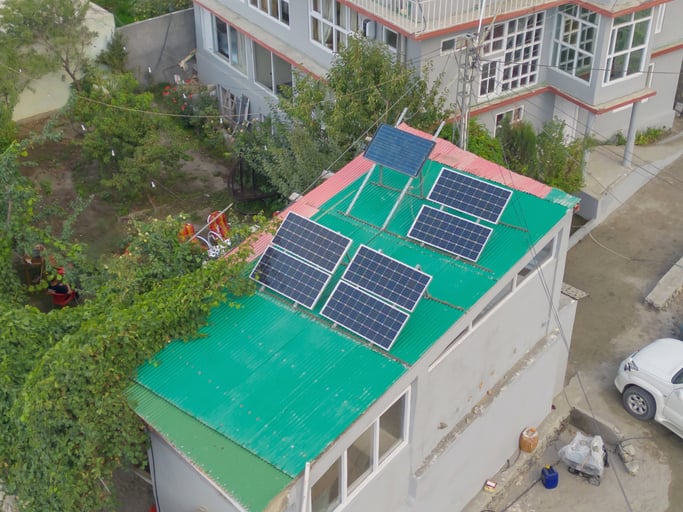
Increasing solar capacity by 89% and battery storage by 60% over what the RPDP sets out can help deliver around $1.8 billion in cumulative cost savings for Thailand by 2037. In addition, the country would also avoid 147 million tonnes of CO2 emissions.
Thailand’s RPDP sets ambitious clean energy targets. But an even higher ambition is attainable and saves billions, according to our analysis.
We developed a cost-optimal pathway for the country’s power sector till 2037, based on the RPDP capacity mix.
As mentioned earlier, the RPDP aims to add 50 GW of renewables and 14 GW of storage capacity by 2037. It will also add around 6 GW of new gas capacity, though we consider limiting this by reducing about 2 GW of new gas capacity planned for 2035 and 2036 in our cost-optimal pathways.
Our analysis is not conservative with regard to additional demand from EV charging and data centres. The RPDP’s demand estimation for EV charging and from data centres is lower than our projections. We consider additional energy demand (10 TWh) and peak load (3.3 GW) from data centres and EV growth, respectively, by 2037.
Variable renewables provide abundant energy but do not always deliver firm capacity during critical hours. To overcome this, we applied each technology type with a firm capacity contribution factor to meet grid reliability needs during peak demand.
We applied a constraint to ensure a minimum reserve margin of 15% based on firm capacity. This value is determined to make sure that the system has sufficient reserve capacity to meet the reliability requirements of a standard power system. In addition, this buffer provides back-up capacity in unexpected events such as unplanned outages or spikes in demand.
Yet, we find that Thailand can meet its future electricity demand, reduce costs and emissions without adding the 2 GW new natural gas capacity.
3.1
Gains from the cost-optimal pathway
Adding 32 GW of solar and 6 GW/ 15 GWh of battery storage, over the RPDP target by 2037, could meet electricity demand reliably and provide gains across the board for Thailand.
The addition of solar and battery storage makes the cost-optimal pathway more capital-intensive than the RPDP trajectory, with cumulative fixed costs over the planning horizon of $168.1 billion compared to $152.9 billion in the RPDP, an increase of $15.2 billion, or about 10.5%.
However, these additions significantly reduce fuel costs, particularly from natural gas. The RPDP’s cumulative variable costs, including fuel cost and variable operation and maintenance (VOM), amount to $197.1 billion, while the cost-optimal pathway reduces this to $180.1 billion, a saving of around $17 billion. Taken together, the cost-optimal pathway delivers net cumulative cost savings of $1.8 billion compared with the RPDP. It translates to a $0.5/megawatt-hour (MWh) reduction in levelised cost of electricity (LCOE) on average from 2026 to 2037.
The cost-optimal pathway also avoids 147 MtCO2 emissions by 2037. In terms of fossil fuel use in volumes, cumulative gas avoided by 2037 (1,815 billion cubic feet (bcf)) is almost two times more than what the country consumed in 2024 for power generation (1,061 bcf).
By 2037, the sharp cost decline of solar and battery results in a high ramp-up of these technologies, totalling 32 GW of solar and 6 GW/ 15 GWh of battery. These additions bring a total of 68 GW of solar and 16 GW of battery in the mix. In terms of generation, solar is projected to grow from only 2%, or 5.5 TWh of the total energy generation in 2025, to as much as 28%, or 102 TWh by 2037.
In contrast, fossil fuels, including coal and gas, drop significantly from over 80% share of the generation mix in 2024 to only about 40% in 2037. Coal’s generation reduces from 42 TWh in 2025 to 17 TWh in 2037. Gas use will also decline from 150 TWh in 2025 to 135 TWh in 2037.
Imported natural gas for the power sector is likely to be replaced mainly by solar, coupled with battery and pumped storage hydro (PSH). The avoided cumulative natural gas is about 1,815 bcf, replaced by an additional 32 GW of solar, 6 GW/ 15 GWh of battery, with the support from 3.4 GW of PSH planned in the existing RPDP. Moreover, 2.4 million tonnes of coal use is cumulatively avoided throughout the same period.
On an annual aggregated level, the RPDP plan forecasts additional demand from data centres to be supplied by natural gas. In our cost-optimal pathway, solar and batteries meet this demand.
3.2
Storage to play a key role in the cost-optimal pathway
As Thailand transitions to higher shares of solar and wind, traditional reserve margin planning – based on a fixed percentage of firm capacity above peak demand – is no longer sufficient.
According to our model, almost 4 GW of battery energy storage system (BESS) is required by 2030 to support system adequacy, in addition to an extra 9 GW of solar compared to the RPDP baseline.
System reserve margin drops below 15% from 2028 in the RPDP, thus, BESS was integrated in 2027 – earlier than the RPDP scenario, which deploys it in 2032. The early entry of BESS is necessary to meet the reserve margin target and accommodate the variability of additional solar capacity, providing energy arbitrage and flexibility to the system.
Our model shows that energy storage systems’ role becomes increasingly important in the cost-optimal pathway as their utilisation dramatically increases to arbitrage excess solar energy to evening peak demand periods. For instance, PSH’s capacity factor in the cost-optimal pathway increased by about 15 percentage points, from 18% to 33%, compared to the RPDP scenario in 2036.
As of 2024, Thailand has about 1 GW of PSH installed capacity. According to the RPDP, the country aims to increase its capacity to around 3.5 GW by 2037 to support the integration of variable renewables.
PSH, along with BESS, plays an important role in power systems with high penetration of solar and wind. By storing surplus electricity during periods of low demand and discharging it during peak hours, pumped storage hydro and BESS help balance the variability of wind and solar.
Additionally, the ability to ramp up and down rapidly in real-time of PSH enhances system flexibility and enables the provision of essential ancillary services, including black start, voltage control, frequency regulation, and inertial response. These services are indispensable for maintaining grid stability and power quality.
Over battery, PSH excels in longer duration storage, larger-scale and bulk energy storage, as well as offering a longer lifespan. However, batteries are more suitable for fast, short-term responses and require less site-specific infrastructure. Rather than being competitors, pumped hydro and BESS are complementary technologies whose combined deployment can significantly strengthen the integration of variable renewables into Thailand’s power system.
3.3
Wind is not financially viable without a drastic reduction in capital expenditure
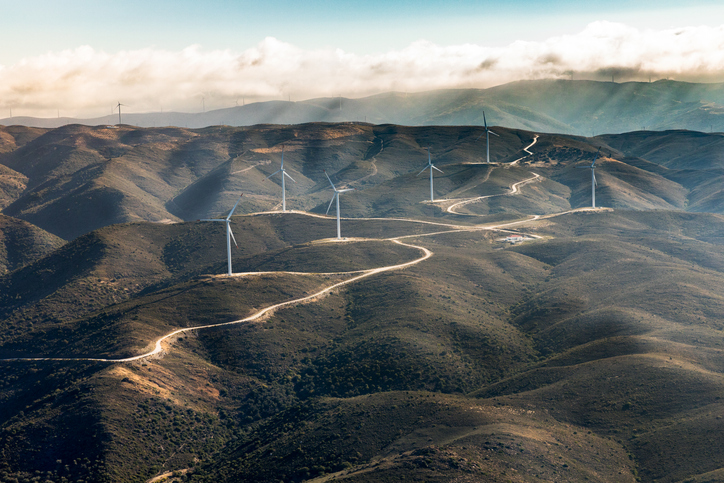
Due to being close to the equator, much of Thailand’s inland areas have low wind speeds, making it generally challenging for large-scale wind power installations. The average wind speed of Thailand is about 2.8-4 metres per second (m/s) at 10 meters above the ground level. Most areas are classified as 1-1.4, on the scale of 1 being poor to 7 as a superb wind resource. However, some areas still have “fair” wind resources of no less than class 3. Thailand’s best wind-energy potential areas are near the coast of the Thai Gulf and higher-elevation lands above 50 m, such as the western mountain ridgeline and the upper southern region.
Nevertheless, with the depletion of natural gas reserves and in consideration of its COP26 commitments, the Thai government has stepped up to diversify the country’s electricity generation from renewable energy resources, including wind power generation capacity. As a wind energy subsidy, it launched a feed-in tariff (FiT) in 2015 at 6.06 Thai Baht/kWh ($0.176 USD/kWh) for 20 years. The subsidy attracted several developers, contributing more than 1,500 MW of wind capacity. A new FiT subsidy issued in 2022 is half of the initial incentive, 3.1 Thai Baht/kWh ($0.09 USD/kWh), subject to competitive bidding. This process will enable wind energy markets to determine the actual price wind energy projects should be paid and minimise the risk of excessive subsidising.
We modelled an additional scenario in which wind is not committed after 2030. Before 2030, there have been several wind projects committed in the revised draft plan, with a capacity of about 4 GW.
Ember’s model identifies that unless there is a sharp decline in wind’s CAPEX of 10% annually, between 2031 and 2037, from $1,591/kilowatt (kW) to $761/kW, wind projects are not suitable in a cost-optimal pathway. Instead of wind, the geographical positioning of Thailand is best suited to solar energy, since on average the country collects a solar irradiation of 5 kW/m2/day. Solar, with batteries, is the optimal solution for Thailand’s power system. As a comparison, the Levelised Cost of Energy (LCOE) of a new onshore wind plant is $75-166/MWh, compared with solar of $33-75/ MWh. However, the complementary effect of wind and solar is worth considering, given the inherent intermittent nature of solar.
3.4
Importing hydro from Lao PDR can compensate for wind, but increases import dependency
Importing hydro power from Lao PDR is another option to compensate for Thailand’s low wind resources, and to optimise costs. According to the draft RPDP, over 5 GW of wind capacity is planned to be built between 2031 and 2037. By replacing those with 2.5 GW of imported hydro from Lao PDR, cost savings could increase by up to $5 billion cumulatively from 2026 to 2037 or $1.3/MWh LCOE reduction on average. In comparison, electricity imports from Lao PDR costs about $0.06/kWh, while LNG-fuelled power plants cost $0.28/kWh in 2023.
Lao PDR is one of the largest electricity exporters in the region, with export destinations to neighbouring countries, including Thailand. The country also promotes the development of other renewables, such as wind and solar, and aims to become “the battery of Southeast Asia”.
Thailand is the top purchaser of Lao PDR’s electricity, buying around 91% of total electricity export, valued at $1.95 billion in 2023. Lao PDR, in turn, is also the largest importer of Thai electricity, buying up to 94% of the latter’s exports.
Lao PDR’s hydro power potential is estimated at around 26 GW, and about 12 GW has been installed as of 2023. The country’s Ministry of Energy and Mines has set a target to increase hydro power capacity to 20 GW by 2030 to facilitate regional export. Therefore, Thailand can expand imports from Lao PDR, contingent on bilateral cooperation and competition from other neighbouring countries.
The synergy of combining hydro with variable renewable energy helps ensure a reliable power system. Hydro’s complementary effect involves its flexible and dispatchable power generation and energy storage capacity. It can not only perform energy arbitrage, but also can quickly ramp up or down to meet fluctuating variable renewable energy output and load demands, reducing the risk of production deficit and curtailment and allowing for greater integration of wind and solar power.
Nevertheless, electricity imports pose some risks associated with social, economic and environmental impacts, which underscore the need for long-term energy planning. For example, hydro dam construction can displace communities and disrupt ecosystems. The diversion of natural water flow for hydro dams has also created tensions over river flow management between Laos and its neighbours. Another concern is the long lead time of hydropower projects, which typically takes 2–4 years to complete. For this reason, our model only allows new imported hydro after 2030. In addition, prolonged droughts driven by climate change could reduce hydro output, introducing further supply risks for Thailand’s power system.

Related Content