
Conclusion
Solar and batteries should become the key pillars of Thailand’s power mix
With the right policy priorities, Thailand can avoid adding new fossil capacity, while making solar and batteries the pillars of its electricity system. In doing so, the country can not only save costs but also facilitate the development of data centres and EV industries.
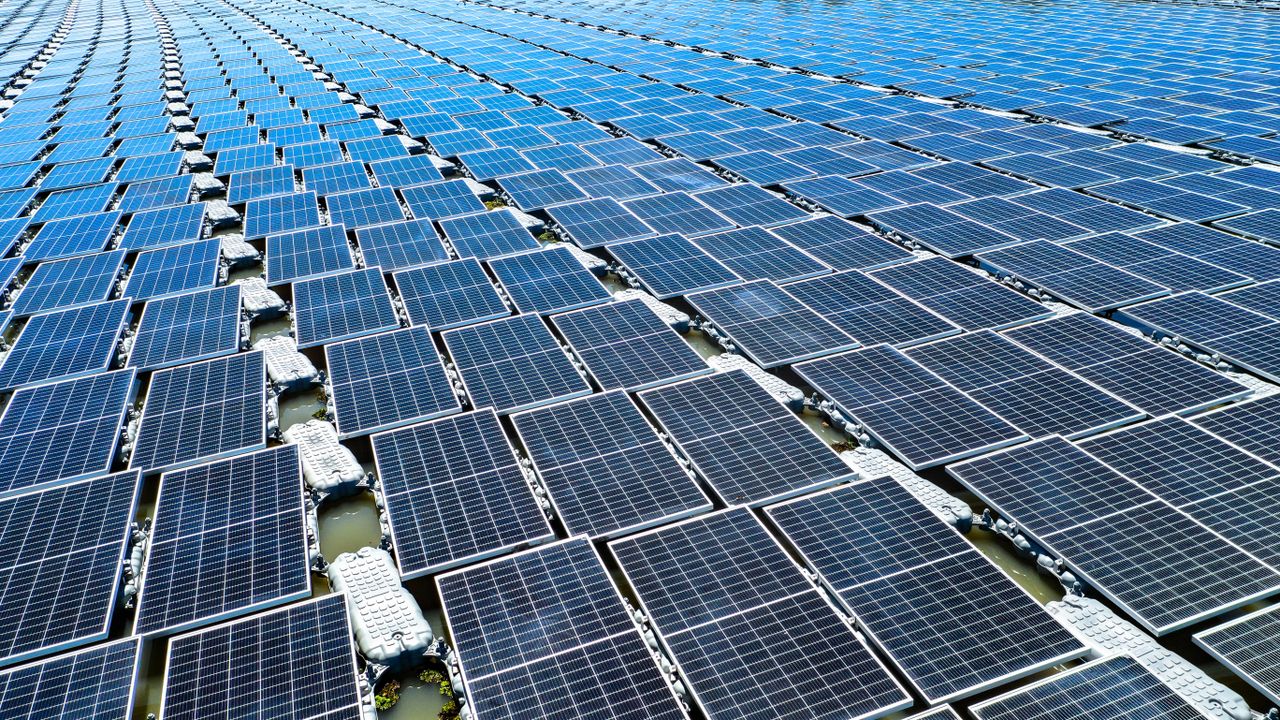
Thailand’s favourable solar resource (~5 kWh/m²/day) with battery storage is the least-cost option for its power system. Even after we factored in more demand from data centres and EV charging than the RPDP estimated, our analysis finds that solar can reliably cater to the country’s growth needs with grid support from energy storage systems.
Increasing clean energy use and power system resilience will enhance Thailand’s economic competitiveness. Our analysis limits 2 GW of new gas-powered capacity to promote diversification of energy supply and avoid risks of stranded assets. To maintain the power system’s reliability, batteries and PSH will play a pivotal role in providing flexibility. They will provide the reserve capacity required to maintain a 15% reliability margin. They also need to come online five years earlier than the RPDP projects.
In doing so, between 2026 and 2037, our cost-optimal pathway reduces 1,815 bcf of natural gas and 2.4 Mt of coal consumption for Thailand.
By bringing in the right policy priorities and aiming for an even cleaner power system than it already has, Thailand can truly make the sun the centre of its sustainable future.
Successfully implementing the cost-optimal pathway we propose and reaping the rewards requires certain policy changes. The country needs better power system flexibility policies. It needs to rethink how it views fossil fuels, improve planning for system adequacy, seek the most cost-optimal renewable resources and improve demand forecasting.
The following are some steps policymakers can implement:
- Improving power system flexibility policies: Prioritising the expansion of solar PV and battery storage as the backbone of the clean energy transition. These technologies represent the most cost-effective option for decarbonisation. Policies to enhance power system flexibility, such as incentives for residential PV-battery systems, are essential. The reduced grid extension investment incurred by PV-battery systems would compensate for the financial support.
- Cut fossil fuel imports: Reducing reliance on imported gas can strengthen energy resilience and minimise risks of exposure to fuel price volatility, supply disruptions, and geopolitical risks. By maximising PV-storage combination, Thailand can decentralise energy production through a small-scale distributed renewable energy system, to improve energy resilience. Energy storage systems provide the flexibility required to balance supply and demand, reduce curtailment, and deliver ancillary services.
- Change system adequacy planning: Planning for system adequacy requires considering reserve margin methodologies. A shift from fixed-percentage planning to reliability-based approaches, such as effective load-carrying capability (ELCC), will ensure accurate accounting of variable renewable capacity during critical demand periods. This is essential for maintaining grid stability as the share of solar and wind increases. Given that reliable reserve capacity for system technical flexibility might open markets for potential ancillary service providers to contribute to system reliability, there can be early deployment of energy storage systems, such as BESS, as proposed in this study.
- Make solar and batteries the foundation of its generation mix: Fossil fuels should be redefined as peaking and backup resources rather than central pillars of the generation mix. Limiting new coal and gas investment to flexible support functions will reduce the risk of carbon lock-in and stranded assets while maintaining sufficient reliability during demand spikes or renewable shortfalls. In a power system with high solar penetration, traditional power plants are required to ramp up and down more frequently to balance variability. This highlights the need to upgrade existing plants to improve their flexibility and ramping capability.
- Assess the best form of renewables: The expansion of wind power after 2030 should be revisited, with long-term PPAs delayed until cost trajectories and technology competitiveness become clearer. This approach preserves optionality while avoiding premature commitments in a sector where Thailand’s wind resources are relatively limited and costs remain high compared to alternatives.
- Improve demand forecasting: Demand forecasting should explicitly account for the rapid growth of energy-intensive industries such as EVs and data centres. Incorporating these structural demand shifts into planning models will help ensure adequacy and avoid underestimating future load growth, which could otherwise undermine reliability. Incentives to encourage smart EV charging will be critical in managing peak demand. Time-of-use tariffs and vehicle-to-grid (V2G) programs can shift charging loads away from peak intervals, reducing the need for excessive investment in new capacity. Coordinated planning of nationwide charging infrastructure will also be necessary to support EV adoption without placing undue stress on the grid.
Hydropower imports from Laos present opportunities to enhance flexibility and reduce costs, given Laos’ vast hydropower potential and existing electricity trade relationship with Thailand. However, expansion must be cautiously approached, as hydropower development carries social, environmental, and cross-border political risks.

Related Content