From scale to system꞉ navigating the next phase of China's battery storage | Ember

From scale to system: navigating the next phase of China’s battery storage

A major shift is now unfolding across China’s battery energy storage sector, as the industry transitions from policy-driven capacity expansion to an increasingly market-tested system integration.

16 Jul 2026
22 Minutes Read
Download PDF

Highlights

150 GW
By the first quarter of 2026, China’s total installed lithium-ion battery energy storage capacity reached almost 150 GW.
100 cycles
The 2025 utilisation shortfall of China’s renewable co-located battery storage compared to standalone systems, highlighting the limits of mandate-driven scale-up.
23 TWh
The extra amount of renewable generation that can be shifted by utility-scale battery energy storage, solely by optimising the utilisation of batteries.

Executive summary

Beyond gigawatts: China’s BESS shifting towards a market-driven future

In 2025, China’s total battery energy storage systems (BESS) capacity surpassed that of the rest of the world combined. Beneath this headline growth, the country’s battery sector is entering a new phase, shifting from rapid deployment towards effective market integration and maximising system value.

When national wind curtailment surged past 17% in 2016, Chinese provinces, among other measures, required new renewable projects to co-locate energy storage. This policy effectively helped keep curtailment in check and drove the country’s BESS installation boom.

However, batteries can provide far more system value than the current market context allows co-located projects to deliver. As the energy system’s ultimate multitool, batteries shift renewable generation across time and location, provide crucial ancillary services for grid stability, and offer emergency support.

Because their operation and finances were tied behind the meter of their parent projects, co-located BESS has seen lower utilisation than standalone systems. In contrast, standalone assets can operate as independent market entities and respond directly to system-wide conditions.

Two major recent policies have reinforced this transition: the end of mandatory storage co-location in 2025 and the expansion of capacity remuneration to include BESS in 2026. This marks a deliberate shift from administrative mandates to market signals as the sector’s emerging driver.

As a result, recent growth in standalone BESS has significantly outpaced that of co-located projects. Meanwhile, utility-scale BESS utilisation is beginning to catch up with capacity expansion.

To sustain development moving forward, the sector requires diverse revenue streams that reflect its true system value, enhanced revenue stacking to ensure commercial viability, stronger market signals to guide planning, and a clear regulatory framework tailored to the bi-directional nature of BESS.

China has built the world’s largest battery storage fleet in record time – but having the batteries is not the same as using them. The next phase of China’s storage story will be defined not by how many gigawatts are added, but by how well they can support the new power system.

Siming Liu
Group Strategy Senior Manager, TrinaSolar

China doubled its battery storage capacity in 2025 against a backdrop of major policy shifts. With so much changing so quickly, now is the moment to watch how these market transitions actually play out. As the power system integrates more renewables, the true value of batteries to China’s energy transition is becoming undeniable. Ensuring policy fully recognises this value and facilitating storage projects to stack revenues will be crucial to driving sustainable, long-term sector development beyond scale expansion.

Biqing Yang
Energy Analyst, Asia, Ember

Key takeaways

01

Renewable co-location mandates were central to China’s battery boom

Mandatory energy storage co-location for new wind and solar projects played an important role in reducing renewable curtailment in China – from over 17% in 2016 to below 5% between 2022 and 2024, while rapidly scaling up the battery fleet.

02

China’s BESS sector is shifting towards a market-driven era

As China ends its renewable BESS co-location mandate and expands capacity remuneration to energy storage, fixed revenue streams are being phased out. They are being replaced by new market mechanisms that allow for revenue stacking, especially as energy arbitrage alone cannot yet support a strong enough business case for BESS.

03

Utility-scale battery utilisation doubled between 2022 and 2025, but co-located assets still lag behind

Policy reforms are helping bridge the gap between capacity growth and lagging utilisation. Following these reforms, renewable co-located BESS utilisation rose from 80 to 199 cycles, while standalone systems increased from 146 to 299 cycles. Due to limited dispatch flexibility, rigid operational patterns and restricted revenue streams, co-located BESS still runs around 100 less cycles per year than standalone systems.

04

Closing the utilisation gap represents a real opportunity for the power system

If China’s renewable co-located BESS had matched the utilisation rate of standalone systems in 2025, it could have shifted an additional 9.5 TWh of renewable generation over the year. Furthermore, if the entire utility-scale BESS fleet had run at an optimised 350 cycles per year, it could have shifted an extra 23.0 TWh of renewable energy to peak demand hours, equivalent to powering Singapore’s entire economy for five months.

Chapter 1: From the scale

China’s rapid battery expansion and changing policy landscape

The five years from 2021 to 2025 saw rapid expansion for China’s battery energy storage system (BESS) sector. This boom was driven by supportive policies, most notably the mandates requiring renewable energy projects to co-locate storage. By the end of 2025, China accounted for over half of all global BESS capacity, establishing itself as the leader in installations.

Against this backdrop of rapid growth, 2026 marks a turning point to an increasingly market-driven era. This shift is driven by fundamental changes to the policy environment, including a key 2025 policy that ended the storage co-location mandate for renewables.

However, as market reforms continue and regulations evolve, sustainable profitability remains the core uncertainty for China’s BESS sector. To address this, the sector is exploring more diverse revenue streams for storage projects. At the same time, policy makers are clarifying rules to enable more effective power market participation.

1.1 China’s BESS outgrows all other countries combined

China’s battery storage build-out has no global parallel. By the first quarter of 2026, the country has installed 155.2 GW/400.8 GWh of “new energy storage”, 149.8 GW of which consists of lithium-ion batteries. In the Chinese policy context, the term “new energy storage” refers to clean storage technologies excluding pumped hydro storage. The category is currently dominated by BESS.

In 2025 alone, China installed 189.5 GWh of new energy storage capacity, effectively doubling its total capacity in a year.

China is also taking up an increasing share in global BESS installations, accounting for over half of global BESS installed capacity by the end of 2025, up from just over 20% in 2021. In December 2025, China installed 18.76 GW/65.46 GWh of new energy storage, exceeding the full-year additions of the world’s second largest market, the United States (US), which was at 15 GW.

Looking ahead, China updated its national target in June 2026 under its 15th Five-Year Plan for building a new-type energy system. The country now aims to deploy 300 GW of new energy storage by 2030.

Furthermore, this increase in installed capacity continues into the beginning of 2026, the first quarter of 2026 demonstrated positive year-on-year growth, despite the strong basis in 2025.

1.2 China’s battery additions outpace its record-breaking solar growth

China’s solar generation continues to break records, with annual generation additions accelerating year after year. In 2025, solar output surged by a record 336 TWh, translating to an average increase of 920.5 GWh every single day.

In theory, the 189.5 GWh of new energy storage capacity that China added in 2025 would be able to cover 21% of this new daily solar generation, shifting it from peak daytime to other hours of the day. Globally, this figure stands at 14%.

This 21% share also marks an increase on previous years. It shows that while China’s solar generation is growing at record speed, battery storage has expanded even faster over the last few years.

1.3 Co-location requirements provided the first push for China’s BESS growth

Beyond the impact of rapid cost reductions, China’s massive scaling of BESS has been driven primarily by government policy.

In 2016, China’s wind curtailment peaked at 17% annually, some provinces exceeding 40%. In response, the central government introduced mandatory curtailment limits for wind and solar power, positioning energy storage as a key solution to meet these targets.

In June 2017, Qinghai became the first province to require wind projects to install energy storage, setting a mandate of 10% of total capacity. Most Chinese provinces adopted similar co-location requirements in the following years. Renewable projects with co-located storage were granted smoother, prioritised grid connection.

In 2021, national policy explicitly required power generation projects to either build or purchase energy storage for peak regulation. This rise in co-location directly helped cut curtailment, keeping China’s curtailment rate below 5% between 2022 and 2024.

However, this capacity-based co-location mandate had its limitations. Without adapted revenue streams and solutions to address operational constraints, these batteries risk becoming a burden for renewable developers.

Meanwhile, under the wider power market reform framework in China, the government is designing more market-led mechanisms to both support BESS expansion and better reflect its value to the grid. For example, national policy allowed BESS to participate in the ancillary services market in 2021, and encouraged its participation in the power market in 2022. We explore this further in Chapter 1.4.

In 2023, a key policy called for better planning and allocation of energy storage. In 2024, the government loosened the national curtailment target, allowing provincial governments to relax co-location rules. By 2025, the government officially ended the mandatory requirement of storage co-location.

1.4 The shift to revenue stacking in China’s BESS market

Batteries are the ultimate multitool of the energy system. They can smooth out supply and demand; help tackle renewable energy curtailment and improve its dispatchability; and provide crucial ancillary services to maintain grid stability and offer emergency support.

Therefore, BESS should be able to access corresponding revenue streams to reflect its system value. Some of these revenue streams are common across different markets, while others are more specific to China’s market environment.

With rapid wind and solar integration and the ongoing power market reform, revenue models for BESS in China are shifting from administratively-determined towards more market-based approaches. The current reform also opens up further diversified opportunities and enables possibilities for revenue stacking.

Meanwhile, many of these revenue streams are still at an early stage of development in China. They are not mature enough to strongly support energy storage industry development and to fully reflect the system value of BESS.

Energy arbitrage

Energy arbitrage is one of the main revenue streams for energy storage projects. BESS can profit from electricity price differences by charging during low-price periods and discharging during high-price ones.

Reform of TOU tariffs change revenue model for behind-the-meter BESS

In China, BESS projects, especially behind-the-meter BESS of industrial and commercial users, have historically relied on energy arbitrage based on time-of-use (TOU) tariffs. Since the 1980s, TOU tariffs in China have largely been set by provincial governments. For energy storage projects, these relatively fixed tariffs allowed predictable and stable revenue. However, such pricing mechanisms are becoming increasingly less fit for a system with higher renewable integration.

Therefore, this framework has been changing during the recent national power market reform. In December 2025, China’s National Development and Reform Commission (NDRC) and National Energy Administration (NEA) issued a major document that establishes the rules for the mid- to long-term electricity market. Among other rules, the document calls for the removal of administratively determined TOU tariffs from March 2026.

Following the direction of the national reform, by June 2026, nine provinces in China have cancelled fixed TOU tariffs, with two more provinces in the consultation phase of the reform process. Instead, TOU pricing mechanisms are increasingly informed by wholesale spot market signals, although implementation differs across provinces in terms of pricing formation and the scope of market participation.

More market-based pricing mechanisms are able to better capture system conditions and provide real-time price signals. This enables BESS to respond more accurately to grid needs, allowing energy storage to realise their system value driven by market signals.

Standalone BESS’s market participation

Opportunities for standalone BESS to participate in the electricity market became official at the national level from 2022.

Though some provinces acted earlier, the central government explicitly encouraged BESS to enter the electricity market from June 2022. The policy also defined the legal boundaries of standalone energy storage, and encouraged co-located BESS to convert to standalone status to trade in the market.

It is important to note that, at this stage of the market reform, energy arbitrage alone cannot yet support a strong business case for BESS projects.

Compared to more mature international markets, China’s spot market price signals remain relatively weak. Restrictive price caps limit the arbitrage returns that standalone BESS can earn. While many provinces have revised their spot market rules to widen these price limits since Document 136 in February 2025, returns from energy arbitrage alone are still insufficient to meet the internal rate of return (IRR) requirements for most projects.


Capacity leasing

Capacity leasing is a mechanism where standalone BESS rents out their capacity to solar and wind projects, helping developers meet co-location requirements and flexibility needs.

Leasing prices are not set at the national level. Several provinces have introduced localised price caps or floors to regulate the market, applying varied rules across different regions.

In China, capacity leasing has been an important revenue stream for many standalone storage projects during the period of renewable co-location mandates. However, following the removal of these mandates, the demand for leasing capacity shrink significantly.

Furthermore, the January 2026 Document 114 clarifies that while standalone storage is eligible for capacity remuneration, projects cannot be compensated if they are already supported by other mechanisms.

For example, Inner Mongolia, one of the frontrunners for setting capacity remuneration for BESS, clarified in 2024 that standalone BESS must choose between leasing out their capacity or receiving capacity remuneration. Double compensation is prohibited.

Fundamentally, capacity leasing is designed to support renewable energy consumption and cut curtailment. It therefore represents a different value stream for BESS compared to the other revenue streams outlined in this section.


Ancillary service market

BESS provides key ancillary services to the power system – frequency regulation, inertia support, voltage control, etc. The system value of these ancillary services are increasingly becoming an independent revenue stream for BESS.

Ancillary service market reform is a key element of China’s broader power market reform. Current efforts aim to shift ancillary services from an administratively managed add-on to an integrated part of the power market.

In 2021, China updated its national rules to allow BESS to participate in the ancillary service market.

In 2025, China introduced its basic rules for the ancillary service market, further clarifying participation rules for BESS. The rules also strengthen links with other markets. For example, the same BESS asset can participate in both spot and ancillary service markets.

The policy encourages provinces with sufficient operational capacity to adopt joint clearing. This allows market assets to bid into both the spot and ancillary service markets simultaneously, using a unified mechanism to optimise clearing and deploy assets where they add the most value. This will facilitate revenue stacking and better reward the value that batteries bring to the system.

Some provinces are taking a more proactive approach. For example, Shandong, a frontrunner in China’s power market reform, updated its power market regulations in April 2026. The new rules state that ancillary service and spot markets should move towards joint clearing where technically feasible.


Capacity pricing mechanism

Another important element that China has been exploring is the establishment of a market-based capacity pricing mechanism.

Several provinces have moved ahead of national guidance. In November 2023, Inner Mongolia began remuneration for pilot standalone BESS based on their power discharge. More recently, Gansu aligned its capacity remuneration standards, applying the same benchmark to standalone BESS and coal power plants.

At the national level, the government had established capacity pricing frameworks for pumped hydro and coal power plants earlier on. A key policy update for the BESS sector arrived in January 2026, explicitly expanding this national scope to include standalone BESS projects, moving towards a more technology neutral framework.

Following the national guidance, 12 Chinese provinces have released their capacity remuneration standards by June 2026.

Expanding the capacity pricing mechanism is crucial for the sector, since previous fixed revenue streams, such as energy arbitrage from fixed TOU tariffs and capacity leasing, are phasing out, yet market mechanisms are not mature enough to ensure BESS profitability on their own.


Unlocking value from behind-the-meter batteries

New business models are emerging for batteries in China. Combining these assets through aggregators offers an opportunity to expand revenue streams, in particular for behind-the-meter batteries.

Aggregators pool diverse energy sources onto integrated platforms. Notably, virtual power plants (VPPs) use digital technologies to coordinate distributed energy resources.

Integrating BESS into VPPs balances the aggregator’s network and optimises its overall efficiency. It also allows behind-the-meter batteries to participate in revenue streams that are typically reserved for larger assets.

On one hand, BESS can participate in power market trading through the VPP, unlocking extra revenue for the project. Frontrunner provinces in China’s power market reform, such as Guangdong, Shandong, Shanxi and Yunnan, already allow VPPs to trade directly in the wholesale market.

On the other hand, by participating in demand-side response through VPPs, BESS can earn remuneration. The demand-side response remuneration is paid to energy users for managing their local loads, helping to shave peak demand and maintain grid stability.


Chapter 2: To the system

Operation reality of China’s battery storage and its way forward

The share of different application types in China’s utility-scale battery energy storage system (BESS) installations is shifting. In the early stage of the scale expansion, renewable co-located BESS was the dominant segment. In recent years, however, stronger revenue opportunities have made standalone BESS the primary driver of new capacity.

In addition, China’s overall BESS utilisation rates have doubled within the past three years. However, a utilisation difference remains between renewable co-located BESS and standalone systems, directly linked with the different market contexts for the two application types in China.

2.1 Shifting application structure in China’s BESS fleet

China’s BESS market was heavily dependent on government policy in the earlier stages of the scale-up, notably the renewable storage co-location requirements. As a result, the majority of BESS capacity was built into renewable energy sites. In 2018, co-located projects accounted for over 70% of utility-scale BESS capacity.

As battery technologies and the power market mature, the landscape is shifting. The pressure to meet strict renewable curtailment targets has eased in recent years. Furthermore, in February 2025, China dropped mandatory storage requirements for new wind and solar projects under Document 136.

Even without the mandate, co-located BESS will remain important as China pushes ahead with massive utility-scale wind and solar projects. But the market will now increasingly shape the application structure of BESS.

In addition, policy support has strengthened revenue streams for standalone BESS. As a result, the share of standalone systems is steadily increasing in China’s battery installations.

Standalone storage has now taken over as the primary market driver. From January to April 2026, standalone BESS accounted for 84.7% of total new installed capacity, while renewable co-located BESS accounted for only 8.4%. The majority of the remainder consists of behind-the-meter storage.

This shift in application structure matters beyond market statistics. Given the different market contexts for these two application types in China, whether a battery sits behind a renewable project or stands alone on the grid decides how it operates, how often it is dispatched, and the type of system value it delivers. This reality becomes clearer when looking at the utilisation data.

2.2 Utilisation is rising, but co-located BESS still lags standalone systems

China’s utility-scale BESS has previously experienced low utilisation in 2022, according to the China Electricity Council (CEC): standalone BESS ran 146 cycles per year, while systems co-located with renewable projects managed only around 80 cycles.

Utilisation is now rising across all segments of China’s battery fleet. This shift began in 2022, when BESS was officially recognised as a participant in national power markets. By 2025, utilisation rates for both renewable co-located and standalone BESS had effectively doubled compared to their 2022 levels.

As a reference, internationally, 350 cycles per year, around one cycle per operation day, is considered an optimised standard for the current technology.

Despite the overall growth, renewable co-located BESS is utilised significantly less than standalone systems. Even with recent improvements, a stark 100-cycle gap remained between the two application types in 2025. This disparity is driven by several key factors:

Fundamental function: Co-located BESS was built primarily to meet regulatory requirements, and reduce local curtailment and improve operation for its parent renewable project. In contrast, standalone BESS is designed to profit from energy arbitrage and provide ancillary services, responding directly to system-wide supply and demand.

Dispatch scale: Co-located BESS primarily smooths out local generation behind the renewable project’s meter, rather than responding to broader grid needs. Furthermore, because these assets are highly distributed with smaller capacities, they are less prioritised for wider dispatch. In contrast, standalone BESS is directly monitored, dispatched, and prioritised by the grid.

Revenue streams: The revenue model for co-located BESS is tied directly to the parent power generator. They can boost project revenue by reducing curtailment, and while they can theoretically participate in the power market as a part of the parent project, specific rules remain unclear in most provinces. In contrast, standalone BESS has been officially recognised as an independent market entity at the national level from 2022.

Operational constraints: Given the primary driver of co-locating BESS was to meet the mandates and secure grid connection, some projects used lower-performance batteries, limiting their ability to be more widely dispatched. Some developers treated co-located BESS as an upfront capital expense rather than integrating them into long-term operations as a profit source.

Operational patterns: A BESS co-located with a solar plant typically charges during the midday solar peak to cut curtailment, often limiting it to a single charge-discharge cycle per day. Meanwhile, standalone BESS can be utilised multiple times a day to capture arbitrage or provide ancillary services, operating largely independently of local weather conditions.

Conversion and retrofitting: Co-located BESS can be converted into standalone status when specific requirements are met, to improve their financial returns and efficiency. However, meeting requirements for grid connection voltage, independent meters and control systems often requires costly retrofitting and higher operational expenditure.

Main requirements for co-located BESS to transition into standalone status

Scale: For example, Shandong sets a threshold of 30 MW minimum capacity for co-located BESS to be converted; Hebei sets a range of 10 MW to 30 MW of rated capacity with at least a two-hour duration.

Grid connection voltage level: Shandong requires a minimum grid connection voltage of 110 kV after retrofitting; Hebei sets the minimum grid connection voltage for standalone BESS at 35 kV.

Technological requirements: Provinces require BESS to be equipped with independent meters and automatic generation control (AGC) to receive dispatch instructions from the grid.

Safety: Provinces have also established safety codes and standards for these projects, including fire safety regulations and mandatory composite gas detection and alarm systems, etc.

Given the scale of China’s BESS sector, the utilisation gap between renewable co-located and standalone projects represents a missed opportunity for the power system. Closing this 100-cycle annual gap carries significant value.

To put this into perspective, running the 2025 installed capacity of renewable co-located BESS for 100 additional cycles could theoretically shift an additional 9.5 TWh of renewable generation over the year, roughly the size of Thailand’s solar generation in 2025.

In an optimised scenario where recent policy changes and market reform can maximise China’s BESS utilisation, so that both renewable co-located and standalone BESS run 350 cycles per year. These additional cycles could significantly boost the fleet’s annual discharge, with the theoretical potential of shifting an extra 23.0 TWh of renewable energy to peak demand hours. This throughput is approximately equivalent to powering Singapore for five months.

2.3 Shifting to market-led expansion and unlocking the system value of BESS

As battery costs plummet and China’s energy storage sector matures, the country’s policy landscape is shifting.

This is a critical moment for the sector. Two recent policies are reshaping China’s BESS sector, shifting the focus away from capacity scale-up towards unlocking the true system value of batteries.

Issued in February 2025, Document 136 is a milestone policy signaling a transition towards market-based pricing for renewables. As renewable projects move away from a relatively predictable revenue model, the policy also removes requirements for new wind and solar projects to co-locate BESS, which had imposed an extra financial burden on renewable developers. By ending these mandatory quotas, the policy clearly signals that China’s BESS sector is transitioning from mandate-driven growth to market-led expansion.

Building on the wider power market reform efforts, the government released Document 114 in January 2026, which includes a clarification at the national level that BESS will participate in capacity remuneration mechanisms. The document confirms that the next phase of government support to the BESS sector will rely more on market signals. Crucially, it opens the door for BESS to access multiple revenue streams in the near future.


Grid tariff rules are evolving for BESS, but immediate challenges remain

As bi-directional assets, batteries play a unique role in the power system, which remain under-defined by current detailed market rules.

China’s national policy clarified in 2022 that standalone BESS discharging to the grid is exempt from transmission and distribution (T&D) tariffs on the corresponding electricity used during charging. Document 114 further detailed that while standalone BESS initially pays T&D tariffs as single-part tariff users, these charges are subsequently reimbursed when the batteries discharge back into the grid.

The recent policy changes also create some short-term challenges for BESS. Notably, the system operation tariff in China covers the costs of schemes including the Contract for Difference (CfD) mechanism introduced in June 2025, alongside rising capacity pricing levels that came into effect at the start of 2026.

Because consumers ultimately fund the system operation tariff, a distortion exists in the current setup – BESS projects are charged this tariff when they charge. Consequently, this imposes a financial burden on BESS projects and undermines the economic viability of energy arbitrage in the power market.


Implications for the way forward

BESS is a crucial multitool for China’s energy system. The current shift in the battery sector reflects a broader trend in the country’s energy transition: moving beyond simple capacity expansion towards effective grid integration and unlocking the true value of clean energy assets.

Building a business case for utility-scale BESS has become a priority as the traditional capacity leasing market shrinks following the end of mandatory renewable co-location. Unlocking diverse revenue streams that reflect the multiple system values of BESS, and facilitating these streams to be stacked, is the key to this stage of BESS development in China.

A reliable capacity pricing framework is vital at this stage. Implementing the national guidelines from Document 114 will provide long-term revenue stability as BESS projects transition into market-driven, yet temporarily uncertain environments.

This stability is critical because China’s spot market price signals remain relatively weak compared to more mature markets. Restrictive price caps currently limit the profits available from energy arbitrage.

Joint clearing of spot power and ancillary service markets – optimising clearing through a unified trading mechanism – is also a key next step. This trend is already emerging in frontrunner provinces like Shandong. Integrating these markets will allow projects to effectively stack multiple revenue streams, ensuring market prices fully reward the system value BESS brings to the grid.

To bridge the utilisation gap for co-located BESS, policies need to better define the role of co-located BESS in the wider power system. For co-located BESS that cannot convert to standalone status, routes need to be explored to allow its participation in the power market and provide services to the grid.

Tailored grid tariff rules for emerging market players like BESS will be essential as the power market matures to reflect their unique role in both charging and discharging. For example, adjusting how the system operation tariff applies during charging cycles will be important to making energy arbitrage-based revenue models viable.

As China builds a power system increasingly dominated by wind and solar, getting these changing market elements right at this crucial current stage of development will ensure that batteries are properly rewarded for the true value they provide to the power system.

Supporting materials

Methodology

In Chinese policy context, “new energy storage” refers to clean energy storage technologies excluding pumped hydro storage. This category has been heavily dominated by battery storage in recent years.

The share of new daily solar generation that can be shifted by additional new energy storage in the same year is calculated using Ember’s yearly electricity data for solar generation in China and new energy storage additional capacity installations (in GWh) from China Energy Storage Alliance (CNESA).

Daily solar generation increase is calculated from the annual solar generation increase for a specific year divided by the number of days in that year. The calculation excludes yearly variations in utilisation. It assumes one optimised full cycle per day, with no specific assumptions on operational factors like depth of discharges, to directly compare the capacity growth of battery energy storage systems (BESS) against solar capacity growth, and how that develops across the years. The final share is calculated by dividing the annual battery capacity additions by the daily solar generation increase, assuming one full cycle per day across all years.

BESS utilisation is aggregated and compiled using China Electricity Council (CEC) annual electro-chemical energy storage station industry statistics report.

The additional amount of renewable generation that BESS could shift in 2025 is calculated using Ember’s yearly electricity data for solar generation in China, China Electricity Council (CEC) application segment installed capacity data in 2025 (in GWh) and China Electricity Council (CEC) BESS utilisation data (in cycles per year).

To calculate how much electricity renewable co-located BESS could have shifted in 2025 if it matched standalone system utilisation, its 2025 installed capacity is multiplied by the difference in annual cycles between the two types of systems.

To quantify the impact of an optimised scenario, the additional electricity shifted by the entire utility-scale BESS fleet if they had run at 350 cycles per year is calculated. This is done by multiplying the 2025 installed capacity of both renewable co-located and standalone BESS by the differences between their respective actual 2025 utilisation and the 350-cycle benchmark.

Acknowledgement

Contributors

Ember: Shiyao Zhang, Reynaldo Dizon, Matt Ewen, Aditya Lolla, Kostantsa Rangelova, Beatrice Petrovich, Duttatreya Das, Ardhi Arsala Rahmani

We thank our external reviewers Hana Chambers, Head of Power Sector Transition, S-Curve Economics; Siming Liu, Group Strategy Senior Manager, TrinaSolar.


Cover image

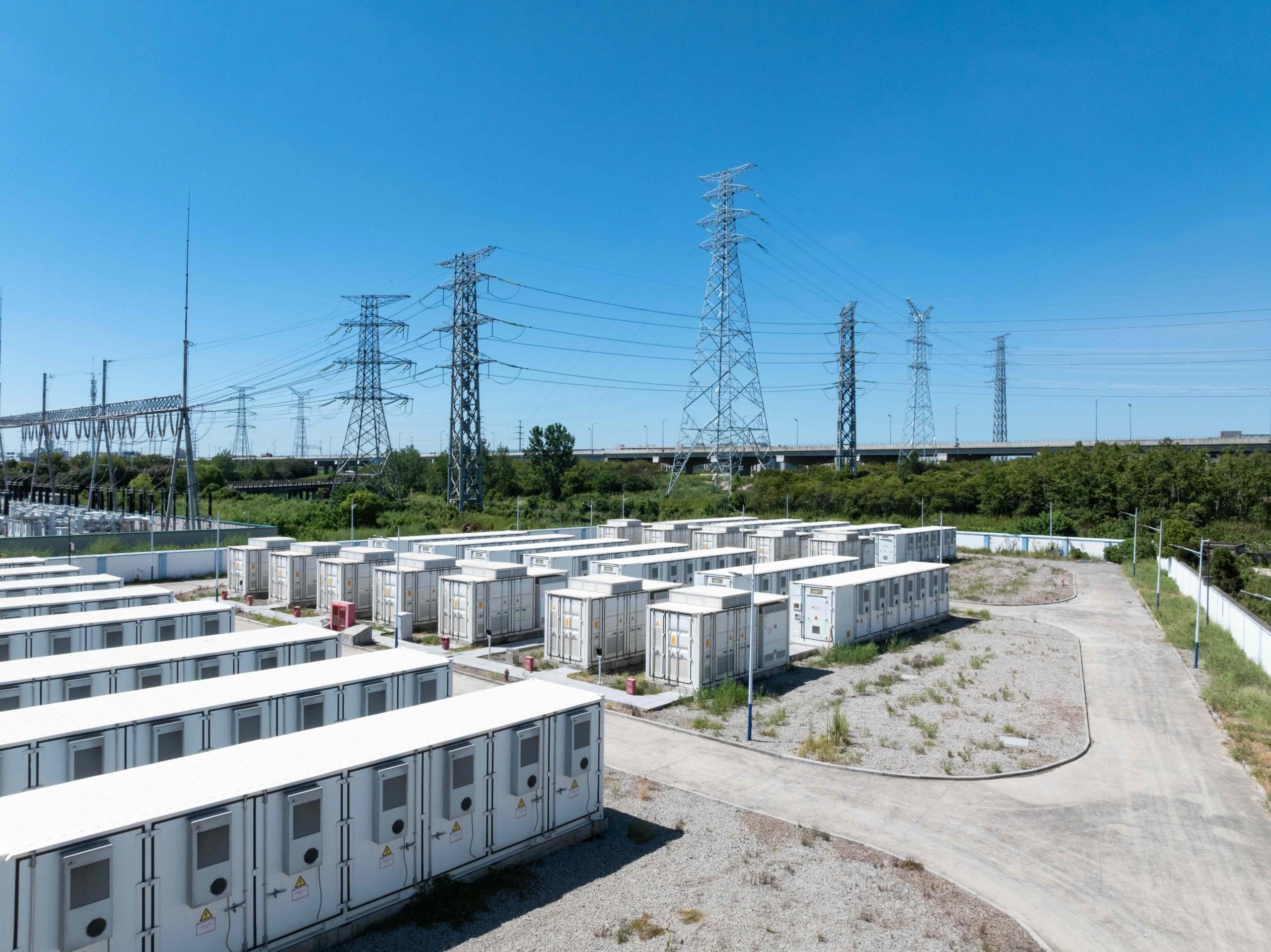
Aerial view of a battery energy storage facility with rows of storage units and electricity pylons in China.

Photo credit: zhudifeng / Getty Images Plus

Share