

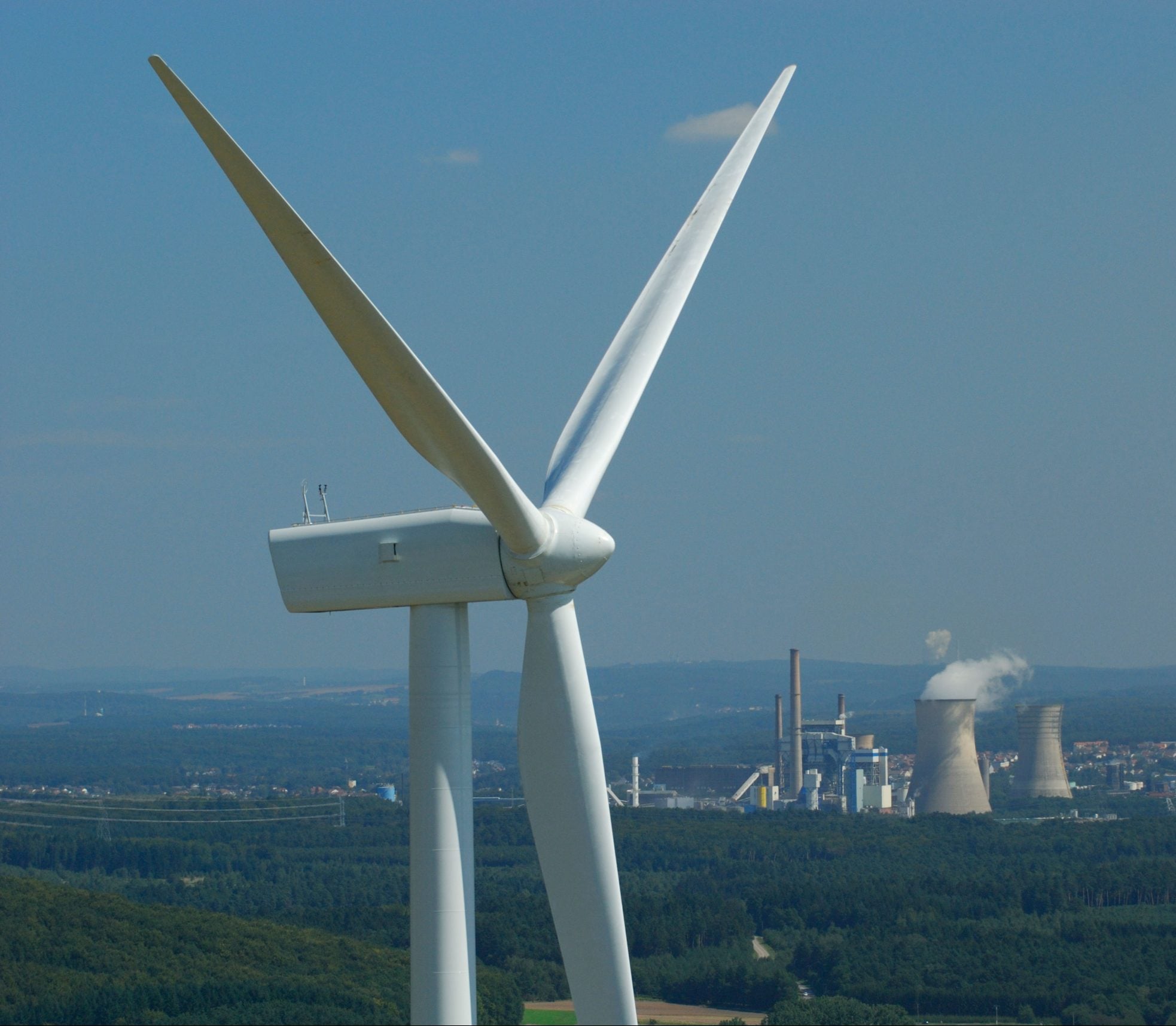
Three facts that show how solar and wind strengthen energy security
With three-quarters of the world in fossil-importing countries, new data from Ember shows that solar and wind have reached the price and scale to significantly displace fossil fuels and boost energy independence.
22 Apr 2025
9 Minutes Read

Fossil fuels are like renting a home, renewables are like owning one. The difference is simple: with fossil fuels you keep paying, prices are out of your control and the landlord can end the contract when they like. Renewables are an upfront investment, but provide long-term stability and independence. While clean energy infrastructure may require initial investment, it frees nations from volatile fuel imports and recurring costs, unlike fossil fuels, which are a permanent economic drain that keeps you dependent on an external force.
Key takeaways
01
74% of the global population lives in countries that are net importers of fossil fuels
Almost three-quarters of the world’s population live in countries that import fossil fuels. In some cases that reliance is very high (Japan relies on fossil imports to meet 87% of its total energy demand), in some cases much lower (imported fossils make up just 21% of China’s total energy demand). Fossil fuel exporting nations, which as of 2019 include the United States, do not represent most of the world’s population.
02
The import cost of a solar panel ‘pays back’ in just one year
Whilst a solar panel requires a one-off import cost, importing fossil fuels is a recurring cost. $1 spent on importing solar panels would save $1 annually in gas imports while generating the same amount of electricity.
03
Solar and wind already larger than global gasoline
The world is already producing solar and wind electricity (4,626 TWh in 2024) that – if used in electric vehicles – would be enough energy to displace all of the world’s gasoline consumption in 2024. This shows solar and wind are now mainstream technologies, having the potential to not only replace fossil fuels at scale in the power sector, but also in the transport sector and across the entire energy economy.
Fact 1: 74% of the global population lives in countries that are net importers of fossil fuels
According to the new calculations made using IEA Energy Balances Data for 2022, Ember estimates that 74% of the world’s population lives in countries that are dependent on fossil fuels from other countries.
This is slightly less than previous historic research from 2018, when it was reported that 80% of the global population lived in countries that were net fossil fuel importers. The shift is largely due to the US, which had long been a net importer but became a net exporter in 2019. Today, the US not only exports fossil fuels, but also aims to expand its exports in the coming years. Just 12 countries supply 80% of net fossil fuel exports.
Many countries rely on fossil fuel imports for the vast majority of their overall energy needs, including Japan (87%), Korea (81%), Türkiye (69%) and Germany (67%). In comparison, China has kept its import reliance relatively low to 21% of its energy needs by relying on domestic coal and clean electricity – and simultaneously electrifying its economy – to avoid increasing its import dependency on oil and gas.
Fact 2: The import cost of a solar panel ‘pays back’ in just one year, compared to the import cost of burning gas in a power plant
Importing one gigawatt of solar panels costs $100 million, based on the 2024 average global price of $0.1 per watt. At a 17% utilisation rate, this would generate 1.5 TWh of electricity per year.
Similarly, importing gas to generate the same amount of electricity (1.5 TWh) in one year also costs $100 million. That’s based on the average international LNG price of $11 per million BTU in 2024 and assuming a 55% efficiency when burned in a gas power plant.
However, while solar panels require a one-off import cost, importing fossil fuels is a recurring expense for countries. In 2024, $100m of solar panels could save $100m of gas imports in the first year, creating an ‘import payback’ within just one year. Over a 30-year lifespan of solar panels, this could result in savings equivalent to 30 years of gas import costs at 2024 prices.
There are, of course, additional costs involved in installing solar panels, beyond just the cost of the panel itself. According to IRENA estimates from 2023, these additional expenses — such as labour, land and financing costs – can add up to around $0.50 per watt of solar panel costs. Many countries are investing in domestic battery manufacturing to avoid future dependence on imports.
Fact 3: The world is already producing enough solar and wind electricity that – if used in electric vehicles – would displace all of the world’s gasoline consumption
Electrification of the global energy economy will require a lot more clean electricity – and clean electricity is already being built at a scale able to meet this challenge.
In 2024, global motor gasoline demand was 27.25 million barrels per day, equal to 14,042 terawatt hours (TWh) of energy. However, because internal combustion engines are only about 24% efficient, only a small portion of that energy was usable – 3,370 TWh.
Global solar and wind generation reached 4,625 TWh in 2024. Electric cars, which are about 84% efficient — far more than internal combustion engines – can convert this energy more effectively. While there is no ‘standard’ efficiency for gasoline and electric cars, we take the midpoint cited by the IEA.
Therefore, if the entire output of wind and solar were used in running electric cars, it would generate around 3,886 TWh of usable energy. This means solar and wind could already generate enough electricity to replace the global gasoline demand from motor vehicles – if the global gasoline vehicle fleet were all electric. This reflects that solar and wind are now mainstream technologies, which have the capacity to replace fossil fuels at scale, not just in the power sector but also in the transport sector and across the entire energy economy.
Solar and wind are on a fast upward path, having tripled in just the last seven years, meeting 15% of global electricity generation in 2024. The growth of electric cars is just getting started – the IEA’s 2024 World Energy Outlook showed electricity demand from electric vehicles is projected to rise from 115 TWh today to around 1000 TWh by 2030 in the Stated Policies Scenario.
The fact that wind and solar already generate enough energy to replace global gasoline demand underscores their potential to displace fossil fuels at scale—not just in electricity, but across the entire energy system. As clean electricity and electric vehicles continue to scale rapidly, the world has a clear opportunity to increase energy independence and bring down energy costs.
Acknowledgements
Cover image
Image by Thierry Grun – Aero/ Alamy Stock Photo
Related Content
Analysis
Storage target ambition is rising, but not fast enough to reach the goal
14 October 2026

Analysis
Electric energy security: how EVs are reducing oil import vulnerabilities
13 October 2026
Analysis
Bankable by design: Financing ASEAN's energy system transformation
06 October 2026
Analysis
Renewable Caribbean: towards energy independence
01 October 2026