
Chapter 5:
Policy recommendations
In this chapter
The road to 2035
In recent years, Türkiye has made significant progress in wind and solar energy, but further policy improvements can help the country achieve its 2035 targets.
5.1
The problem of limited grid capacity
Türkiye targets 120 GW of wind and solar capacity by 2035, nearly triple current levels. To meet this target, the country will need to add around 8 GW of new capacity each year, exceeding the 6.5 GW record reached in 2025.
There are several ways to deploy wind and solar capacity in Türkiye: renewable energy auctions (YEKA), storage-integrated wind and solar projects, unlicensed installations aimed at self-consumption, such as solar, and hybrid solar installations additions to existing plants. Nonetheless, securing the connection capacity is a prerequisite for deploying wind and solar.
YEKA auctions are planned to allocate 1 GW per year each for wind and solar. However, 2 GW per year is not sufficient on its own to meet the target capacity.
No new capacity has been allocated for storage-integrated wind and solar projects since applications were halted in 2023. For unlicensed projects, no available capacity has existed in any province since July 2025. In March 2026, 3.5 GW of new capacity was announced. This includes 1.5 GW at the transmission level and 2 GW at the distribution level.
Hybrid solar projects reached 3.5 GW of capacity by 2024, but this increased by only 140 MW in 2025.
5.2
Freeing up grid connection capacity
As long as the 33 GW of storage-integrated projects already allocated are not finalised, new capacity allocations for wind and solar will remain limited. From 2026 onward, resolving permitting issues—without compromising environmental and social considerations—will be critical to accelerating these projects. At the same time, cancelling inactive projects and reallocating their capacity would free up space, resulting in an acceleration of wind and solar installations.
5.3
Attracting investment to expand grid capacity
Türkiye will need substantial investment in its electricity grid to meet its 2035 goals. According to government estimates, reaching 120 GW of wind and solar capacity requires extra $28 billion in grid investment alone. This level of funding will require external financing.
International financial institutions could support grid investments. Although Türkiye has held discussions with the World Bank, no agreement has yet been reached at this scale. The European Investment Bank (EIB), which resumed operations in Türkiye in 2026, the Asian Development Bank (ADB), which began operations in 2025, as well as the European Bank for Reconstruction and Development (EBRD), which has previously financed many energy projects, could all play a role.
Additionally, foreign investors could help expand grid capacity while supporting clean energy projects. Companies from Saudi Arabia and the United Arab Emirates, which invest in renewable energy globally, could invest in Türkiye through bilateral agreements. An example of such cooperation was reached in February 2026 with Saudi Arabia. It includes the construction of a 2 GW solar plant with a 25-year power purchase agreement.
5.4
Diversifying resources against drought
Hybrid solar installations can be expanded at hydroelectric plants that cannot fully utilise their connection capacity due to drought. Currently, plant owners must wait for new capacity allocations to install solar panels as a secondary source.
Reduced hydroelectric generation caused by drought can be compensated with solar energy. Combining complementary sources can also reduce energy security risks. Türkiye has at least 8 GW of economically viable hybrid solar potential at existing wind and hydro plants.
5.5
Accelerating permitting processes
Improving permitting processes—one of the main barriers to renewable energy projects—can accelerate the deployment of new installations each year. A legal reform adopted in 2025, known as the “super permit,” aims to facilitate new wind and solar investments. This reform is expected to reduce permitting timelines from four years to 18 months for wind and from two years to 18 months for solar. Permitting remains the biggest bottleneck, especially for the 33 GW of storage-integrated projects.
To date, most solar installations in Türkiye have been utility-scale. Many unlicensed projects for self-consumption are also large, ground-mounted solar plants. In the coming years, Türkiye could tap into its estimated 120 GW rooftop solar potential, enabling electricity generation to align with demand.
5.6
Diversifying sources through different auction types
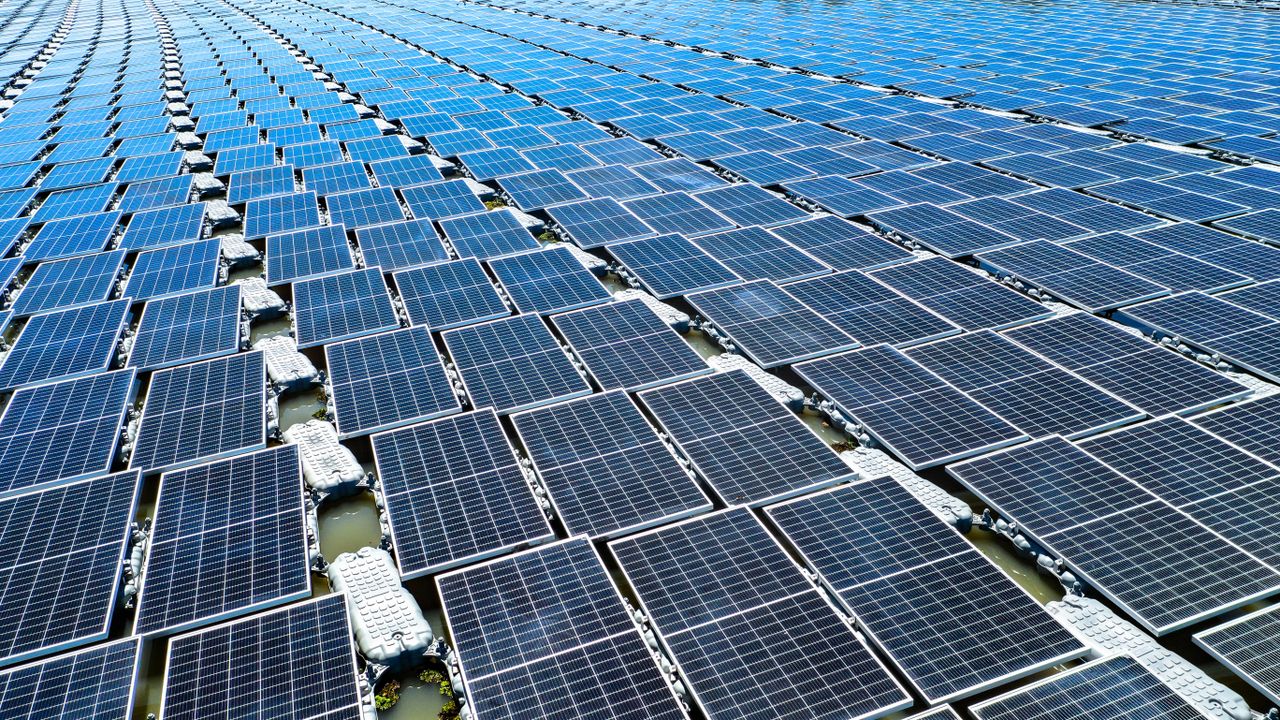
Until 2025, capacity in Türkiye was allocated through auctions only for onshore wind and solar. In 2025, a solar auction including a 35 MW floating solar project was held for the first time. A previous offshore wind auction in 2017 was cancelled due to lack of interest. Expanding auctions to offshore wind and large-scale floating solar could diversify clean energy sources and attract new foreign investors.
Türkiye has been preparing for offshore wind deployment for more than two years, including site selection and wind measurements. This means that an offshore wind auction could take place as of 2026.
Türkiye’s state-owned hydroelectric dams also offer vast reservoir areas. Even if only 10% of their surface area is utilised, there is a potential for 53 GW of floating solar capacity. These areas could be allocated through auctions for large-scale floating solar projects.
5.7
Using limited resources efficiently
The $8.7 billion purchase guarantee announced in 2025 for domestic coal plants contradicts Türkiye’s renewable energy goals. At a time when funding is needed for new energy projects and grid expansion, allocating resources to keep inefficient and ageing coal plants operational creates a policy mismatch.
Because these plants will operate regardless of market prices, they may complicate system management rather than enhance energy security. During periods of high solar generation and low demand—especially midday—excess electricity could increase further due to coal plants being forced to operate under the guarantee. Their inflexibility may make balancing the system more difficult.
5.8
Enhancing grid flexibility through regional cooperation
The growing share of wind and solar increases the need for flexible capacity that can quickly adjust output and maintain frequency and voltage stability. Batteries and hydropower plants with reservoirs or pumped storage can provide this flexibility. Cross-border interconnections can also play a key role.
As of 2025, Türkiye’s interconnection capacity stands at 2.1 GW for exports and 1.35 GW for imports. According to its latest strategy, Türkiye aims to increase export capacity to 6.75 GW and import capacity to 6.6 GW by 2035. However, the plan doesn’t specify which countries will be involved in these expansions.
Situated as a bridge between Europe, Central Asia, and the Middle East, Türkiye has a strategic advantage due to its wide interconnection options, diverse electricity generation mix, renewable potential, and access to multiple regional electricity systems with differing demand profiles.
Ongoing cross-border interconnection projects in the region also present an opportunity for Türkiye to become a central energy hub in the emerging regional electricity market. Regional cooperation can enhance grid flexibility, enable more efficient use of renewable energy potential, and generate export revenues. With its relatively high share of wind and solar compared to its eastern and southern neighbours, Türkiye can take a leading role in new interconnection projects and make its own targets more concrete.

Related Content