

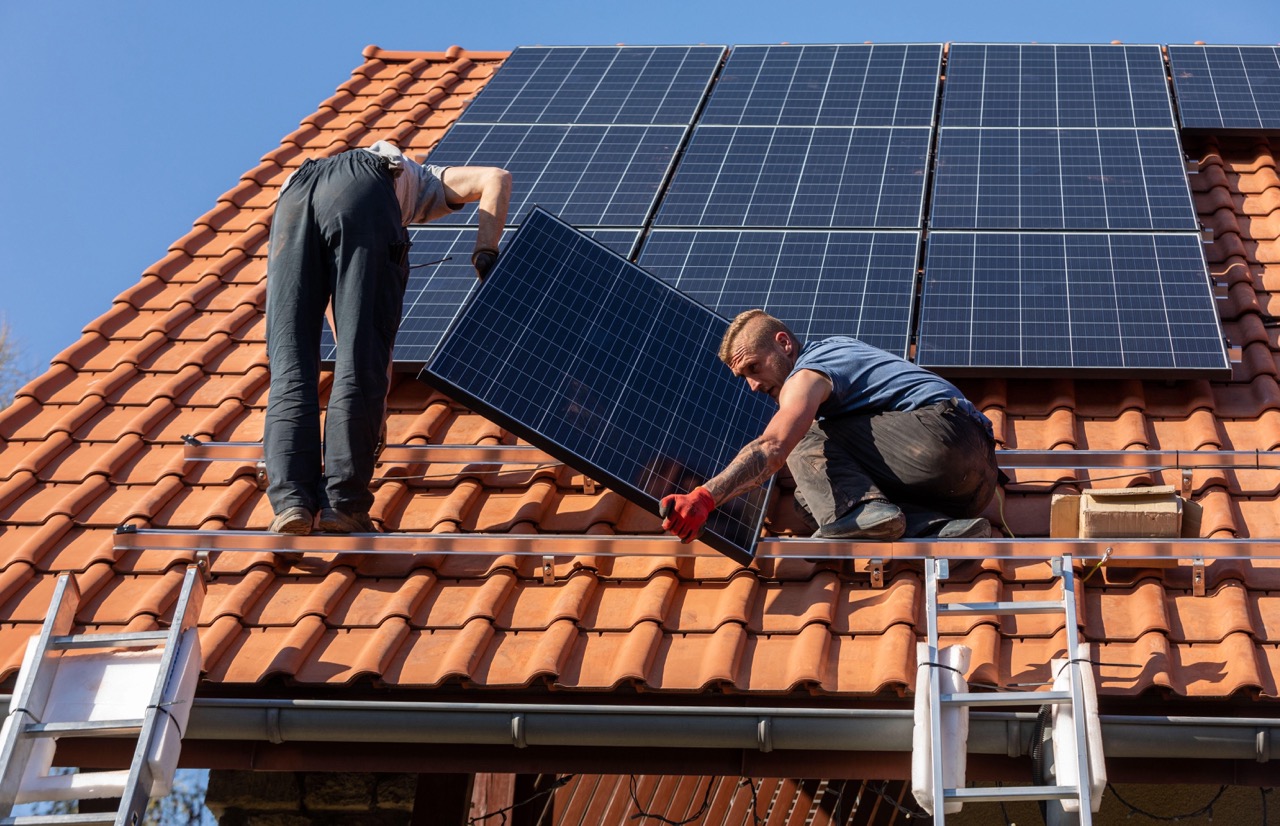
Turning to the sun: Solar rise in Central Europe
Solar power in Central Europe has grown at twice the EU average since 2019. Once associated with coal, the region is already Europe’s solar powerhouse and is quickly becoming the continent’s battery hub.
10 Sep 2025
14 Minutes Read


+
The key to ongoing solar success in Central Europe: flexible grids and storage
Read
2.1 Uneven batteries roll-out
Read Section
2.2 Untapped but promising demand flexibility
Read Section
Supporting information
Read

Smart policies turn coal laggards into solar leaders
Central Europe’s (CE) solar power generation has more than doubled the EU average growth rate over the past five years, despite the region’s modest solar potential, below average GDP and political hurdles.
Record-breaking summer months in 2025 saw solar supply over 40% of Hungary’s electricity and over one-fifth in Poland. Yet national plans for 2030 still set renewable targets well below the EU average, risking a slowdown in progress. To maintain momentum, CE countries need to match solar growth with grid flexibility and storage, building on their leading role in battery manufacturing.
- Central Europe’s solar generation grew at twice the EU average rate since 2019. From 2019 to 2024, Czechia, Hungary, Poland and Slovakia increased cumulative solar output nearly sixfold — from 5 TWh to 29 TWh, compared to the EU’s 2.5-fold increase (125 to 308 TWh).
- Hungary became a global leader in 2024, with solar energy contributing nearly 25% to its electricity generation. Czechia almost doubled its solar output since 2019 and became the first in the region to legalise agri-PV.
- The region is a battery manufacturing hub. Hungary and Poland consistently rank among the top battery exporters in the world. With one of the largest grid-scale battery project pipelines in the EU, Poland is turning into a leading market, while battery deployment lags behind in Hungary.
Central Europe has defied expectations: despite an unfavourable policy setting, it has become one of Europe’s solar success stories. Building on its emerging strength as a battery hub, the region is set to lead the next phase of the clean energy transition, provided the right policies are in place to ensure lasting leadership.
Solar growth in Central Europe exceeds all expectations
While Central European countries lag behind the EU in climate policy and set some of the lowest renewable energy targets, they’ve vastly outpaced the EU in growth of solar electricity generation.
Central Europe’s solar output grew over two times faster than the EU average
Solar power in Central Europe has been largely overlooked in discussions about Europe’s energy transition. Historically, the so-called Visegrad Four — Czechia, Hungary, Poland, and Slovakia — have shown limited ambition in building up their renewable energy generation. Their 2020 renewable energy targets fell below the EU average and they have frequently sought to dilute the EU’s climate policies, such as the European Green Deal. Yet since the introduction of the Green Deal in 2019, the four countries have increased solar output at two times the EU average rate.
Since 2019, cumulative solar generation across the EU increased from 125 TWh to 308 TWh in 2024, growing by almost 2.5 times. In the same period, solar generation in Central Europe climbed from 5 TWh to 29 TWh – a nearly six-fold increase, highlighting the region’s accelerating solar trajectory.
Once heavily dependent on coal, Central European countries are seeing their energy identity reshaped by a rapid solar surge. In the Czech Republic, coal’s share in power generation fell by 7 percentage points over the past five years, and the government moved its coal phase-out date forward from 2038 to 2033. In Hungary, coal’s share halved from 12% to 6% between 2019 and 2024, accompanied by a drop in gas from 25% to 19%. Poland generated more electricity from renewables than coal for the first time in June 2025, while the closure of Slovakia’s last dedicated coal-fired power plant in 2024 reduced its coal use in electricity generation to a minimum, now limited to co-generation plants. The success of these four countries in the growth rate of solar energy stands out as a significant example – not only for the European Union, but also for developing economies with energy systems still reliant on coal, offering a blueprint for emerging economies across the globe.
Hungary, Poland and Czechia surge ahead, leaving Slovakia behind
While the region as a whole has made remarkable progress, national developments tell a more uneven story. Hungary, Poland and Czechia emerged as the leaders, while Slovakia’s growth rate lagged behind.
In Poland, solar PV has become a cornerstone of its renewable energy expansion over the past five years. Solar generation grew from 0.7 TWh in 2019 to 15 TWh in 2024, an increase of more than twentyfold. The number of solar prosumers exceeded 1.5 million in June 2025. In 2022, Poland recorded the third-highest solar capacity additions in the EU.
After more than a decade of stagnation, Czechia re-entered the GW-scale solar market in 2023, adding over 1 GW of new PV capacity for the first time since 2010. The country had been an early European solar leader in 2009-2010, but retroactive policy changes and anti-PV sentiment stalled growth for years. The recent acceleration is evident in generation figures, as 2024 solar output (4 TWh) rose to nearly double its 2019 level (2.3 TWh). In 2024 alone, the grid connected nearly 45,000 new renewable and decentralised energy sources, many of them solar PV systems, equivalent in total capacity to one reactor of the Temelín nuclear power plant.
In both Poland and Czechia, the success of solar energy can be to a large extent attributed to the popularity of residential installations, supported by similar state initiatives, “Mój Prąd” (My Electricity) and “Nová zelená úsporám” (New Green Savings). Both programmes significantly cut upfront costs. Combined with rising electricity prices in recent years and relatively straightforward administrative processes, this has made them practical options for households looking to reduce bills.
The growth seen over the past few years has already translated into record-breaking output in 2025. In June 2025, solar power supplied a remarkable 42% of Hungary’s electricity, setting a new monthly record. Poland’s upward trajectory continued, with solar contributing a record 22% of the country’s electricity generation, while cumulative installed capacity reached 23 GW. Czechia also experienced a significant surge, surpassing its previous generation records, with solar covering 10.5% of electricity generation in June 2024 and rising to 14.7% by June 2025, underscoring the rapid expansion of solar across the Visegrad region.
In Slovakia, installed solar capacity showed only marginal growth between 2019 and 2023 (<50 MW). This slow growth was driven by unfavourable policies, including an eight-year moratorium on grid connections (“stop status”) that lasted until April 2021, as well as high grid connection costs and rising distribution network access charges. However, falling solar technology costs and high energy prices have since boosted interest in PV systems. As a result, Slovakia’s solar sector has recently accelerated, adding 267 MW of installed capacity in 2023 and 274 MW in 2024.
1.2 How Hungary became the world’s solar leader: smart policies turn into solar records
Hungary stands out not only among the Visegrad group countries, but also across the globe, for its leadership in solar generation share. In Hungary, solar’s share of electricity generation jumped from 4% in 2019 to nearly 25% in 2024, elevating the country from a regional leader to a global frontrunner.
Hungary’s remarkable rise to global solar leadership in recent years was driven by both utility-scale and residential installations. Up until 2023, Hungary had a favourable net-metering system in place, in which self-generated electricity can be deducted from consumed electricity on a yearly basis. It also implemented a feed-in tariff scheme, known as KÁT, which guaranteed long-term, above-market electricity purchase prices and priority grid access for producers. Coupled with high energy prices, this created powerful incentives for solar investment.
However, momentum slowed sharply in 2024 following a series of political decisions affecting renewable energy policy. In 2023, Hungary replaced its net-metering system with a net billing scheme. This policy shift triggered a downturn in the residential solar segment. On the utility-scale side, most new capacity commissioned in 2024 was built under the legacy KÁT scheme, but with few new projects in the pipeline and no new grid connection permits issued in the past two years, this segment is also facing stagnation.
1.3 Central European countries set their renewable energy targets below the EU average
In their first National Energy and Climate Plans (NECPs) from 2019, Hungary, Slovakia, Czechia and Poland occupied four out of the bottom five places in terms of national renewable electricity targets of EU Member States. The level of ambition was so low, that by 2024, Czechia, Hungary, and Poland had already exceeded their 2030 solar goals from those original plans.
While the updated NECPs reflect higher ambitions, the projected share of renewables in electricity generation remains below the EU average (66%). By 2030, renewables are expected to account for 31% of electricity generation in Czechia, 42% in Hungary, 51% in Poland, and 26% in Slovakia. Although declining solar costs and high energy prices may continue to drive solar installations, closing the gap with EU targets will require stronger political commitment.
There is a broad set of policy options available to unlock more of their solar potential. Czechia has taken a lead by legalising agri-PV in 2024, enabling solar deployment on farmland without removing its agricultural status. The country also now classifies projects over 15 MW as “energy security” facilities, granting them priority permitting and faster rollout. These policies could model for neighbors, boosting rural economies and decentralising power systems for greater resilience against potential energy infrastructure attacks by Russia.
The key to ongoing solar success in Central Europe: flexible grids and storage
To sustain the growth and benefit consumers, solar must go hand-in-hand with batteries and other clean flexibility solutions.
2.1 Uneven batteries roll-out
Central European countries have yet to match their rapid solar growth with similar progress in battery deployment. As of August 2025 Central European countries deployed just 0.1 GW of large-scale batteries, less than 2% of the EU’s installed capacity, despite accounting for 10% of the bloc’s solar capacity. The lagging battery deployment is already causing issues: in June 2025, an average of 12% of power generated by large scale solar plants in Poland was curtailed. Policy action to support solar must therefore shift to removing barriers for storage, demand response and other clean flexibility solutions.
While the region as a whole has very little deployed capacity, national battery project pipelines tell a more diverse story. As of August 2025, Poland’s installed large-scale battery capacity was low (around 0.02 GW), but a strong acceleration is expected within the next 5 years. The country has one of the largest grid-scale battery project pipelines in the EU: 7.3 GW, including 0.8 GW already permitted or in construction. This acceleration was boosted by batteries’ success in the 2023 and 2024 capacity market auctions, which provided a predictable revenue stream for new facilities, and, more recently, by a dedicated storage subsidy scheme, providing grants and loans up to €1.2 billion.
On the other hand, despite the surge in solar generation, Hungary has among the lowest operating battery capacity in the EU and a virtually absent battery project pipeline. Although barriers for co-located systems were removed and grid access rules reformed in early 2025, until very recently regulatory ambiguity hindered investment in large-scale storage facilities.
Battery roll-out in Central Europe could leverage the region’s flourishing battery manufacturing sector. In 2021 Hungary made up around a fifth of the EU’s battery manufacturing value added, second only to Germany, and as of January 2025 hosted nearly 40% of the bloc’s cell assembly capacity. Poland is already among the world’s top three battery exporters and has one of Europe’s biggest gigafactory pipelines. Without clear renewable deployment signals, Central Europe risks fragmenting its clean-tech value chain and deterring long-term investment. Scaling solar is essential to provide the reliable, low-cost electricity that battery factories require and to secure the region’s role in Europe’s industrial transition.
2.2 Untapped but promising demand flexibility
A key tool to integrate solar energy and lower costs for consumers is demand flexibility, but Central European countries have yet to fully harness its potential. Only a minority of households in the region have smart meters, ranging from 3% in Czechia to 36% in Poland, while other EU countries, such as the Netherlands, France or Spain, already reached over 90% in 2023. This makes it difficult for Central European consumers to shift their electricity consumption patterns and match them with the availability of solar energy.
However, there are signs of progress. In Poland demand flexibility from large electricity consumers has been used to balance the grid since 2017, with up to 1 GW contracted directly by the grid operator and since 2021 through the capacity market auctions. In September 2022, the rapid deployment of demand response helped balance the grid during a stress situation. In Czechia, over 90% of new home solar systems are coupled with a battery – one of highest attachment rates in Europe – and a smart meter. Since April 2025, the transmission grid operator procures demand flexibility from households for grid balancing. Roughly 400 home batteries can reliably charge or discharge into the power grid in an automated way. During the July 2025 local blackout in Czechia hundreds of households participating in a flexibility scheme helped restore grid stability by collectively absorbing 6 MWh of generation surplus in their home batteries.
Supporting information
Downloads
Download full PDF here
Methodology
Electricity generation data
Electricity generation analysis in this report is based on Ember’s open-access monthly electricity generation data.
Solar capacity data
Capacity numbers presented are in units of direct current (DC, gross output). Due to the lack of transparency on this issue in national reporting, not all capacity data in national energy and climate plans can be guaranteed to be in units of DC. The source used for solar capacity data is SolarPower Europe.
Solar targets data
The source for national solar targets is Ember’s Live EU NECP Tracker.
The 2030 capacity figures are derived from SolarPower Europe’s market outlook. SPE provides country-level estimates up to 2028 under three scenarios, with Medium Scenario anticipating the most likely development given the current state of play of the market. To obtain 2030 country-level figures for the Medium scenario, the 2028 estimates were extrapolated proportionally to match SPE’s published 2030 EU total.
Battery deployment capacity
The source for battery capacity is the Real-time Energy Storage Dashboard available on European Energy Storage Inventory, retrieved on August 21st, 2025, filtering for “electrochemical storage” in the technology category. As a time step is not available, it is assumed that the retrieved data points reflect the deployment and project pipeline as of August 2025. The dataset reports total storage power installed capacity (measured in GW) by country, representing maximum power that can be discharged by all the country’s batteries at a given time, starting from a fully charged state. It is assumed that the European Energy Storage Inventory includes only front-the-meter, grid-scale battery capacity, while it excludes behind-the-meter battery capacity (e.g. home battery). Project pipeline is computed as the sum of the following categories: in construction, permitted, announced.
Battery manufacturing capacity
The source for battery manufacturing capacity is Bruegel’s clean tech tracker, published in January 2025.
Acknowledgements
Contributors
Pawel Czyzak, Harriet Fox, Tom Harrison, Burcu Unal Kurban, Lauren Orso, Sachin Sreejith
Special thanks to: Delta Green for providing Czech demand flexibility data and insights.
Cover Image
Wieslaw Jarek / Alamy Stock Photo
Related Content

Analysis
Energy Institute Statistical Review of World Energy
30 June 2026
Analysis
The solarisation of Pakistan’s energy economy
25 June 2026
Analysis
UK solar homes power equivalent of five hours of daily air con use during heatwave
24 June 2026
Analysis
Batteries and demand flexibility are ready to scale across the EU
24 June 2026