
2024 in review
Demand and supply changes in 2024
Electricity demand rose 3% in 2024 after years of stagnation. Solar, wind and gas all rose to meet the rise in demand and offset a small fall in coal generation.
Demand rising fast, but not yet surging
Electricity demand growth in the US had been near-stagnant for 14 years from 2008 to 2021 (averaging 0.1% per year). However, in 2024, it rose by 3.0% (+128 TWh), following a 1.3% fall in 2023. This marked the fifth highest level of demand growth this century.
The country’s GDP rose by 2.8% and the population by 1%, both not unusually high compared to the period of stagnant electricity demand, therefore the rise in demand cannot be fully attributed to these factors.
A much hotter summer in 2024 compared to a mild one in 2023, explains some of the increase. According to Ember’s modelling, 25 TWh out of 128 TWh of the electricity demand rise in 2024 can be attributed to the difference in temperature compared to 2023. The analysis quantifies the extent to which higher or lower temperatures drive changes in monthly electricity use, isolating the impact of temperature variations from structural changes such as economic growth or increased electrification.
The modelling shows that a hotter summer added 35 TWh to air conditioning demand and milder winter months reduced heating demand by 10 TWh. An intense heatwave in June alone added 24 TWh (+8%) electricity demand
compared to a relatively mild June the previous year. The biggest rises by state were Arizona (+20%), Utah (+22%) and Nevada (+23%) in June, most of which can be attributed to increased air conditioning. Overall, temperature-adjusted electricity demand in the country rose by an estimated 2.4% in 2024.
The impact of data centres is significant – but still uncertain. Electricity demand from data centres is estimated to have increased from 176 TWh in 2023 by between 8 TWh (+5%) and 55 TWh (+31%) in 2024, according to recent analysis by Lawrence Berkeley National Laboratory (LBNL). The means between 6% to 43% of the overall 2024 demand rise could be attributed to data centres. This large uncertainty range reflects how difficult it is to track data centre energy use.
Electricity demand from mining cryptocurrency is also rising. It grew by an estimated 16%, adding 7 TWh in 2024 and accounting for 5% of the total rise in demand. That’s according to the latest December analysis by the LBNL. The bitcoin industry has been resisting disclosure, so estimates still contain a lot of uncertainty.
Just 3% (4 TWh out of 128 TWh) of the 2024 demand rise could be attributed to light duty electric vehicles. EIA data showed that demand from EVs grew to 11 TWh in 2024, making up just 0.25% of overall US electricity consumption.
Record solar led clean generation growth
Solar generation increased by a record 64 TWh, from 239 TWh in 2023 to 303 TWh in 2024, leading to a substantial increase in clean generation. Solar and wind together added 97 TWh to generation in 2024 compared to 2023, 64% more than gas (+59 TWh). The growth in all three sources met rising electricity demand while allowing coal to decline.
Solar
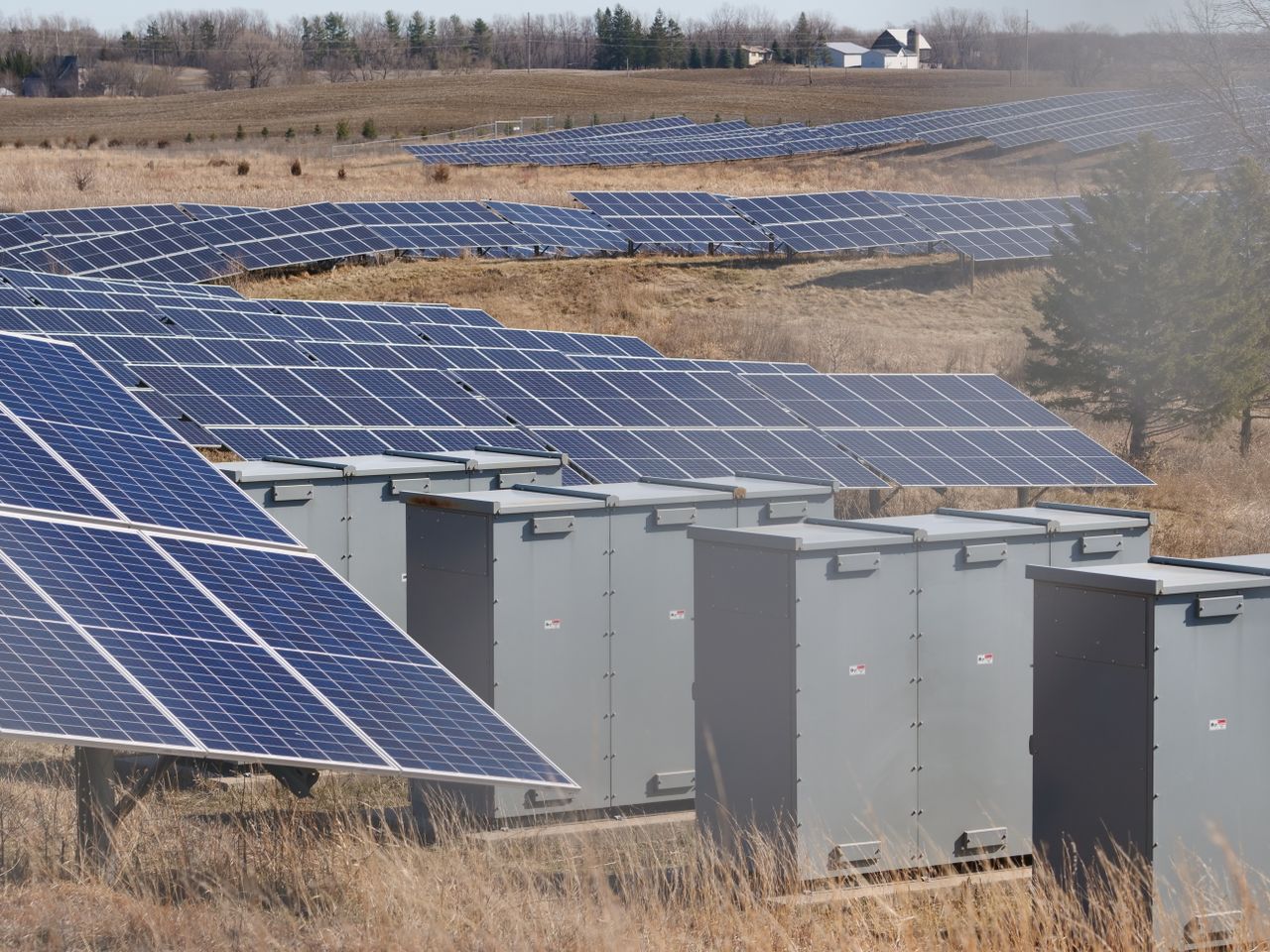
Solar generation increased by 27% (+64 TWh) in 2024, maintaining the strong growth trend seen in the past ten years. Overall, total solar generation reached 303 TWh, 7% of US total electricity generation and surpassed hydro generation (236 TWh) for the first time.
Of the 64 TWh increase in generation, the largest contribution was from Texas with 12 TWh, followed by 11 TWh from California, 5 TWh from Florida and 4 TWh from Arizona. 34 states saw increases of less than 1 TWh of solar generation.
Insight 2 provides an in-depth analysis of solar and battery growth.
Wind
Wind generation rose by a more modest 8% (+32 TWh) in 2024, however it still generated 50% more than solar, making up 10% of the US electricity mix. Of the rise in wind generation in 2024, about half was from newly installed capacity and the other half was from more favourable wind conditions which returned to average levels after very low wind speeds in 2023. Only 5.1 GW of wind capacity was installed in 2024 (5.0 GW onshore and 0.1 GW offshore), the lowest in ten years.
Of the 32 TWh increase, the largest contribution was from Texas with 5 TWh, followed by 3 TWh each from Kansas, Iowa, South Dakota and Illinois.
Nuclear, hydro and bioenergy
Nuclear generation rose 1% in 2024. The slight rise came with the commencement of operations of Vogtle unit 4 – unit 3 already began operations in 2023. The small rise didn’t keep up with the overall electricity rise, so nuclear’s share fell below 18% of US electricity generation, the lowest this century. In total, only 3 nuclear units have come online since 1998. Currently, there are no new commercial reactors under construction, although Palisades power plant is expected to restart in October 2025. No plants have been decommissioned since 2022.
Hydro generation fell 1% in 2024. Hydro generation fell to the lowest level since 2001 and was 10% less than the average of the last 20 years. The shortfall was mostly due to drought in the Columbia River basin, lasting into its second year, leading to low hydro levels in Washington, Oregon, Idaho and Montana.
Bioenergy generation fell (-1%) for the tenth year in a row, producing just 1% of US electricity generation.
Other sources: a small capacity geothermal plant (20 MW) began operations, while no new carbon capture plants were completed.
Fossil generation increased as gas rose almost three times more than coal fell
Fossil generation increased by 34 TWh (+1.3%) driven by a 59 TWh (+3.3%) increase in gas. This was partly offset by a smaller decline in coal, which fell by 22 TWh (-3.3%).
Coal
Coal generation fell 3.3% in 2024, marking the smallest year-on-year fall in the last ten years, except for the Covid rebound in 2021. The decline was driven by the closure of 4.5 GW of coal plants, equal to 2% of the remaining US coal fleet. It was the lowest rate of coal plant retirements since 2014. Of the 22 TWh fall, 6 TWh each came from Texas and Wyoming, 4 TWh from Florida and 3 TWh from Kansas.
Coal generation saw the largest falls in summer months, as solar replaced coal in the daytime hours. Gas was cheaper than coal in most places in most of the year, which led gas generation to replace coal.
Coal generation made up just 15% of US electricity generation in 2024.
Gas
Gas generation increased 3.3% in 2024 and remains by far the largest source of electricity in the US, accounting for 43% of the mix. The increase was driven by rising demand and cheaper running costs compared to coal.
Of the 59 TWh increase, the states with the largest rise were Virginia with 10 TWh, followed by Texas with 8 TWh and Ohio with 7 TWh. Gas generation fell in some states – California saw the biggest fall of 8 TWh.
Other fossil fuels
Other fossil generation, mainly oil, fell 9%, setting a new low. It now makes up just 0.7% of US electricity.
Imports
US net electricity imports fell by 5 TWh in 2024, to 14 TWh. This is the lowest import level since 2004. This was primarily driven by a reduction of imports from Canada due to poor hydro output, while flows from Mexico remained similar to 2023.

Related Content