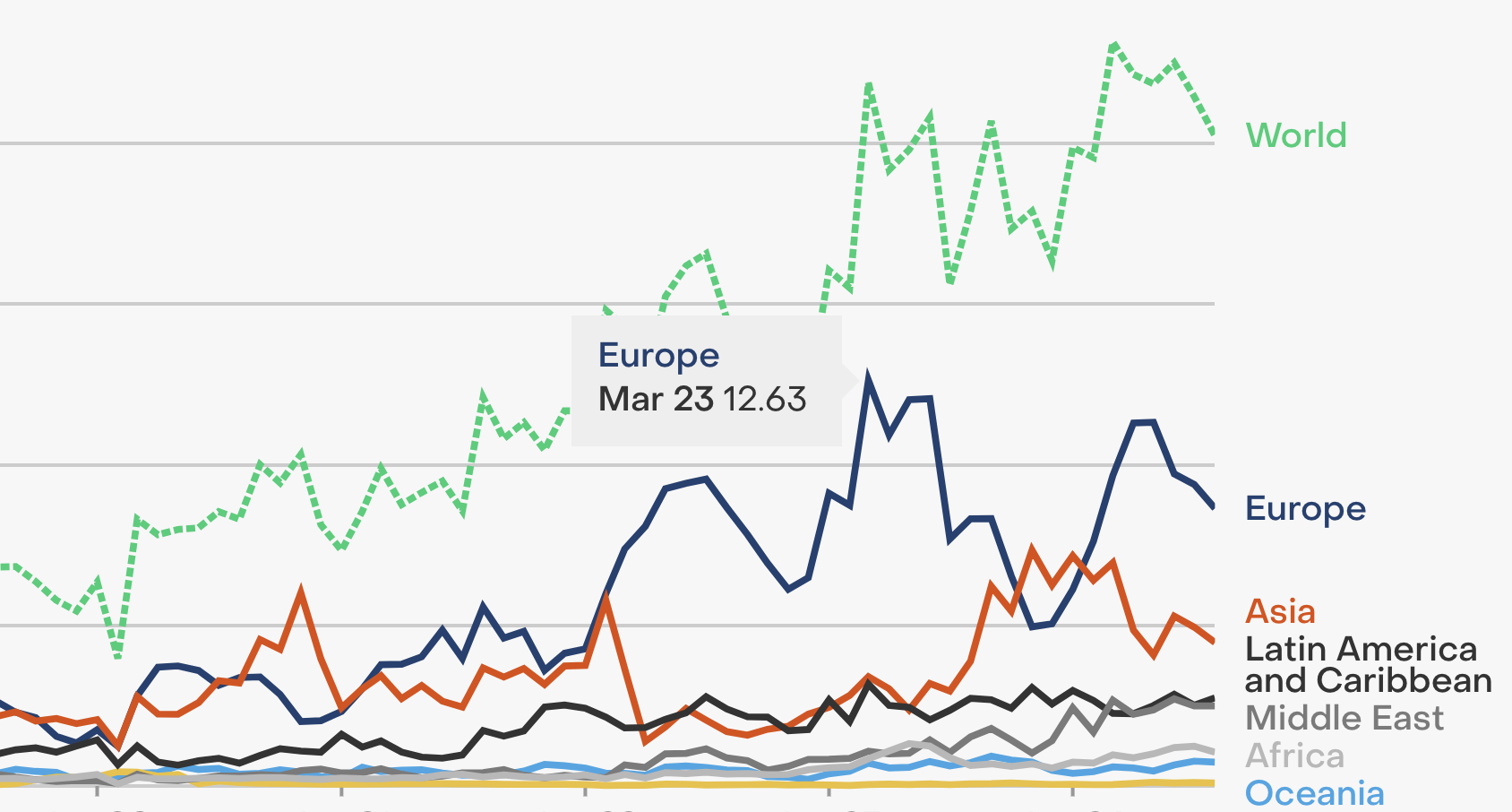
As well as installing more solar domestically, many countries in Asia and Africa are moving further up the solar value chain, building growing solar manufacturing and assembly capabilities. China’s exports of cells and wafers have been soaring, and overtook panel exports in October 2025, as panels are increasingly assembled outside of China. Solar panel exports rose 91% from February levels to reach 32 GW in March 2026, whilst cells and wafers exports rose 108% to 36 GW.
Solar, batteries and EVs help cushion fossil shocks
As the effects of high oil and gas prices ripple across global energy markets, alternatives such as solar, batteries and EVs will be crucial in helping countries become more resilient and reduce dependence on fossil fuels.
Data published by the Chinese customs authority and released in Ember’s China Cleantech Exports Data Explorer shows record exports of solar, batteries and EVs in March 2026, up 70% compared to March 2025 and up 38% compared to February 2026, in the wake of the US-Israel war with Iran.
China’s battery exports surged in March, as countries look to store daytime solar electricity to shift into the evening. Battery exports rose 44% from February to reach $10 billion in March 2026, and were especially high in the EU, Australia and India, markets with large energy storage pipelines.
Cleantech is increasingly reaching a scale that can cushion the impacts of global fossil shocks. Ember’s Global Electricity Review 2026, published on Tuesday, shows that record growth in solar generation in 2025 was sufficient to displace gas-fired electricity equivalent to all LNG exports through the Strait of Hormuz last year. The report also shows that the total global EV fleet displaced 1.8 million barrels per day of oil demand in 2025, equivalent to 13% of US crude oil production.