

Abandoned mine methane offers Wales an energy and revenue opportunity
Recovering abandoned mine methane reduces emissions of a potent greenhouse gas, turns it into a useful energy resource and lowers risks from uncontrolled gas migration while supporting former coal communities through local energy generation.
2 Jun 2026
13 Minutes Read


Directly measuring and capturing abandoned mine methane (AMM) can reduce emissions and create local energy.
It prevents methane, a gas around 82 times more potent than CO2 in the short term, from entering the atmosphere, while also turning it into a viable energy source.
- Wales accounts for roughly half of all modelled UK AMM emissions, yet there is no Wales-specific reporting, and the UK still relies on outdated estimates rather than direct measurement from mine shafts. South Wales alone is home to four of the UK’s ten largest emitting abandoned mine areas, reflecting the methane-rich geology of Welsh anthracite coalfields.
- Welsh coal mines hold around 168 thousand tonnes of methane, enough to generate about 880 GWh of electricity and deliver an estimated profit of £19.5 million by 2050 if captured and used. The UK already shows the technology works, with 16 operational AMM sites exporting 100 GWh and generating £2.3 million in gross profit in 2025, yet Wales has no active projects. This points to an untapped local energy opportunity.
- Weak data and policy gaps are holding Wales back – direct measurement and targeted financial support, such as subsidies or price guarantees, are needed. AMM operators say the lack of accurate, site-level measurement makes it harder to forecast output and identify additional methane reserves.
Note: On June 10, an additional sentence was added under section 3.1 following an update from the North Sea Transition Authority (NSTA)
Abandoned mine methane needs active management
Abandoned mine methane (AMM) is the gas that remains in coal mines after they have ceased operations.
This gas is typically trapped within mine voids, unworked coal seams and other gas-bearing rock strata disturbed by previous mining activities. In some instances, new methane can also continue to be generated post-closure by underground microbial activity.
Once an underground mine closes, the gas is free to migrate through the interconnected underground workings and it can rise and seep out through inadequately sealed mine shafts or fractured surface rocks, posing serious public safety risks such as accumulation in buildings, or explosions.
Furthermore, methane is a highly potent greenhouse gas with a global warming potential up to 82 times greater than carbon dioxide over a 20-year period.
As a result, effectively managing and extracting AMM is vital to mitigate climate change, prevent hazardous surface leaks and harness an otherwise wasted energy resource.
Wales significantly contributes to UK AMM emissions
Wales is a highly significant contributor to the UK’s modelled AMM footprint, accounting for around half of all emissions in 2023 and hosting four of the top ten largest abandoned mine areas.
This is driven by the unique geology of South Wales anthracite seams, which historical measurements reveal to be among the most methane-rich and geologically extreme coalfields in Britain.
2.1 South Wales anthracites are the most methane-rich in Britain
Historical underground measurements indicate that anthracite seams in South Wales consistently recorded the highest methane concentrations of any coalfield in Britain. Typical methane contents ranged from approximately 11 to over 20 cubic metres per tonne of coal (m3/t), compared with around 1–5 m3/t in many Yorkshire seams.
These high methane concentrations are attributed to a combination of factors, including the high rank of the coal, tectonic deformation and reduced permeability. As a result, South Wales was uniquely susceptible to severe gas outbursts and remains one of the most methane-rich coalfields in the UK.
The particularly high methane content of South Wales anthracite has important implications for AMM emissions, as methane retained within both mined and unmined coal seams continues to migrate and escape through shafts, fractures and imperfectly sealed workings.
2.2 Wales accounts for almost half of reported UK AMM emissions
Currently, there is no official reporting of AMM emissions specifically for Wales.
In the UK Greenhouse Gas Inventory, emissions from abandoned coal mines are reported as a single UK-wide aggregate which was 15.76 kilotonnes of methane in 2023. The UK uses emissions estimates based on a study and AMM model developed by the Department for Environment, Food & Rural Affairs (DEFRA) in 2010.
According to this model, Wales accounts for 49% of the UK AMM emissions in 2023. This represents the short-term warming impact of 7.8 thousand tonnes of CH4, or 655 thousand tonnes of CO2 equivalent.
Cumulatively, this will add up to 168 (±47) thousand tonnes of methane between 2026 to 2050, or 14.1 (±3.9) million tonnes of carbon dioxide equivalent (CO2e) using methane’s short-term climate impact.
The DEFRA study calculates that four of the South Wales zones (SWALES 4L, 8L, 9L and 10L) were among the top ten highest-emitting abandoned mine areas in the entire UK in 2010. Additional information on how the AMM emissions are calculated can be found in the supplementary materials.
2.3 Actual emissions are unknown due to monitoring gaps
Whilst the UK reports abandoned mine methane emissions using IPCC Tier 2/3 methodologies (see supplementary materials), this approach remains heavily reliant on emissions factors derived from outdated datasets.
The DEFRA study contains methane gas reserve estimates covering the period from 1990 to 2004. This underlying database was last updated in 2005.
Analysis by the British Geological Survey found that the total area with AMM potential in South Wales coalfield was 548 km2, however, almost double that area, 900 km2, was not assessed, and its AMM potential remains unknown. The report highlights that the prospects in South Wales are highly dependent on complex and largely unknown mine water recovery rates.
The National Atmospheric Emissions Inventory (NAEI) point source emissions register reinforces the monitoring gap. Facility-level methane reporting covers Aberpergwm Colliery, the sole active underground mine in the UK, at around 0.087 tonnes per year. The abandoned mine areas that account for the bulk of estimated Welsh AMM emissions appear nowhere in the register because there is no measurement infrastructure at those sites.
In practice, AMM emissions vary significantly both temporally and spatially, reflecting differences in geological conditions, mine history, hydrology and mine sealing practices. This variability is evident even within relatively confined regions such as South Wales, where methane content gradients have been reported to range from 8–20 m3/t.
The Coal Authority has records of over 175,000 coal mine entries from which AMM could be released, dating back to the 13th century; however, prior to 1872 there was no statutory requirement to deposit abandonment plans. As a result, a potentially significant number of mine entries remain undocumented.
Furthermore, even sealed mines may continue to emit methane through imperfect seals, legacy boreholes or fractures within the surrounding strata. These are all potential emission pathways that are poorly represented within emission factor-based estimation approaches.
Consequently, without direct, site-level measurement, it is not possible to accurately quantify emissions at the spatial and temporal granularity required to support effective understanding of emissions, and this constrains commercial deployment.
2.4 Official AMM inventories may underestimate emissions
Several independent studies and assessments suggest that official AMM inventories, particularly those relying on lower-tier methods, may underestimate actual releases.
Global underestimation of AMM trends
One study found that AMM emissions specifically are projected to increase by a factor of eight by 2100, outpacing the growth of emissions from active underground mines.
Incomplete infrastructure data
The US Environmental Protection Agency (EPA) has acknowledged that its own estimates for abandoned infrastructure emissions are likely large underestimates due to incomplete data. Globally, reliable data on the year of closure and the physical condition of abandoned facilities (such as whether they are properly sealed or flooded) are often unavailable, leading to high levels of uncertainty in Tier 1 and Tier 2 assessments.
UK abandoned mine methane emissions are highly uncertain
Estimates have ranged from 20,000 tonnes per year (Coal Authority) to 300,000 tonnes per year (Association of Coal Mine Methane Operators), according to a 2004 British Geological Survey report. The official UK Greenhouse Gas Inventory reported 15,760 tonnes of methane from abandoned coal mines in 2023.
Abandoned mine methane can be turned into energy
Abandoned mine methane utilisation is the process of extracting and repurposing the methane gas that continues to be emitted from coal mines once they have ceased operations, transforming it into an energy resource rather than venting into the atmosphere.
It also prevents the public hazard of uncontrolled migration of flammable and toxic gases to the surface and can help support former coal communities by supplying low-cost fuel.
Depending on the quality of the gas and local infrastructure, the most common commercial applications for captured AMM are electricity generation, combined heat and power (CHP) and direct sale to gas pipelines.
Its capture and use have been successfully deployed across several countries, including the UK, which currently hosts 16 projects, mitigating around 17–22 kilotonnes of methane per year.
3.1 The UK has 16 operational AMM sites generating £2.3 million in gross profit, but none in Wales
Spatial data on coal mine methane vent sites across the UK identifies 49 known methane venting sites. Of these, only 22 are currently operating; 12 have never started and a further 12 have ceased.
Three venting sites have been identified in Wales, none of which are currently operational: Ogmore Vale/Wyndham (South Wales) never started, and Pontycymmer (South Wales) and Llay (North Wales) have ceased.
While the UK had a fledgling AMM industry, its commercial growth suffered due to falling wholesale electricity prices and the fact that AMM does not qualify for renewable energy incentives.
Infinis is one of the only companies that operates on AMM capture and usage in the UK, reportedly covering 16 sites. In 2025, AMM generated a £2.3 million gross profit for the group. The company reportedly exported 100 GWh of power in 2022 and 132 GWh in 2021. In 2022, we estimate this to be equivalent to around 17–22 kilotonnes of methane.
To the best of the authors’ understanding, there are no AMM utilisation projects currently active in Wales.
Ember estimates that if the estimated Welsh AMM reserves were captured and utilised, they could generate approximately 880 GWh of electricity on average, delivering an estimated profit of approximately £19.5 million.
3.2. Lack of data hinders growth
Infinis highlights that its coal mine methane portfolio is relatively small and harder to quantify because there is no established third-party method for calculating methane volumes. By contrast, its landfill methane projects benefit from better data and stronger operator relationships, which support more accurate forecasting. Consequently, its methane capture operations from landfill cover 100 sites, while its coal mine methane sites are fewer and less predictable.
Exported power per landfill site averaged 10.5 GWh in 2022, whilst exported power per AMM site averaged 6.3 GWh. Given that five AMM sites represent 73% revenue, we estimate that the five major AMM operations have an average export power of 15 GWh.
Overall, the evidence indicates that reliance on estimated emissions factors, rather than direct measurement, is a key constraint on the deployment of abandoned mine methane mitigation in the UK. Detailed studies are required to identify the opportunity for AMM utilisation.
3.3 France has been utilising AMM for decades with tariffs and tax breaks
Capture and use of AMM started in 1978, and in the case of Avion in France, the site has been active in gas production for over 40 years.
France treats methane from abandoned coal mines as a recoverable energy resource, which means there is a tariff control system. Grid operators are required to purchase energy from AMM projects at a higher price, reflecting the risks and costs involved in building the installation.
France also implemented an array of tax benefits for operators of AMM projects, which additionally lowers costs. The most consequential of these is a reduction in VAT from 20% to 5.5%.
In 2022, the government further modernised the mining code to ease permitting and transfer of risk-prevention equipment for new exploiters of old mines.
Français de l’énergie (FDE) reports that its reserves have continued to grow over time, with permitting – not methane supply – now the main constraint. It notes that as mine pressure changes, more gas can be released, allowing additional reserves to be booked.
Policy recommendations
Mitigating AMM requires active incentives and can sometimes be challenging due to the often-complicated status of closed or abandoned mines and gas licences.
One of the key risks faced by AMM utilisation projects is energy price variability. The installations do not offer the same flexibility as other conventional power generation, so operators face the possibility of selling power unprofitably.
Ember considers subsidies to be one of the most effective AMM incentives. Price guarantees, subsidies and tax credits have worked well in incentivising AMM capture and utilisation in Europe, in particular in Germany and France. Guaranteeing a tariff, especially over long periods, ensures reliable sustainable income for investors.
The Welsh Government can act in three ways:
- Mandate source-level direct measurement: Establish a measurement and monitoring programme that requires site-level, direct measurement of methane emissions from closed and abandoned mines. The Welsh Government should work through Natural Resources Wales (NRW), planning authorities and environmental permitting systems to standardise monitoring methodologies, improve emissions transparency and develop a national evidence base for methane mitigation in Wales.
- Prohibit venting and flaring: Develop a Welsh AMM mitigation framework to minimise and progressively phase out routine venting and flaring of abandoned mine methane in Wales. The framework should align with international best practice, including principles reflected in the EU Methane Regulation, while working with the UK Government where reserved energy and emissions powers limit devolved action.
- Introduce targeted financial incentives: Develop targeted Welsh financial support mechanisms to improve the economic viability of AMM mitigation and utilisation projects. In designing these measures, the Welsh Government can draw on successful European approaches, including Germany’s long-term guaranteed energy tariffs for mine methane generation and France’s combination of tax incentives and streamlined permitting processes for AMM operators. The Welsh Government should also work with the UK Government to advocate for complementary UK-wide market incentives that support long-term investment in AMM technologies.
Supporting materials
Downloads
Download the full policy paper.
Methodology
UK AMM modelling methodology
In the DEFRA study, Welsh emissions were integrated into a broader UK-wide model that grouped coal mines into 154 distinct areas or zones, including the “South Wales Coalfield Zones”.
The calculations for the total initial gas reserves for specific mine zones use individual gas content data. For most mines, the DEFRA model applies a single long‑term emission rate of 0.74% of the underlying methane reserve per year, a value derived from regression on only eight UK mines (R-squared ≈ 0.71), none of which are located in Wales.
Some Welsh mine zones were still open and venting gas and had actual gas reserve data available. For these zones, a specific model for emission decay was developed.
The DEFRA study ultimately calculated that four of the South Wales zones (SWALES 4L, 8L, 9L and 10L) were among the top ten highest-emitting abandoned mine areas in the entire UK in 2010.
The current UK emission estimate updates the projected emissions by updating the projected closure dates used in the 2010 model to the actual dates.
IPCC Tier 2 and Tier 3 methodologies
The Intergovernmental Panel on Climate Change (IPCC) provides a tiered framework for estimating underground AMM. The Tier 2 approach requires mine-specific activity data and country/region-specific emission factors, allowing for more accurate estimates where abandoned mines are a relevant emission source. Tier 3 is the most detailed methodology, relying on site-specific measurements or advanced modelling.
Calculating Abandoned Mine Methane
The fundamental calculation for estimating emissions from abandoned underground coal mines, as outlined by the IPCC, involves subtracting recovered methane from gross emissions.
Methane Emissions = Emissions from Abandoned Mines – Methane Emissions Recovered
The UK’s methodology is designated as a Hybrid Tier 2/3 approach because it uses a mixture of national datasets and site-specific derived factors to calculate abandoned mine methane emissions.
For mines with available historical mine-specific emissions data or physical characteristics, particularly gassy mines, a Tier 3 method is used; for those without, a Tier 2 method is applied.
Tier 2 methodology
While the IPCC Tier 2 approach provides a general framework for calculating emissions based on the number of mines and their “gassiness”, the UK methodology replaces several generic parameters with more precise, measurement-derived data.
The UK uses country-specific activity data to define the scope of the calculation:
- Number of Mines: Instead of using global averages, the UK uses a database of 143 currently closed mine areas as of 2005 and projections for 11 mines scheduled to close by 2050. By 2050, the cumulative number of closed mine areas is projected to be 153. Hatfield Colliery reopened in 2007.
- Flooding Status: The model incorporates UK-specific research on mine flooding rates and mine water 3D modelling to calculate the likely year of flooding and determine which mines are still actively emitting gas, with methane emissions ceasing from fully flooded workings, rather than assuming 100% of mines remain unflooded.
- Activity Statistics: Initial gas reserves are estimated by combining spatial mine models with gas content data, flow data and accounting for disturbed coal seams, based on historic production and mine characteristics.
Tier 3 methodology
- Measurement-Derived Decay Rate: Unlike the default IPCC coefficients for a general Emission Factor, the UK utilises a “long-term emission rate” of the gas reserve per year. This rate is a Tier 3 element because it was derived from a regression analysis correlating the AMM reserves of eight specific UK mines with their directly measured methane flow rates from exposed vents.
- Mine-Level Reserve Modelling: The model calculates detailed gas reserve models for each abandoned coal mine, using spatial characteristics like depth and volume, combined with gas content and flow data. The decay rate is then applied to these unique, mine-specific gas reserve estimates.
The EU Methane Regulation
The EU Methane Regulation (Regulation (EU) 2024/1787, Chapter 4, Section III) obliges Member States to monitor and report and mitigate methane emissions from closed and abandoned underground coal mines:
- By 5 August 2025, Member States shall set up and make publicly available an inventory of all closed underground coal mines and abandoned underground coal mines in their territory or under their jurisdiction where operations ceased after 3 August 1954.
- From 5 May 2026, methane emissions shall be measured in all closed underground coal mines and abandoned underground coal mines where operations ceased after 3 August 1954.
“Measurement equipment shall be installed on all elements listed in Part 1, point 1.5, of Annex VIII which were found to emit above 0,5 tonnes of methane per year based on the inventory in paragraph 1 of this Article. That measurement equipment shall take source-level direct measurements or perform source-level quantification in accordance with the applicable standards or technical prescriptions established under Article 32, at least on an hourly basis and of sufficient quality to allow for a representative estimation of annual methane emissions from all elements listed in Part 1, point 1.5, of Annex VIII which were found to emit methane.”
- By February 2027, Member States must develop a mitigation plan.
- From January 2030, venting and flaring from equipment of abandoned and closed coal mines will be prohibited unless utilisation of methane or reduction of methane emissions is not technically feasible or risks endangering environmental safety, human safety (including that of the personnel) or health.
Acknowledgements
Contributors
Reynaldo Dizon, Izabela Urbańska, Ardhi Arsala Rahmani
Cover image
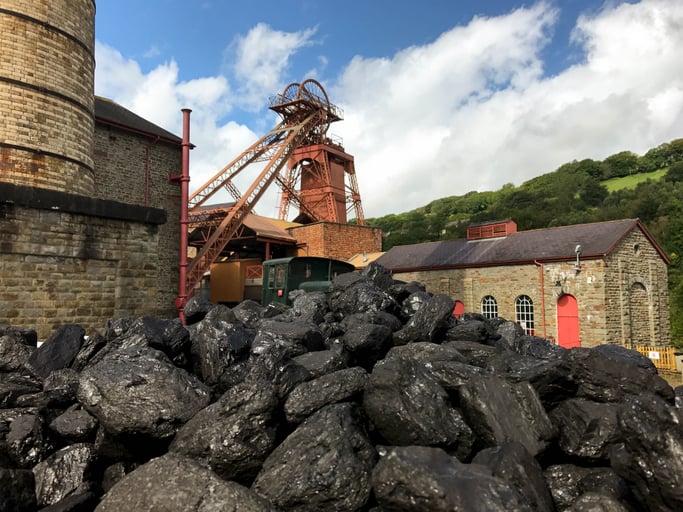
Pile of coal in front of the pithead and winding gear at the former Lewis Merthyr colliery in Rhondda Heritage Park, Porth, Wales.
Credit: Ceri Breeze / Getty Images Plus
Related Content
Policy papers
From oil dependence to electric security: a resilience roadmap for EU road transport
03 July 2026
Policy papers
Solar growth in South Asia has cut fuel imports for power but deeper reductions need electrification and regional grids
19 March 2026
Policy papers
Ember’s response to the public consultation on European Resource Adequacy Assessment
10 March 2026
Policy papers
Common biomass sustainability framework: consultation
27 February 2026