

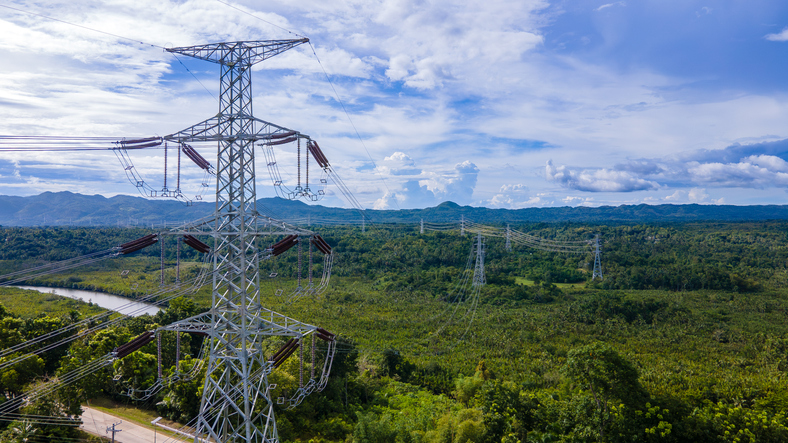
ASEAN’s low-carbon future flows through smart grids
Smart grids are ASEAN’s bridge to a clean energy future and a competitive global edge
14 Oct 2025
21 Minutes Read

Table of Contents
Executive summary
Read
Supporting materials
Read
Highlights
$2.3 billion
By 2040, stronger and more reliable power systems could unlock up to $2.3 billion in annual economic value for ASEAN
$4-10.7 billion
Smart grid investment of $4 to 10.7 billion is needed to modernise ASEAN’s power systems, support economic growth, and enable cleaner, more reliable energy
243,000 – 649,000 jobs
Investing in smart grid infrastructure could create new jobs across ASEAN, spanning engineering, construction, IT, operations, and supporting industries
Executive summary
Smart grids can save ASEAN billions and unlock clean energy growth
Renewable capacity in the ASEAN region has more than doubled over the past decade, and national targets continue to rise. Yet this rapid buildout coincides with fast-growing energy-intensive sectors, such as data centres, industrial parks, and manufacturing hubs, which require reliable, uninterrupted and verifiably sourced from renewables.
Traditional grids, built around centralised fossil supply, were not designed for today’s fast-paced renewable growth. Strengthening networks, enhancing cross-border links, and expanding demand-side flexibility will be essential to minimise curtailment, make full use of clean energy, and ease system pressures.
Smart grids offer a critical solution. By enabling advanced digital controls, real-time monitoring, and automated demand management, they integrate renewables more efficiently while ensuring reliability. They also open space for distributed resources like rooftop solar and storage, and provide the digital backbone for sustainable, investment-ready economies.
Smart grids are no longer optional – they are the backbone of ASEAN’s clean energy future. Investing in smart grid infrastructure is both an energy transition enabler and a driver of economic and industrial competitiveness. Modern grids unlock the full value of renewable assets, strengthen industrial growth, and position ASEAN at the forefront of the global green economy.

Alnie Demoral
Energy Analyst, Ember
Energy Analyst, Ember
Smart grids are an essential tool for meeting growing energy demands as well as managing increasingly complex energy systems in ASEAN and the wider Asia-Pacific region. They offer opportunities in reducing waste and pollution while maximising the efficient use of energy infrastructure. Regional cooperation will be an essential tool for realising the full potential of smart grids.

Carlos Kuriyama
Director, Policy Support Unit, APEC Secretariat
Director, Policy Support Unit, APEC Secretariat
Accelerating smart grid deployment can turn risks into a strategic advantage. Beyond strengthening reliability, smart grids can cut renewable integration costs, unlock green industrial growth, and advance regional power trade, positioning ASEAN to meet climate goals while securing competitiveness in the global low-carbon economy.
ASEAN has made early strides in smart grids, but progress is uneven and hampered by financing gaps, fragmented standards and limited coordination. Scaling up requires regional cooperation to harmonise grid codes, mobilise investment through clear cost-recovery and green finance, and share lessons from frontrunners.
While national governments must first secure financing, regional bodies can drive standardisation and peer learning. Smart grids promise not only energy security and renewable integration but also job creation, cleaner air and stronger regional competitiveness.
The findings of this report highlight the importance of collaboration between governments, businesses, and technology leaders. By advancing smart grids, ASEAN can strengthen energy security, accelerate renewable integration, and create the conditions for sustainable economic development. From data centres to manufacturing hubs, industries depend on steady and clean electricity. Smart grids can ensure that renewable power is delivered reliably, creating the conditions for continued industrial development, innovation, and regional opportunity.

Spencer Low
Head of Regional Sustainability, Asia Pacific, Google
Head of Regional Sustainability, Asia Pacific, Google
Sound energy infrastructure and smart grids underpin the energy interconnectivity that ASEAN envisions for itself. The region’s existing legacy grids cannot support the region’s renewed ambition of an ASEAN Power Grid, one that will increasingly encourage large-scale adoption of renewable energy and greater cross-border energy trading among Southeast Asian countries. ASEAN’s Low-Carbon Future Flows Through Smart Grids not only helps to project the investment needs required to achieve grid modernisation but also discusses strategic policy levers that can help the region unlock socio-economic advantages that come with regional energy integration. Understanding how to create an enabling environment is critical to helping ASEAN achieve its energy and climate ambition.

Sharon Seah
Coordinator, Climate Change in Southeast Asia Programme ISEAS-Yusof Ishak Institute
Coordinator, Climate Change in Southeast Asia Programme ISEAS-Yusof Ishak Institute
Key takeaways
01
ASEAN achieved a near 60% reduction in outage duration and frequency across the region from 2015 to 2020
From 2015 to 2020, ASEAN improved power reliability by nearly 60%, with SAIDI (average outage duration) dropping from 13.0 to 5.2 hours and SAIFI (outage frequency) from 8.6 to 4.4 hours of interruptions per user, driven by grid upgrades and stronger operational practices. Building on this momentum, ASEAN can enhance reliability further by sharing best practices and supporting improvements where gaps remain.
02
ASEAN countries can strengthen reliability in ways that match their unique needs
Each member state faces unique reliability challenges and opportunities. Value of Lost Load (VOLL) estimates highlight these differences: in Myanmar ($3.68/kWh), the Philippines ($3.55/kWh), and Indonesia ($3.52/kWh), the biggest gains come from reducing the risk of major blackouts. Whereas in Singapore, where the VOLL is $6.23/kWh, even small improvements in service continuity bring significant economic value. By tailoring reliability strategies to national contexts, ASEAN can maximise both resilience and user satisfaction across the region.
03
Three policy levers offer a pathway for ASEAN to scale early wins
ASEAN countries have piloted battery storage, expanded renewables, rolled out smart meters, and updated grid codes, proving global best practices can be adapted locally. To move from pilots to scale, governments can harmonise standards and grid codes to enable smoother renewable integration and regional power trading, mobilise finance and ensure cost recovery to attract investment and sustain utilities, and leverage peer learning and frontrunner models to replicate proven approaches and avoid costly trial-and-error.

Related Content
Analysis
Renewable Caribbean: towards energy independence
01 October 2026
Analysis
Methane doesn't read the label
30 September 2026

Analysis
Annual coal mine methane emissions are linked to tens of thousands of deaths
30 September 2026

Analysis
Indonesia's captive coal giant: better data to shape industrial competitiveness
23 September 2026