
Chapter 2:
Invest $4 - 10.7 billion in smart grids to fully unlock clean power potential
In this chapter
ASEAN needs $4–10.7 billion in smart grid investments to deliver reliable, clean energy to its expanding economies. The scale is significant, but so too are the opportunities.
Singapore’s Grid 2.0 strategy illustrates the benefits of acting early. It combines advanced digital grid management, energy storage, demand-side flexibility, and regional interconnections. A centrepiece of this approach is the Grid Digital Twin, a virtual model that enables real-time simulation, predictive maintenance, and risk-aware planning.
Together, these investments show how strengthening hardware through modernisation and embedding intelligence through smart grids will make Singapore’s power systems strategic assets for competitiveness.
Across ASEAN, smart grid ambitions are increasingly embedded in national policy frameworks. Malaysia’s National Energy Transition Roadmap promotes smart meters, predictive maintenance, automation, and cybersecurity, alongside reforms such as Third-Party Access to enhance competition and renewable uptake.
Thailand’s 20-year Smart Grid Master Plan has spurred pilot projects on renewable forecasting, smart metering, and demand response. In the Philippines, the Smart Distribution Utility Roadmap and forthcoming Smart & Green Grid Plan aim to prepare distribution networks for large-scale renewable integration.
Indonesia has already deployed over 1.2 million smart meters as a part of its medium-term plan, while Vietnam’s Smart Grid Roadmap, which is being developed, targets curtailment reduction and long-term modernisation.
Despite differences in approach, a shared vision is emerging that smart grids are digital, flexible, and consumer-empowering.
- On the system side, automation tools such as Supervisory Control and Data Acquisition (SCADA) and Wide Area Monitoring Protection and Control (WAMPAC) strengthen reliability, while storage, forecasting, and Energy Management Systems (EMS) enable efficient renewable integration and optimise flows across generation, storage, and demand.
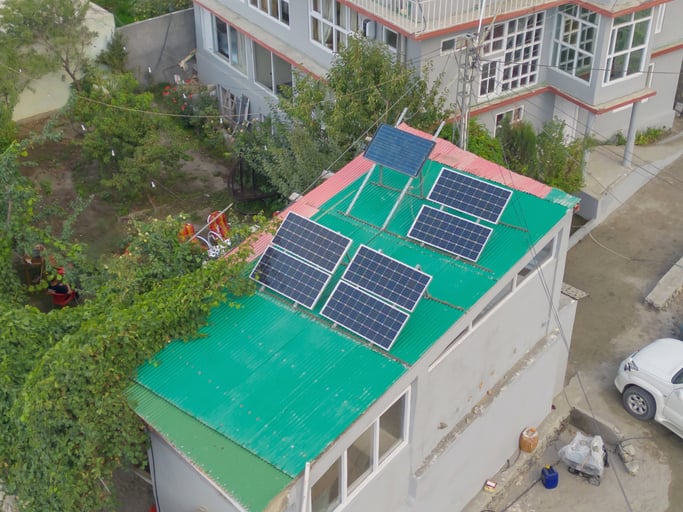
- On the consumer side, smart meters, demand response, and rooftop solar are turning households and businesses into active “prosumers,” with EV charging and peer-to-peer trading adding new layers of flexibility.
Costs vary across technologies. Low-cost options such as smart meters, demand response, and forecasting tools improve efficiency, reduce peak demand, and support renewable scheduling. However, many rely on higher-cost investments like automation, EMS, or storage to operate effectively and deliver sustained system benefits.
Medium-cost measures strengthen grid resilience and support greater consumer participation, while higher-cost investments in storage and EV charging provide critical system services of stabilising the grid, integrating variable renewables, and supplying backup capacity.
Across all cost levels, however, increasing digitalisation also heightens exposure to cybersecurity risks, making parallel investment in protection and resilience essential to safeguard both systems and consumers.
Together, this portfolio of solutions positions smart grids as the backbone of ASEAN’s energy transition, capable of reducing outages, cutting losses, and enabling greater renewable penetration, while advancing the region’s vision of a more competitive, resilient, and sustainable energy future.
2.2
The question isn’t ‘If’ but ‘How fast’
For ASEAN, modernising the power grid is no longer a choice. Smarter, more flexible grids are essential to keep pace with rising electricity demand and growing shares of solar and wind. The debate is not whether to invest, but how much — and how quickly.
The challenge is that there is no single benchmark. Around the world, countries spend very differently depending on what their systems need. Europe has invested heavily in digitalisation and cross-border connections to handle large shares of renewables.
China has channelled funds into provinces where wind and solar curtailment were highest. India, with lower renewable shares, has focused on modernising distribution in selected utilities.
Smart grid spending generally reflects local challenges, not a one-size-fits-all formula. For ASEAN, this report identifies three indicative investment pathways, derived from international benchmarks and adapted to regional conditions.
- A low-level pathway (around $6 per capita) prioritises strengthening basic reliability through distribution network upgrades, smart meter rollouts, and reduced outages, similar to India’s experience.
- A medium-level pathway (around $ 10 per capita) focuses on preparing grids for rapid renewable growth with digital controls, advanced forecasting, and storage to minimise curtailment, reflecting China’s approach.
- A high-level pathway (around $16 per capita) targets advanced flexibility through regional interconnection and cross-border power trade, following the trajectory of the EU.
These pathways are not prescriptive, but provide a useful frame of reference for ASEAN policymakers to consider investment trade-offs and sequencing.
Each level delivers distinct benefits. Even at the low end, households and businesses would see fewer outages and lower technical losses. A medium push would allow more renewable power onto the system, reducing waste and cutting reliance on fossil backup. At the high level, investment could support an interconnected regional market, improving resilience while enabling a deeper clean energy transition.
Applying international benchmarks across ASEAN populations suggests upfront smart grid investment requirements of around $4 billion for a distribution-focused pathway, $6.7 billion to enable rapid renewable energy growth, and $10.7 billion to support regional integration.
Most of this need falls to Indonesia, the Philippines, and Vietnam, which together account for more than half of the regional total. By contrast, smaller countries such as Brunei, Laos, and Singapore require relatively modest absolute sums, though their per-capita costs are higher. This illustrates how the same benchmark scales differently depending on population size and national system characteristics.
However, the figures are indicative, not precise forecasts. Actual investment will depend on policy ambition, system conditions, and technology choices. Singapore shows this in practice. Its cumulative spending on digital grid programmes, covering the Intelligent Energy System pilot ($30 million SGD), and Grid 2.0 R&D investment ($55 million SGD), roughly amounts to $65 million USD, which falls within the benchmark range of $34–90 million USD. This suggests the benchmark is a reasonable reference, while also leaving room for countries to allocate more resources should they pursue higher levels of digitalisation, flexibility, or regional integration.
2.3
Smart grid deployment hinges on the right mix of financing and policy innovation
Smart grids are critical to ASEAN’s clean energy transition, but they require substantial upfront investment. The challenge is not only technical but also financial.
In advanced economies, strong regulation and utility creditworthiness enable grid upgrades to be financed through capital markets, often via green bonds, while government incentives help reduce risks. Market-driven models are also emerging, where consumers directly pay for smart meters in exchange for greater transparency, energy savings, and convenience.
In developing countries, concessional and blended finance play a larger role, with multilateral development banks (MDBs) providing loans and guarantees, and governments co-financing through performance-based schemes, as seen in India.
Under India’s Revamped Distribution Sector Scheme, the central government provides grants to cover part of the capital costs for smart metering, loss reduction, and grid modernisation. These grants are performance-linked, meaning distribution companies receive the funds only if they meet agreed milestones.
Singapore shows what strong institutions can achieve. The Energy Market Authority mandated grid digitalisation and, in partnership with SP Group, a state-owned utility, funded deployment directly through its green financing framework, recovering costs through regulated tariffs. This demonstrates how clear regulation and capable utilities can drive progress without donor support.
For ASEAN, Singapore offers a governance blueprint. But as most utilities lack SP Group’s financial strength, regional strategies will need to combine MDB-backed blended finance, green bond frameworks, public–private partnerships, and regulatory reforms that secure cost recovery while protecting consumers.

Related Content