
Getting off imports to stabilise UK electricity bills
Clean Power 2030 cuts expensive gas imports, but biomass imports remain high
The UK Clean Power 2030 Action Plan aims to reduce reliance on fossil fuels. Other imports such as biomass remain in the power system by 2030, increasing UK exposure to volatile energy bills.
Clean Power 2030 cuts gas import reliance quickly
Clean Power 2030 will reduce gas use in the power system to below 5%
Since 2014, gas has been the single largest source of power generation in the UK. However, progress towards a clean power system by 2030 aims to reduce the UK’s reliance on gas imports. In December 2024, the UK Department of Energy Security and Net Zero (DESNZ) published a Clean Power 2030 Action Plan to tackle overreliance on gas in the electricity system. This 2030 plan intends to reduce the proportion of gas used in power generation to below 5%, down from 28% in 2024. This will limit both the total volume of expensive gas purchased but also the number of hours that gas sets the price in the wholesale electricity market – restraining the impact of gas price volatility.
Gas imports are expected to be cut by over half by 2030
Ember estimates that the Clean Power 2030 Action Plan will cut gas imports for electricity generation by 57% (-53 TWh) in line with the NESO ‘Further Flex & Renewables’ modelling. This is due to a large reduction in gas power use, displaced by a rise in renewable power generation. Overall, gas consumption for power generation is forecast by NESO to fall from 204 TWh in 2023, to 53 TWh in a 2030 clean power system. Clean power deployment therefore limits the availability of gas power plants to influence the wholesale power price, as well as reducing overall import volumes.
The accelerated deployment of low-carbon power generation in the Clean Power 2030 Action Plan will reduce total gas consumption for power by around three-quarters (-154 TWh). Achieving this demand reduction is critical to reduce exposure to market volatility, because the import reliance of gas supply is forecast to increase from around half (45%) in 2023 to over 75% of supply by 2030, due to a decline in UK gas production.
Clean power supports long-term price stability
Reducing gas use lowers electricity bills risks
Cutting reliance on gas for power through the Clean Power 2030 Action Plan reduces the exposure of UK bill payers to high gas prices and market volatility. The largest component of residential electricity bills is the wholesale price of power which is typically driven by gas power prices, other components include network costs, VAT, and policy obligations.
In the UK wholesale power markets, the cheapest generators are used first, but the overall price is set by the most expensive units needed to meet demand, which in recent years has meant that expensive gas power plants often set the price of power. During the energy crisis in 2022, it was the wholesale price of power, largely set by the cost of gas, which increased significantly, which in turn drove the overall consumer electricity bill sharply upwards.
Gas prices are therefore critical to UK electricity costs, but whether produced domestically or imported, the price of UK gas is not set by the government but linked instead to international markets. Some power prices can be fixed in advance through Contracts for Difference (CfDs) which support low-carbon power generators by auctioning a set price of power to developers, or through bilateral agreements. However, day-ahead electricity prices are strongly linked to the volatile cost of gas in the European market, which has risen across 2024 and into 2025, with direct impacts on wholesale electricity prices.
Looking forward, reducing gas use by building clean power generation alternatives cuts power price volatility. Recent modelling by Baringa highlighted that household electricity bills would increase by five times less in a clean power system if faced with a comparable energy crisis, compared with 2022. Reducing gas use through a transition to a clean power system is the fastest way to reduce the impact of international gas prices on UK energy bills.
The long-term decline in domestic gas production, even with potential new discoveries, means that new gas infrastructure locks-in future import reliance. This analysis has assumed both that current discoveries are developed and assessment of additional potential fields are discovered and developed. Therefore, this is a conservative estimate and actual production may be even lower. The long-term decline in gas production means that a new gas power plant or gas CCS power plant will be more than twice as reliant on imports over its lifetime compared to historic gas power stations. For instance, a UK gas power plant built in 2025 will rely on 80% imported fuel over its lifetime, while a plant built in 2000 was 30% reliant on imports.
Renewable energy has reduced the impact of fossil fuel import reliance to date
Since coal use in the UK power sector peaked in 2012, renewable power has increasingly displaced coal power without increasing the overall share of gas power. In 2024, the gas share of total power generation fell to its lowest since 2015.
Clean power generation displacing fossil fuel use has restrained a rise in imports, as between 2012 and 2024 gas power on average relied on imports for 48% of supply. Furthermore, some low-carbon support schemes paid back to consumers as the price of electricity rose during the energy crisis. In 2022, payments from renewable generators with CfDs helped reduce household annual electricity bills by £18. So far, renewable power has helped limit the rise in gas imports, as well as reducing the impact of gas price surges. However, accelerated deployment is now needed to further reduce import reliance.
The wind down in biomass power has begun
Wood pellet price volatility reveals an opportunity to extend energy security
As the prices of gas jumped during the recent energy crisis, other imported fuels also saw cost shocks. Due to the reliance of large-scale biomass power on imported wood pellets, generators are exposed to knock-on price volatility during an energy crisis. The average wood pellet import price level, measured by value per volume imported, jumped 34% in 2022/23 compared to the pre-crisis average, and remains 27% above average in 2024.
Recent government announcements signal a shift towards lower biomass use
The Clean Power 2030 Action Plan does not explicitly target reduced biomass consumption, though more recent announcements signal the beginning of a wind down. The government action plan includes a capacity range for ‘low-carbon dispatchable power’ of both higher and lower than current biomass capacity, meaning there is no commitment to reduce imports, despite the high cost of biomass power generation and its high import reliance.
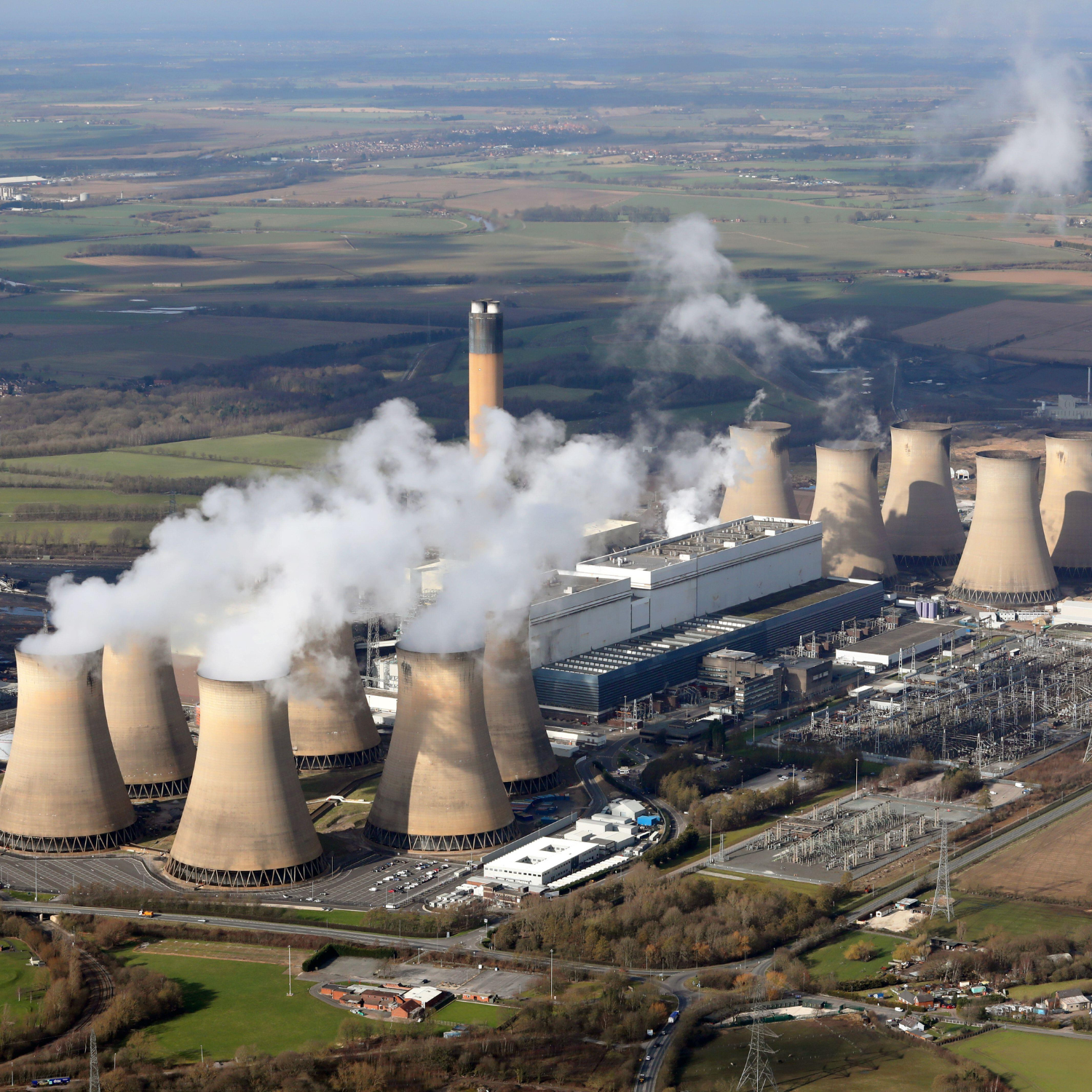
Recent Ember modelling however, suggests that high capacity levels are not required in a 2030 clean power system. Modelling showed that generating capacity at Drax power station, the largest biomass power plant in the country, could be reduced to a quarter of its current size within a stable functioning 2030 clean power system. This is a large reduction from current levels. In 2024, wood pellet import expenditure and volumes likely reached record highs, over 9.6 million tonnes, with generation at Drax power plant increasing 28% on 2023 levels.
In February 2025 a government decision was announced for the future of subsidies for Drax power station beyond the current end of subsidies in 2027. The announced subsidy package introduces some additional limits and conditions on subsidy payments to large-scale biomass power generation, including capacity factor limits and a contract limited to four years. These conditions will cap the estimated annual subsidy to half of its current level, and cut total biomass generation across the year.
Although this subsidy extension will support generation in the near term, it is at a far reduced level compared to current consumption. Further, enforcing the subsidy conditions could facilitate a longer-term reduction in biomass power, particularly as new renewable generation minimises the need for additional and more expensive power generation.
Minimising biomass generation represents an opportunity for a clean power system in 2030 to go further in cutting import reliance, beyond gas reduction.
Accelerated support for clean power generation and energy system flexibility will reduce the role of biomass to the margins of the power system, reducing import reliance and expenditure.
Other energy users remain reliant on imports
Reducing gas use for power helps to cut import bills, but other sectors remain reliant
Gas demand has fallen in recent years, partly due to its high prices, as well as the rise of renewable energy and higher electricity imports. There have been further reductions in the overall use of gas too. The biggest reduction in gas demand has been in annual household use (-133 TWh since 2000), followed by power generation (-119 TWh) and in industry (-96 TWh). However, despite these reductions, gas remains a critical source of energy. Used across the economy, gas is currently the second largest source of energy, behind oil, meaning increases in the price of gas have wide effects, raising energy bills for power, industry, and domestic heating.
The Clean Power 2030 Action Plan will cut expensive gas imports, and more recent policy announcements have signalled a shift away from biomass generation too. Unshackling the UK from these energy imports will support long-term price stability as the proportion of home-grown electricity steadily increases. Looking ahead, as other energy uses such as household heating and transport remain reliant on imports, a strategic approach to reducing imported fuel consumption in other sectors will extend the benefits of clean power, and support the evolution of a more stable energy system.

Related Content