

Energy Security in an Insecure World
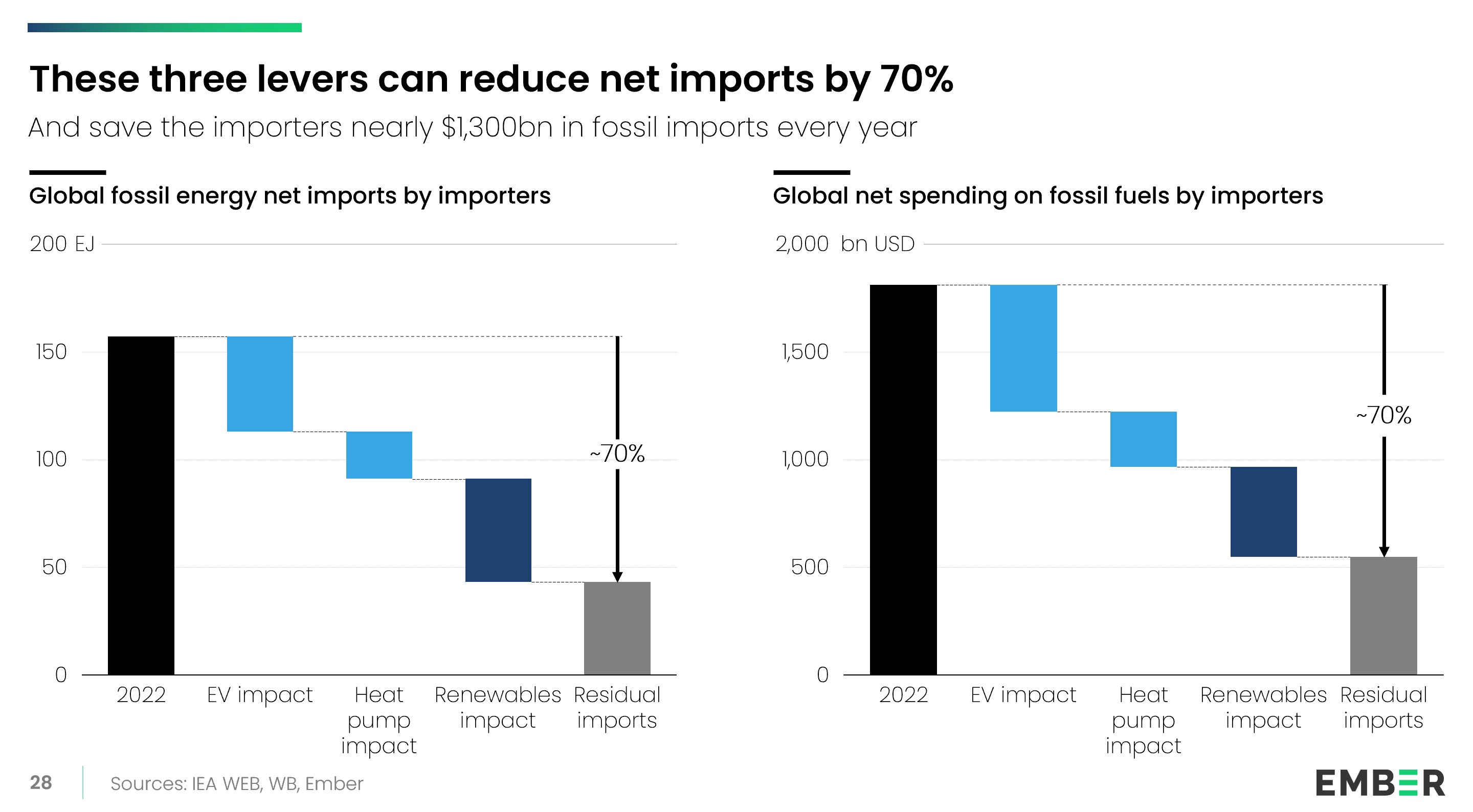
New analysis shows that replacing fossil imports with three key levers—electric vehicles, heat pumps, and renewables—can cut net fossil fuel imports by 70%, saving importers $1.3 trillion globally each year.
22 Apr 2025
7 Minutes Read


Highlights
37%
Total primary energy demand met by imported fossil fuels
52
Countries importing over 50% of their primary energy from fossil fuels
-70%
Global fossil fuel import reduction if EVs, heat pumps and renewables replaced all imported fuels in transport, heating and power
Executive summary
Energy at Risk
As the Pax Americana wanes, 74% of the world’s population living in fossil fuel-importing nations face rising energy security risks. Electrotech offers a new security strategy for an uncertain future.
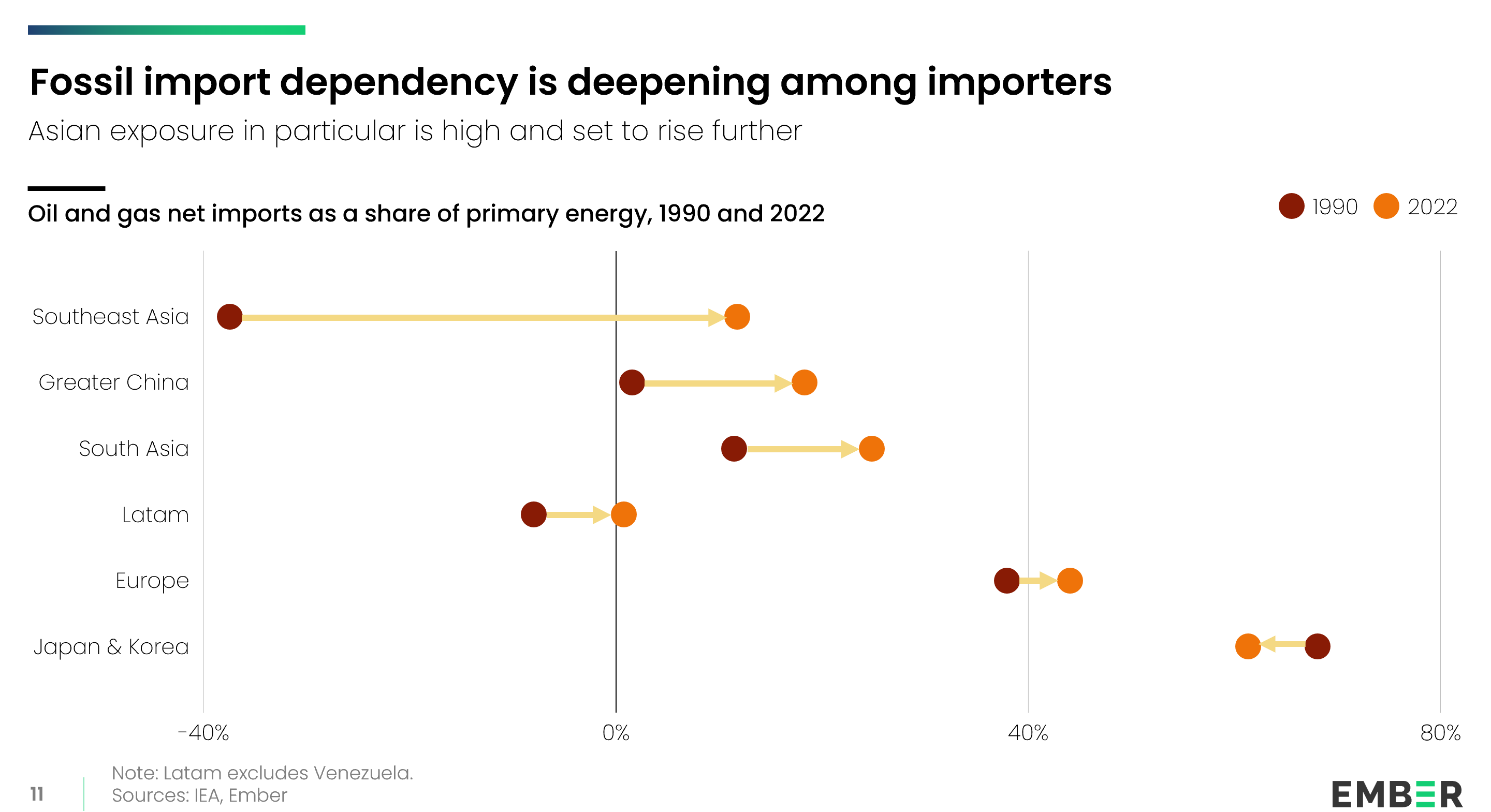
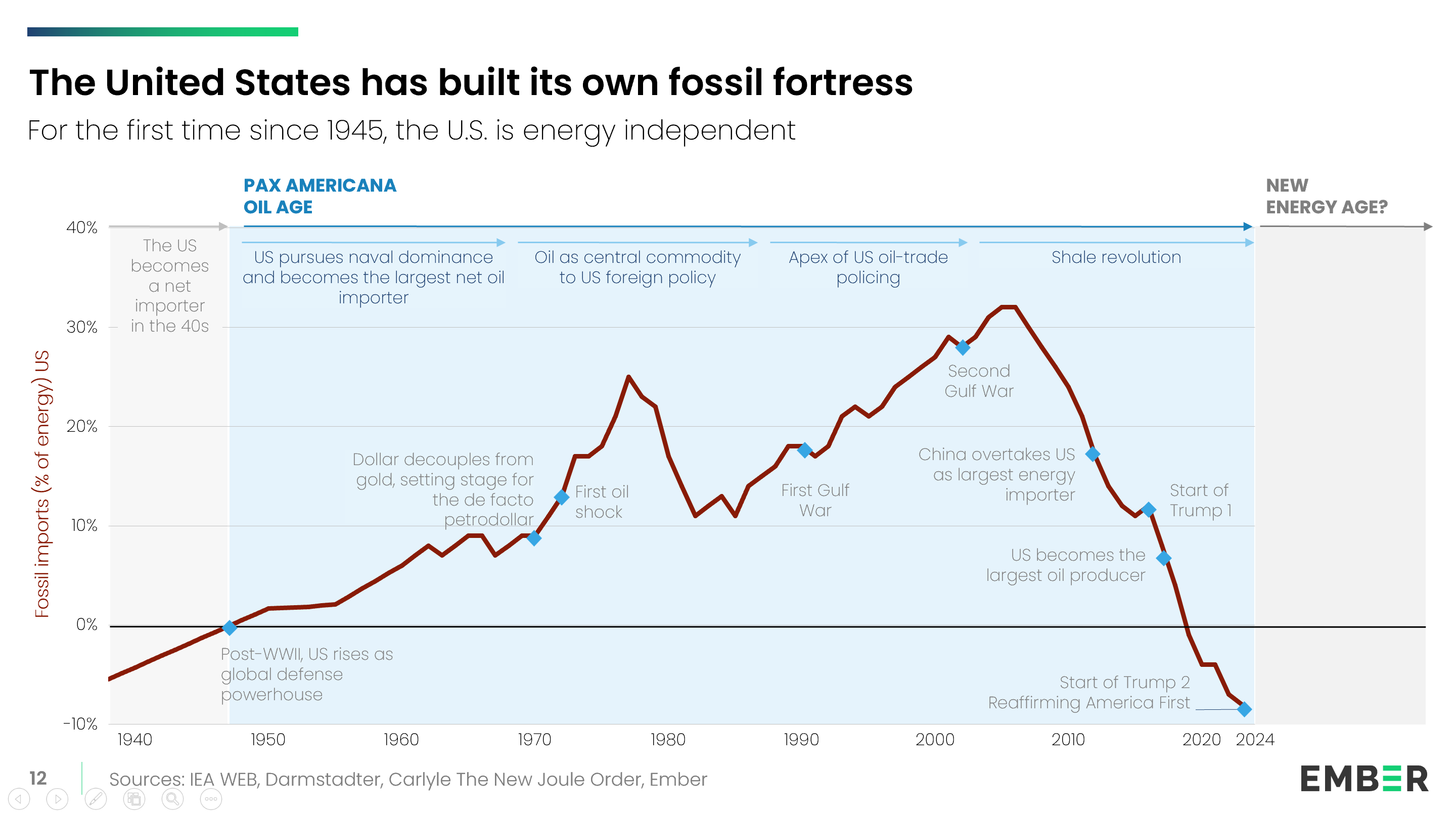
Since the end of World War II, under the Pax Americana, the United States dominated global geopolitics, and oil dominated energy markets. During this period of relative US-guaranteed stability, the world built a massive dependency on fossil fuel imports.
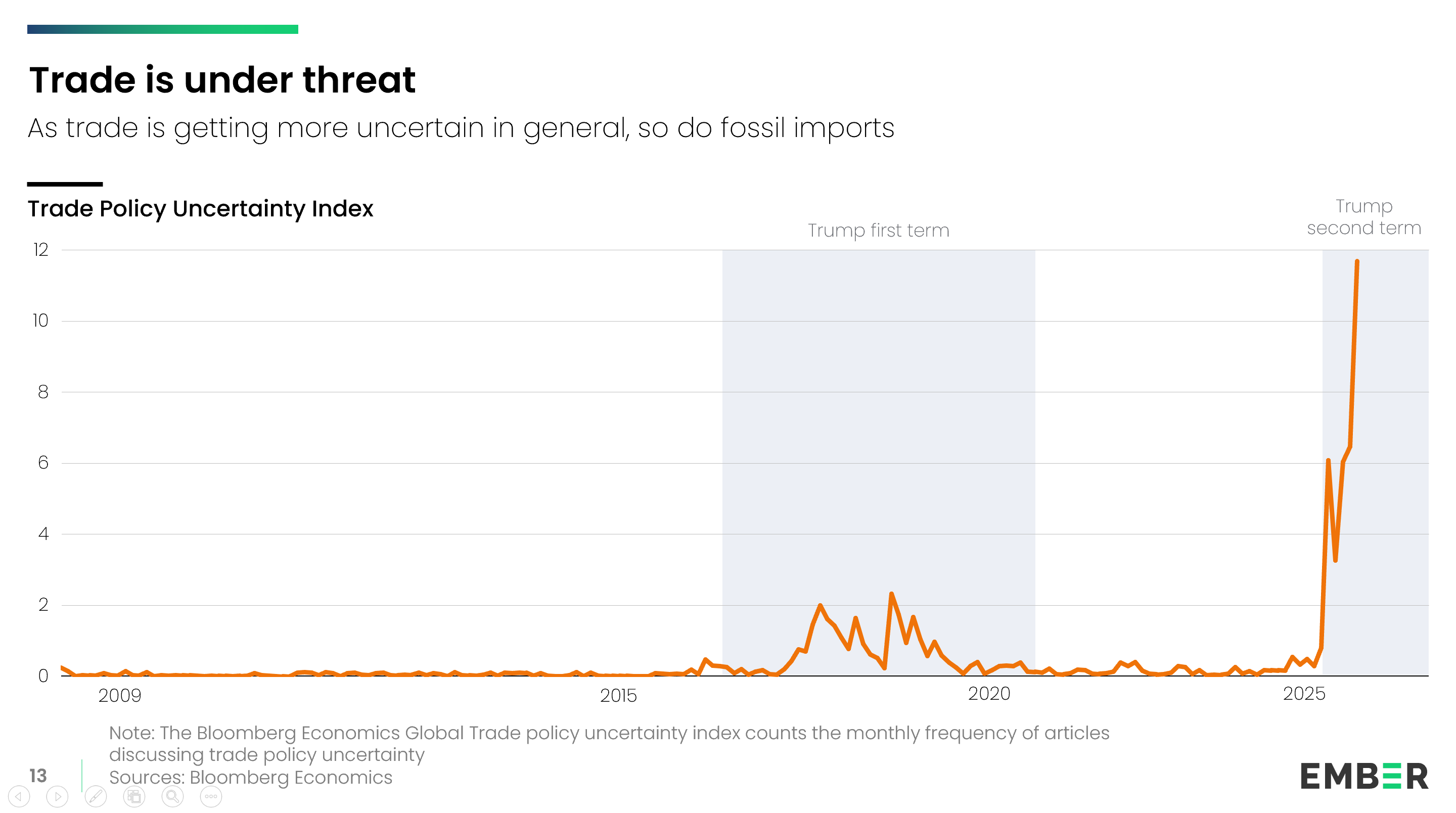
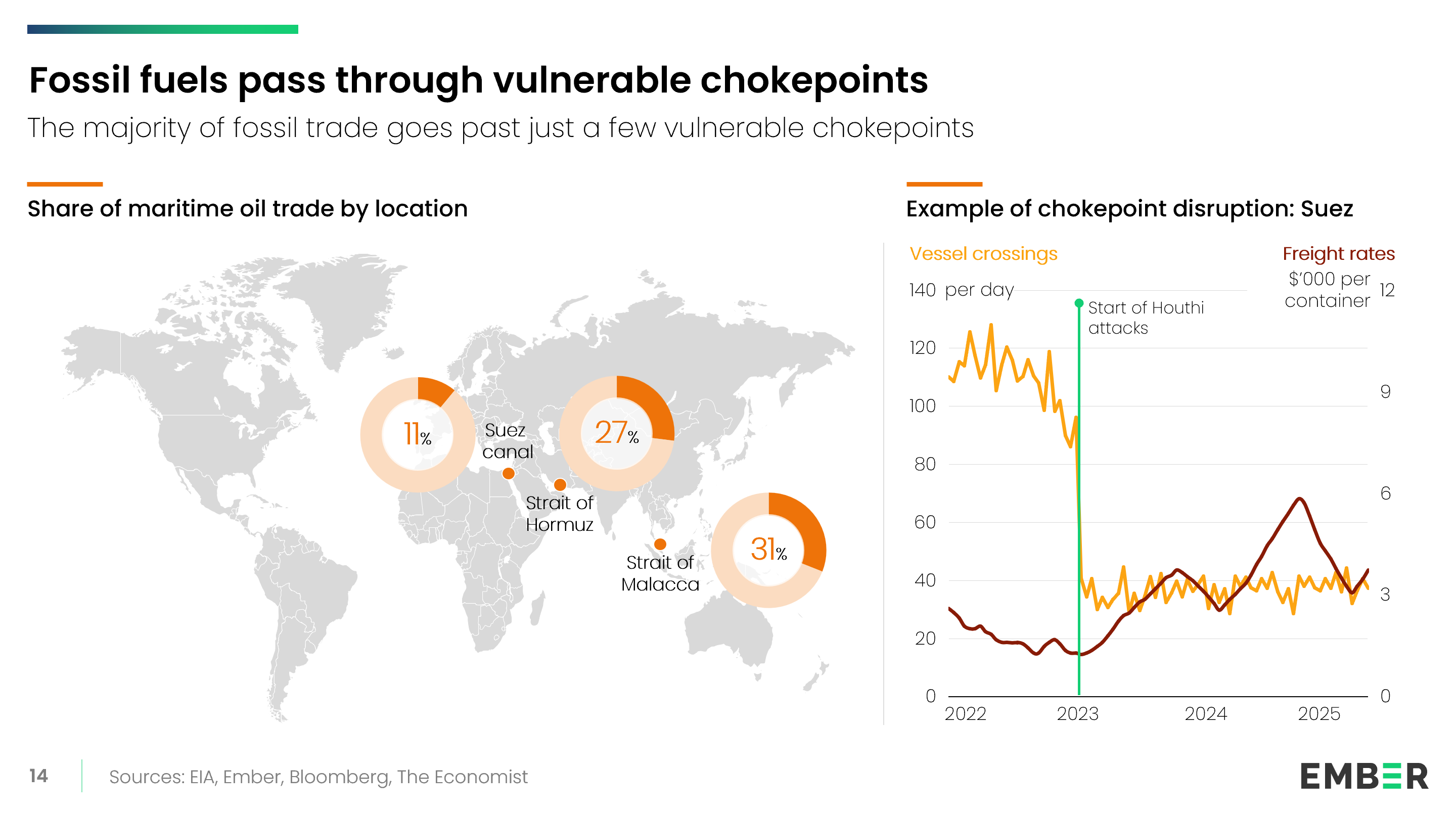
Today, with global trade under greater threat than at any time since World War II, the world’s heavy dependence on fossil imports for essential energy supplies looks increasingly risky.
As governments and business leaders meet at the IEA’s Summit on the Future of Energy Security this week, they should take a sober look at the energy security risks that their respective countries now face.
01
37% of primary energy is imported
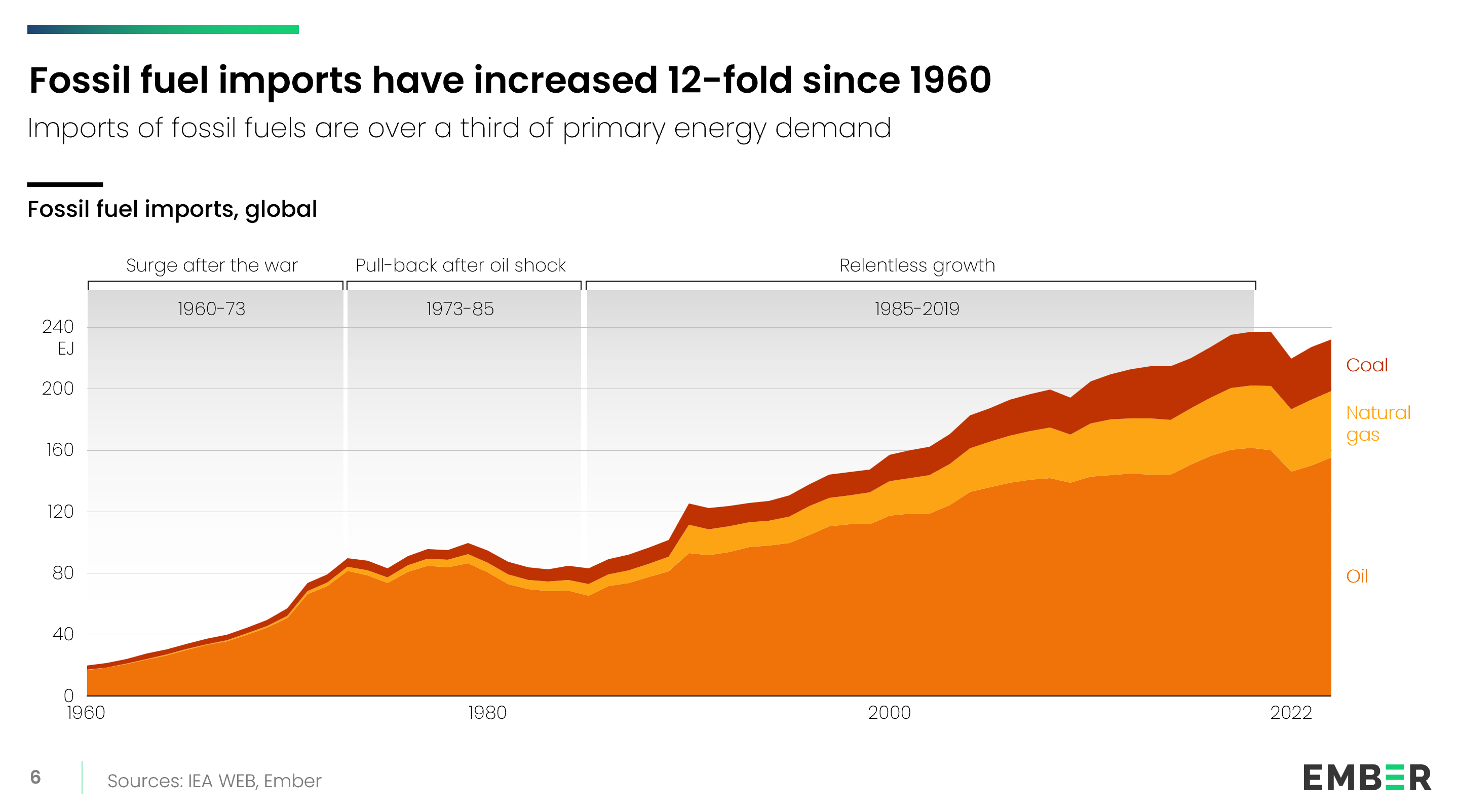
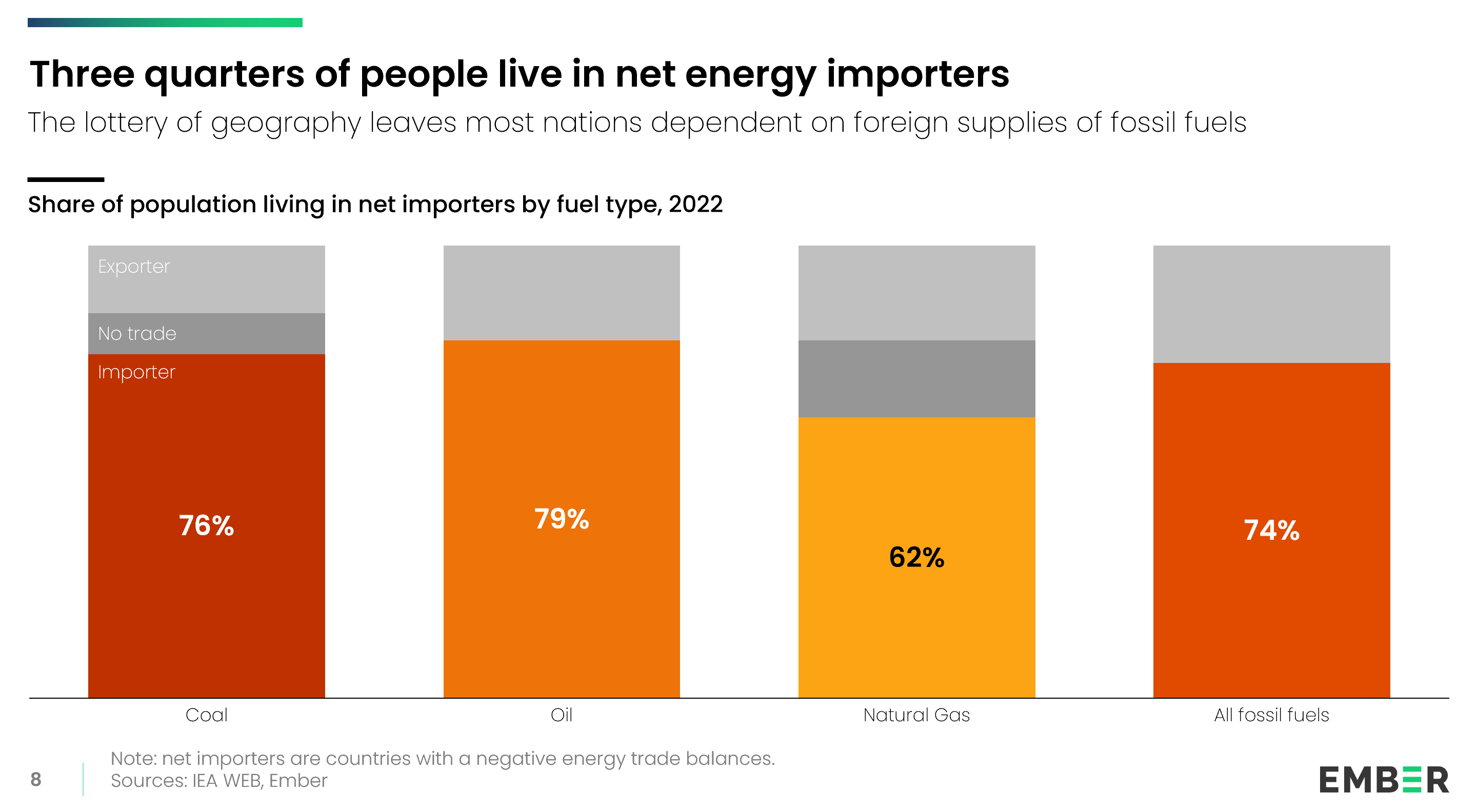
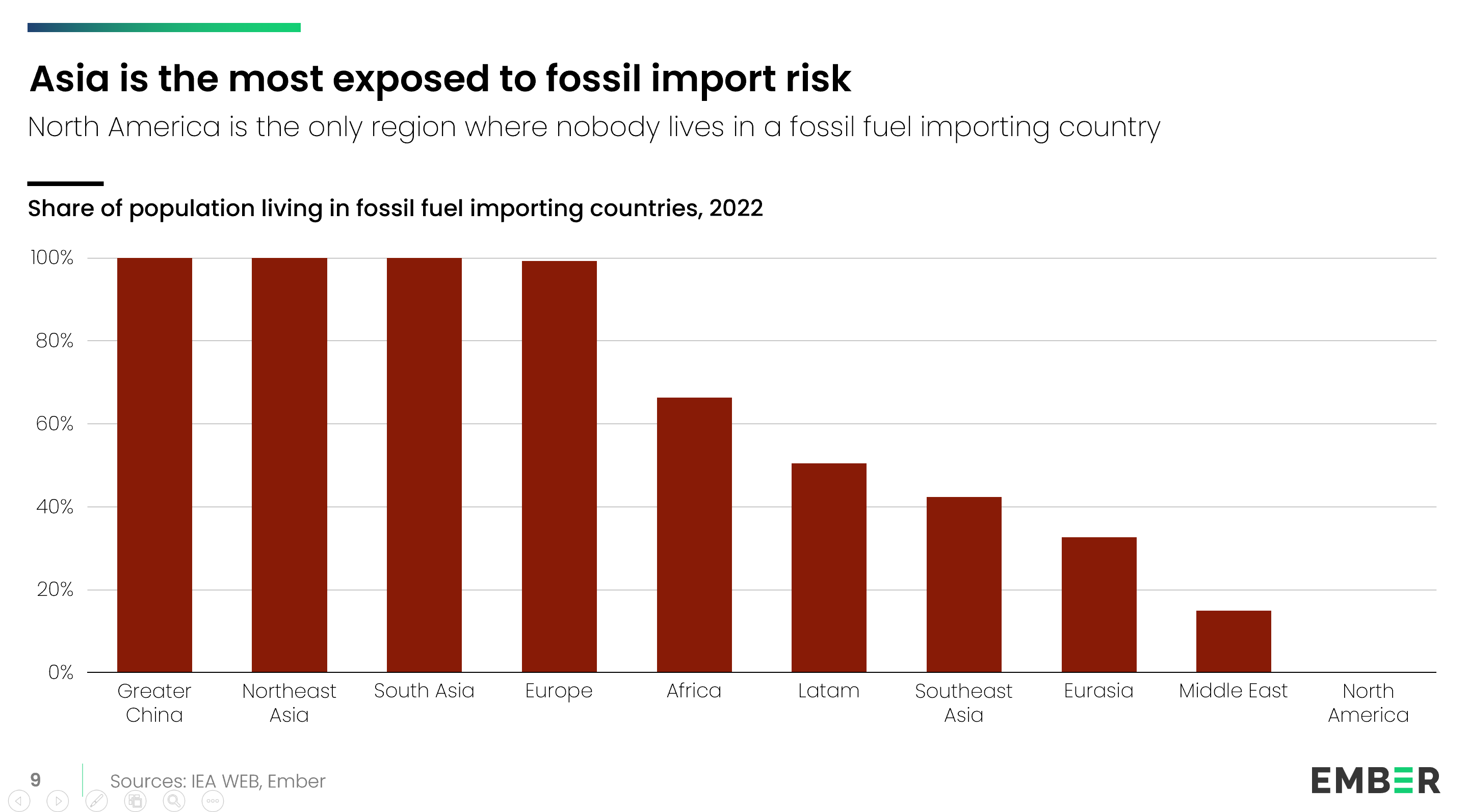
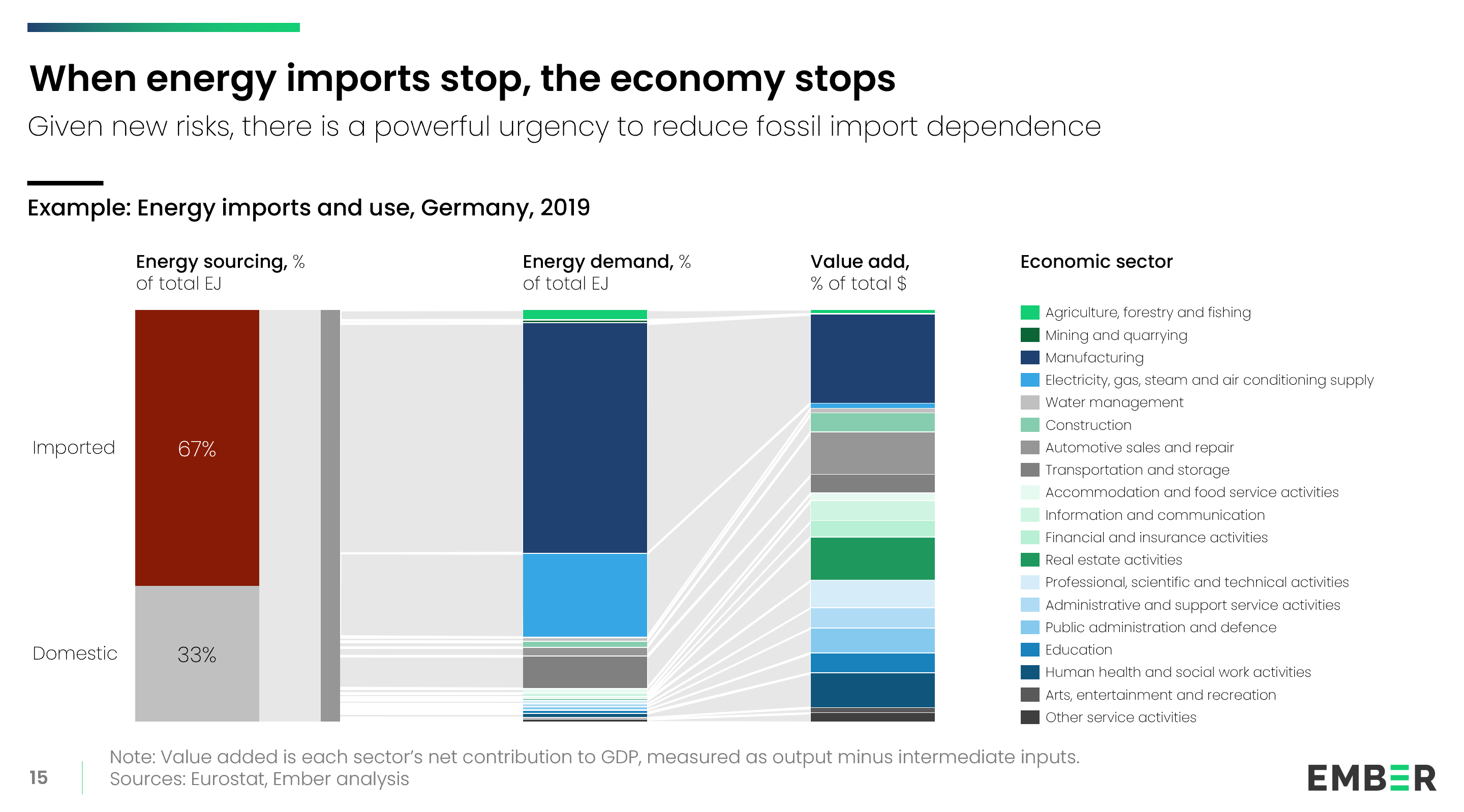
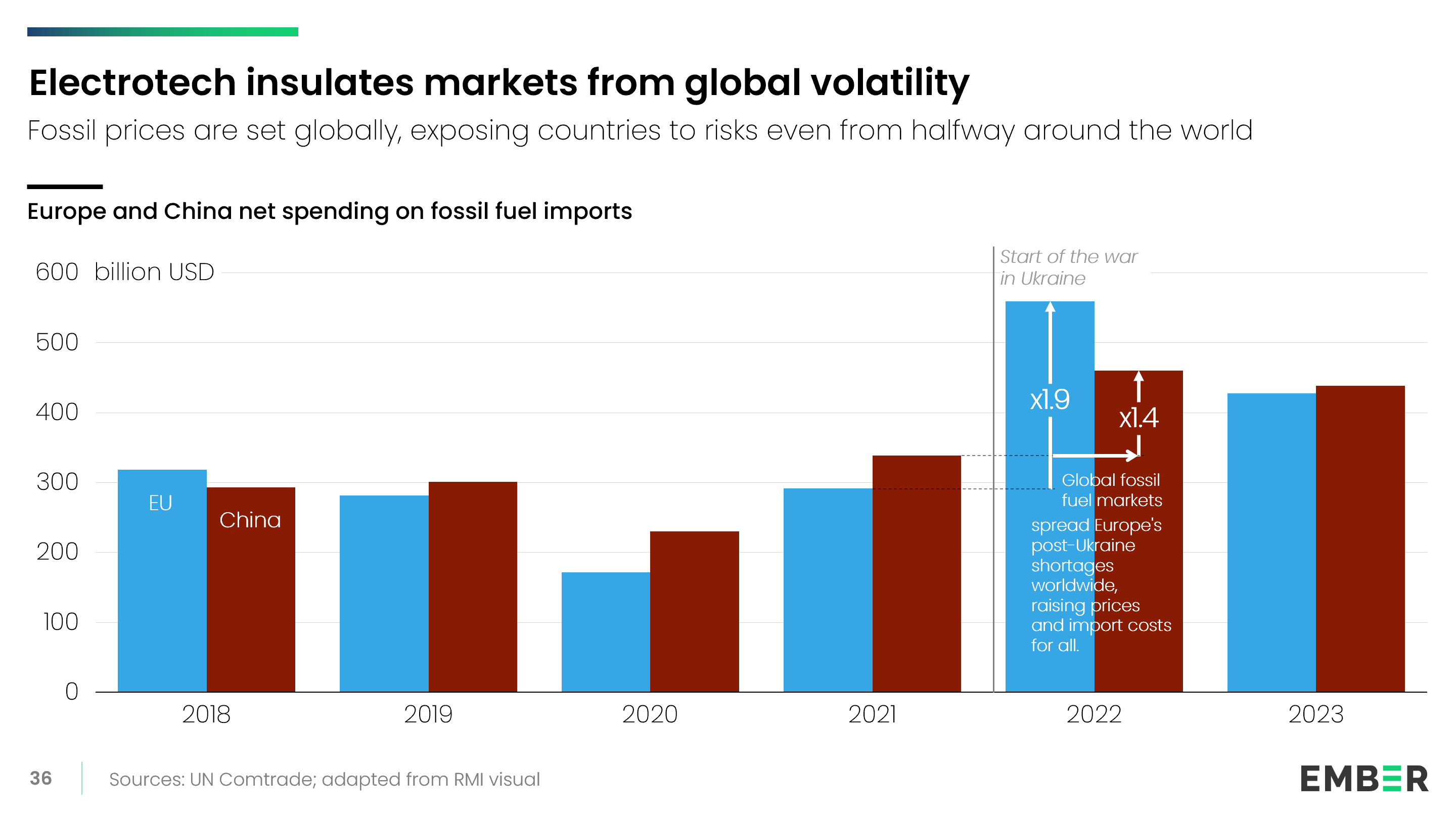
Under the Pax Americana, fossil fuel imports have risen twelvefold since 1960, reaching 37% of global primary energy demand in 2022. In 2022, net fossil fuel imports cost the global economy $1.8 trillion USD, equivalent to 1.8% of global GDP that year. 74% of the world’s population live in countries that are net importers of fossil fuels, according to Ember’s calculations from IEA energy balances data in 2022. This includes all of Greater China, South Asia and Northeast Asia; 99% of Europeans; two-thirds of Africans; and nearly half the populations of Southeast Asia and Latin America.
02
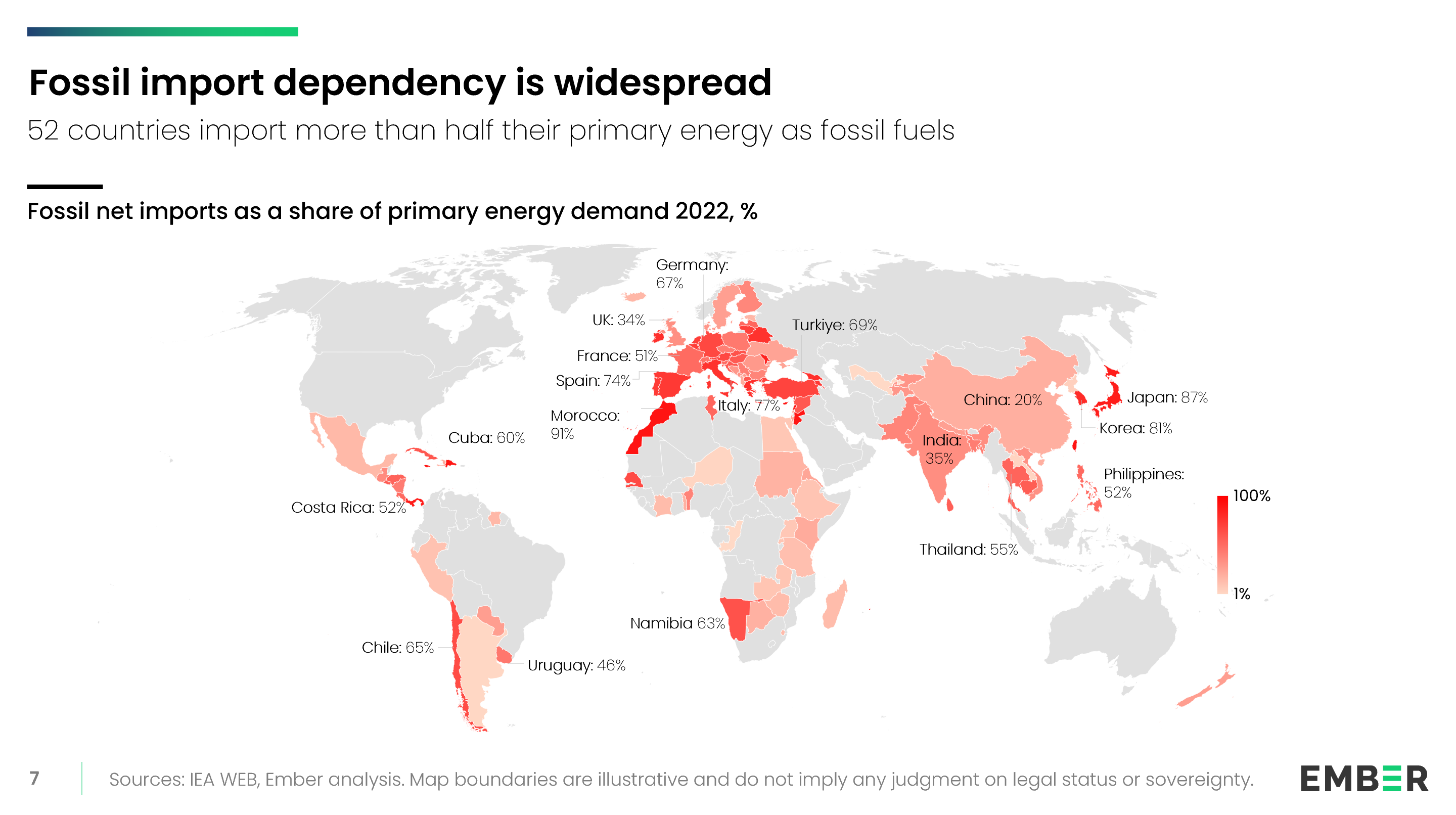
52 countries import over half their energy from fossil fuels
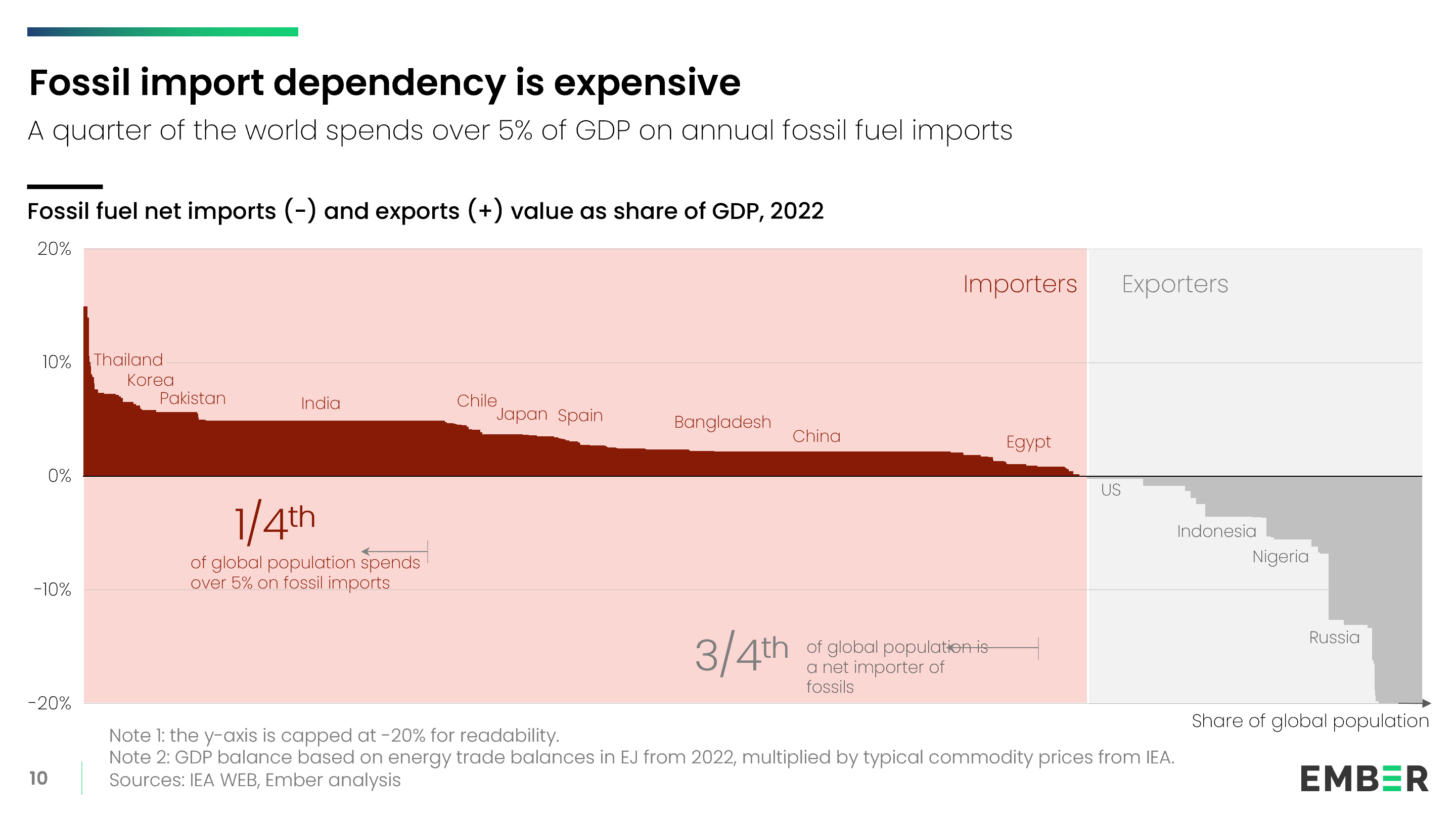
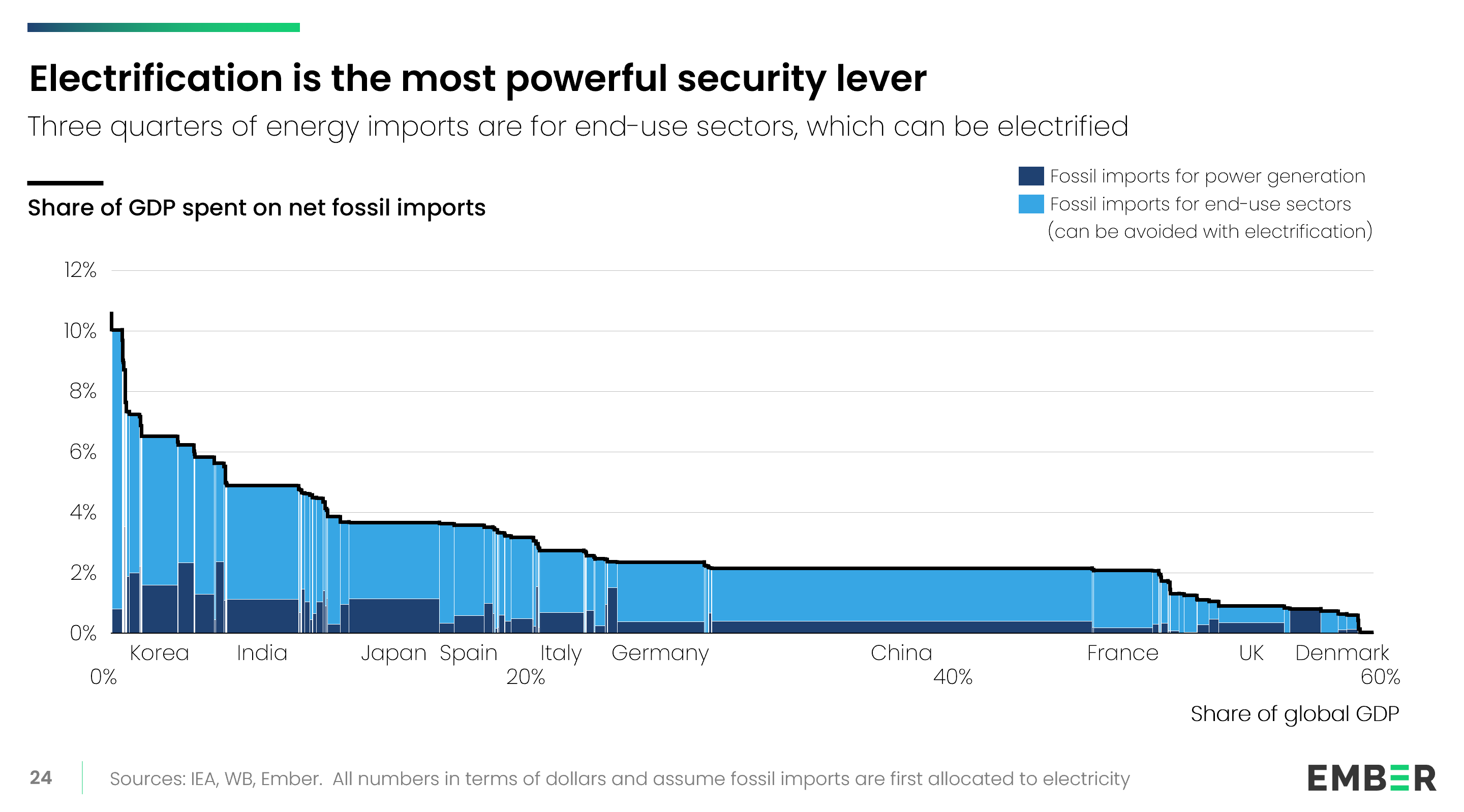
Many countries are considerably exposed. 52 countries import over half their energy in the form of fossil fuels. A fifth of global GDP comes from countries where net fossil fuel imports provide over two-thirds of their energy, including Germany, Japan and Italy. Globally, one in four people live in countries that spend at least 5% of their annual GDP on fossil fuel imports, most notably India which spent 5% in 2022.
03
Electrotech can save 70% of imports
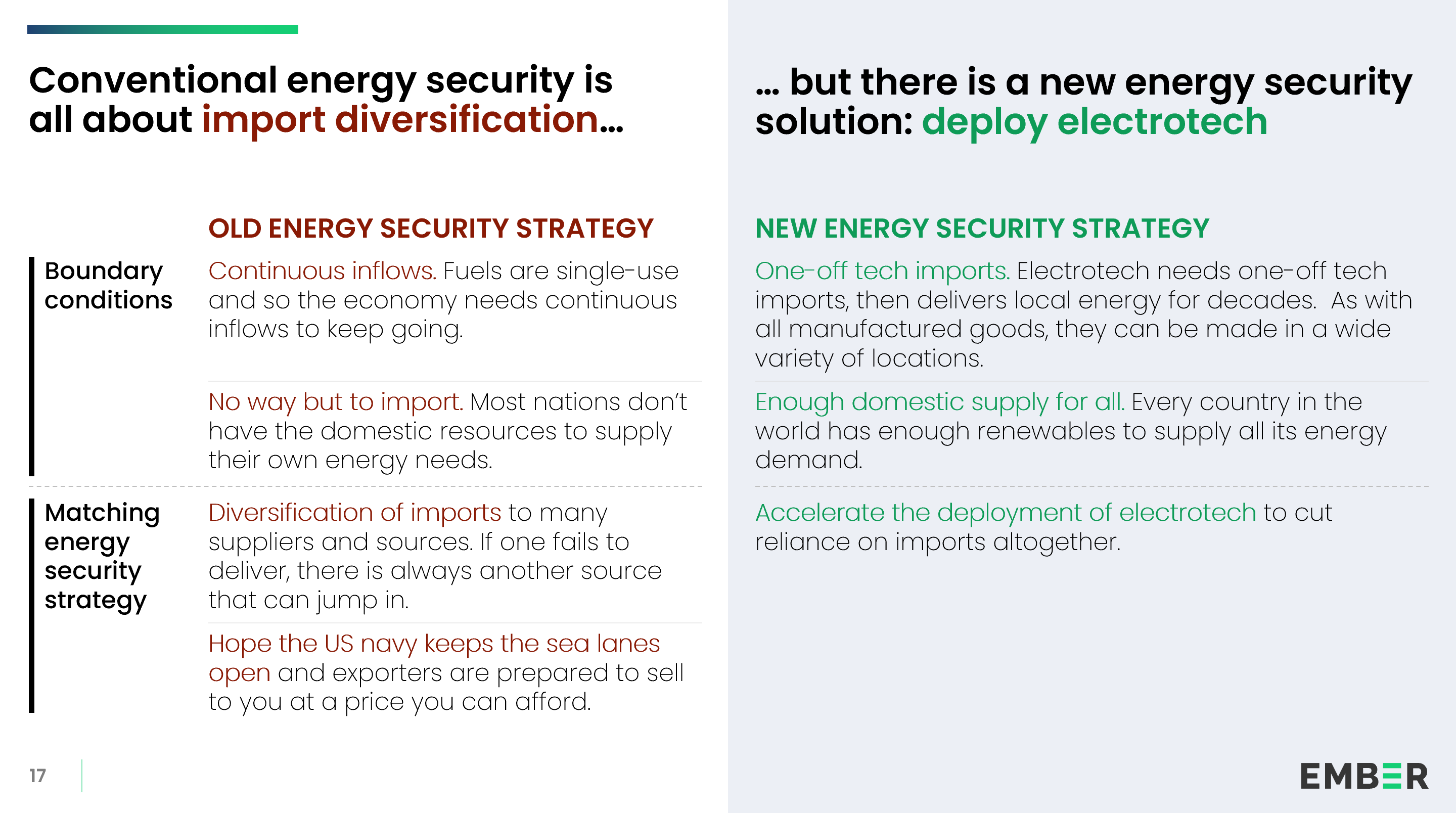
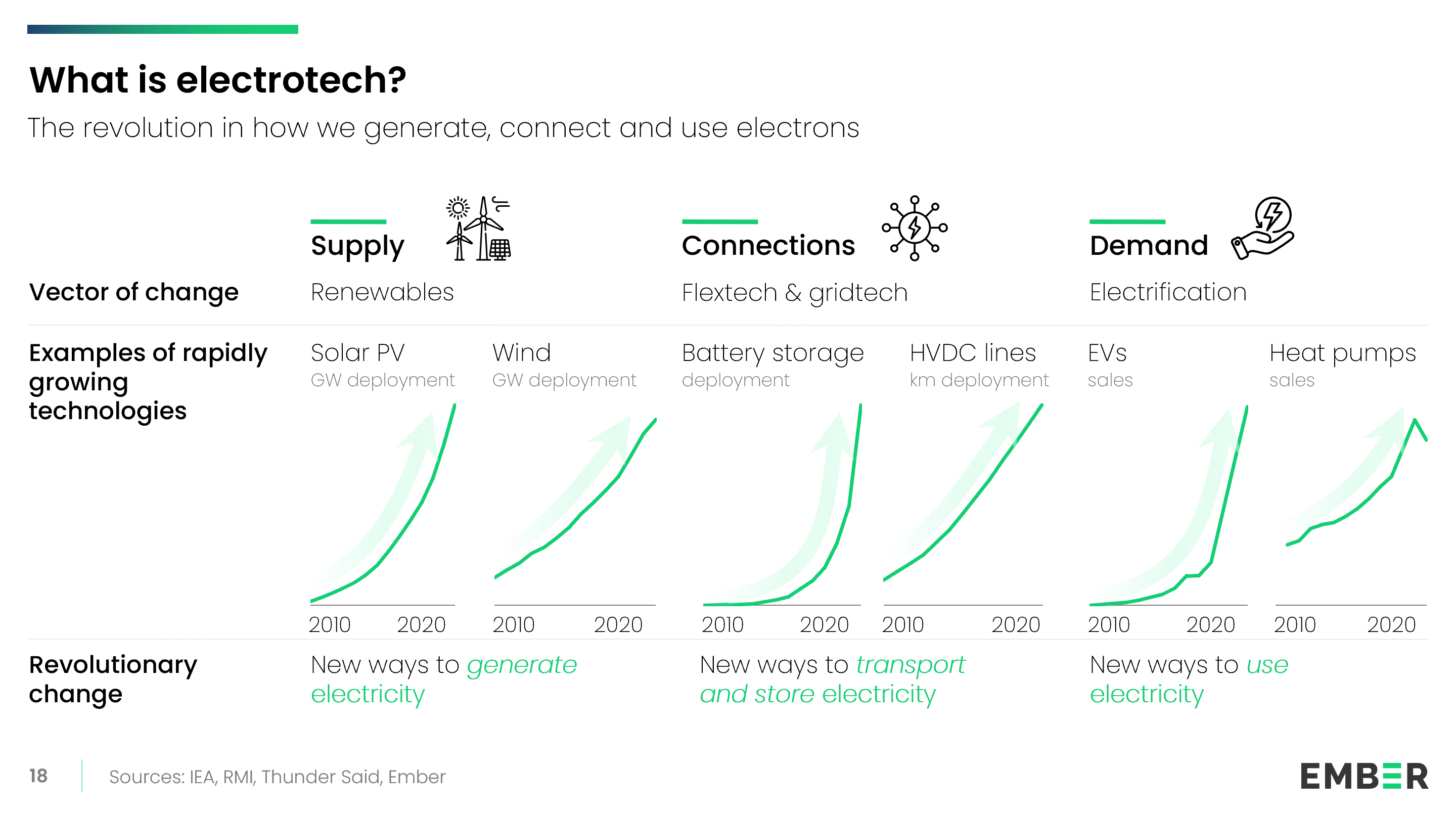
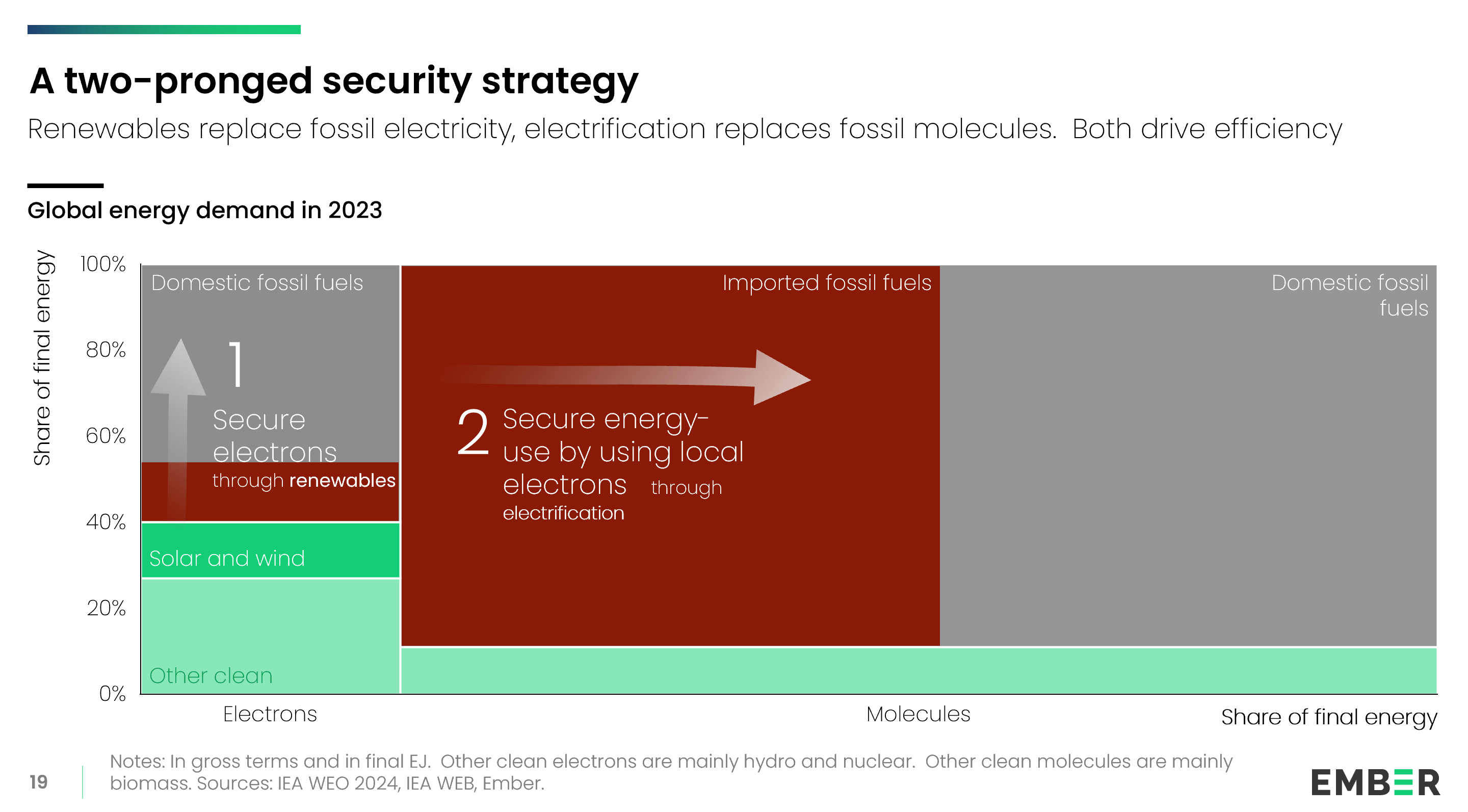
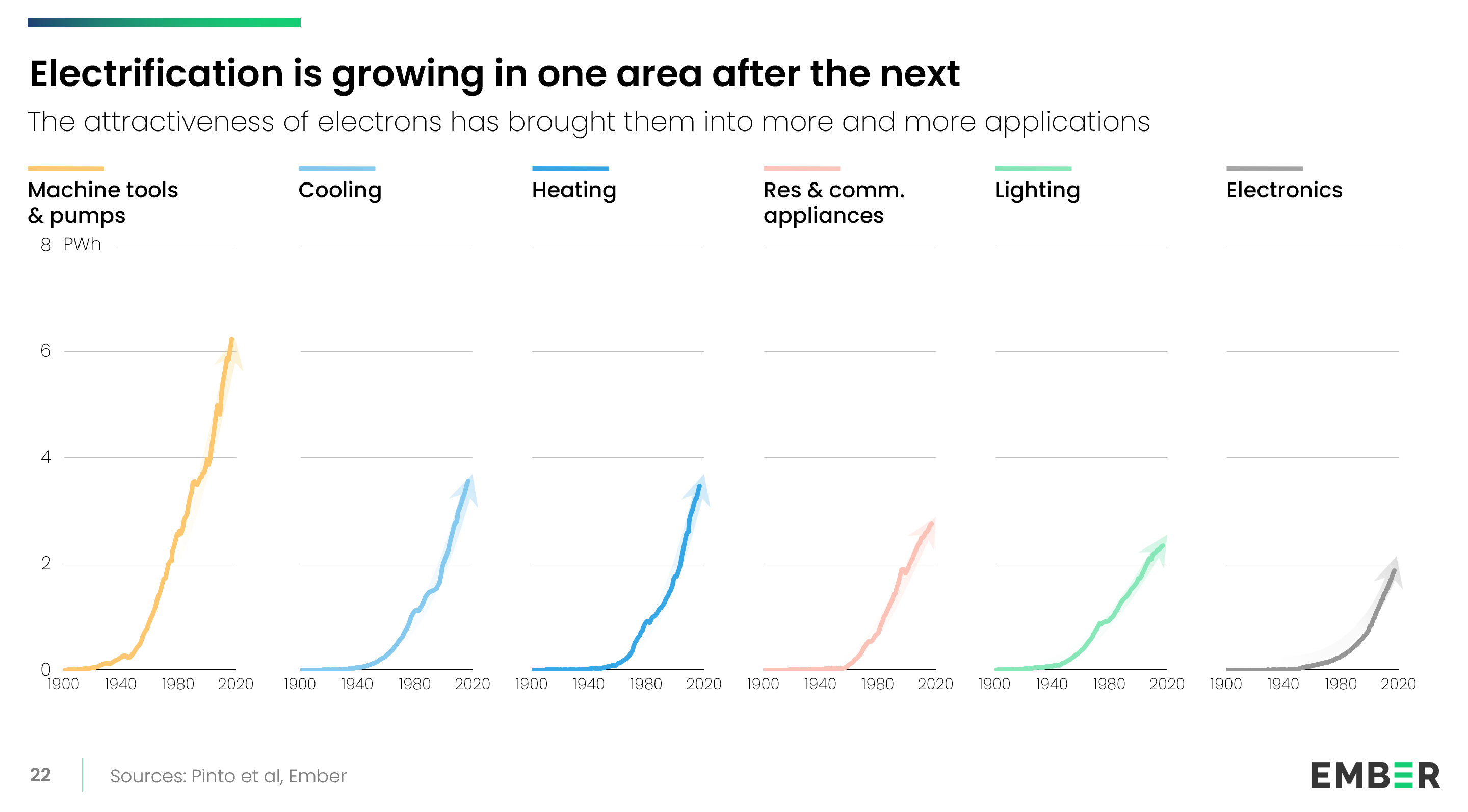
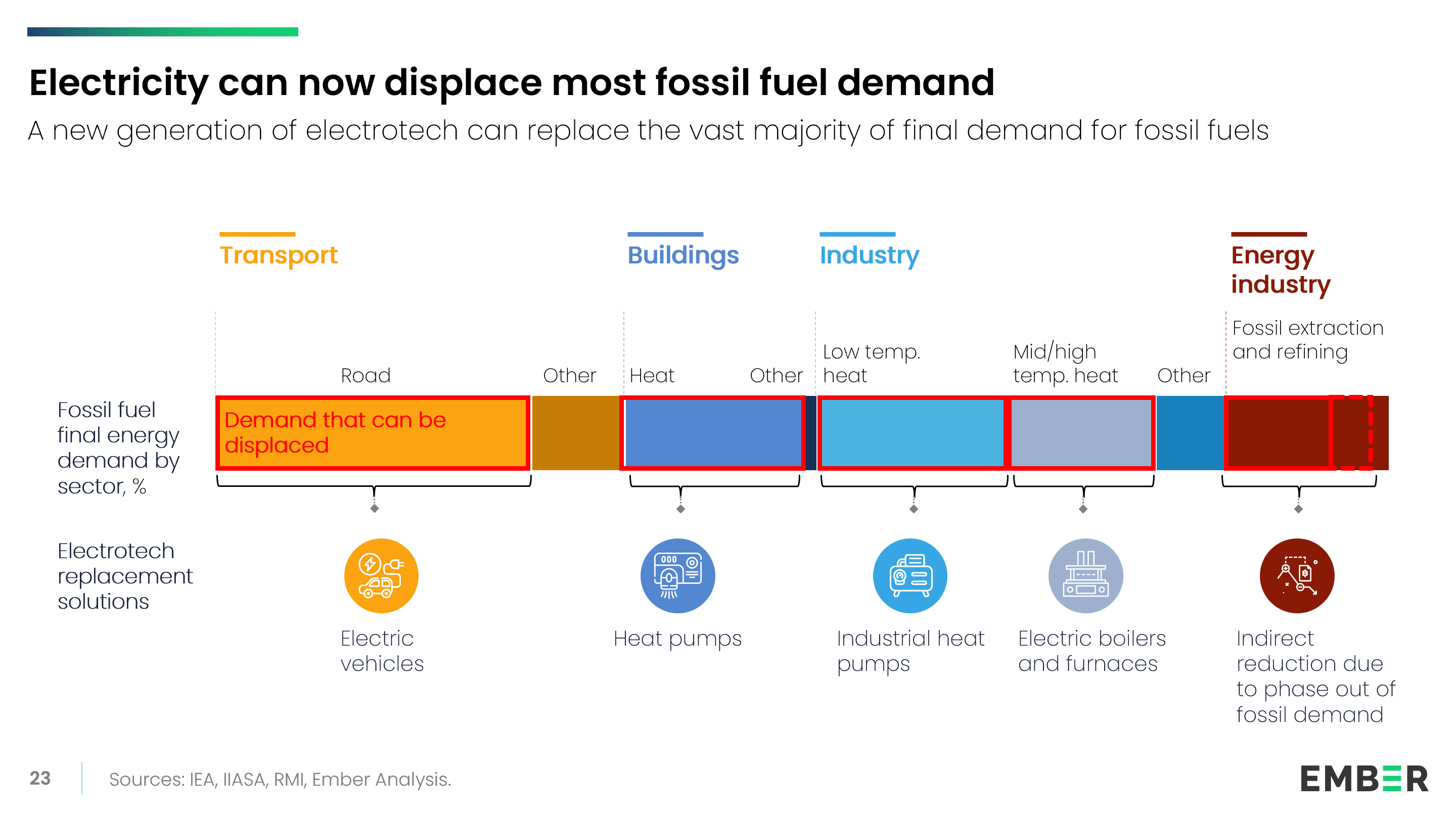
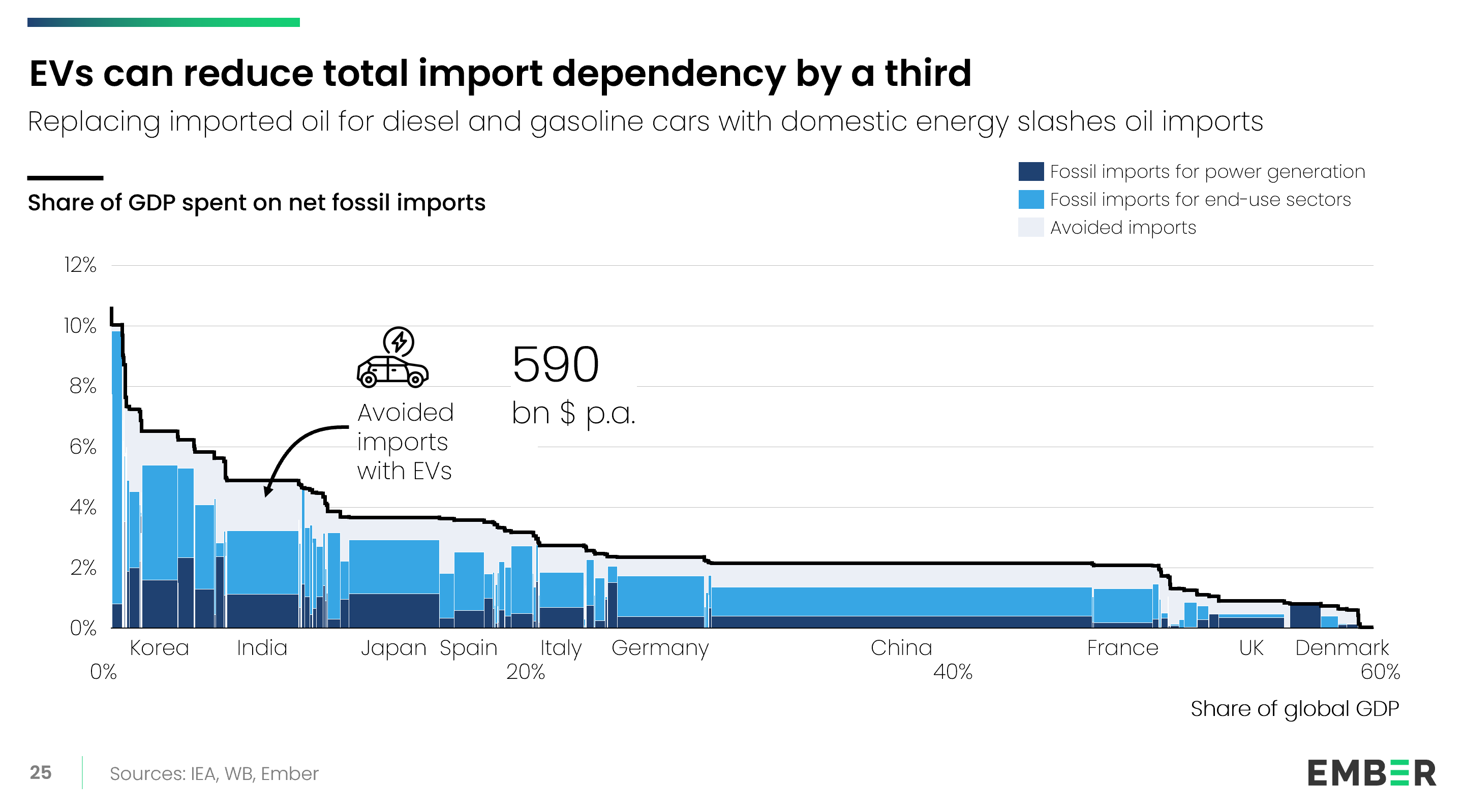
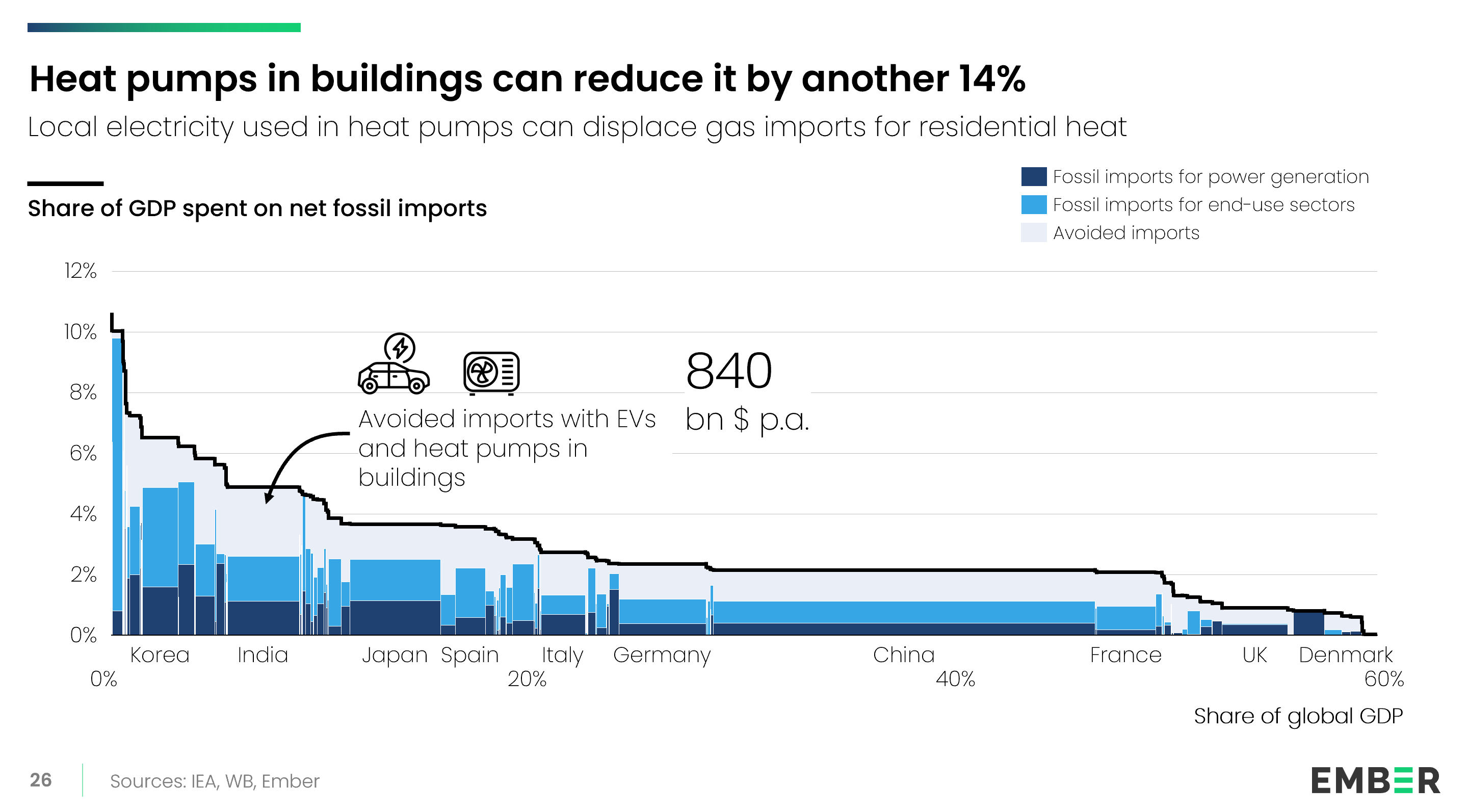
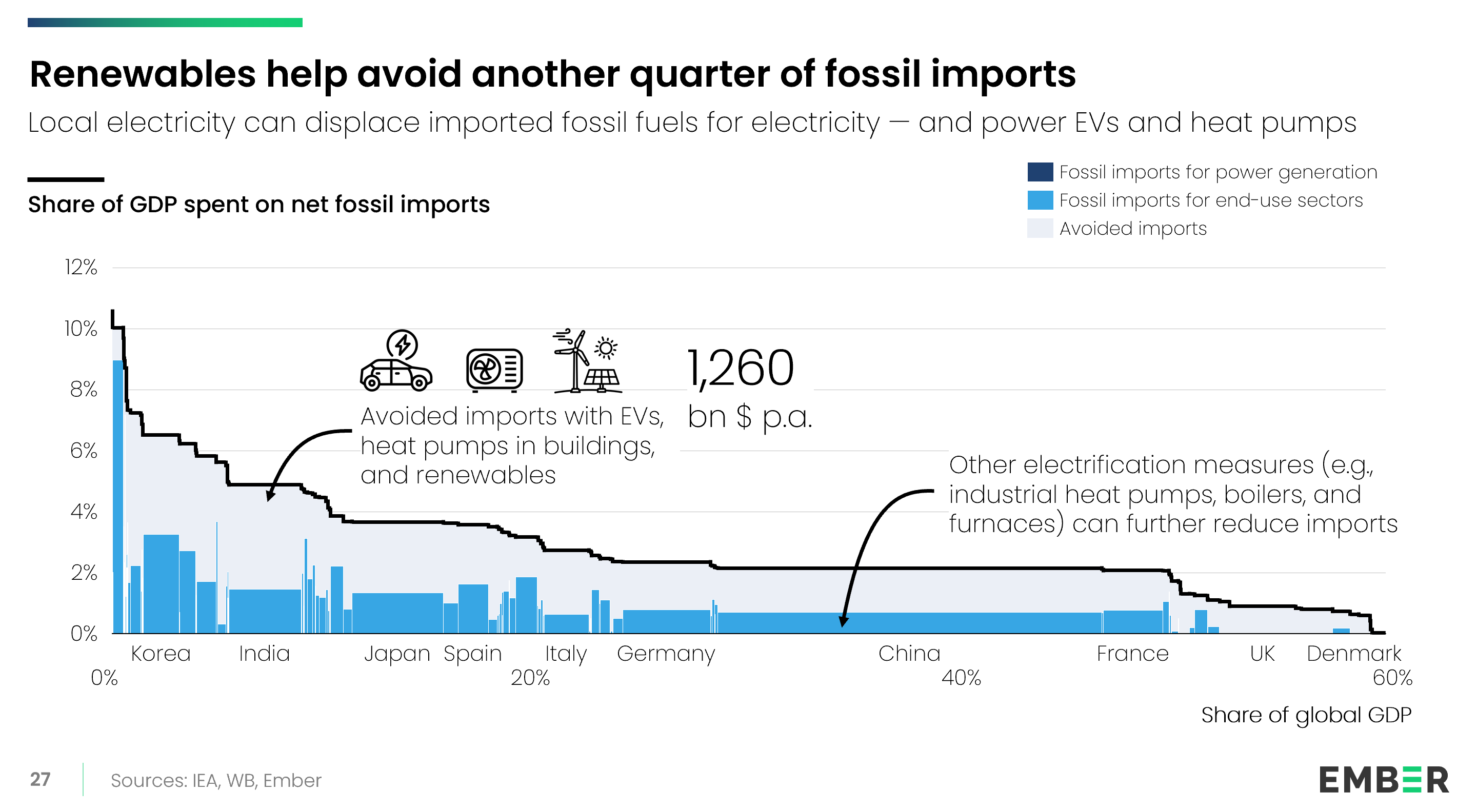
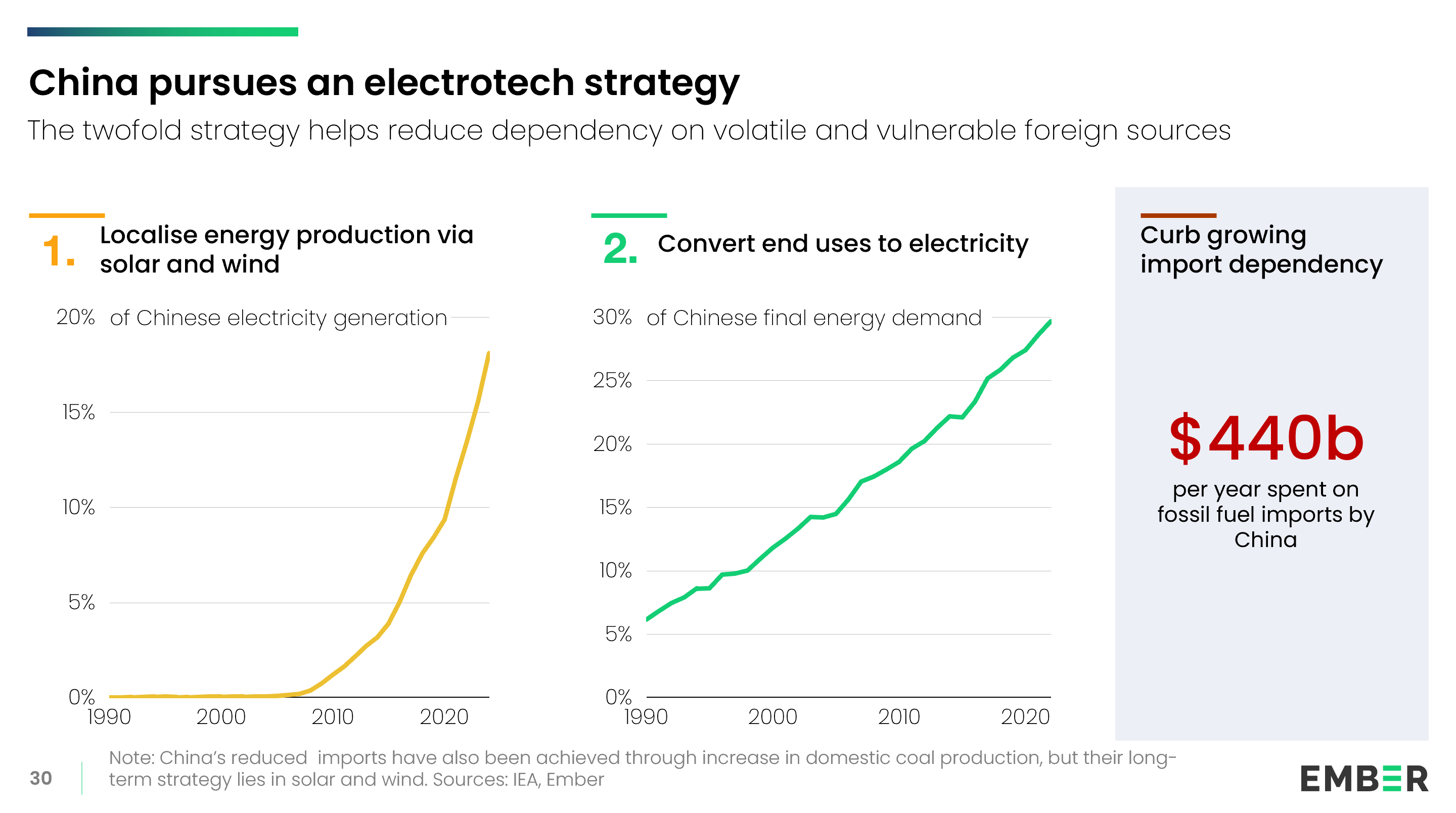
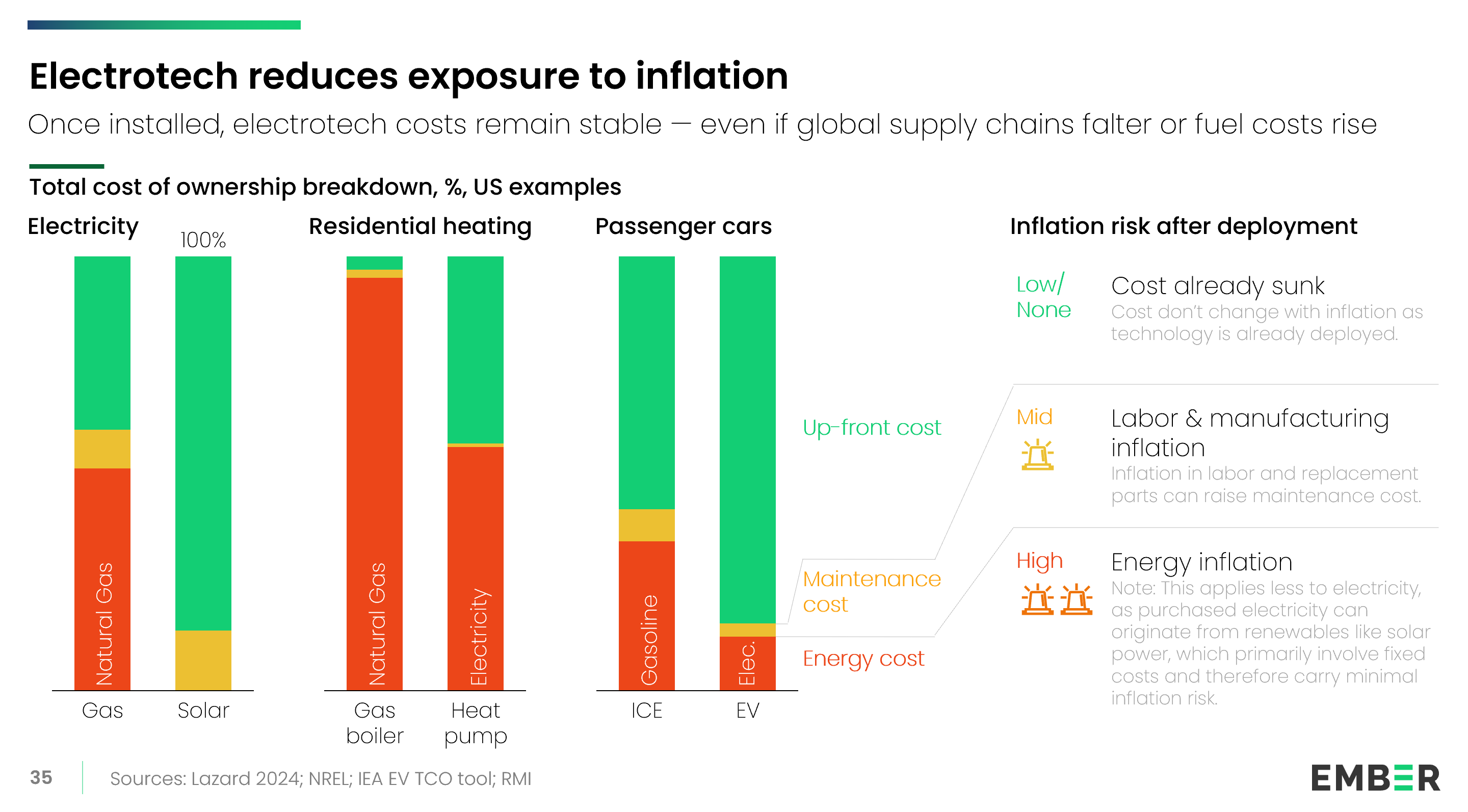
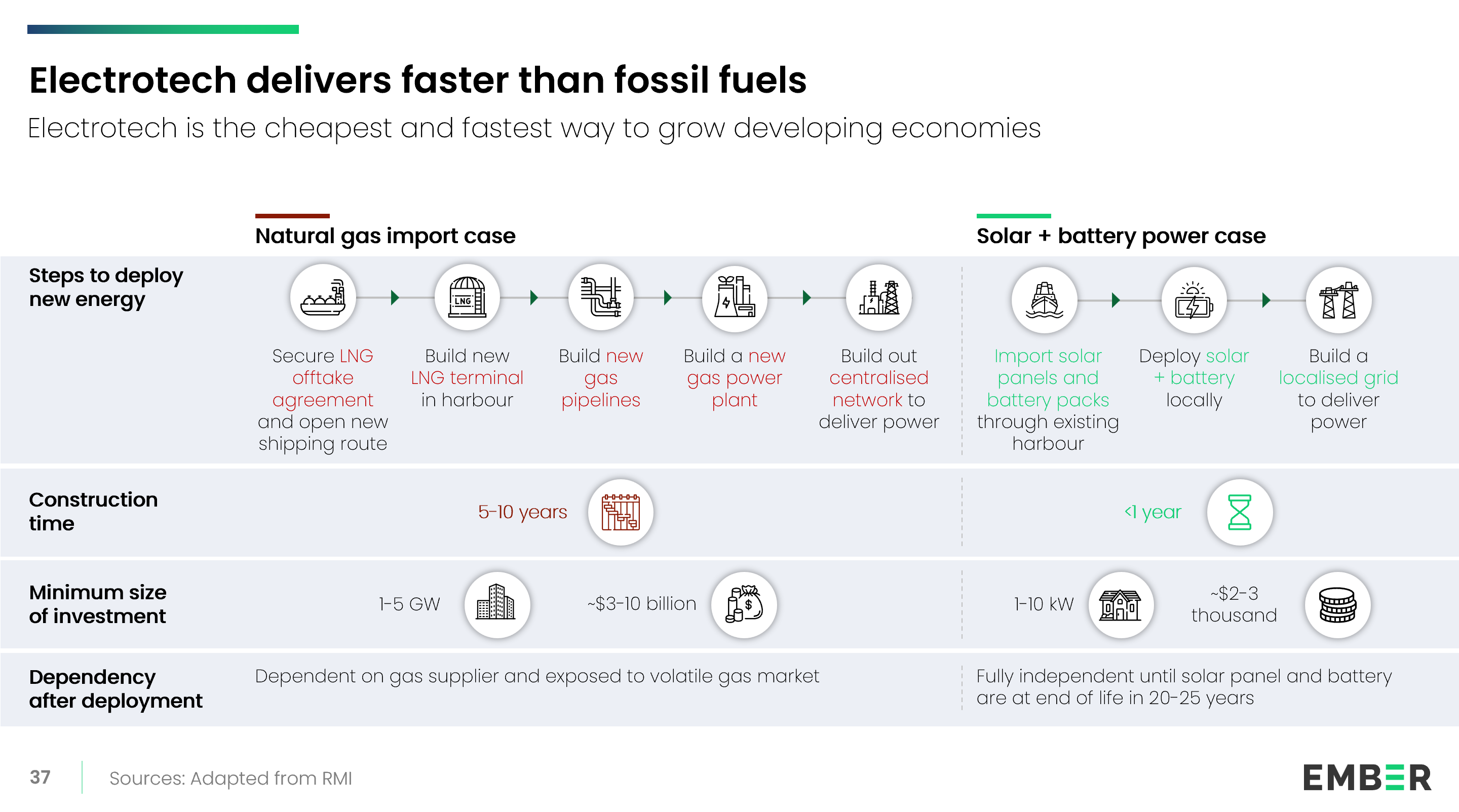
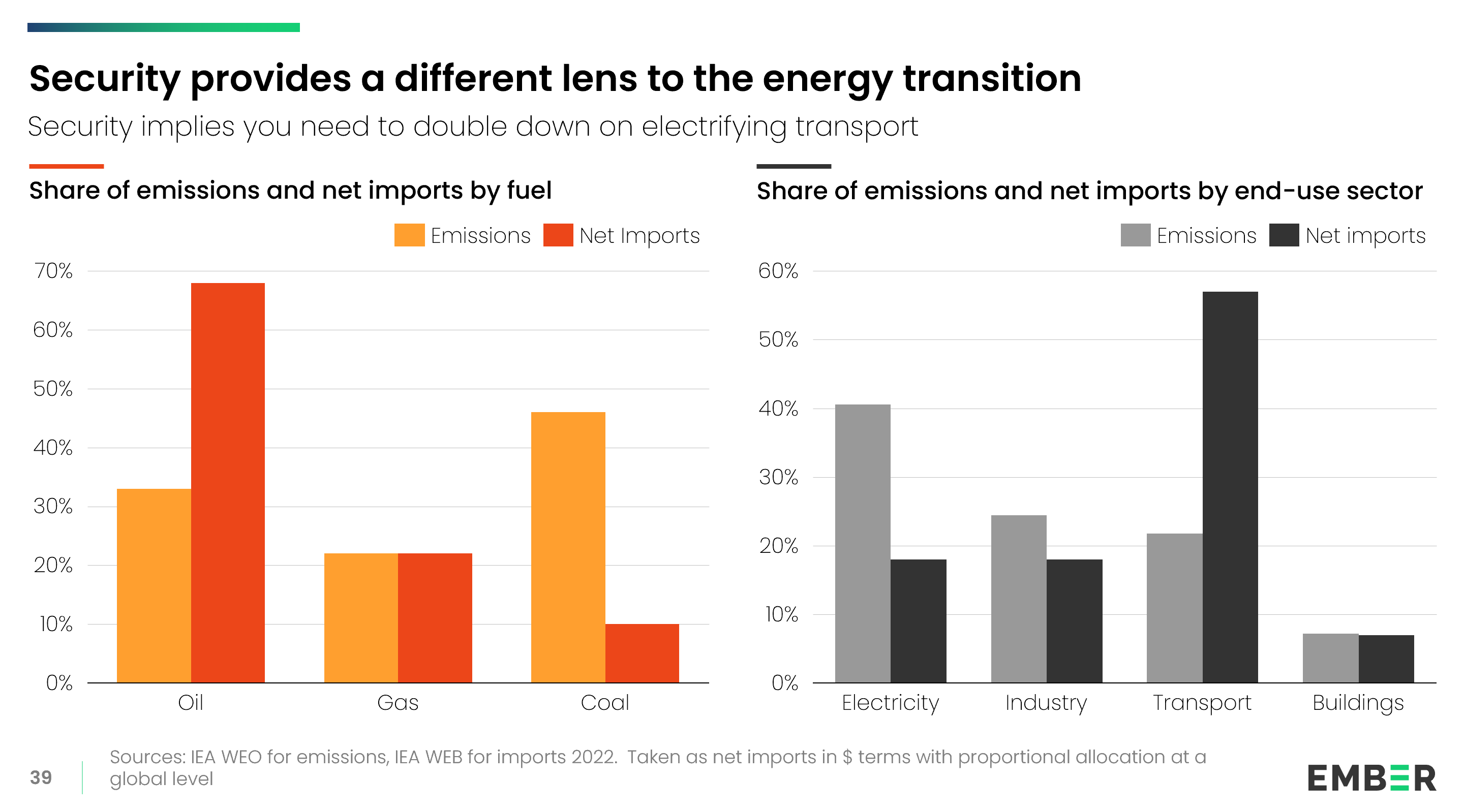
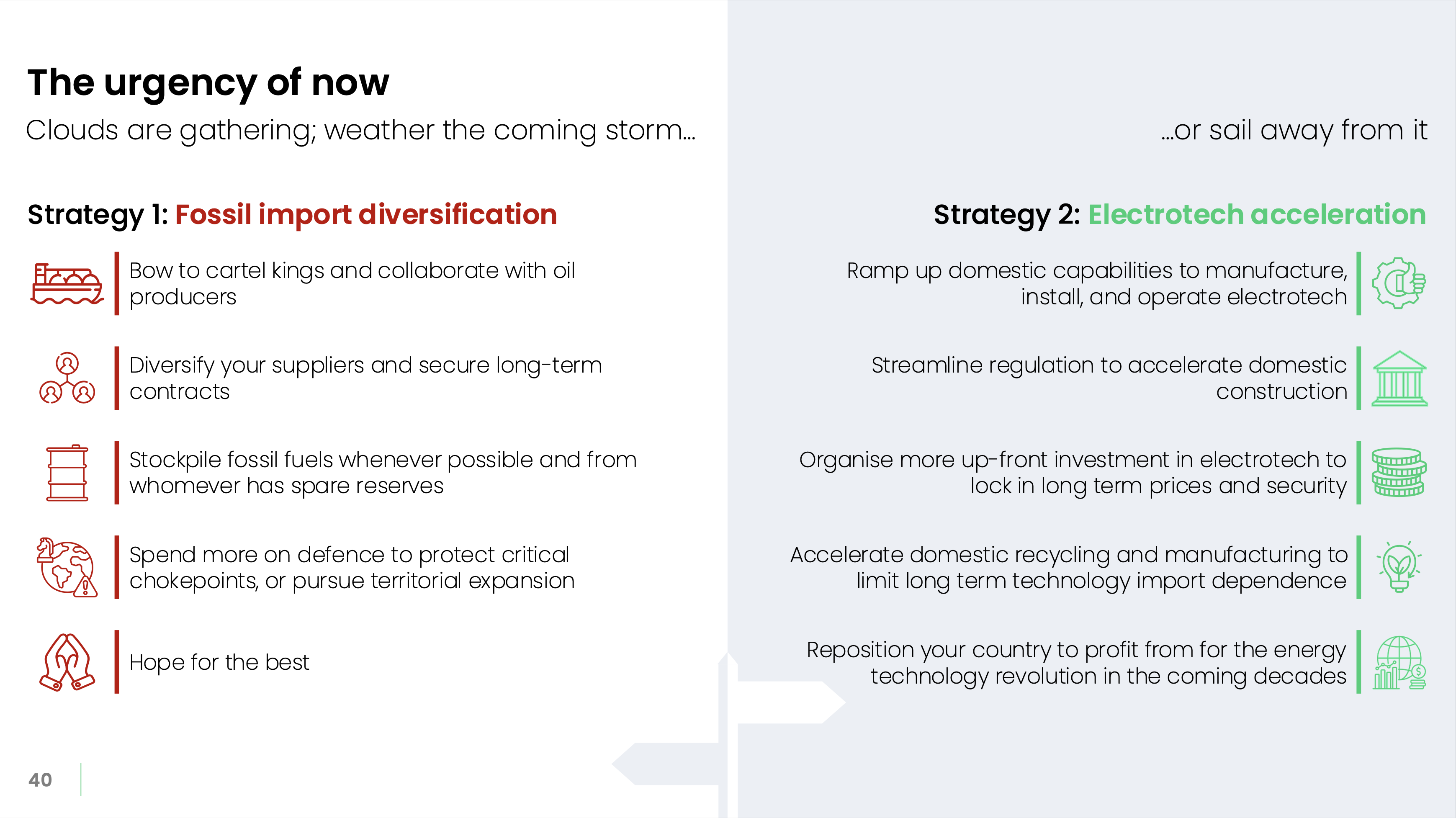
There is a new path to energy security: a two-pronged electrotech strategy: shifting electricity generation to renewables, and directing energy use to electricity. Replacing imported fossil fuels using three key levers—electric vehicles, heat pumps and renewables—can cut net fossil fuel imports by 70%, saving $1.3 trillion globally each year. The biggest impact comes from replacing all imported oil for road transport globally with EVs (33%). Scaling wind and solar to displace all imported fossil fuels in global power generation saves 23%. Heat pumps replacing all imported fossil fuels used for building heat worldwide add 14%. Together, they unlock a faster, cheaper route to energy independence.
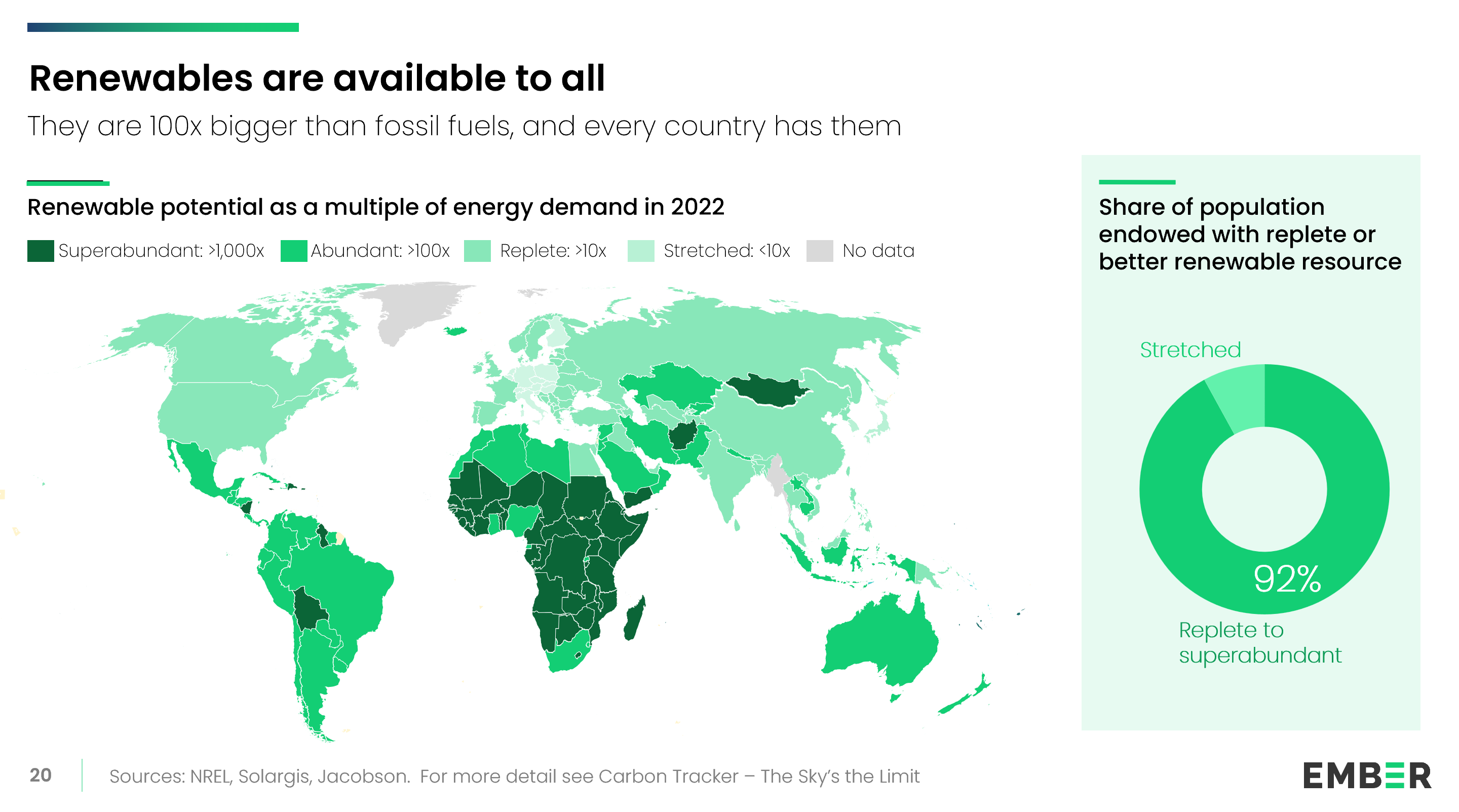
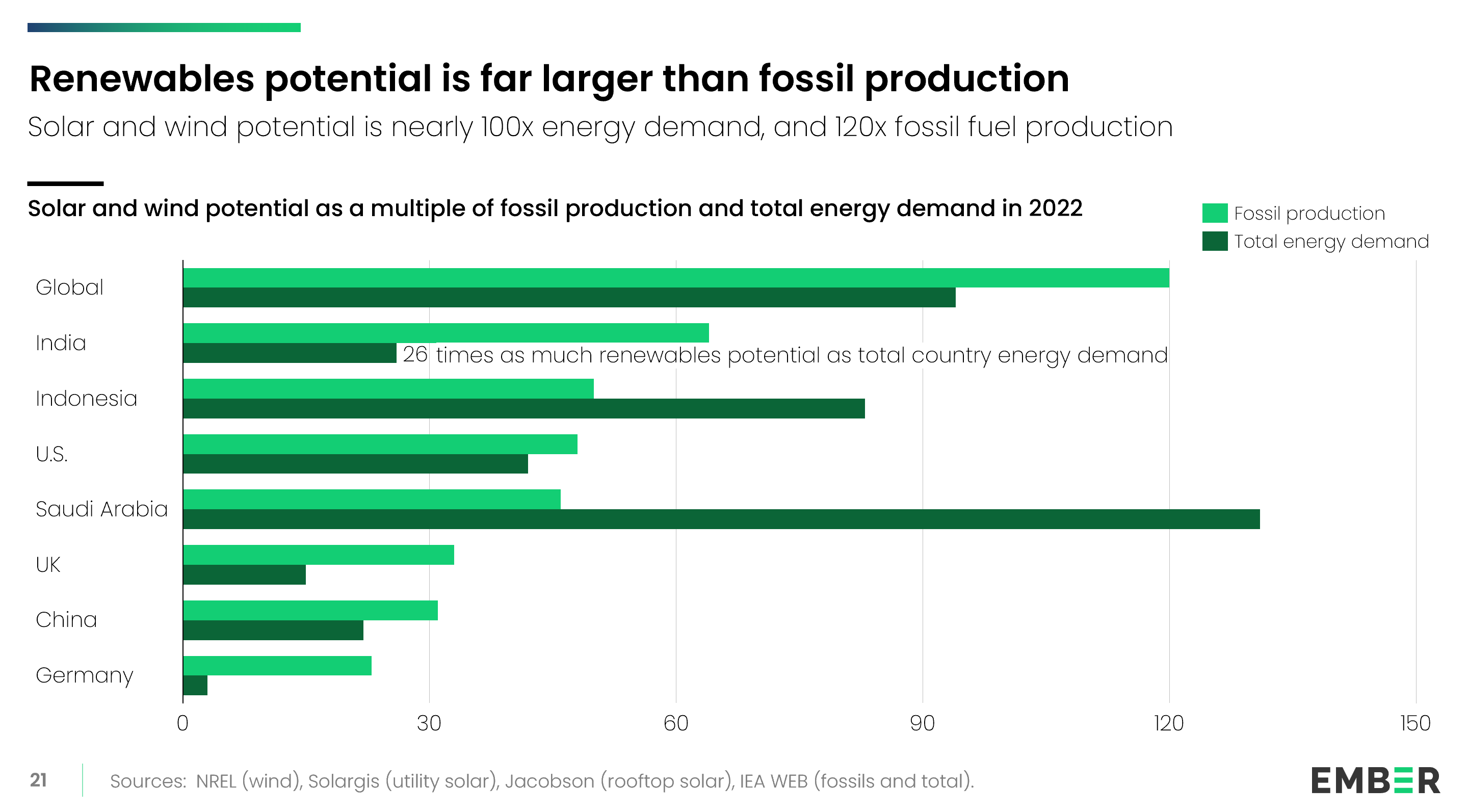
The electrotech opportunity is open to any country. Where fossil fuels are geographically concentrated, renewables are widely available and abundant. 92% of the world’s population has the potential to meet more than ten times their energy demand with renewables. Global solar and wind potential is nearly 100 times the world’s current energy demand, and 120 times total fossil fuel production.
Fossil-importing nations are like frogs in boiling water, failing to detect the gradually increasing danger. Import dependency has been rising for decades, and now Donald Trump has turned up the heat to a boil. Electrotech offers the fastest escape route from this escalating threat.
This analysis has been prepared in a slide deck format, which is shown below. For optimal viewing, kindly refer to the downloadable PDF here.
Fossil fuel import dependency is high— and the risk is rising
Electrotech offers a new strategy for energy security
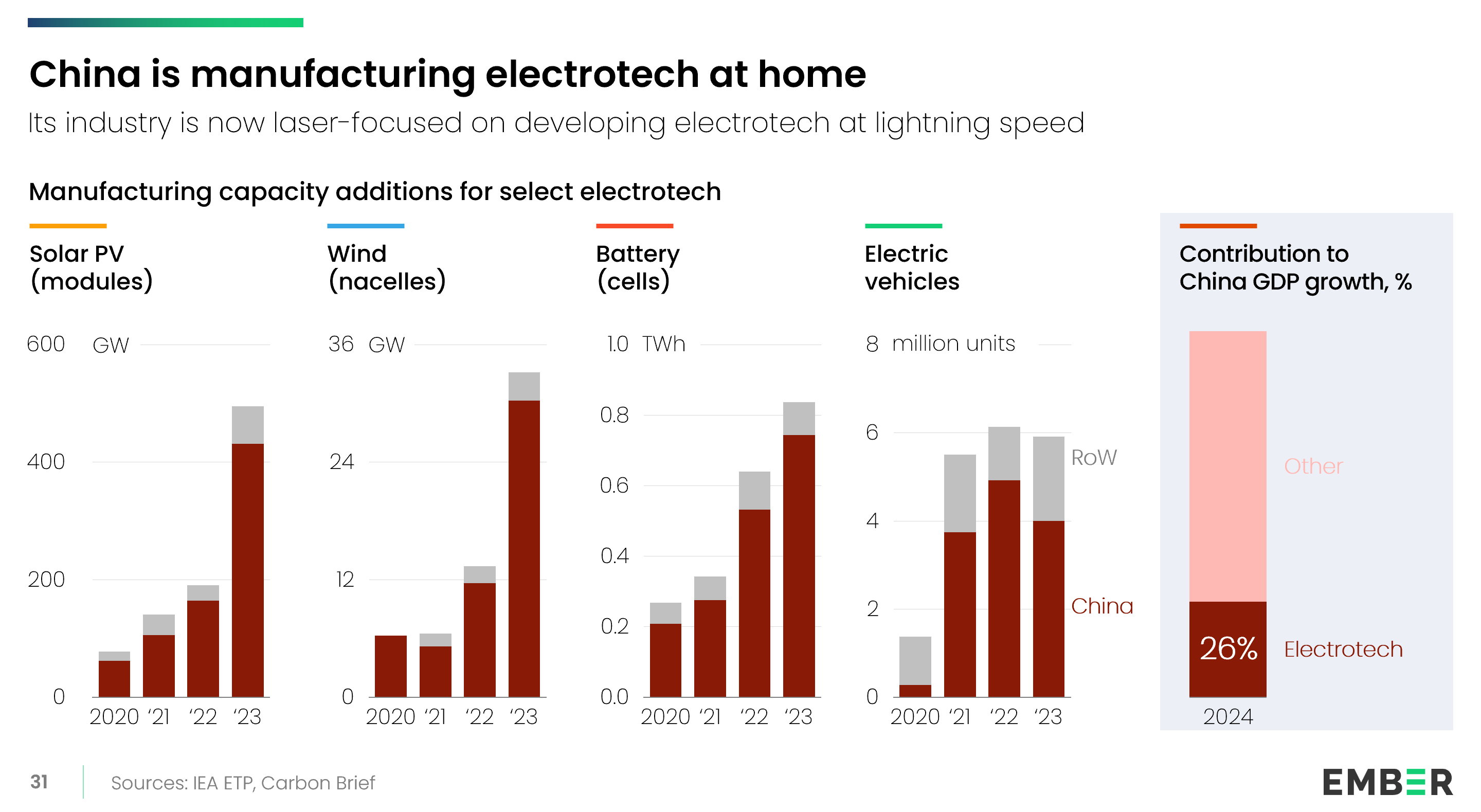
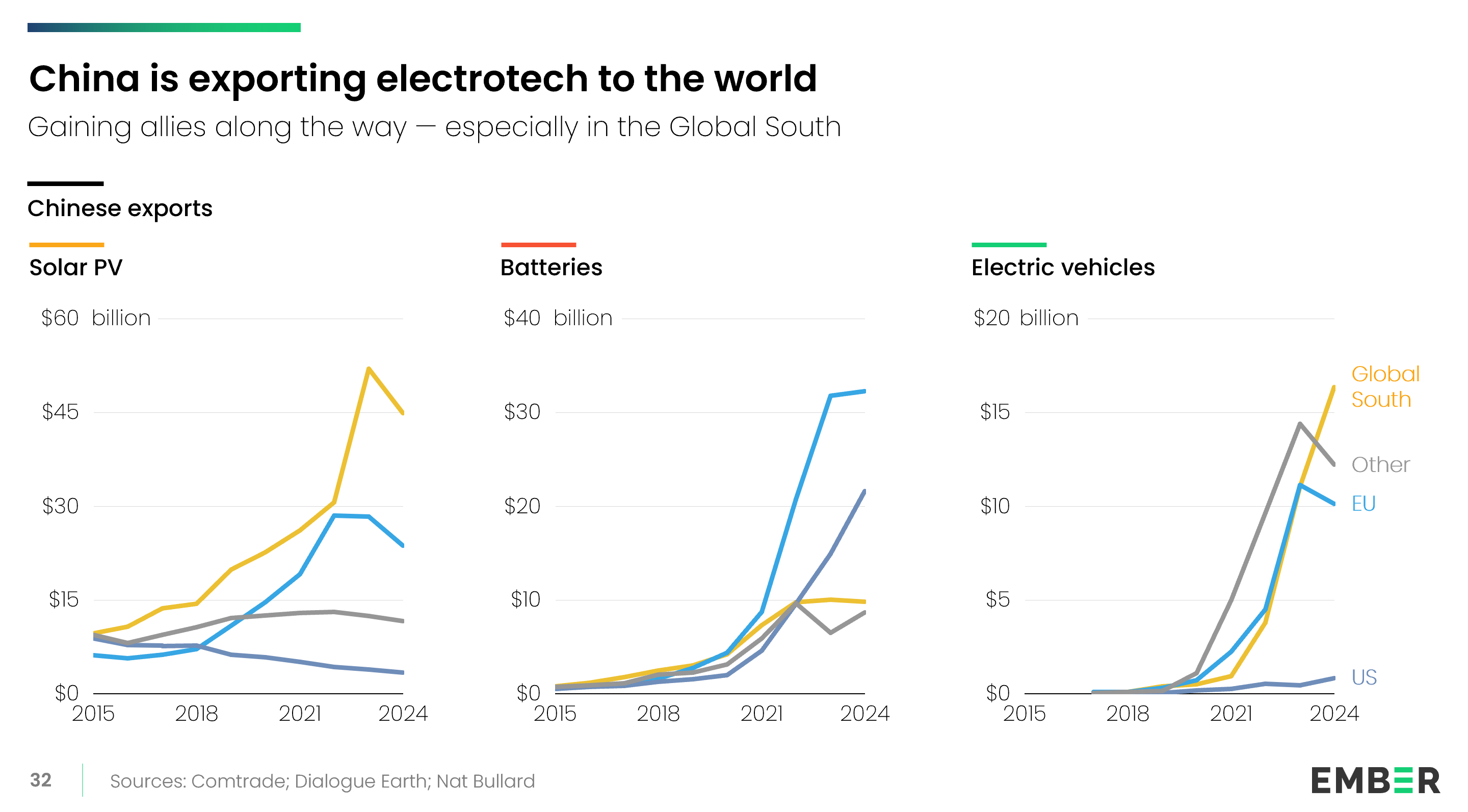
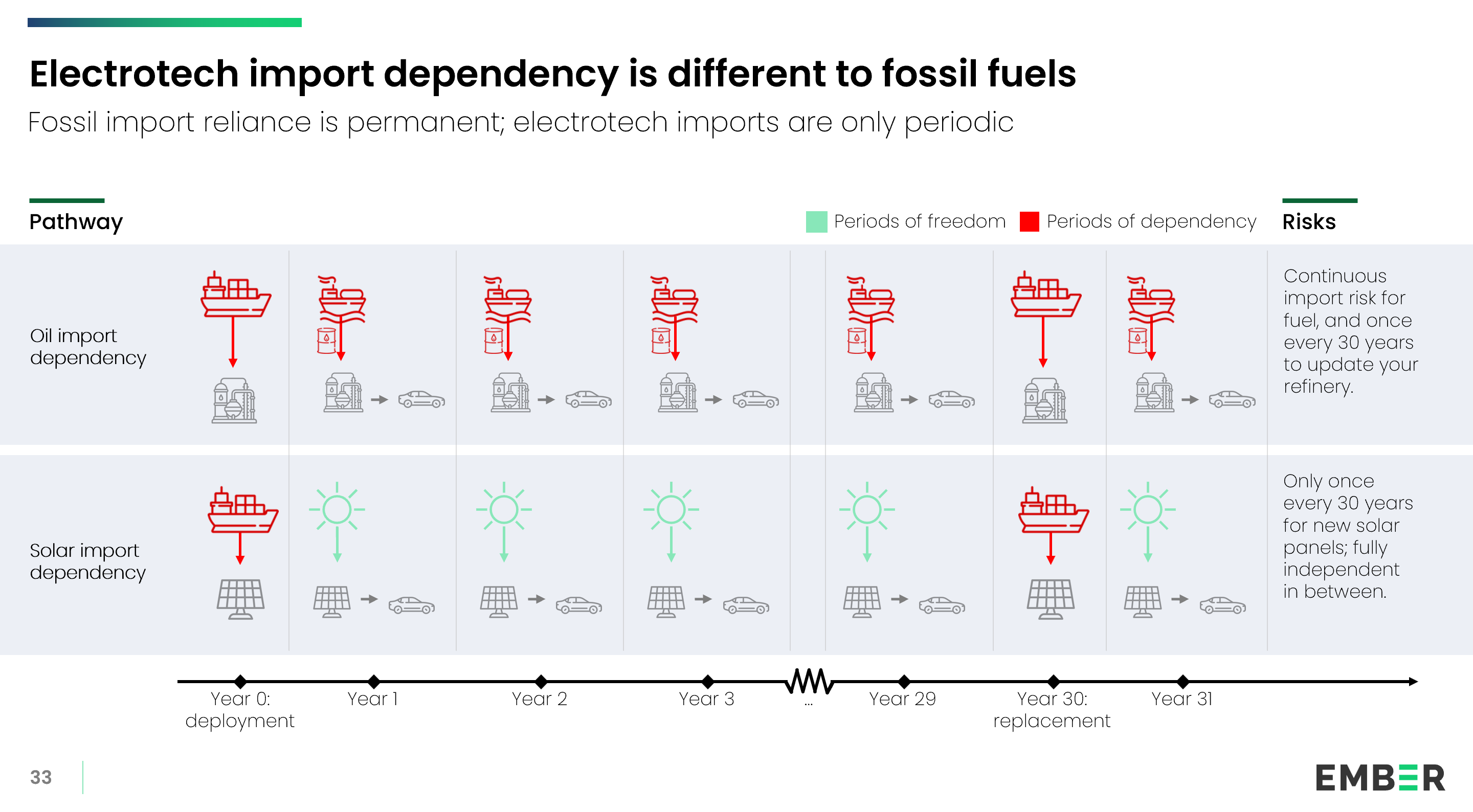
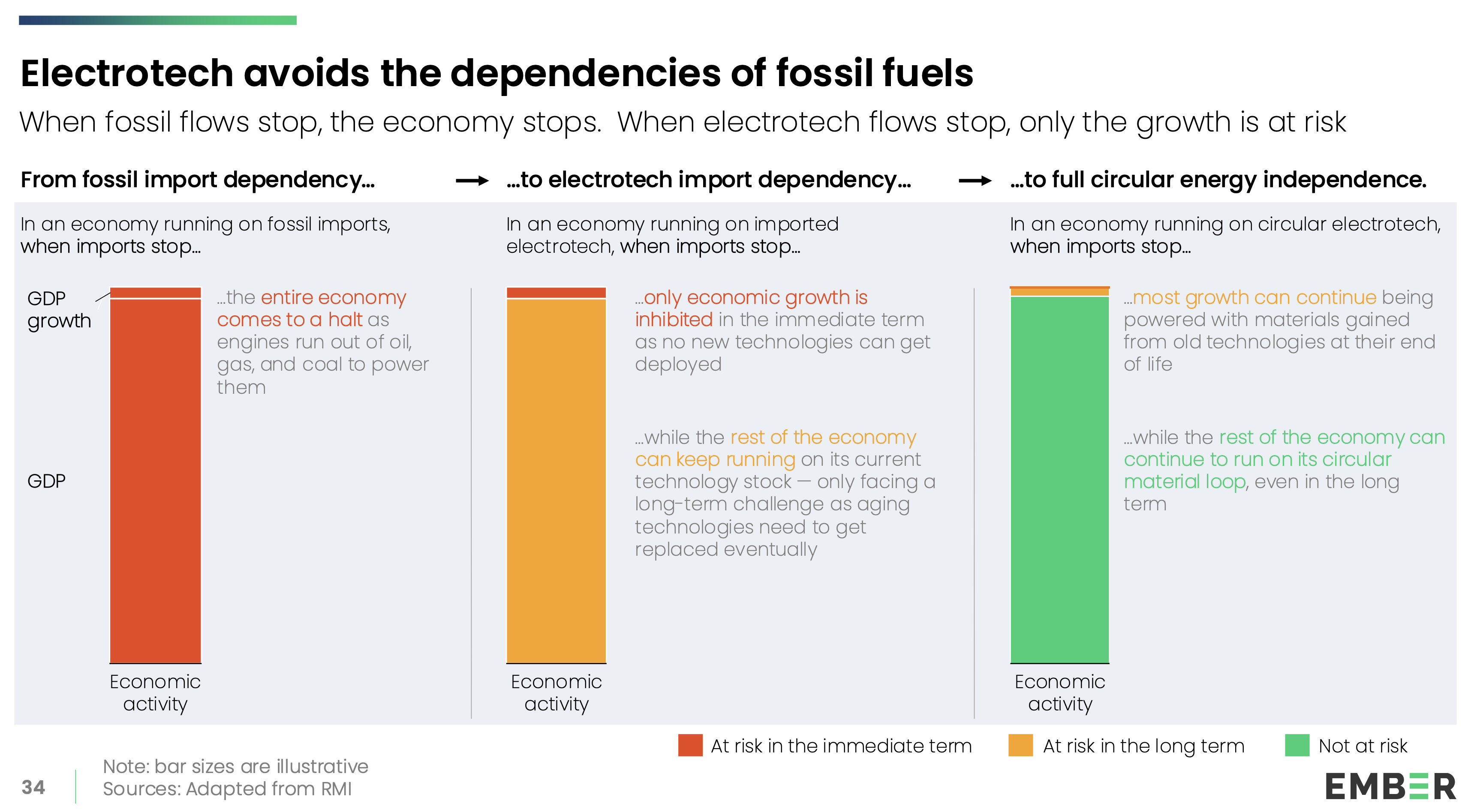
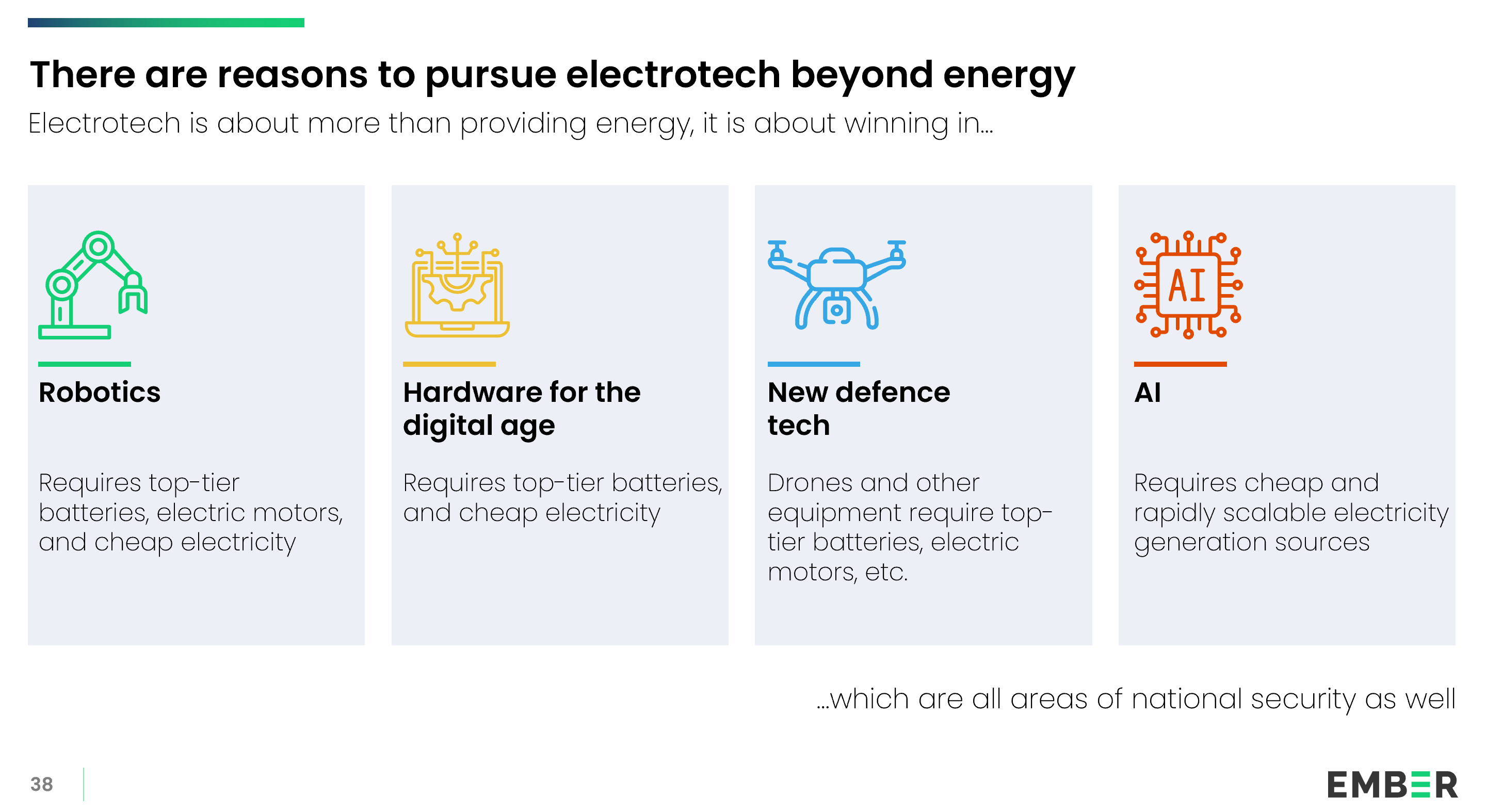
China is pursuing this strategy— others can follow
Downloads
Download the complete slide deck
Methodology
This analysis examines the energy trade balances of all countries globally, using the World Energy Balances published by the International Energy Agency (IEA). The principal reference year is 2022, as it is the most recent year for which the dataset provides a complete picture of national energy trade flows. Population data are sourced from the OECD via the IEA. Real GDP figures are obtained from the World Bank.
A net importer is a country whose imports of a given fuel exceed its exports of that fuel on a total energy basis. The category of oil includes products and crude.
In charts assessing the cost of energy imports, we pair 2022 energy flow data with a more representative fossil fuel price—adjusted to account for the exceptional price spikes caused by the Ukraine war. This adjustment is intended to provide a view of the economic burden of fossil fuel imports outside of a geopolitical shock.
To estimate the potential savings available to fossil fuel importers through electrotech, we assess three major levers: solar and wind, electric vehicles (EVs), and heat pumps. Their potential is sized as follows:
- Solar and Wind: Assumed to have the potential to displace up to 100% of the imported fossil fuels currently used for electricity generation. This is not to assume that solar and wind will provide all electricity in the system, but rather that the proportion of electricity generated currently from imported fossil fuels can be replaced by domestic renewable sources.
- Electric Vehicles (EVs): Assumed to substitute all imported fossil fuels used for road transport.
- Heat Pumps: Assumed to replace all imported fossil fuels used for heating in buildings.
No specific timeframe is prescribed to this potential, as the pace at which nations realise these savings depends on choices made today.
We acknowledge that further savings are possible through the electrification of industrial processes and other solutions to non-road transport; however, these are not included in this analysis.
Acknowledgements
Cover image
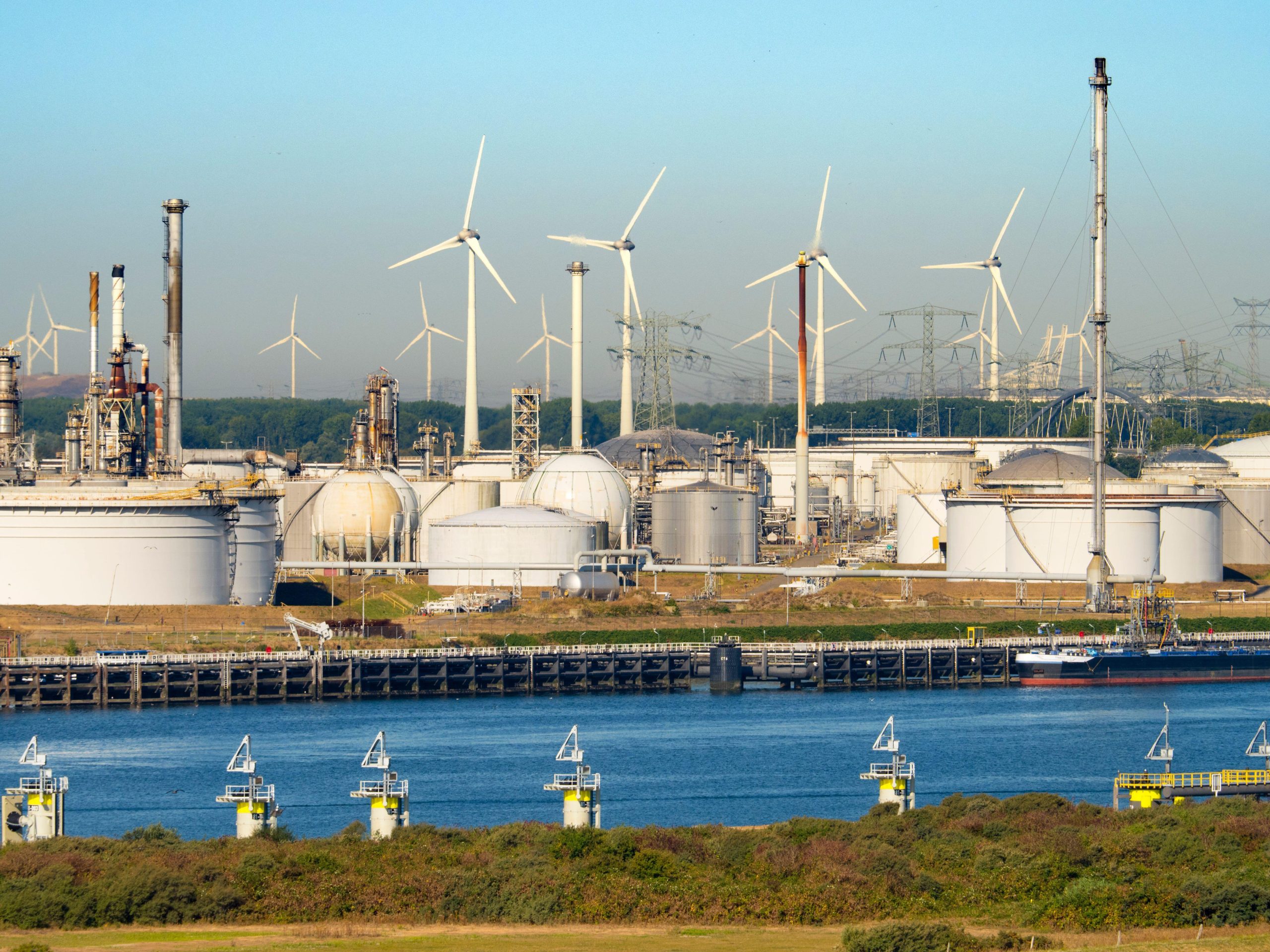
Wind turbines and oil storage tanks in Rotterdam. Credit: Jon Bower / Alamy Stock Photo
Related Content
Analysis
Storage target ambition is rising, but not fast enough to reach the goal
14 October 2026
Analysis
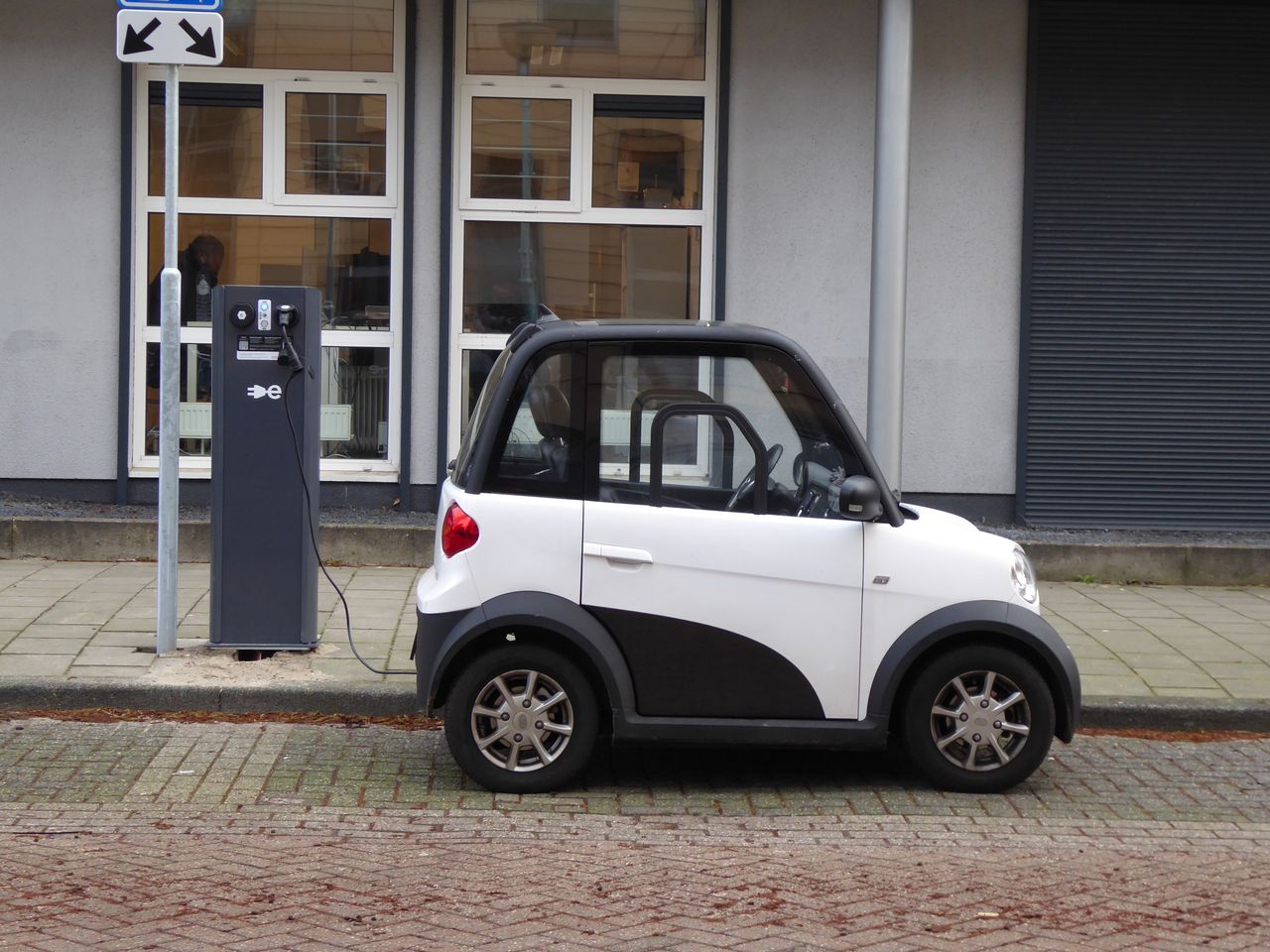
Electric energy security: how EVs are reducing oil import vulnerabilities
13 October 2026
Analysis
Bankable by design: Financing ASEAN's energy system transformation
06 October 2026
Analysis
Renewable Caribbean: towards energy independence
01 October 2026