For decades, the question about solar and wind was whether they could be cheap enough to compete with fossil power. That question is settled: across most of the world, they are now the cheapest new source of electricity, and onshore wind is the cheapest of all on global average.
The next question is whether wind and solar can deliver power when it is needed, rather than simply when the weather allows. The answer will determine whether renewables can replace coal and gas, or merely supplement them. It is a harder challenge, rooted in a fundamental difference: fossil fuels can be extracted and burned on demand, while renewables must be harvested with the rhythms of nature.
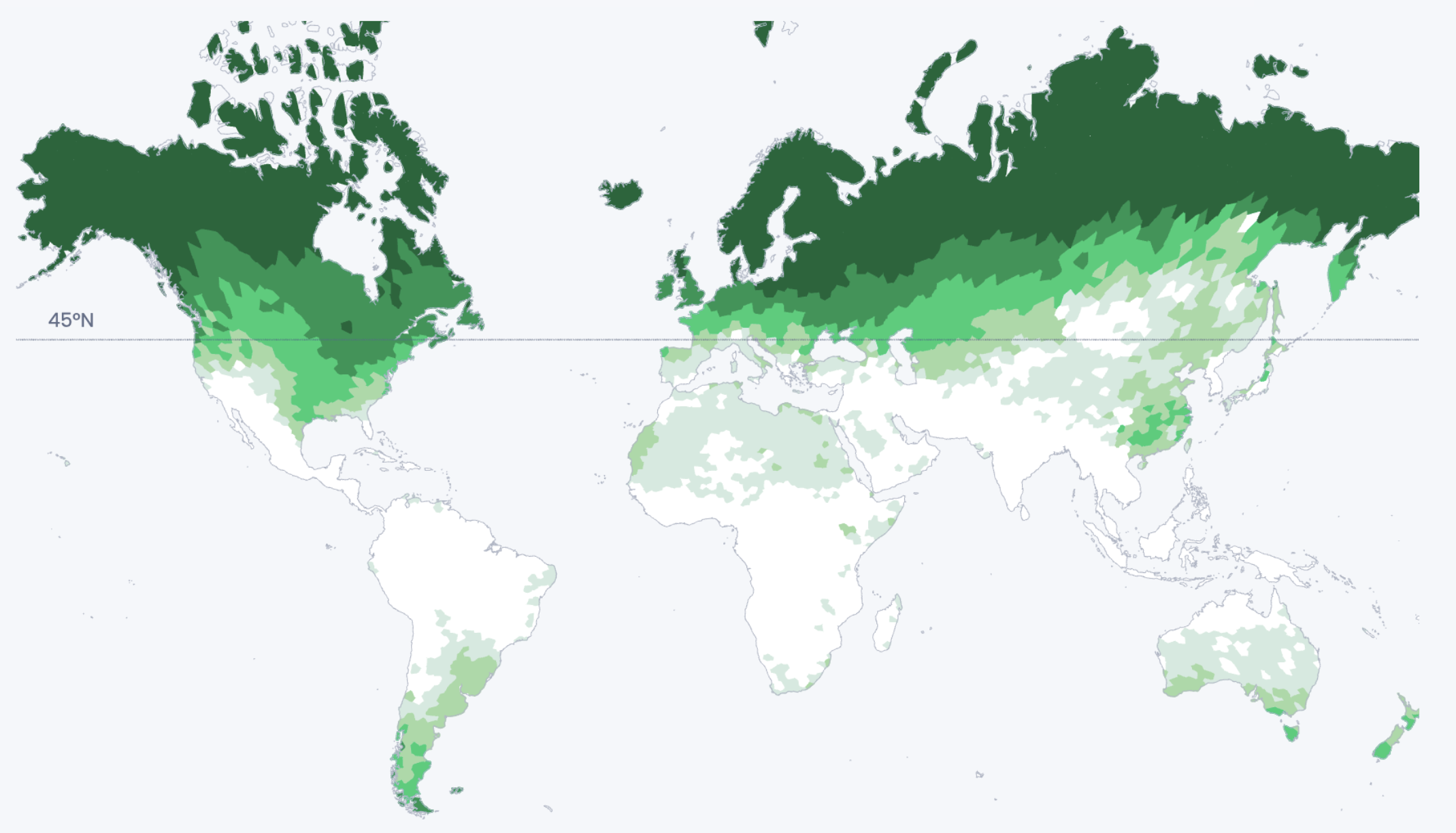
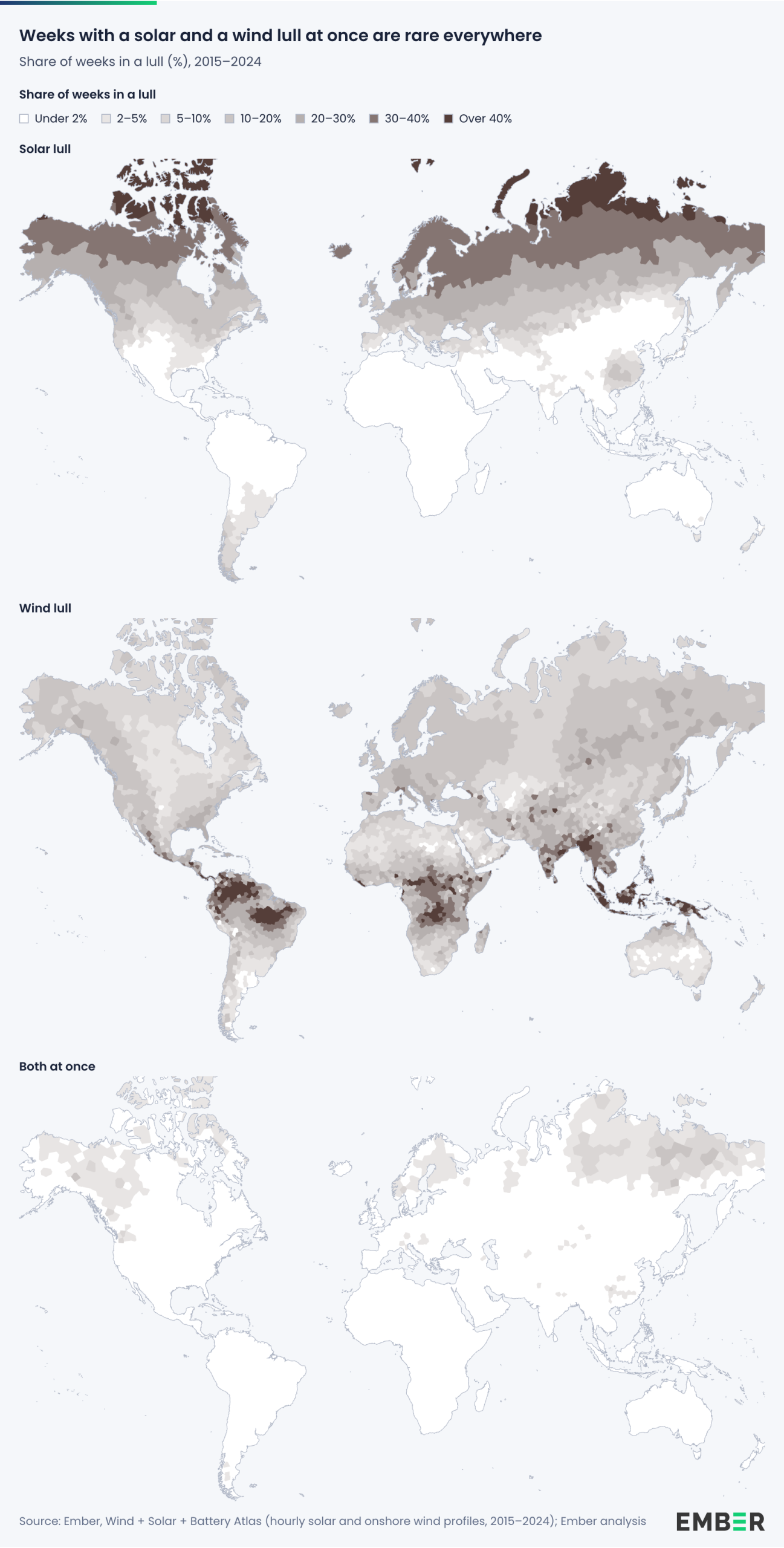
Solar and batteries have already gone a long way towards meeting this challenge. In Harnessing the Sun, we found that together they could meet 80% of electricity demand for under $100/MWh for four in five people worldwide. But solar alone has its limits. Like any crop, it has its bad seasons: short winter days and prolonged stretches of cloud can leave even a solar-and-battery system struggling to meet demand.
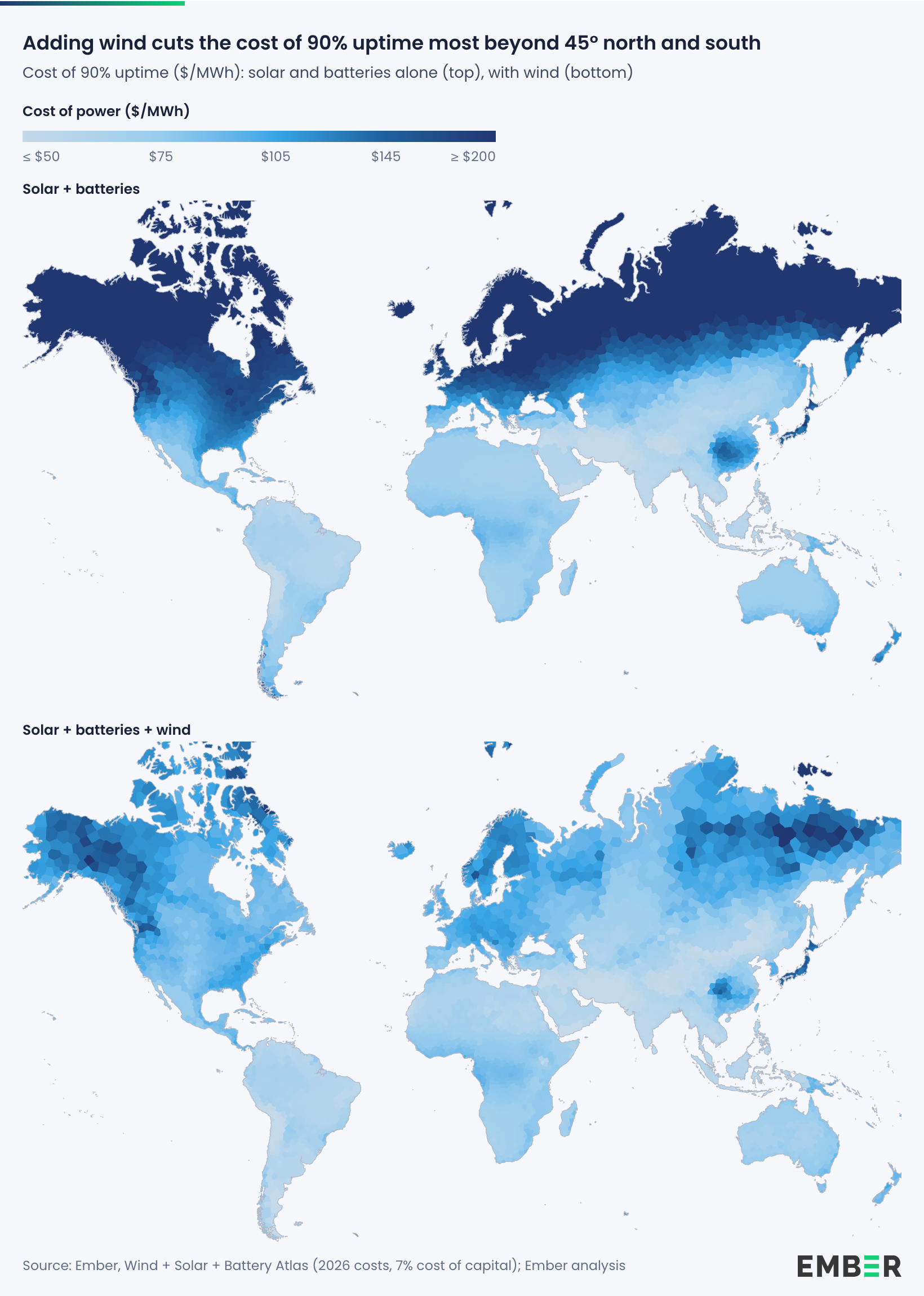
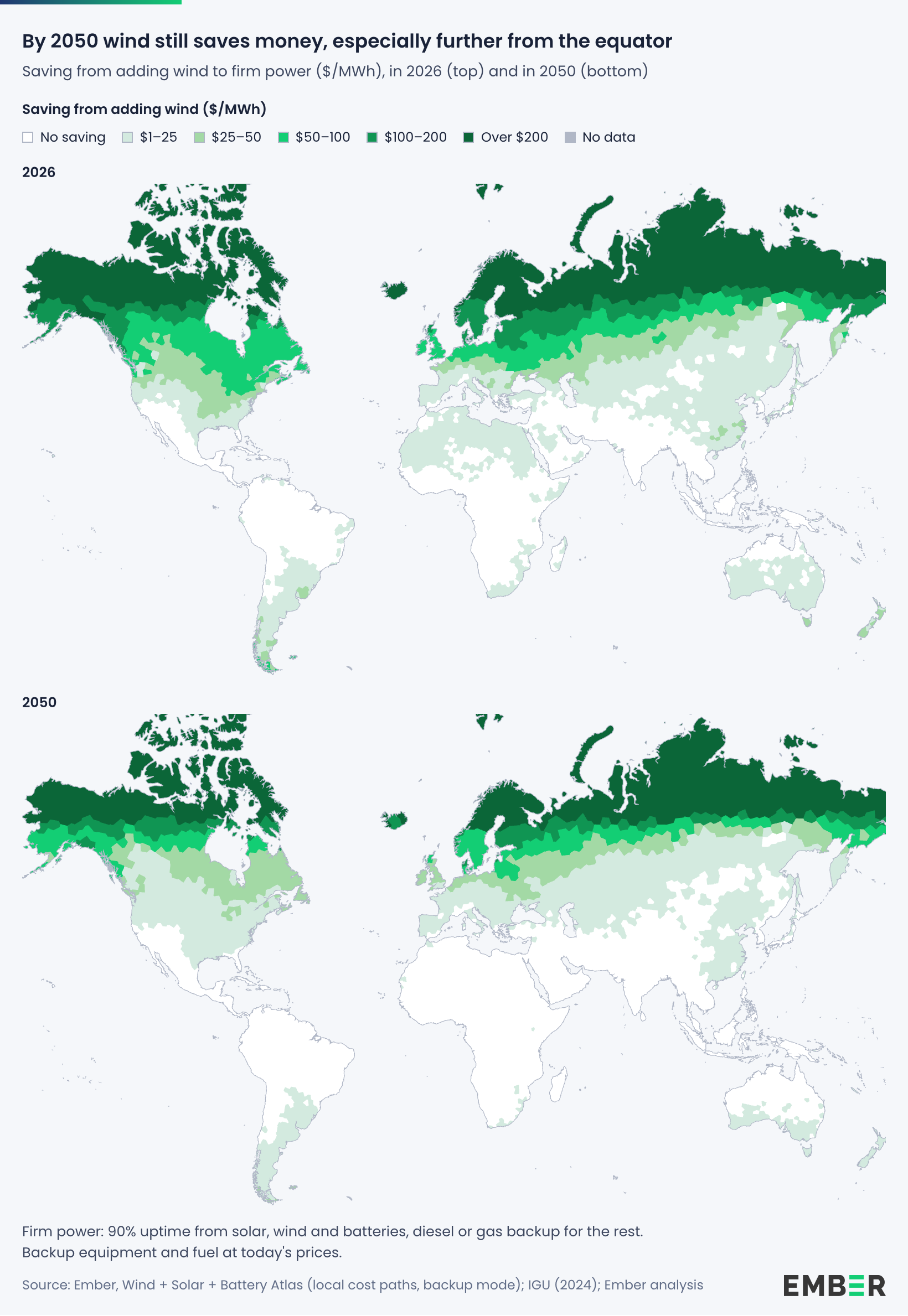
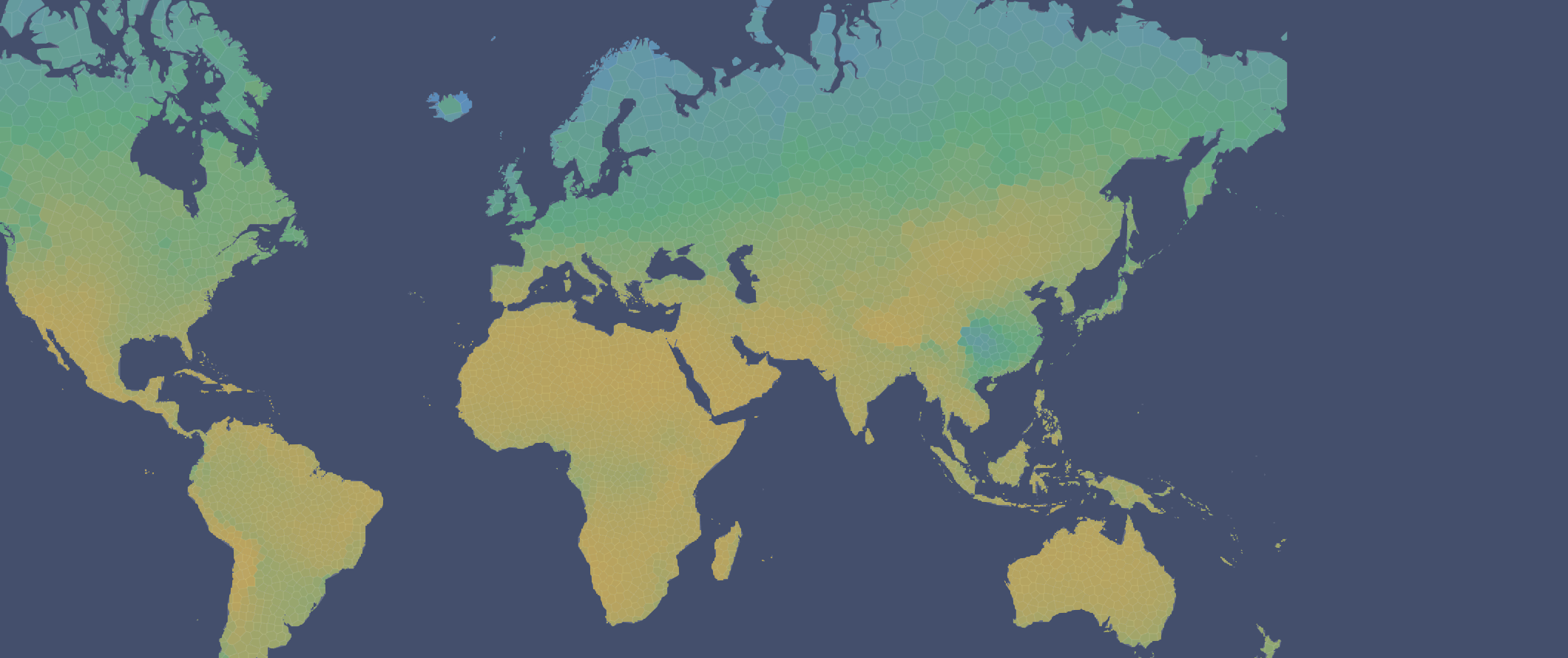
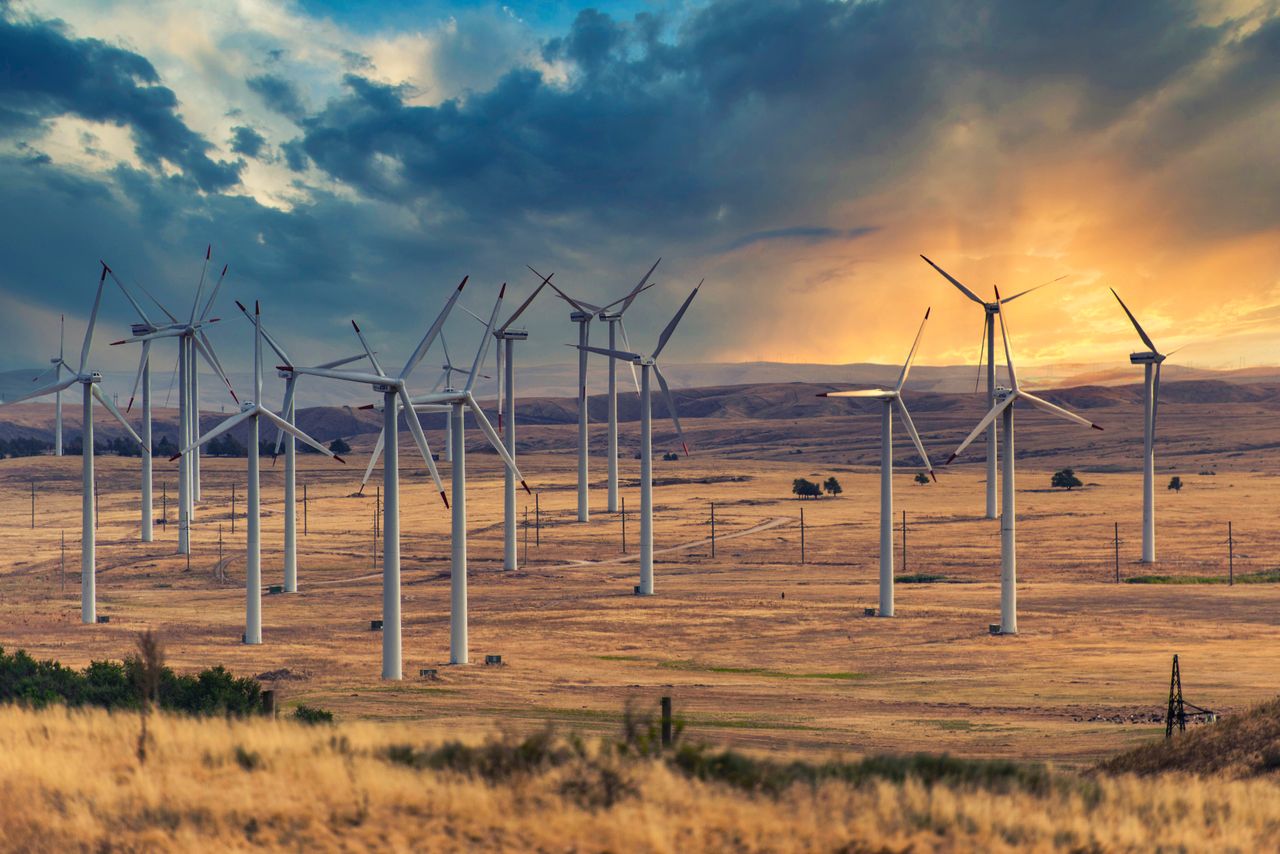
Wind is the second crop, and it grows in different weather. Solar follows the path of the sun. Wind follows weather systems: it often blows hardest when skies are grey and stormy, and in much of the world it is strongest in the colder months. That makes wind a natural complement to solar power.
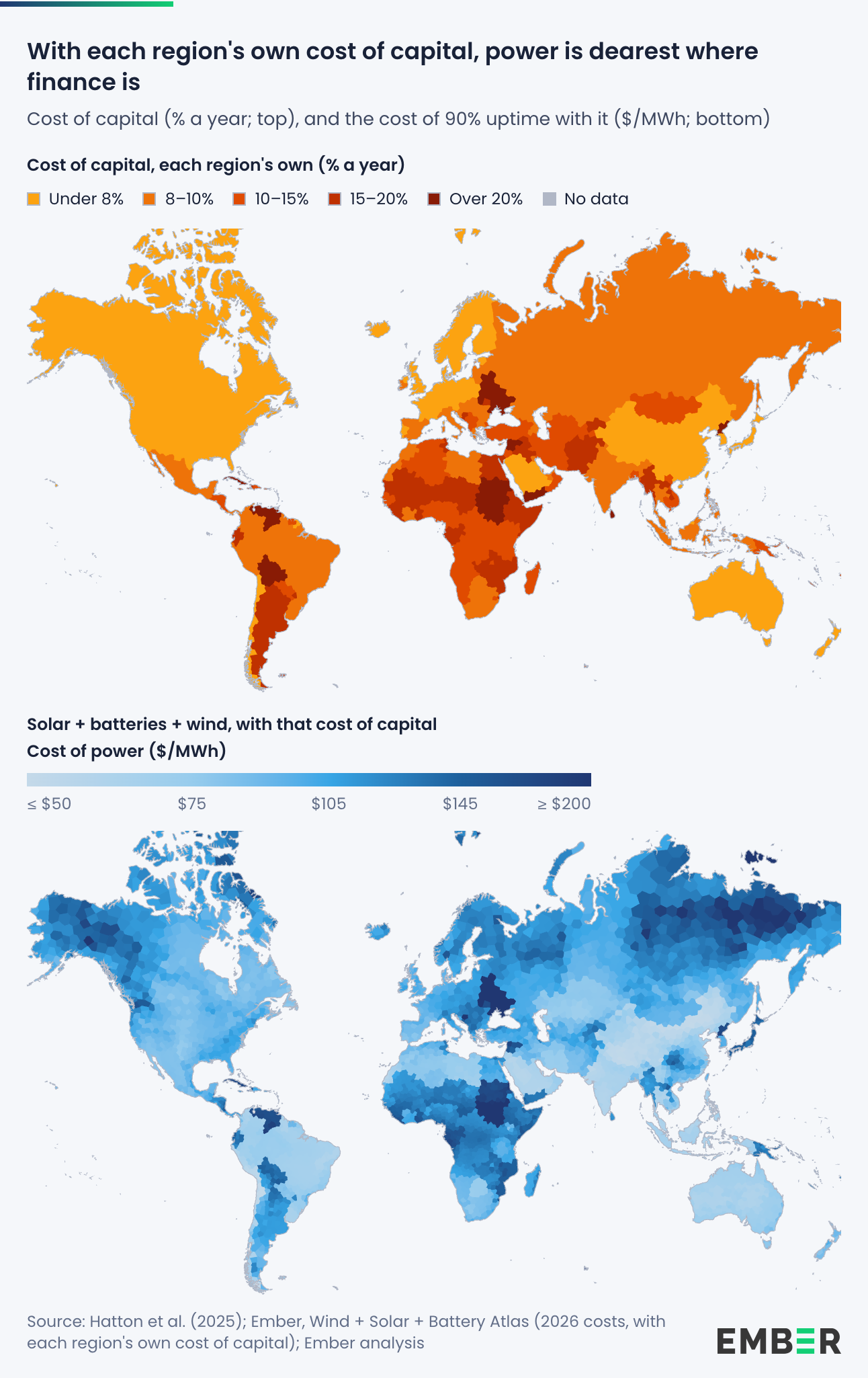
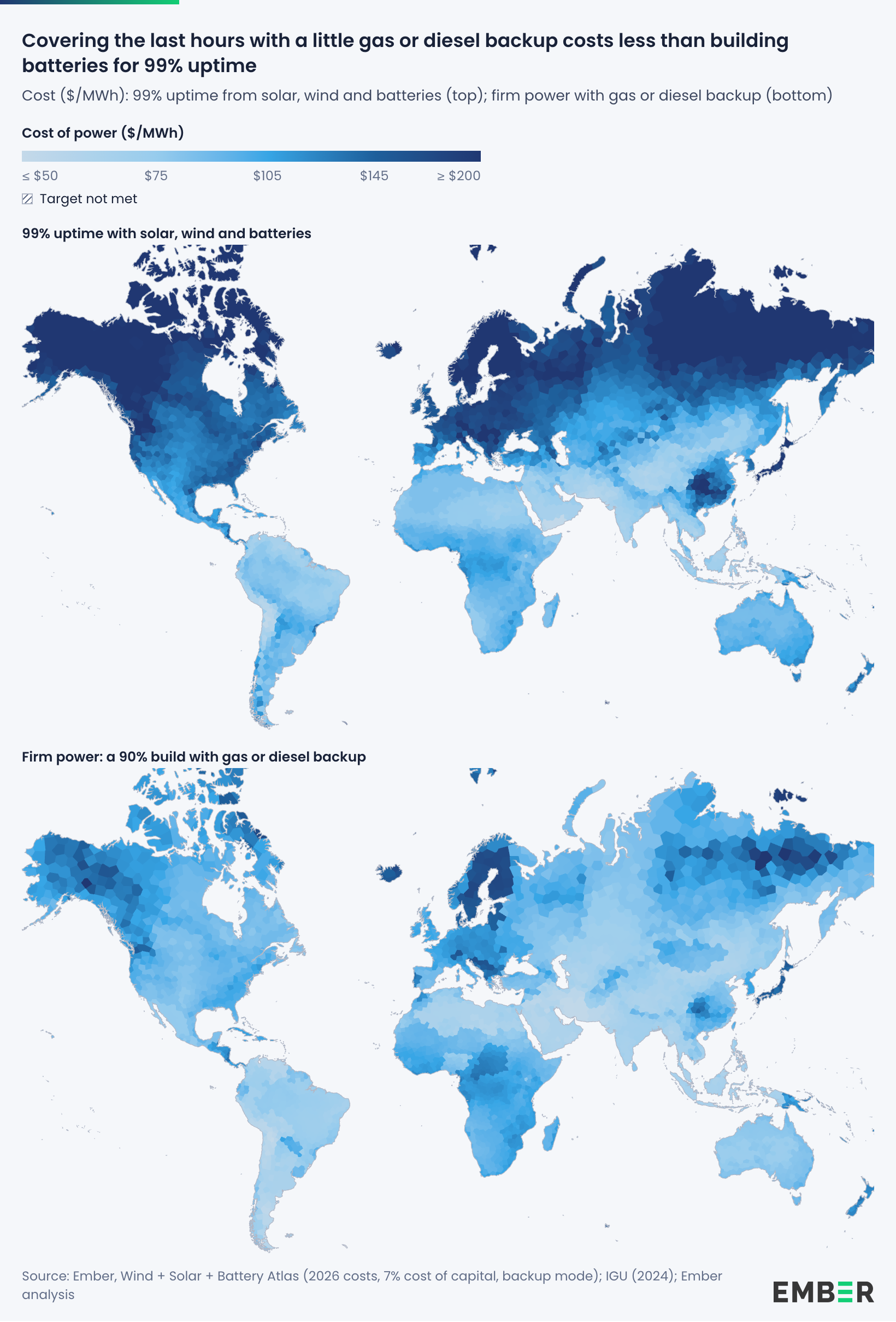
To see how far wind takes us, we added it to the atlas behind ‘Harnessing the Sun’ and ran every region of the world through ten years of hourly weather. We set the toughest test we could: baseload demand – the same every hour, day and night, summer and winter. Real demand is kinder, and more of it can be moved to other hours each year. So the costs here are a stress test, not a forecast: real systems should do better.
Our benchmark is uptime: the share of that demand a system meets from its own solar, wind and batteries, hour by hour. We use 90%, with gas or diesel backup for the rest when the goal is fully firm power. Seven findings stand out, most of them widely underappreciated.