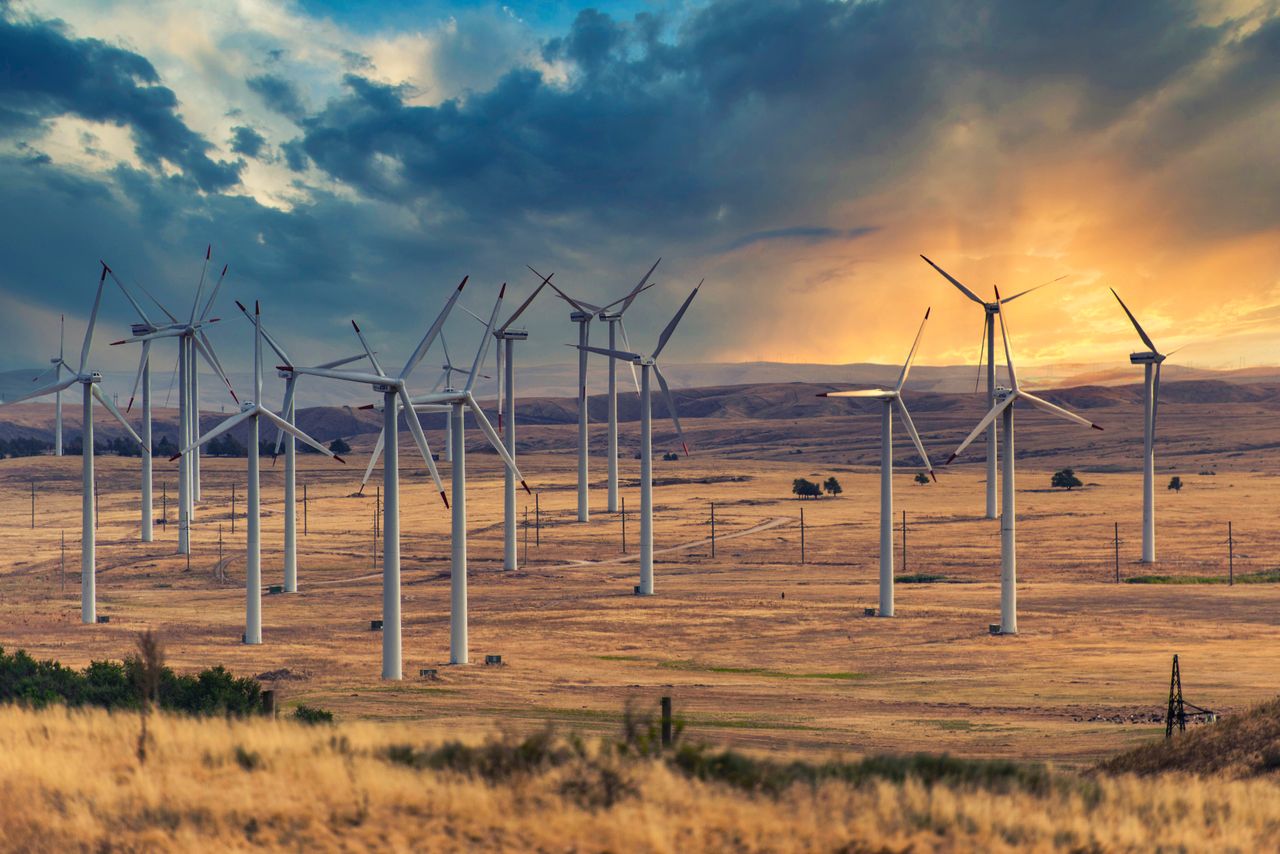
Kazakhstan’s wind is strong, steady and available almost everywhere at low cost. It can be at the core of the capacity build-out needed to meet the country’s fast-growing demand and replace old and inefficient infrastructure. National targets underestimate its potential and risk missing the opportunity.
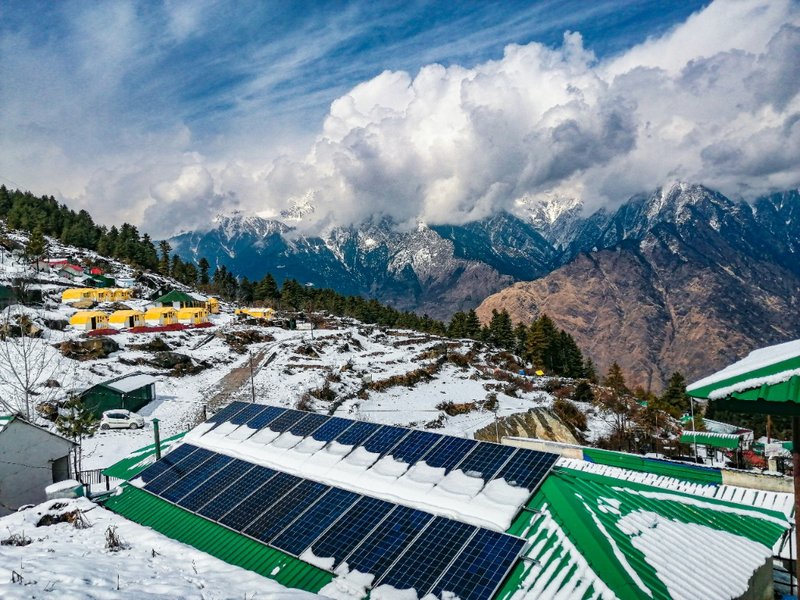
While in sunny countries like India, solar and batteries can supply around the clock electricity economically, in Kazakhstan the vast untapped wind potential provides a unique opportunity.
Wind is already leading progress toward 15% renewables by 2030 target
Kazakhstan has a national target to reach 15% renewable electricity share by 2030. The target includes wind, solar, bioenergy and small hydropower, but excludes large hydropower plants. By that definition, renewables reached 7% of generation in 2025, up from 4.5% in 2022. Renewable generation rose 1.7 times over that period, beating the interim national target of 1.5 fold increase.
Wind is already leading the progress towards the target. It accounted for 4.7% of 2025 generation, according to Ember data, more than doubling from just 2% in 2022. Installed capacity has surpassed 2 GW as of Q2 2026, with over 5 GW in the pipeline, of which 4 GW is expected to come from four large wind-plus-battery projects, each with 1 GW wind and 600 MWh battery.
Costs are already competitive. Kazakhstan’s first auction for wind with storage, a 1 GW project in Kostanay region, cleared in April 2025 at 18.72 tenge/kWh ($42/MWh at the September 2026 exchange rate of about 450 tenge to 1 USD), and the negotiated dollar tariffs for the TotalEnergies and Masdar projects are $39.9/MWh (18.0 tenge/kWh) and $44.9/MWh (20.2 tenge/kWh). These prices are generation prices and comparable with the $41–49/MWh generation cost of the hybrid plants in this report.
Smartly operated hybrid plants can be a source of system flexibility
Wind and solar are a source of abundant cheap electricity. Some curtailment is not only economically acceptable – it is the key to making hybrid power plants a source of flexibility, but only if it is by design and paid for. A fleet of hybrid plants spread across the three power zones adds flexibility of its own. When operated smartly, hybrid plants stop being a flexibility liability and become part of the solution: cheap power where demand is, with the flexibility to keep the lights on.
Interconnections extend the same flexibility benefits across borders that can create green energy corridors that unlock the renewable potential and strengthen energy security for the whole Central Asia and the Caucasus region.
Batteries need to be able to stack revenues to provide their full value
Kazakhstan is already considering a law on energy storage systems. 2.4 GWh of batteries are already due to come online in the next few years at the four large wind-plus-battery projects. To ensure these batteries provide system-wide value and to incentivise future investment in smart hybrid projects, new rules need to be in place as soon as possible and ensure the possibility for revenue stacking. That means access to an ancillary-services market (frequency regulation, reserves, black start), access to the balancing market, and arbitrage under market rules rather than regulated charging and discharging tariffs. China’s regulatory journey from storage mandates to new market mechanisms that allow revenue stacking is a potential source of key learning for Kazakhstan. The mandates began in 2017 and required new wind and solar projects to add storage but co-located batteries were used little, cycling just 80 times a year in 2022. Since 2022, China has opened spot, ancillary-service and capacity payments to batteries, supporting a notable increase in utilisation and in February 2025 scrapped the mandates.
Without a target beyond 2030, Kazakhstan risks slowing progress
Kazakhstan does not have a dedicated renewables target beyond 2030. Instead, the 2050 target is for 50% renewable and other alternative sources, which include nuclear. The lack of a specific renewables target risks undermining progress once the 2030 target is reached. There are already valid concerns that integrating more variable renewables beyond the 15% by 2030 target will be challenging due to insufficient system flexibility. Kazakhstan’s coal plants have slow ramp rates and cannot run below about 70% of capacity, while other sources of flexibility like demand response and hydropower, remain untapped due to market rules that do not pay for flexibility. The grid operator, Kazakhstan Electricity Grid Operating Company (KEGOC), has argued for a pause on new renewable projects until flexible capacity catches up.
Increasing system flexibility while keeping up the pace of renewable deployment is the central task of the next decade. A clear and ambitious post-2030 wind and solar target would be a clear signal to investors that the pipeline does not stop at 15%.