About
This report examines the current level of electrification in Türkiye and how it has developed, and sets out the technological changes and policy steps needed to raise electricity’s share of final energy consumption to 35% by 2035.


Available in: Türkçe
Over the past decade, Türkiye has built significant momentum in clean electricity, raising the share of solar and wind in electricity generation from 4.5% to 22%. However, spreading this clean energy across the wider economy depends on electricity replacing the fossil fuels burned in buildings, transport and industry.
Reaching the 35% target by 2035 therefore requires comprehensive policy changes that simultaneously scale up heat pumps in buildings, electric cars and heavy-duty vehicles in transport, and electric production technologies in industry – implemented together with investment in renewables and grids.
Türkiye has made significant progress in generating electricity from renewable sources in recent years. But for this clean energy to reach the wider economy, electricity needs to replace fossil fuels in buildings, transport and industry. Reaching the 35% electrification target by 2035 means electricity taking on a growing share of the work that oil, coal and gas do today. By implementing the policy changes and infrastructure investments that carry its high renewable potential to end users through electrification, Türkiye can reduce its dependence on imported fuels and strengthen its energy security.

As of 2024, electricity meets only 22% of Türkiye’s final energy consumption. Around a third of energy use in buildings and industry is electrified, compared with less than 1% in transport. Yet Türkiye’s electrification potential is high. With today’s technologies, electricity could meet all the energy needs of buildings, 96% of those of transport and 58% of those of industry.
Between 1990 and 2024, electricity’s share of final energy consumption rose from 10% to 22%. But this increase did not replace fossil fuels. Almost all the growth in electricity consumption came from new needs. As a result, the share of fossil fuels in final energy consumption remained almost unchanged at around 70% throughout the period.
Over the past decade, fossil fuel consumption in Türkiye grew by an average of 2.5% a year and electricity demand by 4%. If current trends continue, the electrification rate will reach only 24.4% by 2035. Reaching the 35% target requires a rapid and fundamental change in the structure of energy consumption.
Even in a scenario where every new car sold from 2027 onwards is electric, the electrification rate of cars only reaches 17% in 2035. The impact of this shift on the national electrification rate is just 1.6 percentage points. Raising the national electrification rate by 1 percentage point corresponds to 5.7 million new electric vehicle sales. The 35% target can therefore only be reached through a transition in which electricity replaces fossil fuels in all sectors.
Accordingly, at the 31st United Nations Climate Change Conference of the Parties (COP31), which Türkiye hosts this year, the target of 35% electrification by 2035 is expected to be on the agenda. In Türkiye, where this share stood at 22% in 2024, electrification needs to gain momentum for the target to be reached.
Türkiye’s clean energy transition has so far taken place mainly in electricity generation. The share of renewables in electricity generation rose from 32% to 43% between 2015 and 2025. Over the same period, the share of solar and wind alone grew from 4.5% to 22%, showing that the energy transition in the power sector has gained significant momentum. Yet while electricity increasingly comes from renewable sources, energy needs in buildings, transport and industry are still met mainly by fossil fuels.
Spreading the progress in electricity generation across the wider economy depends on electricity replacing fossil fuels in buildings, transport and industry – in other words, on raising electricity’s share of final energy consumption. To accelerate this transition, Türkiye has announced a pledge to raise electricity’s share of global final energy consumption to 35% by 2035.
For Türkiye, electrification points to a very high potential for transformation in final energy consumption, particularly in transport and buildings. In Türkiye, around 85% of final energy demand could be met by electric technologies already in use today. Electric vehicles in transport, heat pumps in buildings, electric cooking instead of gas stoves and electric production technologies in industry can replace fossil fuels with more efficient and cleaner electricity.
Today, existing technologies already make it possible in Türkiye to electrify 100% of energy use in buildings, 96% of transport and 58% of industrial energy consumption. The share that does not appear suitable for electrification comes largely from aviation and shipping in transport, from high-power machinery such as combine harvesters in agriculture and from some high-temperature processes and fuels used as feedstock in industry.
By contrast, in 2024 electricity met only 32% of energy consumption in buildings and around 30% in industry. Although Türkiye became Europe’s fourth-largest market for electric cars in 2025 with 190,000 sales, the electrification rate in transport is still below 1%. The greatest electrification potential therefore lies in transport and buildings, where electric alternatives are technologically mature and energy consumption is high.
Despite the high electrification potential across sectors, the trajectory of Türkiye’s electrification rate so far shows that electric technologies have not spread on a scale that would replace fossil fuels. Between 1990 and 2024, final energy demand in Türkiye tripled, while electricity demand rose roughly sevenfold. Because electricity demand grew faster than total demand, electricity’s share of final energy consumption increased. Over this period, the electrification rate rose from 10% to 22% in 2024.
However, this rise in the electrification rate was the result of growth, not transition. Bringing electricity to the whole country, including rural areas, the spread of household appliances, computers and air conditioning and the growth of economic activity all drove rapid increases in electricity demand. This new demand did not replace needs previously met by fossil fuels, and fossil fuel consumption also kept growing over the same period. As a result, the share of fossil fuels in final energy consumption fell only from 70.9% to 70.4% between 1990 and 2024.
In heating – the only major end use to see a real fuel switch during this period – the shift was not to electricity, but from wood and biomass to gas.
Since 2018, electricity demand has grown almost as fast as fossil fuel demand. Between 2018 and 2024, electricity consumption grew by an average of 3% a year and fossil fuel demand by 2.8%. As a result, after reaching 21.5% in 2018, the electrification rate remained largely flat and stood at 21.8% in 2024. This is close to the global and European Union averages of 23%, but well behind Asia (28%), where electrification is advancing faster. Türkiye’s electrification rate is, however, above the averages for the Middle East (20%) and Africa (12%).
This shows that Türkiye needs to scale up electrification much faster than it has so far to reach the 35% target. The electrification rate rose by only 1.3 percentage points in the 11 years between 2013 and 2024. Reaching the target requires an increase of 13 percentage points in the 11 years from 2024 to 2035 – ten times the previous pace.
The growing share of renewables in electricity generation is reducing the power system’s dependence on fossil fuels. However, electricity makes up only 22% of final energy consumption. Most of the remainder consists of fossil fuels burned directly in transport, buildings and industry. Cutting the use of fossil fuels such as oil, gas and coal in these sectors requires wider use of electricity. Supplying the electricity demand created by the electrification with renewable energy will enable clean energy to spread across the wider economy. Replacing fossil fuels with electricity from renewable sources will also strengthen Türkiye’s energy security by reducing its import dependence.
Between 2014 and 2024, final fossil fuel demand in Türkiye grew by an average of 2.5% a year, and electricity demand by 4%. If these trends continue, the electrification rate will reach 24.4% in 2035, around 11 percentage points short of the 35% target. This shows the need for a transition that goes beyond current trends and accelerates the replacement of fossil fuels with electricity.
In a scenario where fossil fuel consumption keeps growing at its current pace, raising electricity’s share of total final energy consumption to 35% requires a very large technological transition. In this case, reaching the 35% target would mean 19 million electric cars and 6.5 million electric commercial vehicles on the road in 2035, heat pumps in 20 million homes and around 12 GW of electric heat generation capacity in industry.
This scenario requires an average of 1.7 million new electric cars to take to the road every year. That is around 1.5 times the total number of cars sold in Türkiye in 2025. Moreover, only 17% of new sales in 2025 – 190,000 cars – were electric. The 19 million electric cars needed by 2035 are also more than two and a half times the 7 million projected by the Energy Market Regulatory Authority (EMRA) in its high scenario for 2035. The scenario also requires heat pumps to be installed in 1.8 million homes every year. This is equivalent to almost all of Ankara’s residential gas subscribers switching to heat pumps every year. Yet around 1 million gas boilers are sold in Türkiye each year. The targeted transition would therefore require installation rates far above current boiler sales and a rapid change of the heating market.
The electricity generation required by this scenario is equally large. Without any fall in fossil fuel consumption, this transition would increase final electricity consumption by 480 TWh compared with 2024, to 790 TWh in 2035 – 2.6 times today’s level. Meeting this additional consumption with the current mix of generation capacity would require around 200 GW of additional capacity to be brought online by 2035. That means commissioning new generation capacity 1.5 times the size of today’s installed capacity by 2035. If current investment trends continue, however, capacity growth on this scale by 2035 does not appear feasible.
For electricity consumption to reach 790 TWh, it would need to grow by an average of 9% every year until 2035. This is more than double the 4% average annual growth Türkiye recorded over the past ten years. Türkiye last achieved annual electricity consumption growth of 9% in the 1970s, when electricity was being brought to every village.
In a scenario where fossil fuel consumption stays flat at its 2024 record level, electricity consumption would need to grow by an average of 6.7% a year to reach the 35% target by 2035. Yet this rate is higher even than the strong growth Türkiye last achieved between 1996 and 2007, when consumption was a third of today’s level.
However, as in every maturing power system, electricity consumption growth in Türkiye is slowing over time. Annual growth of more than 9% in 1972–1980 has fallen by around 1.5 percentage points each decade, to 4% in 2014–2024. Reaching the 35% target without reducing fossil fuel consumption, purely by increasing electricity consumption, would require today’s mature system to recapture growth rates typical of the early period when access to electricity was expanding. The path to the 35% target therefore lies not in increasing electricity consumption far above current rates, but in concrete steps to shift the services that fossil fuels provide today to electricity.
In the early years of the shift from fossil fuels to electricity, the electrification rate can paint a misleading picture of slow progress. Because electric technologies use 2–4 times less energy to do the same job, total energy consumption falls when a service previously met by fossil fuels switches to electricity. As a result, electricity’s share of total energy consumption rises more slowly in the early years than the share of services actually switching to electricity, then climbs rapidly once the transition passes a certain threshold.
Cars clearly illustrate this gap. An internal combustion engine car uses around 3.6 times as much energy as an electric car to travel the same distance. As a result, the transition measured by number of vehicles and the electrification rate measured by energy diverge markedly.
In a fleet of 100 internal combustion engine cars, converting 10 to electric represents a 10% transition by number of vehicles, but raises the energy-based electrification rate to only 3%. Converting half the fleet takes the rate to 21%, while converting 80 cars brings it to just 52%. Converting the final 20 cars takes the rate to 100%.
In the early stages, the spread of electric vehicles raises the electrification rate slowly; as most vehicles become electric, the rate rises faster. This is because electric vehicles use far less energy than petrol or diesel vehicles to travel the same distance. When the first vehicles switch to electric, most of the total energy consumption still comes from fossil fuels. But as the number of electric vehicles grows, fossil fuel consumption falls and electricity’s share of total energy consumption rises faster.
The electrification rate can therefore make progress look slower than it is in the early stages of the transition, and faster than it is in later stages. To understand the real pace of the transition, indicators such as electric vehicle sales, heat pump installations and industrial production capacity switching to electricity need to be tracked alongside the electrification rate.
The gap between the electrification rate and the transition rate by units of vehicles is also visible in Türkiye’s current car fleet. As of September 2026, although 2.7% of 18 million cars in Türkiye are electric, these cars account for only 1% of total energy consumption by cars.
Thanks to the efficiency of electric cars, converting half of the current fleet would cut total car energy consumption from 150 TWh to 100 TWh. If all cars were electric, the same distance would be covered with 45 TWh – less than a third of today’s energy use. This shows that the spread of electric technologies can deliver far greater energy savings than the transition by vehicle numbers suggests, and can reduce dependence on oil imports.
Türkiye sold an average of 1 million new cars a year between 2023 and 2025. Even in a scenario where the vehicle stock stays unchanged and all new car sales are electric from 2027 to 2035, electric cars would make up 35% of the total car fleet. Electricity’s share of car energy consumption, however, would remain at 17%.
This transition would add only 1.6 percentage points to Türkiye’s overall electrification rate. In a scenario where all 18 million cars on the road today became electric, Türkiye’s overall electrification rate would rise by around six percentage points, from 22% today to 28%.
The gap between the transition rate and the electrification rate is not unique to electric cars. It arises with every electric technology that has an efficiency advantage over fossil fuels. Heat pumps are 2.5 times more efficient in buildings and twice as efficient in industry, while electric heavy-duty vehicles are 1.5 times more efficient. Because of this efficiency, electricity accounts for less energy than the fossil fuel it replaces, which creates the gap between the transition and the rate. So, while the 35% target may look easy to reach from today’s 22%, it requires the simultaneous transformation of millions of vehicles, households and industrial facilities. A one percentage point increase in the national electrification rate corresponds to 5.7 million new electric cars, or 2.5 million households switching from fossil fuels to heat pumps. The target can therefore only be reached through a simultaneous transformation across all sectors.
Reaching Türkiye’s 35% electrification target requires cutting fossil fuel use and expanding electricity in industry, transport and buildings. To track this transition, the national target should be broken down into sectoral roadmaps with absolute targets. This would set the pace at which each sector needs to transform and make it possible to measure whether current progress is in line with the target. These targets would also provide a basis for forecasting future electricity demand and for planning clean generation capacity and grid investment to match.
The Climate Law, which entered into force in 2025, made expanding electrification one of the duties of public institutions and requires them to align their plans with electrification targets by the end of 2027. Assigning interagency coordination and progress tracking to the Carbon Market Board established by the Law would speed up the process without the need for a new institutional structure.
Residential heat pumps are among the technologies that could make a large contribution to the national electrification target, 11 percentage points on their own. However, their uptake depends on running costs being competitive with gas.
The current tiered electricity tariff and the 4,000 kWh annual consumption threshold for the last resort supply tariff (SKTT) quickly push households using heat pumps into high-cost bands and onto the SKTT. Compared with subsidised gas prices, the unit cost of electricity in the upper tier is three times higher, and four times higher under the last resort tariff, which weakens the economic case for heat pumps. To reduce fossil fuel dependence and encourage electrification, raising the consumption threshold in the tiered tariff for households using heat pumps would limit the increase in electricity costs and make heat pumps more competitive with gas.
Road transport alone accounts for around a third of energy imports in Türkiye. With the Hormuz crisis expected to add $5.2 billion to oil import costs for road transport in 2026, the shift to electric vehicles offers a major opportunity to cut oil demand and import dependence. This shift could be accelerated by a scrappage scheme that requires end-of-life fossil fuel vehicles to be replaced only with electric equivalents. Old, inefficient cars would be taken off the road, and because these cars would have been replaced anyway, users would face no additional cost.
In addition, making the public sector’s new fossil fuel vehicle purchase ban, which expires in May 2027, permanent and extending it to vehicle leasing would generate significant savings in the public budget. Over the long term, this policy would also contribute directly to the central government budget by lowering the public fleet’s fuel and maintenance costs.
Meanwhile, diesel, which makes up two-thirds of fuel consumption in road transport, is pushing up transport costs and Türkiye’s import bill as global oil prices rise. Converting heavy-duty vehicles to electric could cut energy costs and oil imports, helping to reduce the trade deficit. Türkiye has signed a memorandum of understanding envisaging that at least 30% of new truck and bus sales are zero-emission by 2030 and that all are zero-emission by 2040, but it has not yet reflected these targets in national strategy documents. In addition, compared with their diesel equivalents, electric light commercial vehicles – where the transition could happen faster – are subject to a higher Special Consumption Tax.
Measures such as a gradually increasing electric requirement for new urban passenger buses purchased from 2027, together with Special Consumption Tax and Motor Vehicle Tax advantages and motorway toll discounts for electric heavy-duty vehicles, would extend electrification beyond private use to commercial transport. By creating a steady and predictable market, this move would also accelerate domestic commercial vehicle production and investment in charging infrastructure for heavy-duty vehicles.
Industrial heat demand of up to 200C degrees can already be met with existing electric technologies. However, the specific conditions of each facility and production process mean that electrification options and investment needs must be assessed case by case. Publicly supported feasibility studies would lay the groundwork for investment decisions by identifying facilities’ technical potential and suitable technology options. Building the project development capacity of facility staff would speed up the conversion of this potential into viable projects. As a result, existing transition support could be directed to processes with high electrification potential.
Meanwhile, the EU’s Carbon Border Adjustment Mechanism (CBAM) entered its financial obligation phase in 2026. In a high scenario, it is estimated that CBAM’s annual cost to Türkiye could reach €2.5 billion. Moreover, the EU’s preparations to extend CBAM to other sectors that account for a significant share of Türkiye’s exports, such as chemicals, plastics, glass and ceramics, suggest that this cost could rise.
The way to reduce these costs is to accelerate the clean energy transition that cuts industrial emissions, with electrification at its core. Quickly setting the emissions cap and price corridor in the Türkiye Emissions Trading System (ETS), which entered into force in 2026, to create a predictable carbon price would encourage industry to invest in electrification. Channelling ETS revenues into industry’s clean energy transition would help keep in Türkiye the resources that would otherwise leave the country through CBAM.
Meeting rising electricity demand with fossil fuel power plants would increase emissions and energy imports, even if it raised the electrification rate. The 35% electrification target should therefore be considered together with renewable energy targets.
Türkiye’s target to triple its wind and solar installed capacity – currently over 40 GW – by 2035 provides a strong foundation for the clean electricity supply this transition will need. To support this target, realising Türkiye’s 120 GW of rooftop solar potential would both make a significant contribution to additional capacity needs and support the expansion of distributed electricity generation.
Strengthening transmission and distribution grids, expanding interconnection capacity and planning battery storage and demand side flexibility solutions at the same time are essential to carry this new capacity and rising demand through the system reliably and efficiently. This integrated approach to infrastructure would ensure that rising demand is met reliably and at low cost.
However, strengthening the grid and increasing clean electricity generation are only the first step. Achieving the 35% electrification target depends on clean electricity replacing fossil fuels in sectors such as transport, buildings and industry. As holder of the COP31 Presidency in 2026, Türkiye can take a leading role in the energy transition by extending its progress in renewable electricity across the whole economy through electrification.
The electrification rate refers to the share of electricity in total final energy consumption. Non-energy uses in final energy consumption are excluded from the total. Calculations use the energy balance tables published by the Ministry of Energy and Natural Resources. Global and regional rates were compiled using the same definition from the International Energy Agency’s World Energy Balances dataset.
The electrification-ready share was calculated by matching sectoral and fuel-specific final consumption data from the energy balance table with the technology readiness levels in the IEA’s Clean Energy Technology Guide. All uses with an electric alternative at level 9 – the highest readiness level in the guide, meaning commercially mature – were considered electrifiable.
The first scenario assumes that final fossil fuel demand grows at its current annual rate for 2014–2024. In this scenario, the 35% target is reached solely through growth in electricity demand. The second scenario assumes that fossil fuel consumption stays flat at its 2024 level.
Electricity demand in the scenarios refers to final demand. The gross amount to be met on the generation side was calculated assuming 15% transmission and distribution losses. Additional electricity needs were assumed to be met in proportion to today’s installed capacity mix.
Electricity consumption growth rates used in historical comparisons were calculated from national energy balance tables covering 1972–2024.
Data from the automotive distributors’ association ODMD and the Turkish Statistical Institute (TURKSTAT) were used for car sales and electric vehicle shares, data from the gas appliance industry association DOSİDER for gas boiler sales and EMRA’s 2035 high-scenario projection for the electric vehicle comparison.
For the calculation in which all new car sales are electric, new car sales in Türkiye – an average of one million a year in 2023–2025 – were assumed to continue at the same level from 2027 to 2035, with all of them electric.
The energy-based electrification rate for cars was calculated assuming that each vehicle in the fleet travels the same distance each year and that an internal combustion engine car uses 3.6 times as much energy as an electric car for the same distance. In calculating this transition’s contribution to Türkiye’s overall electrification rate, all final energy consumption other than cars was held constant at 2024 levels; the fossil fuel consumption replaced by converted vehicles was subtracted from total final consumption, and their electricity consumption was added to both electricity consumption and total final consumption. The same method was applied to the case where the entire current fleet becomes electric.
The calculation for Türkiye’s current fleet used petrol, diesel, LPG and electricity consumption by cars from the 2024 balance tables (around 150 TWh in total), together with TURKSTAT figures of 18 million cars and a 2.7% electric vehicle share as of September 2026.
To estimate the technologies behind the additional electricity consumption in the scenarios, the 4% annual growth in electricity demand that would occur anyway if trends continued was first separated out, and additional fossil fuel uses above this were assumed to be converted to electricity. The electricity required was calculated by dividing the fossil fuel consumption replaced by each converted use by the relevant efficiency factor. Electric cars were assumed to be 3.6 times more efficient than internal combustion engine cars, electric heavy-duty vehicles 1.5 times more efficient than diesel equivalents, heat pumps in buildings 2.5 times more efficient than gas boilers and electric heat generation in industry twice as efficient as fossil fuel systems. The transition to 2035 was distributed across technologies in proportion to their current consumption shares.
Sectoral contributions were calculated separately for each technology, holding the 2024 consumption structure constant. When several sectors transform simultaneously, the denominator shrinks faster, so the total effect will differ from the sum of the individual contributions. In homes, all heating, hot water and cooking were assumed to switch to heat pumps and electric cookers.
Burcu Ünal Kurban, Lauren Orso, Ufuk Alparslan and Ardhi Arsala Rahmani
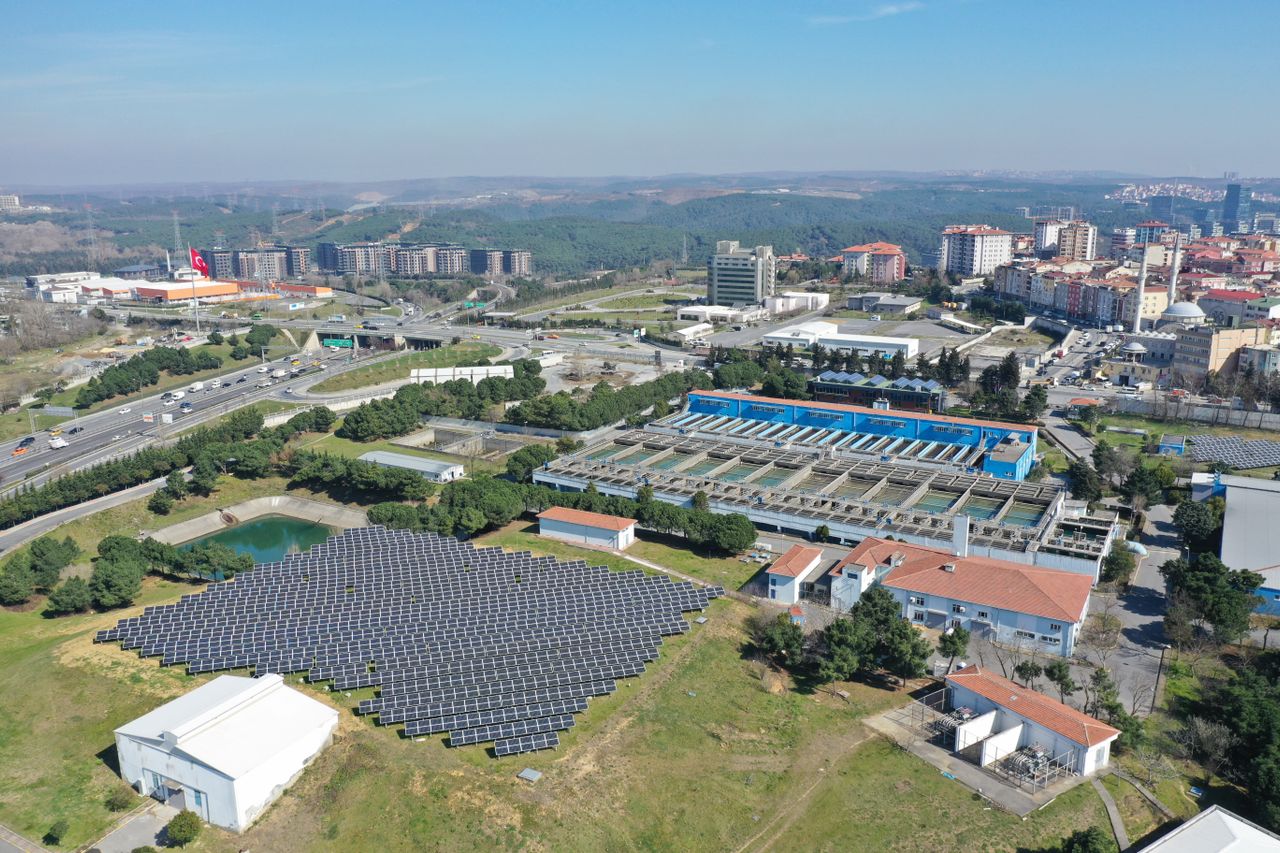
Aerial view of a ground-mounted solar farm installation situated next to an industrial facility, highway interchange, and urban settlement in Eyüpsultan, Istanbul, Türkiye.
Credit: Sururi Ballıdağ / Pexels

Ember is an energy think tank that aims to accelerate the clean energy transition with data and policy. Ember is the trading name of Ember Energy Research CIC, a Community Interest Company registered in England & Wales #06714443. 'Ember' is a trademark held at the United Kingdom and European Union Intellectual Property Offices. All content is released under a Creative Commons Attribution Licence (CC-BY-4.0). Website powered by 100% renewable electricity.