
Chapter 1:
Wind and solar
In this chapter
Wind and solar reach 22% of electricity generation and surpass hydropower
In Türkiye, the momentum in capacity growth—initiated by record solar installations in 2023—has continued, while electricity generation from solar has doubled over the past two years. Wind installations also reached a new high in 2025. Although Türkiye still lags behind many European countries in wind and solar energy, it is clearly the leader among countries in the Middle East, the Caucasus, and Central Asia.
1.1
Wind installations hit records as solar maintains strong growth
2023 marked a turning point for solar energy in Türkiye. Until then, annual solar installations had reached a maximum of 2.3 GW, but in 2023 they hit a record 4.8 GW. Since then, growth has remained strong, with solar installations holding around 4.5 GW for two consecutive years.
New wind capacity rose to a record 1.9 GW in 2025, surpassing the previous peak of 1.8 GW in 2021.
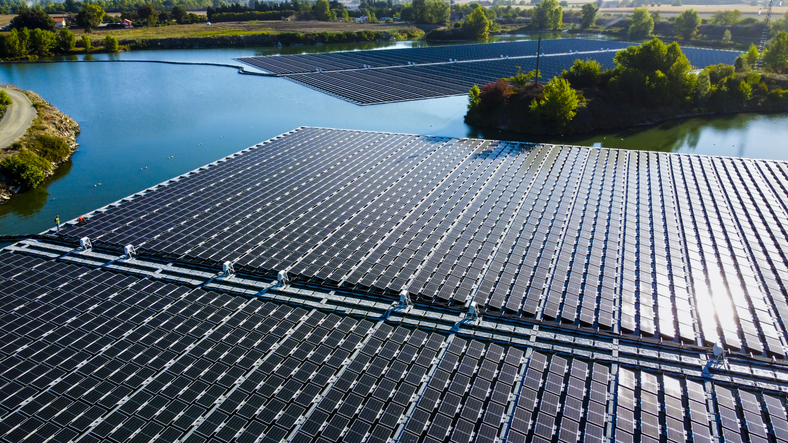
As a result, in 2025 Türkiye achieved a record 6.5 GW of new wind and solar capacity combined. By the end of 2025, total installed wind and solar capacity reached approximately 40 GW.
Despite record installations in recent years, Türkiye still has a long way to go to meet its renewable energy targets. The country aims to reach 120 GW of total wind and solar capacity by 2035—meaning it must triple its current capacity. Achieving this target will require annual installations of 8 GW, exceeding even the record level reached in 2025.
1.2
Solar electricity generation doubled in two years
Solar generation in Türkiye grew steadily between 2018 and 2023. Thanks to the strong capacity growth since 2023, generation has increased exponentially, doubling from 18.4 TWh in 2023 to 37.3 TWh in 2025.
The rapid increase in solar capacity in recent years has significantly raised its share in electricity generation. Before the recent surge, solar accounted for only 4.7% in 2022; by 2025, despite rising electricity demand, this share increased to 10.5%.
Meanwhile, growth in wind capacity has mainly offset rising electricity demand. While wind’s share remained just below 11% between 2022 and 2024, it reached 11.1% in 2025.
Over the past decade, wind and solar energy in Türkiye have rapidly increased their share in electricity generation, reaching approximately 22% in 2025. For the first time, wind and solar surpassed hydropower in 2025, becoming the main drivers of growth among renewable energy sources.
The increase in wind and solar has also reduced the share of natural gas. In the early 2000s, natural gas accounted for over 40% of electricity generation. By 2014, its share had risen to 48%, while wind and solar together accounted for just 3.4%. By 2025, natural gas share had fallen to 22%. In the same period, coal’s share increased from 30% to 34%.
1.4
Despite growth in wind and solar, Türkiye still trails Europe
In 2025, hydropower accounted for 16% of electricity generation in Türkiye, while other renewables such as geothermal and biomass contributed to 5%. Altogether, renewables made up about 43% of the country’s total electricity generation. Although this is above the global average, it remains below the European Union average of 48%.
Across 24 European countries with electricity generation above 25 TWh, the share of renewables ranges from 17% to 99%. Norway, which generates 90% of its electricity from hydropower, has the highest share. Countries rich in hydropower resources—such as Austria, Portugal, Switzerland, and Sweden—also rank highly. Despite its strong hydropower potential, Türkiye ranks 16th among these countries in terms of renewable share in generation.
In terms of the share of renewable energy in electricity generation, Türkiye ranked 16th among European countries in 2023 and 2024 as well. The last year Türkiye placed in the top 5 in this ranking was 2004.
Denmark leads Europe in wind energy, generating 58% of its electricity from wind in 2025, followed by Ireland (38%) and the United Kingdom (30%). With an 11% share, Türkiye ranks 15th among European countries, although it remains ahead of Norway, Italy, and France, where wind accounts for about 8%.
Hungary has the highest solar share in Europe (27%), followed by Greece and Spain (22%). In Mediterranean countries with similar solar potential to Turkiye, such as Portugal and Italy, solar accounted for around 17% of the electricity mix, compared with 10.5% in Türkiye. Türkiye ranks 14th in solar share among European countries. Even Poland, with 11.4%, remains ahead.
However, beyond Europe, Türkiye stands out as a leader in wind and solar electricity generation in its neighbouring regions. Among 16 countries in the Middle East, the Caucasus, and Central Asia with electricity generation above 25 TWh, no other country exceeds a 20% share of wind and solar. With 22%, Türkiye is clearly ahead of its regional peers.
Therefore, Türkiye has strong potential to serve as a role model for clean energy transition in the Middle East, the Caucasus, and Central Asia. Hosting the global climate summit COP31 in 2026 presents a significant opportunity for Türkiye to assume a regional leadership role in this area.

Related Content