Chinese solar exports double in a month to hit record high amid energy crisis | Ember

Chinese solar exports double in a month to hit record high amid energy crisis

23 Apr 2026

The latest data shows that the regions most affected by the unfolding energy crisis have seen some of the sharpest increases in demand for solar PV. Sales were also higher in anticipation of a change in export tax rebates from 1 April, which adds 9% to solar panel costs.

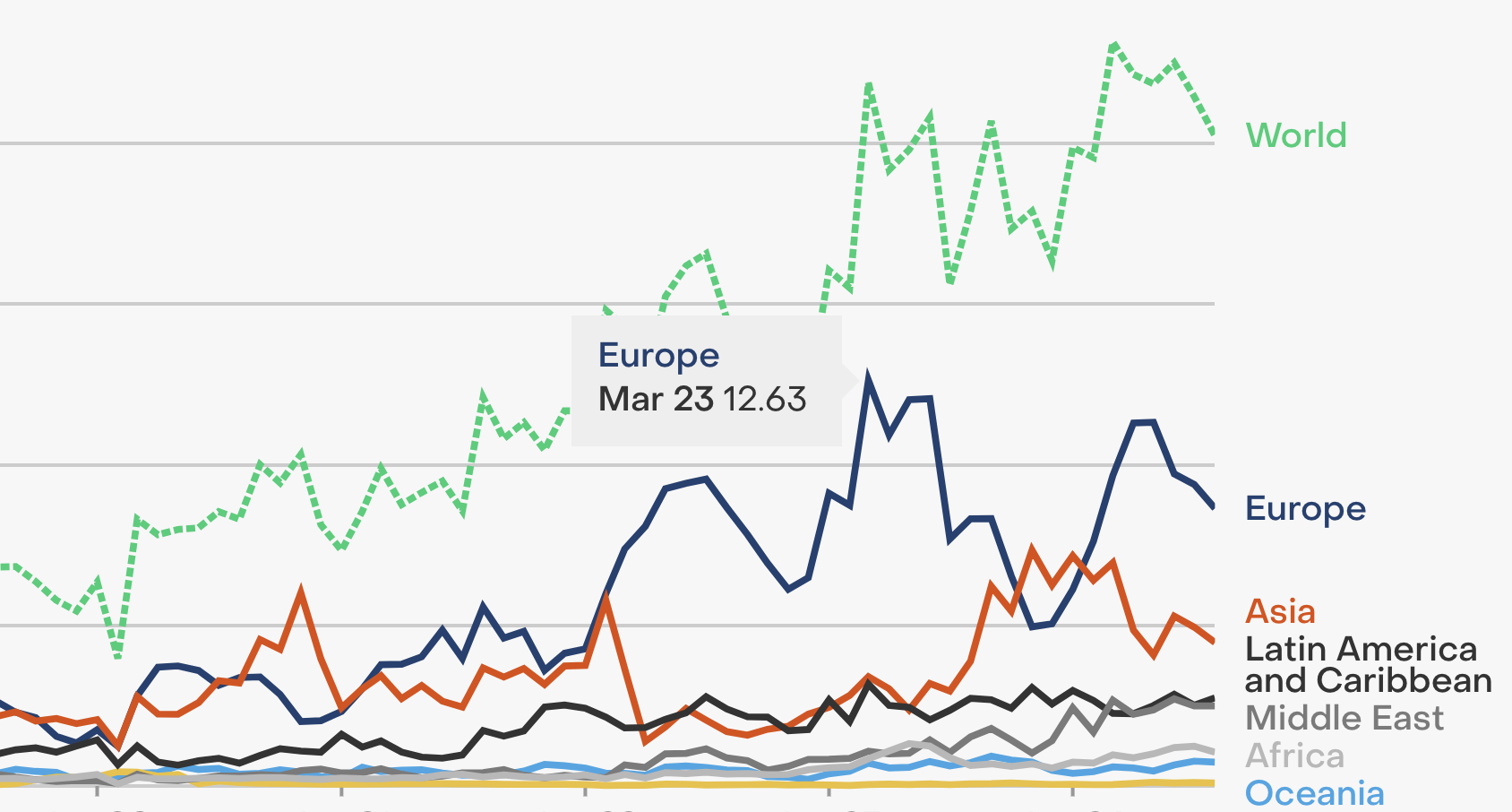
Fifty countries set all-time records for Chinese solar imports in March 2026, with a further 60 seeing the highest levels in six months. Exports to Africa rose by 176% compared to February 2026 to reach 10 GW in March 2026, while exports to Asia doubled to reach 39 GW – both new all time records. Combined, the two regions were responsible for three-quarters of the increase in Chinese solar exports.

Countries with particularly rapid growth in Asia include India (+141%, +6.6 GW compared to February 2026), Malaysia (+384%, +1.8 GW) and Lao PDR (+108%, +2.3 GW). In Africa, Nigeria (+519%, +1.2 GW compared to February 2026), Kenya (+207%, +1.4 GW) and Ethiopia (+391%, +1.1 GW) all imported over 1 GW of solar PV technology for the first time ever in a single month, predominantly in the form of solar cells.

Elsewhere, records were reached in other markets acutely affected by high oil and gas prices, including Japan, Australia, and the EU. The Middle East was the only region not to see a step up in solar imports, as the closure of the Strait of Hormuz affects trade flows.

As well as installing more solar domestically, many countries in Asia and Africa are moving further up the solar value chain, building growing solar manufacturing and assembly capabilities. China’s exports of cells and wafers have been soaring, and overtook panel exports in October 2025, as panels are increasingly assembled outside of China. Solar panel exports rose 91% from February levels to reach 32 GW in March 2026, whilst cells and wafers exports rose 108% to 36 GW. 


Solar, batteries and EVs help cushion fossil shocks

As the effects of high oil and gas prices ripple across global energy markets, alternatives such as solar, batteries and EVs will be crucial in helping countries become more resilient and reduce dependence on fossil fuels.

Data published by the Chinese customs authority and released in Ember’s China Cleantech Exports Data Explorer shows record exports of solar, batteries and EVs in March 2026, up 70% compared to March 2025 and up 38% compared to February 2026, in the wake of the US-Israel war with Iran. 

China’s battery exports surged in March, as countries look to store daytime solar electricity to shift into the evening. Battery exports rose 44% from February to reach $10 billion in March 2026, and were especially high in the EU, Australia and India, markets with large energy storage pipelines.

Cleantech is increasingly reaching a scale that can cushion the impacts of global fossil shocks. Ember’s Global Electricity Review 2026, published on Tuesday, shows that record growth in solar generation in 2025 was sufficient to displace gas-fired electricity equivalent to all LNG exports through the Strait of Hormuz last year. The report also shows that the total global EV fleet displaced 1.8 million barrels per day of oil demand in 2025, equivalent to 13% of US crude oil production.


“Fossil shocks are boosting the solar surge. Solar has already become the engine of the global economy, and now the current fossil fuel price shocks are taking it up a gear. Countries are importing solar panels at record levels, and building up their own domestic assembly and manufacturing capabilities to address surging global demand.”

About Ember

Ember is an independent energy think tank that aims to accelerate the clean energy transition with data and policy. It creates targeted data insights to advance policies that urgently shift the world to a clean, electrified energy future.

Learn more
Share