


Marking five years of Ember with five charts on the global energy transition | Ember

Marking five years of Ember with five charts on the global energy transition

As Ember marks its fifth anniversary, our analysts share their favourite graphics that capture defining moments from the past five years of the clean electricity transition. Together, they tell a story of rising renewables, falling coal, and accelerating electrification — and offer a glimpse of what’s next.

13 Aug 2025


Five Key Charts: Insights from Ember’s Analysts on the Global Electricity Transition

Ember’s fifth anniversary arrives at a pivotal mid-decade moment. In the past five years, clean electricity has made remarkable strides — solar and wind have surged, coal use has fallen in key regions and electrification is steadily accelerating

To mark this milestone, five of Ember’s analysts — each with a distinct focus  — have each selected a graphic that captures a key moment in the global transition to a clean, electrified energy economy. Together, these visuals reflect the progress made so far and offer insight into the direction of the transition as momentum continues to build.

Some of these insights are drawn from Ember’s newly revamped Electricity Data Explorer, a core part of our open data offering. Several of the graphics featured in this article are built using data freely available through this tool, which provides open, up-to-date insights at both global and country levels — enabling anyone to explore insights like these in just a few clicks.

Solar takes the lead as the fastest growing power source reshaping the global energy system

Solar power is transforming the world — and at record speed.

Solar electricity generation needed just eight years to grow from 100 TWh to 1,000 TWh. Then it took only three more years to double that — reaching 2,000 TWh in 2024. In each of those last three years, solar was the largest source of new electricity globally.

No other electricity source has scaled this quickly.

Driven by plummeting costs, modular design and fast and easy deployment, solar power is becoming the backbone of the new global energy system. It’s clean, scalable, and increasingly central to powering modern economies. And with battery costs also falling rapidly and their deployment accelerating, there is a growing number of projects globally that aim for round-the-clock solar electricity.

The energy transition is no longer a future vision — it’s happening now, and solar is leading the way.

Solar is no longer just a daytime resource. With battery storage costs falling and deployment accelerating, we’re entering a new era where solar can reliably power economies day and night. It’s becoming a true 24-hour solution — clean, scalable, and central to the future of energy transition.

Asia’s uneven transition: China and India surge ahead as ASEAN begins to scale up renewables

Asia’s energy transition reflects the diverse pace of progress among its countries.

At the forefront is China, which continues to drive global renewable energy deployment. In 2024, it added a record 278 GW of solar and 80 GW of wind capacity (1.5X of Germany’s total installed capacity), bringing total installed wind and solar capacity to over 1,400 GW — surpassing its 2030 target six years ahead of schedule. This enabled China to meet over 80% of incremental power demand in 2024 through clean electricity.

India is consistently deploying solar and wind capacity and was ranked third globally in wind and solar deployment in 2024, with total renewable energy capacity including hydro reaching 209 GW by the end of year, up by 16% from the previous year. Wind and solar generation nearly doubled in the period between 2020 and 2024. India is now moving beyond wind and solar installation, focusing on energy storage and round-the-clock renewable energy solutions.

In contrast, ASEAN remains at an earlier stage of deployment but is picking up pace. While Vietnam leads the region with 23 GW of wind and solar capacity, most other member countries have installed less than 5 GW. Nonetheless, falling costs — down by 85% for solar and 55% for wind in 2024 versus 2010 — are creating favourable conditions for renewable energy adoption across the region.

Asia’s energy transition is marked by remarkable leadership from China and India, which are rapidly scaling renewables. While ASEAN countries are just beginning their journey, rapid cost declines in solar and wind are setting the stage for accelerated growth across the region in the coming years.

Record solar growth unlocks clean power potential across Europe

In 2024, renewables provided nearly half (48%) of the European Union’s electricity, up from a third in 2019, driven by the rapid rise of homegrown wind and solar.

Solar power saw widespread growth, with every EU country increasing its solar generation in 2024 compared to the year before. Sixteen EU countries generated more than 10% of their electricity from solar in 2024 — well above the global average of 7%. Notably, Hungary, Greece, Spain, and Cyprus each produced over a fifth of their electricity from solar. Innovative solutions, such as agri-PV, are emerging to unlock solar potential beyond rooftops and open fields. Solar became the EU’s largest source of electricity for the first time in June 2025.

This impressive expansion of the EU solar fleet means periods of abundant solar generation are becoming more common. This trend can further reduce reliance on expensive fossil power, if solar growth is paired with batteries, smart electrification, upgraded grids and other clean flexibility tools.  While such tools are already deployable, targeted policy action is necessary to realise their full potential.

Türkiye also saw record solar growth in 2024. With strong solar potential, solar became the country’s third energy source by installed capacity after hydroelectric and gas.

The EU’s record solar growth in 2024 marks a turning point — solar is no longer just a complementary source but is becoming central to Europe’s power system. To fully harness this momentum and reduce reliance on fossil fuels, Europe needs to scale up batteries, flexible demand, and grid upgrades alongside continued solar and wind expansion.

Improving global measurement of coal mine methane emissions using complementary approaches

Satellite monitoring is transforming global methane mitigation efforts by providing unprecedented visibility into emissions from coal, oil and gas operations. With a growing array of sensors – from wide-area flux mappers to high-resolution point-source imagers – governments, researchers, and civil society now have access to timely, independent data that can strengthen inventories and increase transparency.

Monitoring and understanding emissions is often the first step toward effective mitigation. This is especially critical for coal mine methane (CMM), which remains significantly underreported globally, due to inconsistent measurement practices and reliance on outdated emission factors.

Satellites are central to improving our understanding of emissions, and are effective in the majority of regions worldwide. However, local environmental conditions can affect the availability of satellite data in some locations or at some times of the year. This graphic highlights Ember’s first global analysis using satellite data, revealing that environmental conditions — such as cloud cover, low sunlight, and challenging terrain — can affect monitoring capacity in nearly one-third of coal, oil, and gas sites worldwide. In comparison, regions with arid conditions are ideal for satellite observations.

Understanding these differences can guide the effective deployment of satellite observations, complementing them with robust ground-based or airborne measurements – especially in high-risk or data-poor regions – to ensure accountability and accelerate methane mitigation.

Satellites are transforming how we track methane — they’re indispensable. But to cut emissions faster and fairly, we need to reinforce them with ground and airborne data, especially in the regions that are hardest to monitor. This is essential to ensure no region is left behind in the race to reduce methane.

China’s electrification surge signals the future of global energy demand

The energy transition primarily consists of two disruptive trends: solar and wind are taking over electricity supply, whilst electricity is taking over energy demand. The economic and security advantages from each trend mean there is an emerging geopolitical race to excel at both.

Importantly, whilst Europe, the United States, and China all race forward with renewables, China is racing ahead of the West in electrification. China has been electrifying among the fastest in the world, growing electricity’s share of final energy by about 10 percentage points per decade. In contrast, Europe and the United States have seen little movement for a generation, illustrating that they are falling behind in the race to electrify.

While most countries are racing ahead with renewables, few countries are racing to electrify. This is a strategic error given electrification can curb over three-quarters of energy imports, deliver greater savings to households, and is an area where China is outpacing the rest of the world.

Acknowledgements

Featured Image Credits

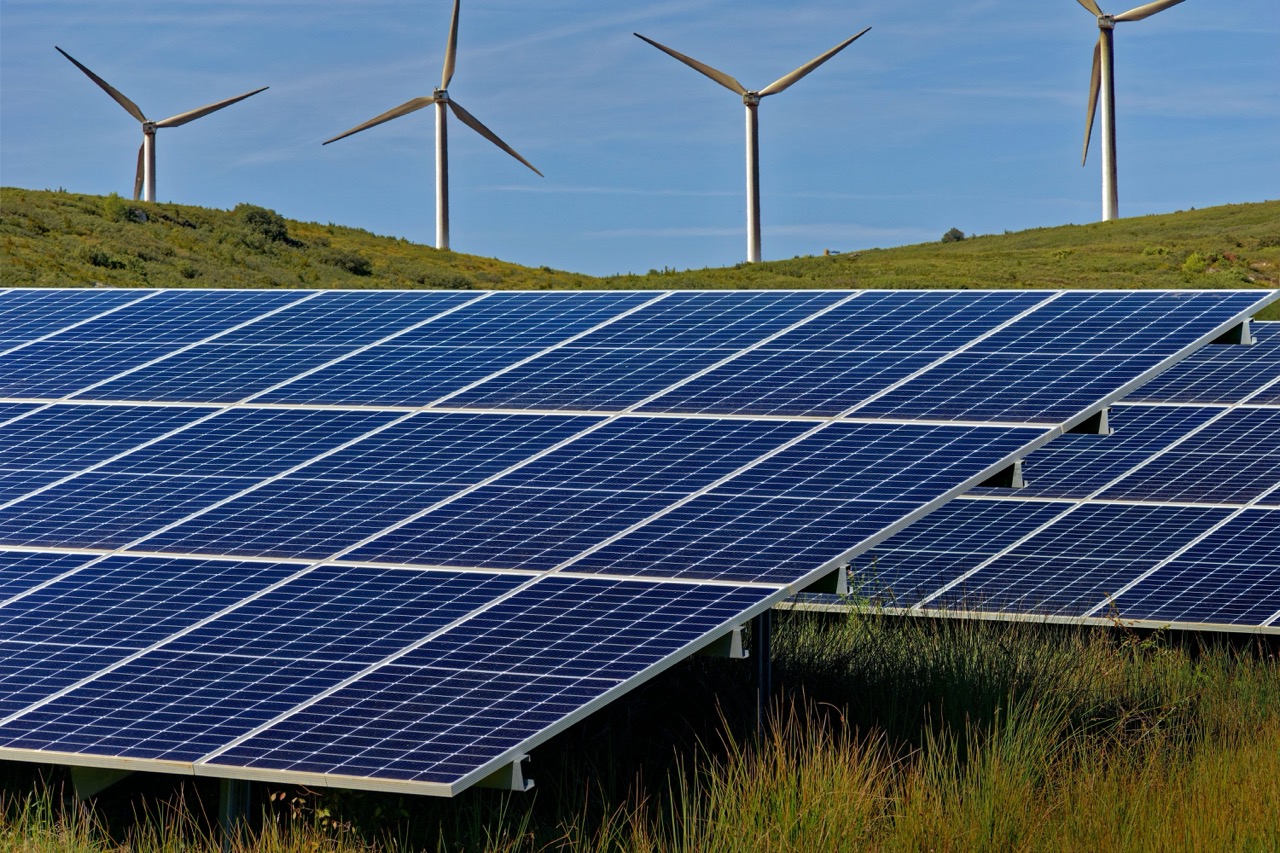
Rural Solar panels and wind turbines.

Roy Conchie / Alamy Stock Photo

Share