
Coal Mine Methane | Ember

Coal Mine Methane

Coal mines emit more methane than the gas industry, yet this pollution is often overlooked. Half of methane emissions from coal mines can be captured with proven technologies.

Anchor point: Overview

40 Mt
Methane leaked from coal mines in 2024
91%
of coal mine methane emissions come from just 9 countries
54%
Methane emissions that can be captured at coal mines using proven technologies

Overlooked and underestimated


Not only are coal mines being overlooked they are likely underreporting their methane emissions, with emissions potentially twice as large as reported.

Setting up improved monitoring and implementing existing technologies to utilise or destroy methane should be the first priority for all coal producing countries.

According to the IEA, 54% of methane emissions from coal mines could be captured for an average cost of $230 USD per tonne of methane. The biggest wins can be had by starting with super-emitting mines.

As clean energy replaces coal in the electricity and steel sectors, the process of closing coal mines will need to ensure that methane is trapped, for example by flooding mines.

Satellites are starting to show how big the issue is. However, these are most effective when used in conjunction with other forms of monitoring. Greater attention will mean that countries and companies won’t be able to ignore their emissions for much longer.

Anchor point: Data tools

Data tools

Coal Mine Methane Data Tracker

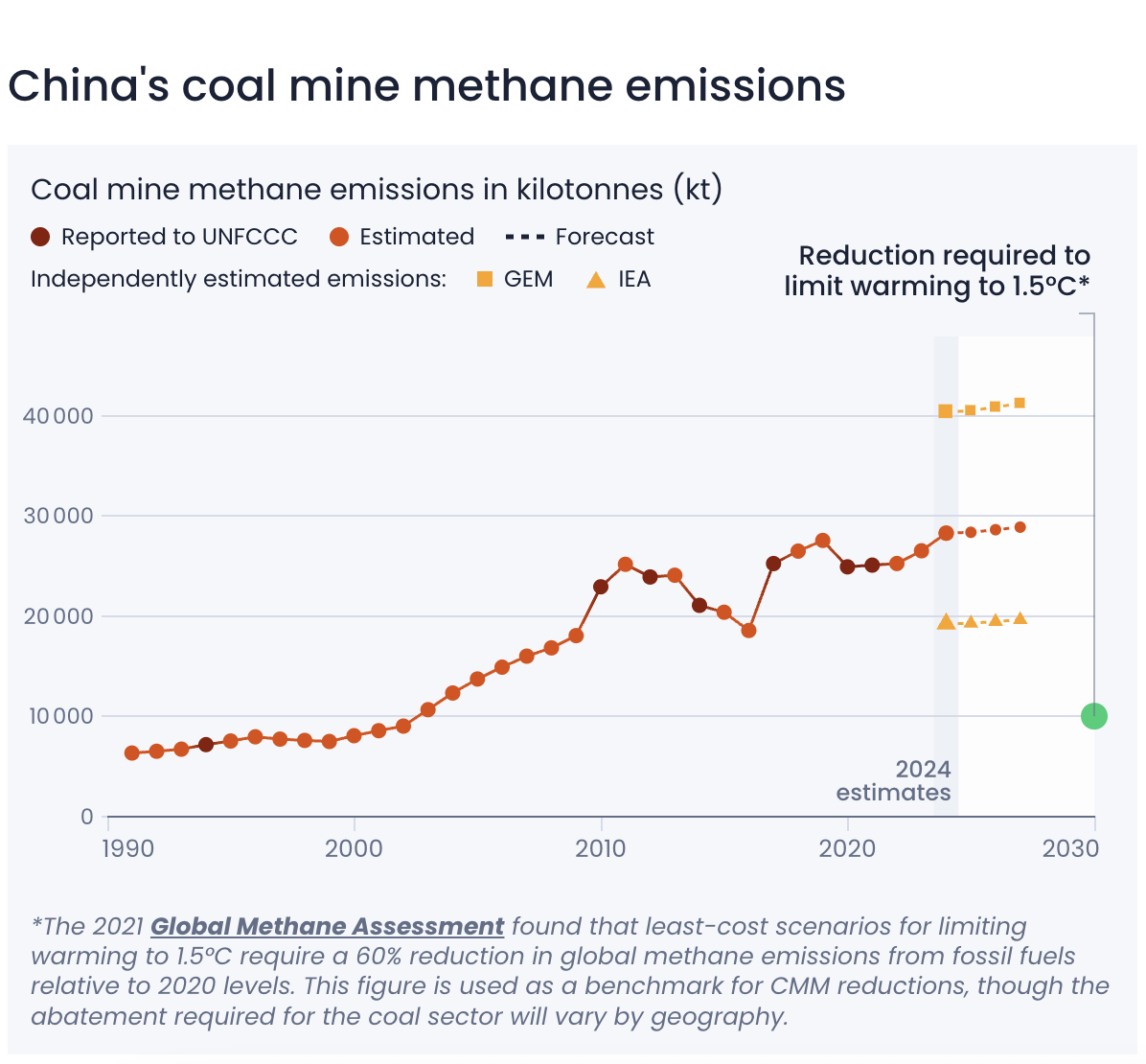
Ember’s Coal Mine Methane (CMM) Data Tracker allows users to analyse and visualise the most comprehensive dataset available on national-level coal mine methane emissions. The tool – launched a few weeks ago – provides country-by-country insights into CMM commitments, reported emissions, independent estimates and forward projections through 2027. It also integrates coal production data, the split between underground and surface mines and Ember’s confidence scoring for reported emissions.

The dataset covers all major coal-producing countries and includes historical emissions reported to the UNFCCC, complemented with independent estimates from the IEA and GEM, and Ember’s own gap-filling calculations.

Use the tool
A screenshot of Ember's Coal Mine Methane Data Tracker

Satellite Coal Mine Methane Observation Map

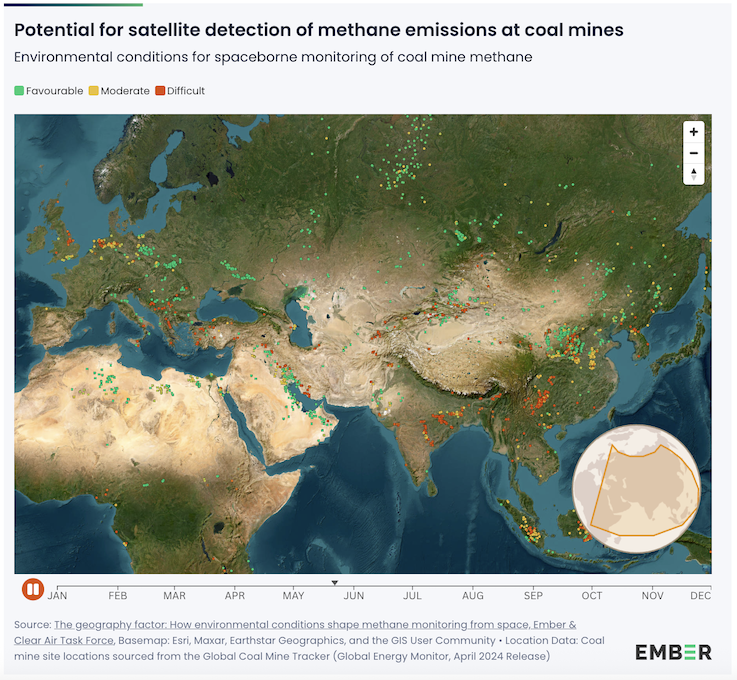
Despite coal mines releasing methane, emissions are accurately tracked at very few sites. Spaceborne methane monitoring techniques, using satellites, are becoming a key tool for tracking global methane emissions – providing insights, which can be used by governments, industry, and civil society organisations.

In Ember’s report “The Geography Factor”, analysts assessed the impact of environmental factors on the effectiveness of spaceborne methane monitoring techniques. This data tool, originally featured in the report, displays the varying potential for satellite methane detection across operational coal mines worldwide – factoring in the effects of annual cloud cover, sunlight availability, solar zenith angles, elevation, and wind patterns, among other variables.

Use the tool
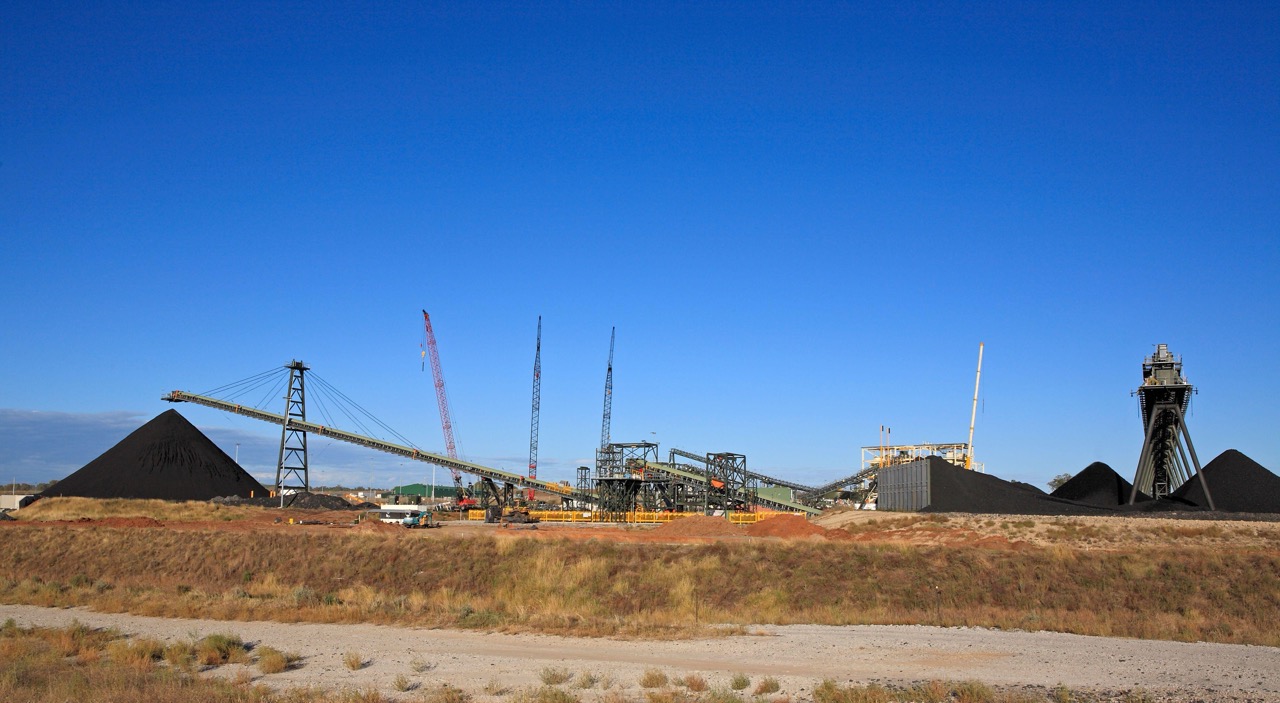
Whitehaven Coal Mine, an underground coal mine at Baan Baa, near Narrabri, western NSW, Australia

Coal is dirtier than you think

In this interactive explainer, find out more about coal mine methane: why it’s underestimated and how it can be monitored and reduced.

Read more

Anchor point: Our work

Our work

Cutting coal mine methane with data and policy

Ember launched in 2020 with a focus on shifting the world from coal to clean electricity. While analysing the impact of coal power on the climate, it became clear that the massive methane emissions from coal mining were being overlooked and drastically underestimated.

We set up a specialist unit working on coal mine methane to galvanise action in the world’s biggest emitters, by using data and analysis to highlight the scale of the issue and the solutions.

Since launching this work in 2020, we’ve already had an impact in Australia, India, Indonesia and Germany, and with the global steel industry.

“This issue is doubly overlooked. Methane is overlooked compared to carbon dioxide emissions. And methane emissions from coal mines in particular are being overlooked compared to the oil and gas sectors, and almost totally ignored in the steel industry.”

Anchor point: Experts

Our experts

Share