The electric fast-track for emerging markets | Ember

The electric fast-track for emerging markets

How electrotech can serve the billion people left behind by the fossil system and open up a faster path to prosperity

2 Apr 2026
18 Minutes Read
Download PDF

Highlights

46%
46% of CVF nations, measured by electricity demand, have overtaken the United States in solar uptake
3X
In 8 out of 10 CVF countries, solar panel imports are at least three times higher than official statistics suggest
$155bn
CVF countries that are net fossil fuel importers spent $155 billion on imports in 2024

Executive summary

Falling electrotech costs create a new path to reach the billion people left behind by fossils

Smaller emerging economies have long struggled to climb the energy ladder. Electricity demand per capita in low-income countries, for example, has declined since 2010. More than 700 million people still have no electricity, and many of those connected face frequent outages.

This challenge is most visible in the 74 member nations of the Climate Vulnerable Forum (CVF). Together, they are home to over a fifth of the global population but account for under 5% of global GDP and electricity demand. These nations represent three-quarters of the world’s population living on less than 1 MWh of electricity per capita.

The conventional fossil-based development model has failed to reach them at scale. For countries with limited state capacity and high borrowing costs, this lumpy, centralised, capital-intensive fossil path has always been a tall order.

A different path is now available. Rapid cost declines in electrotech – such as solar, battery storage, and electric end-use technologies – are reshaping the economics of energy in these markets. These technologies are scalable in small increments from the ground up. The opportunity is not undercutting fossil fuels; it is pricing in the billion people the fossil system left behind. The shift is already under way and moving faster than many recognise.

It has long been argued that the only path to economic development needs fossil fuels. But the current energy crisis has again exposed how fragile that path is, especially for emerging economies that spend billions each year on fuel imports. The difference today is that a credible alternative development path exists: electrotech is now cheaper, widely available, easily scalable, and offers the prospect of energy independence and abundance to drive growth. For the first time, developing countries can build a cheaper, more reliable energy path to prosperity on their own terms.

Daan Walter
Principal, Ember Futures

The old fossil fuels trade-off between climate and development is no longer the case. This is an epochal shift in humanity’s energy story, and vulnerable developing countries are at the heart of the increasingly rapid electrotech transition towards clean energy futures and climate prosperity.

Sara Jane Ahmed
Managing Director and V-20 Finance Advisor, CVF-V20

Key takeaways

01

Electrotech adoption in CVF nations is rising fast.

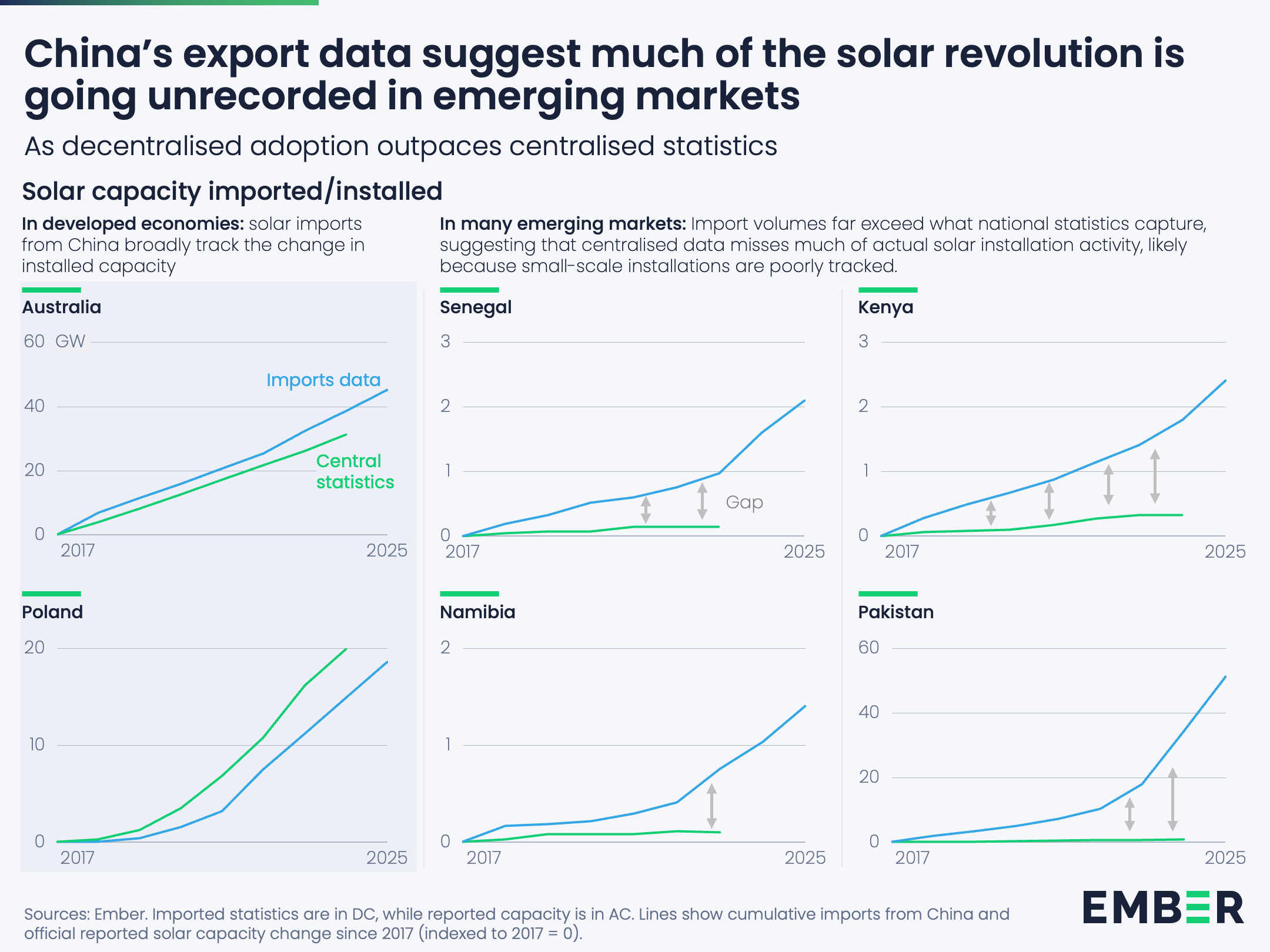
Across supply, connections and end-use, leapfrogging is already visible. Around half of CVF nations, measured by electricity demand, have already surpassed the United States in solar penetration, and half in electrification. In 8 out of 10 CVF countries, cumulative solar imports since 2017 are at least three times higher than official installed capacity.

02

Change is driven by the new economics of energy.

The economics of energy in emerging markets has shifted profoundly. Solar now requires less upfront capital than fossil fuels, whereas a decade ago it required up to five times more. Off-grid solar-battery systems already beat grid extension for communities more than a few dozen kilometres from existing lines. Electric end-use technologies, from two-wheelers to cooling, have fallen in price by 30–95% over the past decade.

03

The electrotech path unlocks strategic advantages for CVF nations.

Expanding reliable electricity supply raises productivity. Electrotech reduces dependence on imported fossil fuels, which cost CVF importing countries $155 billion in 2024 and expose them to external price shocks. At the same time, CVF nations hold strategic leverage through minerals, manufacturing geography, and fast-growing consumer markets, just as China, the United States (US) and Europe are bidding for access to all three.

04

The choice is now between the electrotech fast-track and the fossil detour.

Most CVF nations have not yet locked into large-scale fossil infrastructure. Their energy systems remain dominated by biomass, which is inefficient and limiting but carries minimal infrastructure lock-in. Falling electrotech costs now make the direct path from biomass to electricity affordable. Many countries are already taking the fast-track. Others can follow.

Chapter 1

Introduction

There are two dominant views on energy and development – the fossil view and the climate view.

The fossil gradualist view holds that the world built its wealth on fossil fuels and that any departure from this proven path carries greater risks and costs: the implied conclusion is that emerging economies should be encouraged to follow the same route.

The climate view tends to accept the primacy of fossils in development, and layers onto it the argument that climate-vulnerable nations did not cause the problem they are being asked to absorb and should not have to pay the price to fix it. Implicit in this framing is that the electric path comes at a premium relative to the fossil one.

Both views seem to agree on one thing: that building prosperity without fossil fuels is costlier and slower.

Rapid changes in technology now undermine that assumption. This report presents a third perspective: the electrotech view. It argues that electric technologies (such as solar, batteries and electric vehicles) are winning in emerging markets because they are cheaper and better suited to local needs. Small emerging economies are already at the frontier of electrotech uptake across supply, demand and connections: Namibia (35%) and Togo (18%) lead in solar generation, Jordan and Kyrgyzstan in battery sales, and Nepal (70%) and Sri Lanka (64%) in EV uptake.

Our analysis shows that 46% of CVF nations, measured by electricity demand, have leapfrogged the United States in solar penetration, and about 51% have surpassed it in economy-wide electrification.

The true scale of this shift likely exceeds what official data captures. Change is outpacing the centralised statistics: for example, small solar panels on balconies and rooftops go largely unregistered in national figures. The gap between panels imported and capacity officially reported is large and growing. In eight out of ten CVF countries, cumulative solar imports since 2017 are at least three times the installed capacity recorded in the most recent official statistics.

This note explains why this is happening, how it may evolve, and what it means for the countries at its centre. We begin with economics.

Chapter 2

The New Economics of Energy

The last decade has transformed the economics of the energy transition in emerging markets. Solar now requires less upfront investment (capital intensity) than fossil power plants; financing for solar projects (cost of capital) is cheaper than for fossil fuels; batteries are more affordable than extending electricity grids to remote areas; and the price of electric end-use technologies has fallen by up to 95%.

Supply: solar is now the less capital-intensive option

Falling renewable costs are well documented. Their implications for emerging economies are less well understood. Conventional wisdom holds that renewables carry a higher upfront cost than fossil fuels, and that in emerging markets, where borrowing costs are high, solar and wind face a double disadvantage: they require more capital and more expensive financing than fossil power.

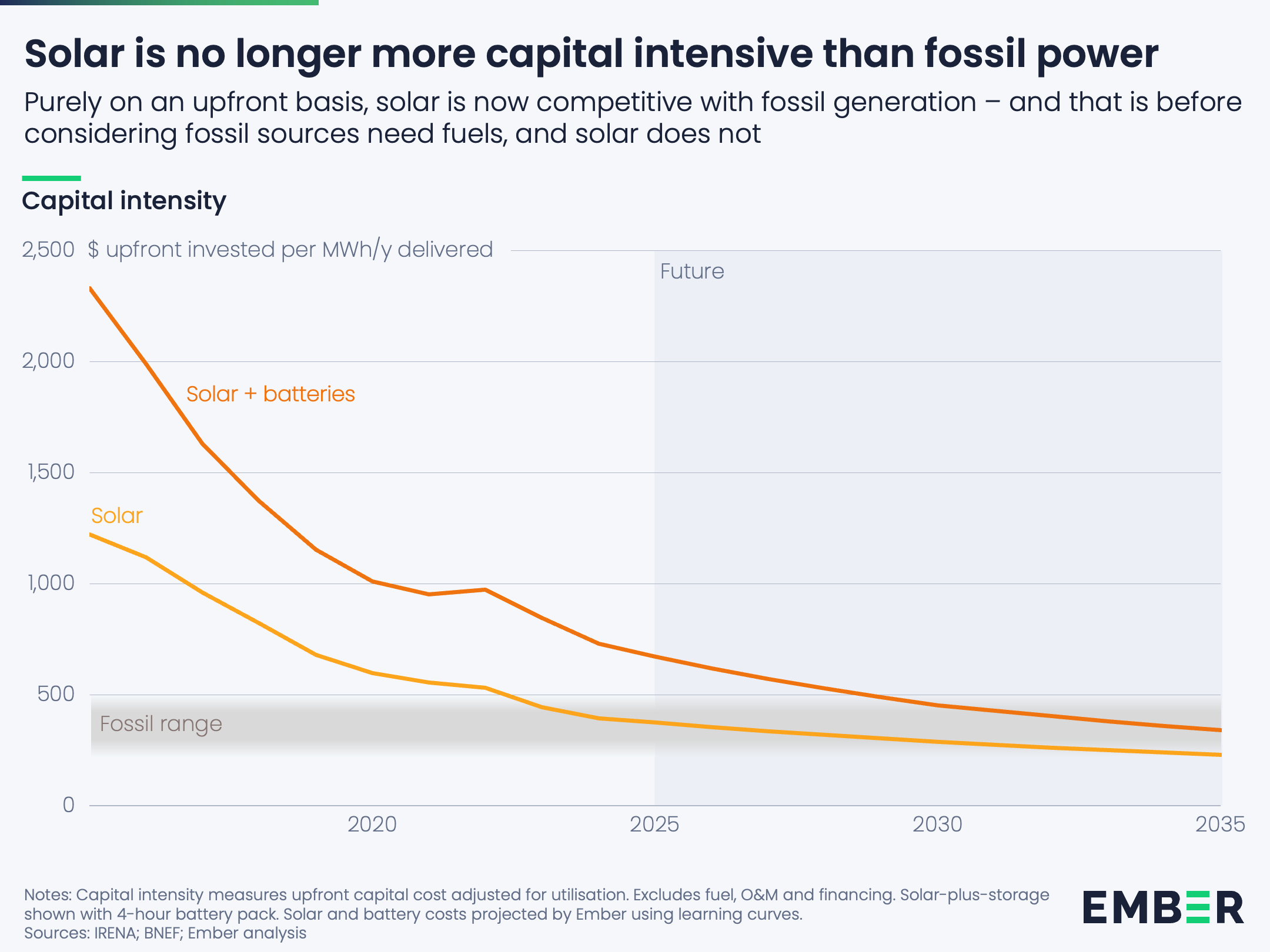
Both assumptions have now been inverted. A decade ago, a solar plant could require up to five times the upfront investment of a comparable coal or gas plant per MWh delivered. Solar could still be competitive over its full lifetime through avoided fuel costs; but where capital is scarce, lifetime economics rarely determine investment decisions. Upfront costs do, and on that measure solar used to lose.

That has now changed. Solar alone is now competitive with fossil power on a pure capital expenditure (capex) basis, and solar-plus-storage is expected to follow by around 2030. By 2035, both will be cheaper to build than new fossil alternatives. It is now fossil fuels, not solar, that carry the burden of capital intensity.

And once built, solar has no fuel costs: it beats fossil alternatives from day one and widens its advantage with every year of operation.

The second supply-side shift is how investors set financing costs for different technologies. A decade ago, solar required a higher cost of capital than gas in many emerging economies; today that relationship has reversed, with solar financing available at lower rates across most CVF economies. In Morocco for example, the cost of capital for solar was 8.7% in 2015 compared with 8.2% for gas. By 2025, gas had risen to 9.6% while solar held steady at 8.7%. The shift was even sharper in Viet Nam, where the cost of capital for solar fell from 12% to 10% — falling below gas, which stood at around 11%.

CVF countries still face elevated financing costs, running roughly double those in markets such as India and the United Kingdom (UK), but that premium is driven by country-level risks such as currency volatility and policy uncertainty, not the technology itself. To put that capital cost gap into perspective, the higher cost of capital adds around $20 per MWh to the levelised cost of solar. Later in this note, we discuss how the expansion of electrotech can begin to soften this challenge.

Connections: batteries beat the last mile

Over 700 million people in the world have no electricity. Most remain unconnected because the economics do not work: running power lines across hundreds of kilometres of remote terrain can double or triple the cost of power that is already hard to afford. Until recently, there was no affordable alternative.

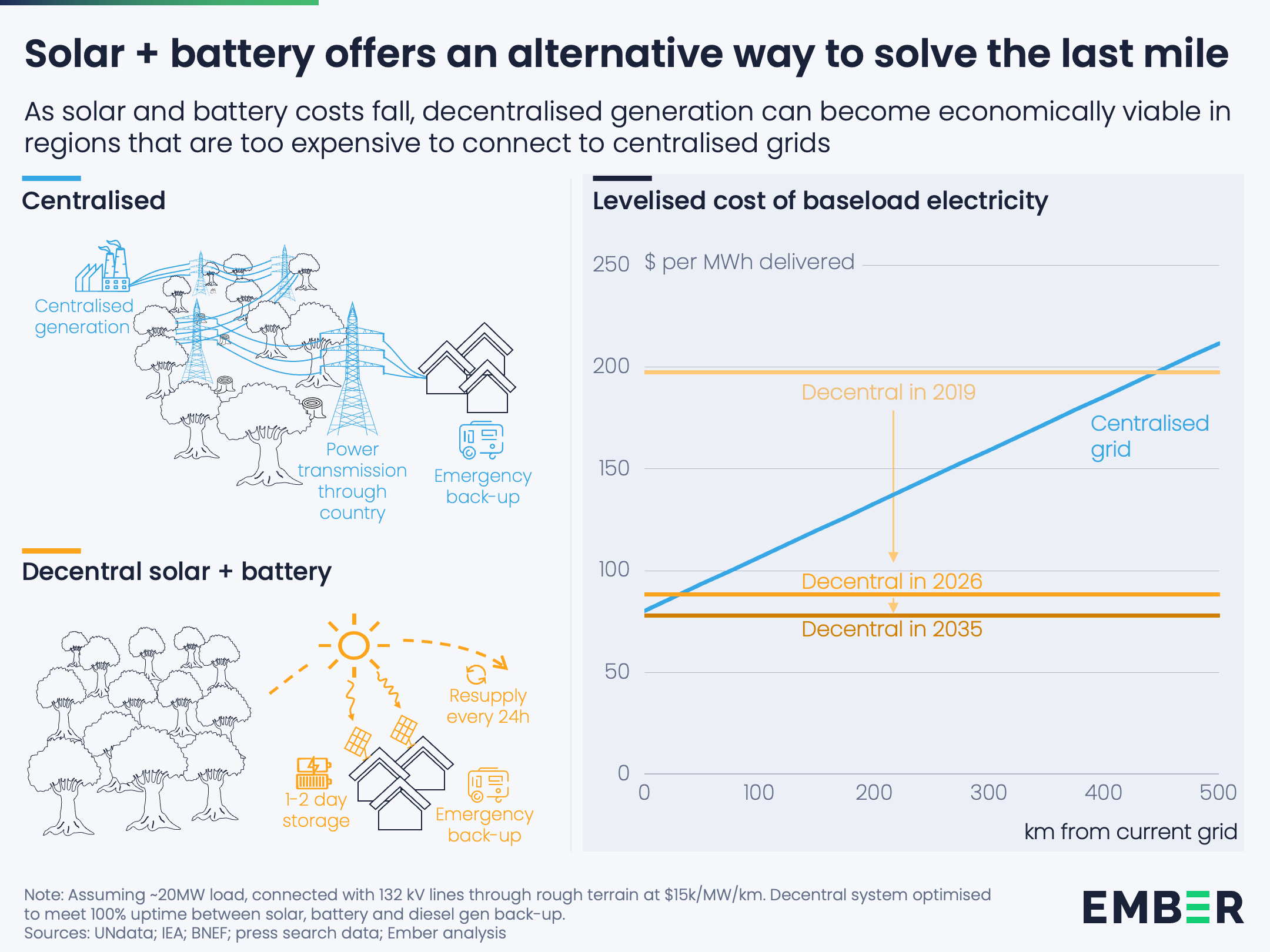
Falling battery costs have changed this. The sun rises in every village every day, regardless of grid proximity. A solar-battery system, supported by a small diesel emergency backup, can store electricity generated by solar panels during the day and release it on demand. Decentralised solar systems offer a practical way to address the longstanding “last-mile” challenge of delivering electricity to remote communities. Rather than extending grids across vast distances, electricity can now be generated and used locally.

This mirrors a pattern already seen in these markets. Mobile phones leapfrogged fixed-line networks because they were decentralised, less capital-intensive, and consumer-led. Solar-plus-battery systems share all three characteristics.

In 2019, off-grid solar-plus-battery only made sense for the most remote locations, more than 400 kilometres from the grid. In 2026, solar-plus-storage is already cheaper than grid extension for any community more than a few tens of kilometres from existing lines. As battery costs keep falling, that crossover point is approaching the grid itself. Within a decade, solar-plus-battery is set to be cheaper than the grid for virtually everyone in CVF countries, connected or not.

Hardware costs are only a part of the challenge. A decentralised energy system is only as good as the maintenance ecosystem around it. In many markets, repair services and technical support have lagged behind the deployment. In sub-Saharan Africa, for instance, many low-cost solar products have failed within a few years. Closing this gap is both a challenge and an opportunity to build local employment.

Demand: electrification becomes affordable

New supply and connections are only transformative if people can actually use the electricity. Today, only about 16% of final energy demand in CVF countries is met by electricity, in part because electric technologies have long carried price tags that most households and firms across emerging economies could not afford. Where borrowing costs are high, financing these purchases has rarely been an option either.

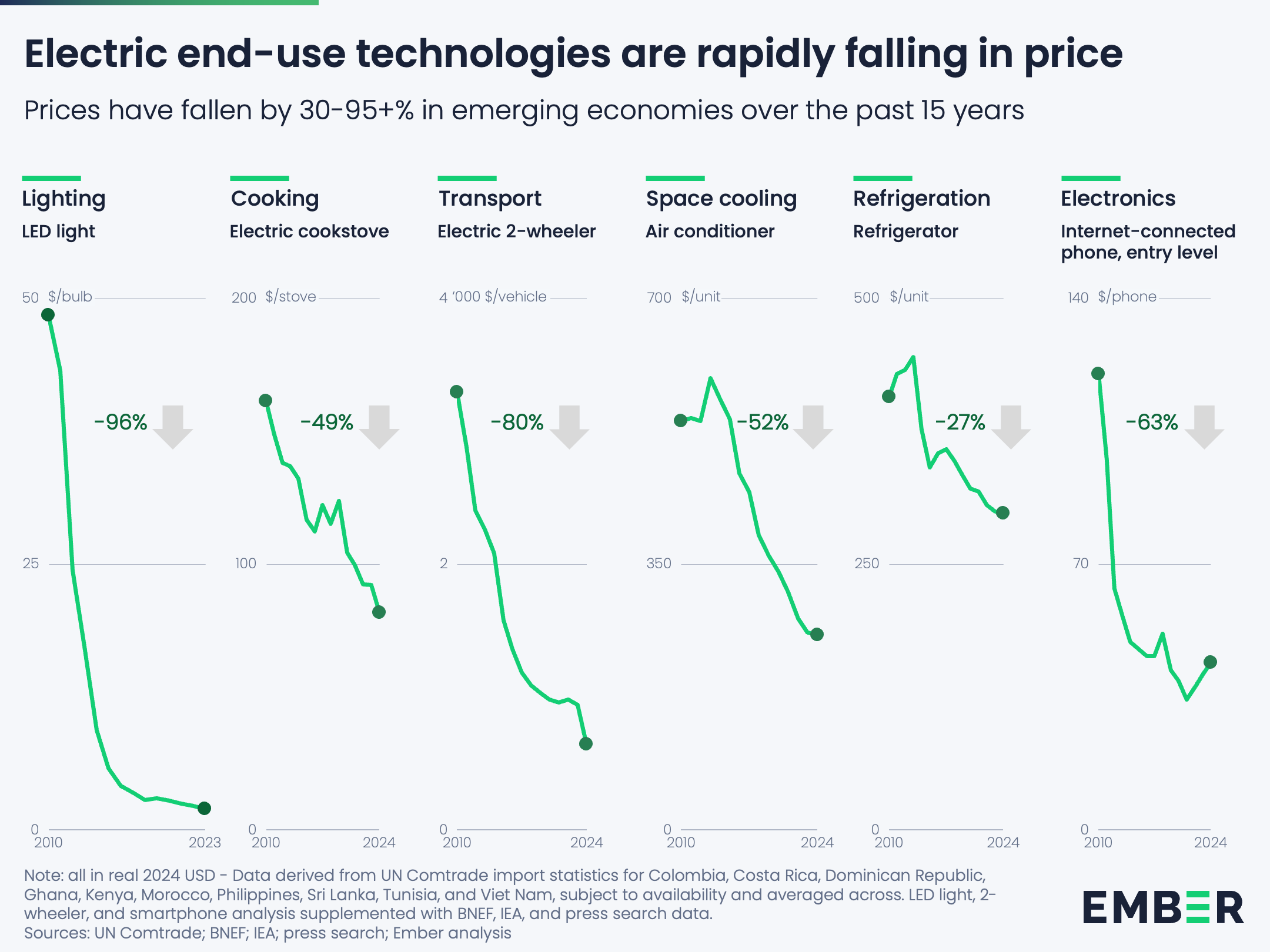
That is changing quickly. Mass manufacturing, led by China, is driving down the cost of electric end-use technologies just as it did for solar panels. Take transport. Across much of the developing world, from Kenya to Viet Nam, electric two-wheelers now cost less to buy than entry-level petrol equivalents. Once bought, they cost a fraction to run: electric motors are over three times as efficient as petrol engines. The interesting shift is not petrol to electric; it is no bike to e-bike.

The same dynamic is playing out in cooling, water heating, cooking, electronics, and manufacturing equipment. Prices for many electric technologies in CVF countries have fallen by 30–95% over the past decade. As a result, these technologies are becoming increasingly accessible, allowing households and businesses to use energy services that were previously out of reach.

New markets open up

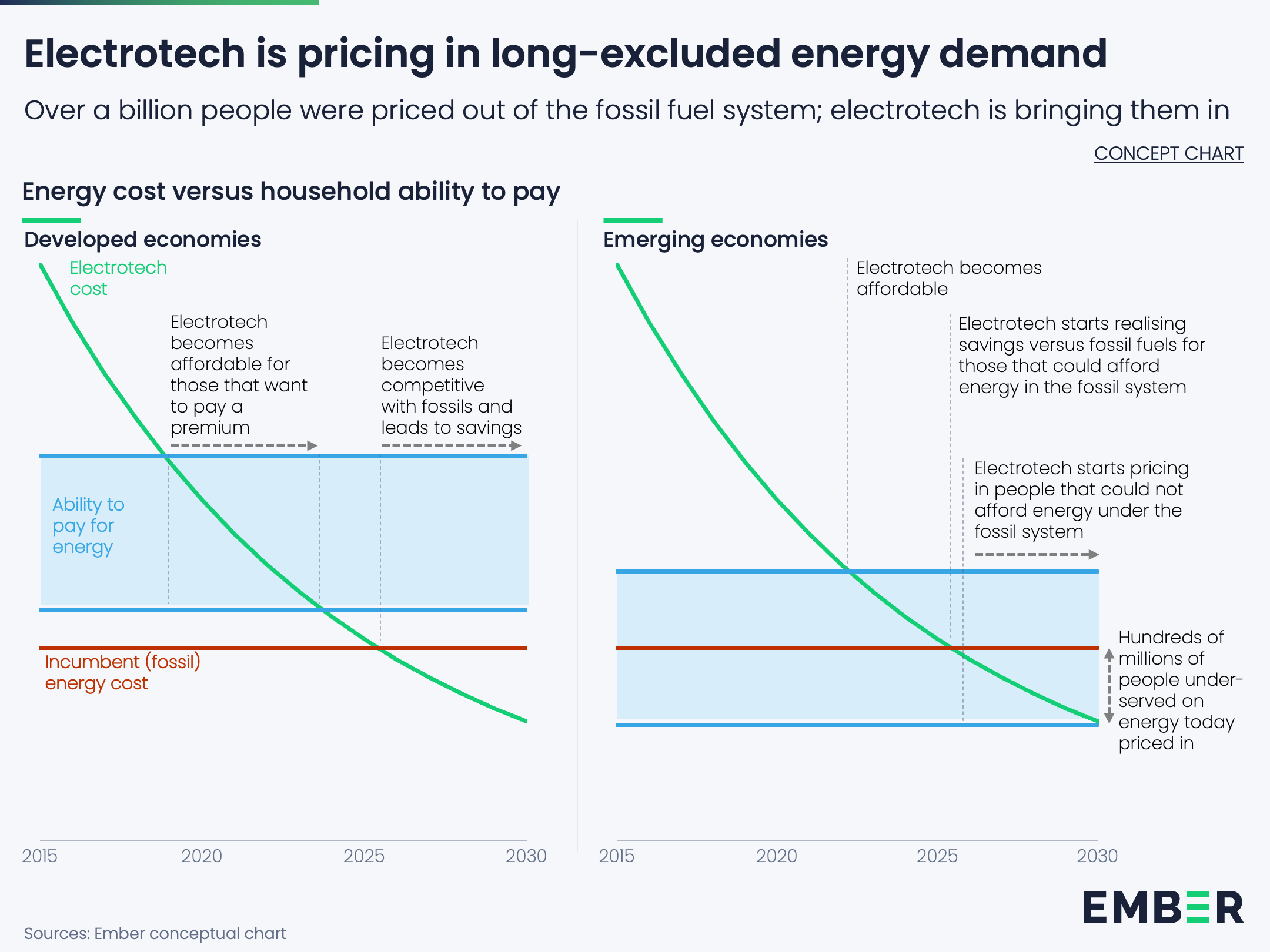
For most people in mature economies, electrotech is compelling because it delivers the same energy services as before, but at lower cost. For many in emerging economies, the proposition is more fundamental: it means affordable energy services for the first time. Hundreds of millions of people long priced out of fossil-fuel energy can now access power as falling electrotech costs unlock vast, long-neglected demand.

Established industries often overlook lower-income or harder to serve markets because margins are thin and customers are difficult to reach. This dynamic, often described as the Innovator’s Dilemma, is playing out at global scale. Many emerging economies were long underserved by the fossil energy system – not just through fossil industry neglect but because of a fundamental product-market mismatch.

Fossil energy systems required scale, centralised infrastructure, and access to capital. Most small emerging economies lacked those conditions.

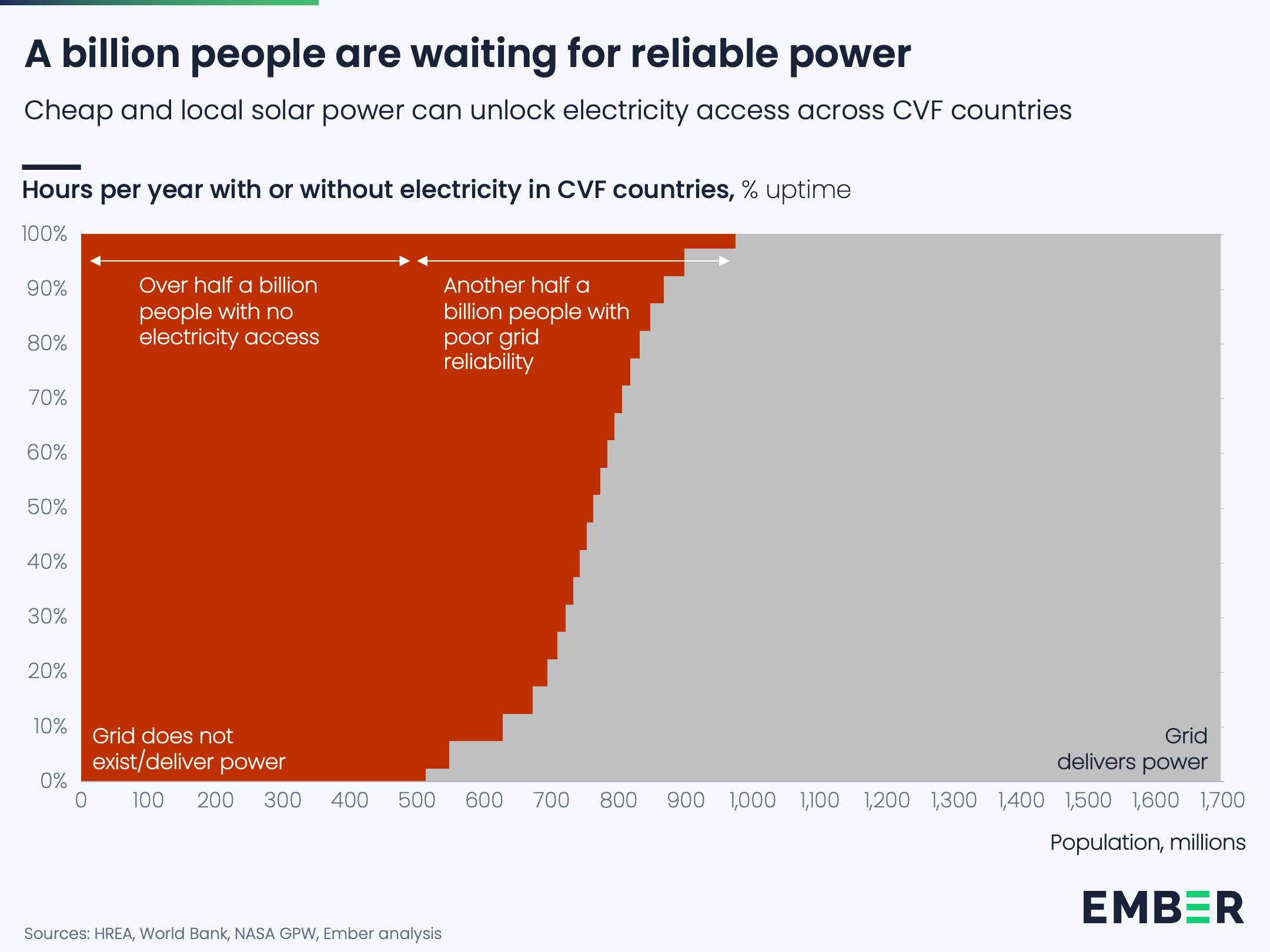
Electrotech is now targeting those underserved markets, and it does not need to be perfect to succeed. A solar-battery system delivering 80% uptime can be transformative for communities with no electricity at all, or where grid uptime sits below 60%. Across CVF countries, that describes up to 800 million people. As these communities adopt electrotech, they help drive up manufacturing scale and learning, which further drives costs down and improves performance. Disruptive technologies often enter markets that incumbents have ignored, scale and improve within them, and eventually become not just good enough but better than the incumbent solution.

Emerging economies are therefore not merely the beneficiaries of the electrotech revolution. They are its ideal disruptive market counterpart, with each accelerating the other’s rise.

Chapter 3

The advantages of the electric path

The electrotech path to development carries compounding advantages at every scale, from the microeconomics of households and firms to macroeconomic structure and geopolitical leverage.

Microeconomics: breaking the energy poverty gap

The strength of the electrotech path lies in its bottom-up nature. According to our granular geospatial analysis of United Nations and World Bank data, CVF nations account for roughly two-thirds of the world’s population without access to electricity. In these countries, around 500 million people, mainly in Africa, have no electricity at all. Another 500 million have grid connections that suffer frequent outages. Neither condition provides a foundation for prosperity. Unreliable energy is one of the most severe constraints on business in CVF countries.

Even those with a nominally reliable grid connection often cannot use as much electricity as they need, because the delivered cost remains too high. As a result, hundreds of millions continue to rely on biomass fuels, not because biomass is good but because it is widely available, grows wherever the sun shines and requires limited upfront cost.

This creates a costly trap: burning biomass indoors is a leading cause of respiratory disease linked to 2.9 million premature deaths each year, and gathering it consumes hours that could otherwise go toward work, education, or rest. Solar PV captures that same solar resource directly — and at a cost that is finally falling within reach.

Small modular technologies open the door to growth

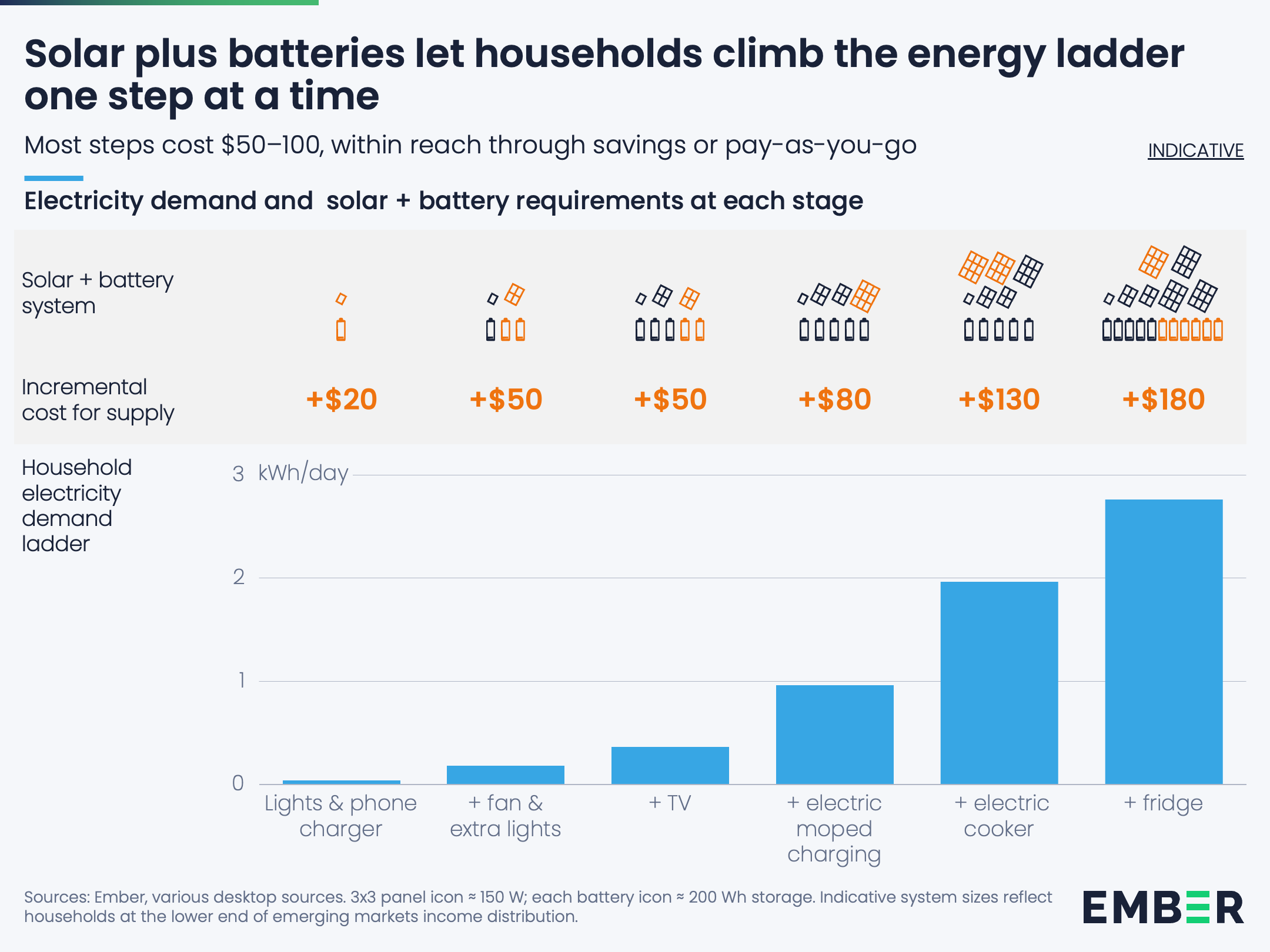
Electrotech also fits the economic reality of the households and businesses it reaches. Unlike the centralised, capital-heavy systems of the fossil era, solar and batteries can be installed in small, affordable increments. This enables households to climb the energy ladder one step at a time. A household can start with a panel and a light, add a battery and expand as savings allow, without needing tens of thousands of dollars upfront.

Pakistan illustrates what this looks like at scale: a rapid expansion of solar financed largely by private savings, growing from the bottom-up, without waiting for a grid connection or a government programme to deliver energy.

Macroeconomics: from fossil import drain to electric abundance

Widening energy access at the micro level means unlocking productive capacity at the macro level. Schools with reliable lighting can run longer days. Hospitals with consistent power can keep medicines cold and machines running. Factories with cooling can retain workers and increase output. Each of these represents a direct link from electricity to productivity, and from productivity to growth. Electricity is not a sufficient condition for development, but it is a necessary one.

As shown on the map below, the solar resource available to CVF nations makes the scale of this electric opportunity difficult to overstate. Domestic solar potential across these countries is many hundreds of times greater than current electricity demand, based on World Bank estimates that account for land realistically available for solar deployment. On average, solar energy could provide over 320 MWh of electricity per capita in CVF nations. That is more than 25 times the 12 MWh per capita currently consumed by the world’s largest per-person electricity consumer, the United States.

This resource has of course always been available. What has changed in recent years is that harvesting it with solar panels and using it in electric end-use technologies has become cost-competitive. The path to energy self-sufficiency and electric abundance is both technically feasible and economically attractive.

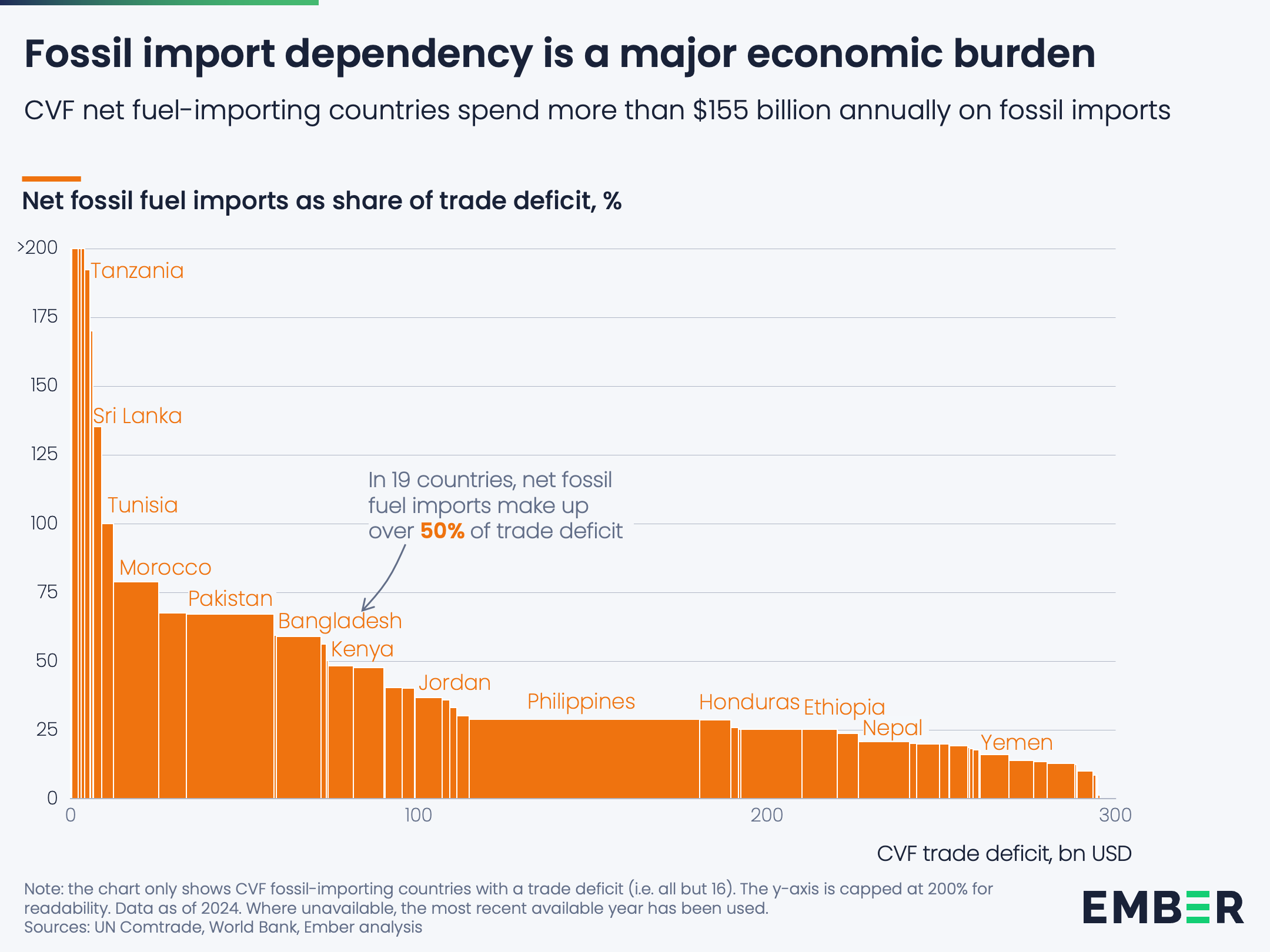
This shift also creates an opportunity to curb ongoing fossil -fuel imports, which have been a persistent drag on the balance of payments. Such expenditure is, in an economic sense, non-productive: a recurring leakage rather than a one-time capital investment on home soil. All but ten CVF countries are net fossil fuel importers. Together, they spent about $155 billion on net fossil imports in 2024. In 19 countries, fossil-fuel imports account for over 50% of the trade deficit. In Morocco, the figure is 79%; in Pakistan, 67%; and in Bangladesh, 59%.

Fossil dependency also leaves these economies exposed to price shocks beyond their control, as the present crisis in the Middle East makes clear. Around a fifth of global oil and LNG passes through the Strait of Hormuz. Its closure, together with damage to Gulf hydrocarbon infrastructure, has triggered a supply-side disruption whose costs are being unevenly absorbed. In a prolonged conflict, with oil averaging $100 per barrel through 2026, CVF nations’ collective oil import bill could rise to $158 billion – an increase of more than $30 billion compared to 2024 levels.

Some CVF countries are already in a position to cushion the blow. Electrotech deployed to date across these nations is already displacing fossil fuel that would otherwise need to be imported. The 138 GW of solar panels imported from China between 2020–2025 can generate electricity sufficient to avoid $20 billion in LNG or $42 billion in diesel imports annually. (Refer to the methodology section).

More broadly, the advantages of electrotech reinforce each other because they address the same underlying constraint: unreliable or insufficient energy supply. When energy is scarce or unreliable, it acts as a structural tax on the entire economy. Firms face higher costs from running backup generation, investors demand higher risk premiums and governments spend scarce fiscal resources on fuel imports rather than productive investments.

Electrotech can begin to remove this tax. As access improves and supply becomes more reliable, firms operate at lower cost, risk premiums fall and governments can redirect fiscal resources. Together, these changes can reduce the cost of capital. Lower financing costs enable more investment in electrotech, which improves reliability and reduces risk. The result is a reinforcing cycle in which each turn makes the next one easier. Where fossil dependency created a vicious cycle, electrotech can make it virtuous.

Geopolitics: three assets and three competing blocs

For most of the fossil era, emerging economies paid the price set by petrostates and Western capital. The electrotech revolution changes this dynamic. Solar and wind power provide energy that does not need to be imported, priced abroad, or paid for in foreign currency.

The shift goes beyond reducing that dependence. CVF nations hold three assets that the energy transition runs on – critical minerals, favourable manufacturing geography and fast-growing consumer markets. Three competing blocs – China, the European Union and the United States — seek access to all three. This creates not just a path to energy sovereignty but also a new source of geopolitical influence.

What makes this moment distinct is that these blocs are bidding for access to each of these assets simultaneously.

China currently dominates the hardware layer of the transition and is moving fast to secure mineral supply chains, manufacturing partnerships and consumer relationships across many emerging economies. The United States is investing in the digital and physical intelligence layer and is willing to pay a significant premium to keep critical minerals, processing capacity and market access outside China’s orbit. Europe is trying to anchor its decarbonisation strategy in partnerships with emerging markets, as it diversifies away from Chinese supply chains. Competing blocs mean competing bids, giving CVF nations a degree of choice they have not previously had.

However, assets do not automatically translate into leverage. The Democratic Republic of Congo holds more than half of the world’s cobalt reserves, yet has so far captured little value from them. Extraction has largely been controlled by foreign capital, and processing takes place abroad, leaving the country with limited royalties rather than broader industrial development. Market access can also be imposed as easily as it can be negotiated, as smaller economies subject to US tariff pressure have discovered. The three assets create the conditions for leverage; whether that leverage is realised depends on how deliberately governments act.

Some governments have already shown what deliberate action looks like. Viet Nam has used targeted industrial policy and incentives for foreign direct investment to build a major electronics manufacturing base, integrating global technology supply chains rather than remaining purely an assembly platform. Morocco, meanwhile, has leveraged its dominance in phosphate reserves – holding roughly 70% of global supply – and its proximity to Europe to position itself as a hub for battery materials and other clean energy supply chains, attracting large-scale investment from both European and Chinese firms. Neither is a complete model, and both reflect advantages not shared by every CVF nation. But they show that the choice is real, and the window of opportunity is open.

Chapter 4

The energy choice: Fast-track or detour?

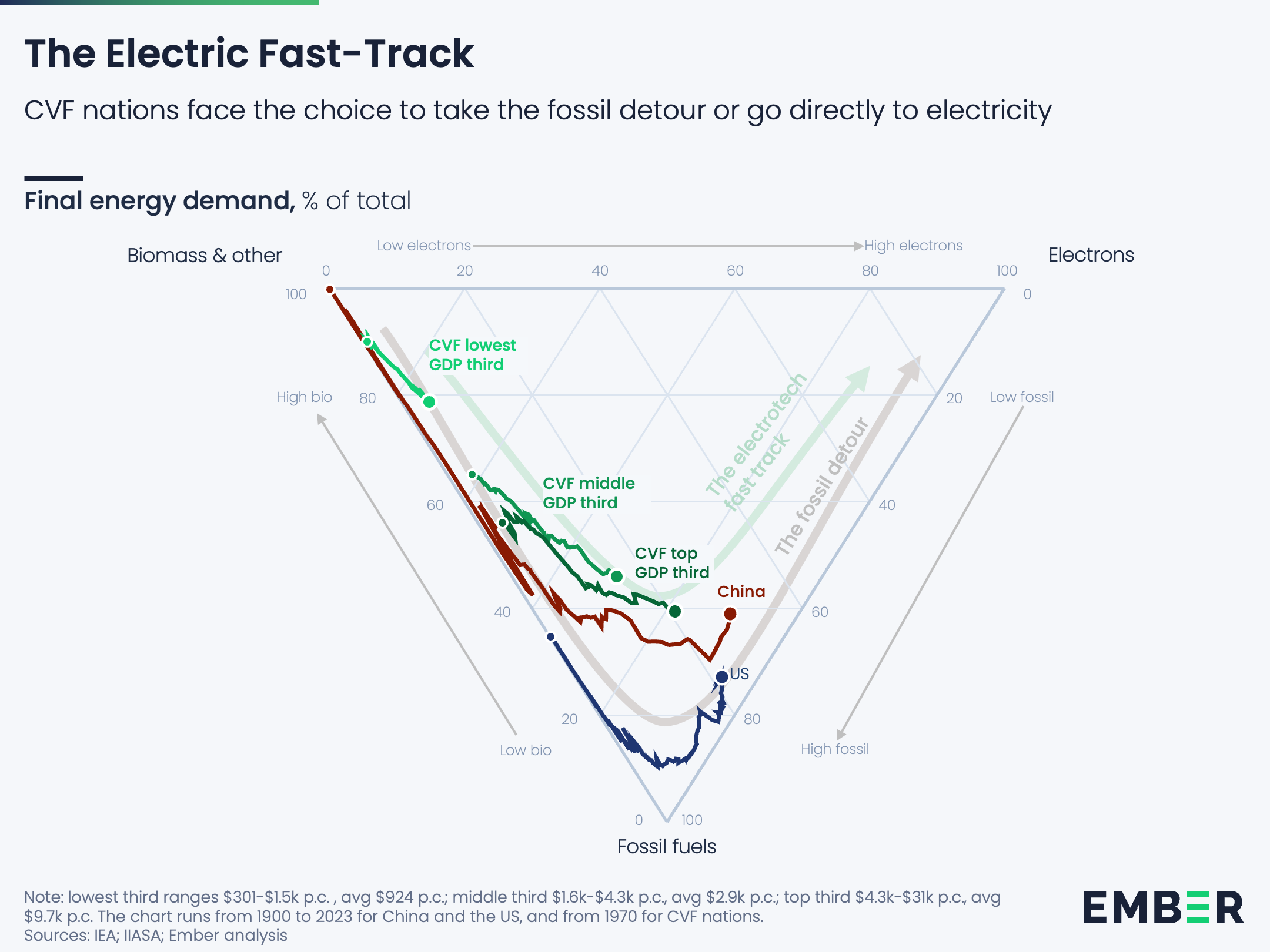
Every economy that industrialised over the past century followed a broadly similar path: moving from biomass to coal, then coal to oil and gas, descending deep into fossil dependency before beginning the long climb back toward renewables and electrification. The United States took the better part of a century to make that journey. China is moving faster, but it still went deep into fossil fuels before turning to electricity. The cost of that detour, measured in import bills, pollution, price shocks and lost sovereignty, is enormous. For the countries that followed it, however, there was no alternative.

There is now a new path. Rapid declines in electrotech costs have opened a direct route from biomass to electricity, bypassing more than 50 years of fossil lock-in. Many CVF nations are at this juncture today. Most have not yet committed to a fossil-based energy system. Their energy mix is still dominated by biomass, which is inefficient and limiting, but does not carry the lock-in that fossil infrastructure creates. The electrotech fast-track runs directly from their current position towards electricity and the productive capacity it enables, bypassing the fossil detour.

In 2026, emerging economies do not need to follow the fossil-intensive path to prosperity. A more attractive electric fast-track is available.

Supporting materials

Methodology

This analysis is produced by Ember in partnership with the Climate Vulnerable Forum and V20 Finance Ministers (CVF-V20), a coalition of 74 nations across Africa, Asia, Latin America, and the Pacific. This analysis thus focuses on the CVF countries but remains relevant for the many emerging economies around the world.

The main data sources are IEA World Energy Balances for national energy statistics, and Ember for electricity generation and China exports of electrotech products, notably solar panels and batteries. International trade data, including import and export volumes and prices, are drawn from UN Comtrade. Economic and population indicators come from the World Bank.

Annual generation from imported solar panels is estimated at 218 TWh, assuming 90% of imported panel capacity is operational and a 20% capacity factor reflecting average solar irradiance across CVF member countries. Fuel displacement is calculated in primary energy terms, grossing up by thermal plant efficiency – 45% for gas, 33% for diesel gensets – and priced at $12/mmBtu for LNG (representative Asian spot) and $750/tonne for bulk diesel. Both figures represent illustrative potential, assuming all operational capacity displaces thermal generation exclusively.

To calculate the share of CVF nations that have overtaken the United States in solar generation and electrification, we measure by share of CVF electricity demand. In the case of electrification, many smaller CVF nations are missing from the IEA World Energy Balances, so the figure represents the share of demand where data is available.

The Climate Vulnerable Forum

The Climate Vulnerable Forum and V20 Finance Ministers (CVF-V20) is an international partnership of 74 countries highly vulnerable to a warming planet. The CVF-V20 stands strong with 74 member countries from Africa, Asia, the Caribbean, Latin America, the Middle East, and the Pacific. Home to 1.7 billion people – more than a fifth of the global population – these nations account for 3.9% of global GDP.

A list of CVF-V20 member countries grouped by region is provided below.

Africa and Middle East: Benin, Burkina Faso, Cabo Verde, Chad, Comoros, Côte d’Ivoire, Democratic Republic of Congo, Eswatini, Ethiopia, Gabon, Gambia, Ghana, Guinea, Jordan, Kenya, Lebanon, Liberia, Madagascar, Malawi, Morocco, Mozambique, Namibia, Niger, Palestine, Rwanda, Senegal, Sierra Leone, Somalia, South Sudan, Sudan, Tanzania, Togo, Tunisia, Uganda, and Yemen.

Asia and the Pacific: Afghanistan, Bangladesh, Bhutan, Cambodia, Fiji, Kiribati, Kyrgyzstan, Maldives, Marshall Islands, Mongolia, Nauru, Nepal, Pakistan, Palau, Papua New Guinea, Philippines, Samoa, Solomon Islands, Sri Lanka, Timor Leste, Tonga, Tuvalu, Vanuatu, and Viet Nam.

Latin America and the Caribbean: Barbados, Colombia, Costa Rica, Dominica, Dominican Republic, Grenada, Guatemala, Guyana, Haiti, Honduras, Nicaragua, Paraguay, Saint Lucia, Suriname, and Trinidad and Tobago.


Acknowledgement

Authors

Daan Walter, Antoine Issac, Sam Butler-Sloss, Kingsmill Bond

CVF-V20 Secretariat

Sara Jane Ahmed, Mark Lynas, Sandy Jojo Twene

Contributors

Hannah Broadbent, Chelsea Bruce-Lockhart, Lauren Orso, Rashmi Mishra, Ardhi Arsala Rahmani, Kostantsa Rangelova

Cover image

Credit: umesh negi / Getty Images Plus

Share