

Clean power fortifies Britain against gas price shocks
British wind and solar blunted the worst of the price shocks in the first four weeks of the latest fossil fuel crisis by displacing gas generation, delivering savings.
9 Apr 2026
7 Minutes Read


The international price of gas surged in March 2026 following the start of the US-Israel war with Iran on 28 February, initiating the second fossil fuel crisis in Europe in just four years. Strong wind and solar generation blunted the impact of gas fuel price spikes in the first four weeks of the latest crisis by displacing gas generation, shielding billpayers from expensive gas purchases.

- British gas power prices increased by 42% in the latest global fossil fuel crisis. The cost of gas-fired power generation soared to £110.42/MWh in the first four weeks of the crisis, up from £77.75/MWh in the week before. Oil and gas prices fell following the announcement of a two-week ceasefire on 7 April 2026, but price developments after the ceasefire remain uncertain.
- Over a quarter (28%) of Britain’s current wind and solar capacity has been built since the 2021-23 energy crisis began, 7.7 GW of new wind power and 7.6 GW of solar.
- New wind and solar saved Britain around £7 million per day in gas purchases. As a result of new wind and solar, in March 2026 gas power generation was 39% lower than in March 2021.
- Over 750 wind and solar projects have either begun construction or secured planning permission in Britain since October 2021, a potential pipeline of 60 GW.
Ensuring timely delivery of the wind and solar projects in the pipeline will help to fortify Britain’s power system against future international fossil fuel price shocks.
“The latest fossil fuel crisis proves that wind and solar have already lowered our dependence on gas. We now need to deploy more renewables and reduce our reliance on volatile gas for good.”

Josie Murdoch
Energy Analyst, Ember
Energy Analyst, Ember
British wind and solar cut the gas bill as fuel costs soared
2026 fossil fuel crisis drives up international gas prices
The recent escalation of conflict in the Middle East has caused significant disruption to global trade, initiating the second fossil fuel crisis in Europe in just four years. Airstrikes by the US and Israel on Iran on 28 February 2026 prompted the country to effectively close the Strait of Hormuz. Roughly a fifth of global oil and liquefied natural gas (LNG) supplies transit the strait annually. Iran also launched attacks on neighbouring states. Dozens of oil and gas facilities in the region have reportedly closed, including the Ras Laffan facility in Qatar, which produces roughly a fifth of global LNG. A two-week ceasefire was announced on 7 April 2026, during which shipping is expected to resume through the Strait of Hormuz, with oil and gas prices subsequently falling. Price developments after the ceasefire remain uncertain.
Britain’s gas supply has not been significantly disrupted as only around 1% came from Qatar in 2025. However, Britain is exposed to fluctuations in oil and gas prices in international fossil fuel markets, including gas for power generation.
Cost of gas power in Britain increased by 42% in March 2026
Amid concerns over international supply, the price of fossil gas spiked, pushing up the cost of gas-fired power in Britain. The average daily cost of gas generation increased by 42% in the four weeks following the start of the US-Israel war with Iran on 28 February, rising to £110.42/MWh from £77.75/MWh in the week prior. The wholesale power price subsequently soared, peaking at £137.21/MWh on 20 March, the highest daily average in 2026 to date.
The 2021-23 fossil crisis also saw gas prices surge. The average daily cost of gas generation increased from £42.30/MWh before the crisis in 2020 to £180.10/MWh in 2022, when the annual wholesale power price reached £204.71/MWh, on average.
Britain is better insulated since the 2021-23 energy crisis
Britain has rapidly deployed new wind and solar capacity since the 2021-2023 fossil crisis began. A quarter (28%) of Britain’s current wind and solar capacity has been built since the last crisis. Since October 2021, over 130 wind and solar projects have been delivered; 7.7 GW of new wind power (onshore and offshore, including floating) and 7.6 GW of new solar power. Britain’s new capacity displaces additional gas power generation, better insulating the power system from gas price shocks.
Britain now has close to 55 GW of wind and solar capacity, leading to higher renewable generation and increasingly displacing gas in Britain’s power system. Wind and solar generation was 52% higher between 28 February and 28 March in 2026 than in the same period in 2021, while gas generation has fallen 39%. As international gas prices rise, the benefits of displacing gas with wind and solar increase.
Since the US-Israel war with Iran began, wind and solar has met 40% of Britain’s electricity demand, while gas fell below a quarter (23%). On eight days between 28 February and 28 March, wind alone provided over a half of Britain’s daily electricity. This is a stark change from the same period in 2021, when gas generated 38% of electricity and Britain was more exposed to gas price shocks.
British wind and solar prevented a high gas bill, avoiding £7 million in gas purchases per day
The wind and solar capacity built over the past five years has helped cut gas-fired power generation in Britain, reducing the volume of gas fuel purchases needed to meet demand. If gas generation in 2026 had not fallen from 2021 levels, the cost of gas used in power generation in the first four weeks of the latest fossil fuel crisis would have been 52% higher. Instead, the increased renewable capacity in Britain since the last crisis cut gas generation by 39%, and avoided around £7 million of gas purchases per day.
Renewables shield Britain from future gas volatility
Britain is on track to cut gas generation further as new wind and solar farms are delivered over the next few years. In addition to the 54.8 GW of wind and solar capacity that has already been built, over 750 projects have either begun construction or secured planning permission in Britain since October 2021, a potential pipeline of 60 GW. Following the record-breaking CfD auction (Allocation Round 7) in early 2026, Britain is contracted to have 45 GW of CfD-backed wind and solar capacity deployed across England, Scotland and Wales by 2031.
In the wake of recent fossil fuel market shocks, the government announced plans to bring the next CfD allocation round (AR8) forward, to secure additional renewables capacity more quickly. Ensuring timely delivery of the wind and solar projects in the pipeline will help shield Britain’s power system from future international fossil fuel crises.
Supporting materials
Methodology
Sources:
Hourly and daily generation data has been sourced from NESO’s historic GB generation data, paired with wholesale electricity prices. Wholesale prices are average day-ahead spot prices per MWh sold per time period, sourced from the Low Carbon Contracts Company. Where possible, we have used generation-weighted price data.
The cost of producing electricity using fossil gas is represented by the Short Run Marginal Costs (SRMC) of gas power generation. This cost is the sum of fuel costs, carbon costs and variable operating and maintenance costs, assuming a gas power plant efficiency rate of 50%. For more detailed information, refer to Ember’s European electricity prices and costs tool.
Contract for Difference capacity data is sourced from the LCCC and DESNZ, using the ‘Expected Start Date’ in the forwards data. We acknowledge that CfD projects do not always connect on or before their expected start date, but this information is usually privately held by developers. Data for projects under construction or in planning has been sourced from the DESNZ publication: the ‘Renewable Energy Planning Database’.
Savings estimate:
The avoided gas purchases estimate was calculated using the difference in gas generation replaced by wind and solar generation on each day in the period 28 February to 28 March, compared between 2021 and 2026, multiplied by the daily gas fuel cost. The additional wind and solar generation in 2026 is assumed to have displaced gas generation, which fell by 39% in this period. Without this reduction in gas power generation, around £760 million in gas purchases would have been required to generate the same level as in 2021. This fall in gas generation is partially attributable to an increase in wind and solar generation, whose combined generation cut gas purchases by around £260 million, to £500 million.
The change in payments to wind and solar generators reported by the LCCC through the Contracts for Difference scheme in the 2026 period, compared with the same period in 2021, are then subtracted from the avoided gas purchases to estimate a net saving. The 2026 payments are calculated using real values from 28 February to 22 March 2026 and modelled values from 23 to 28 March 2026 based on national generation, strike price and wholesale cost figures. Real values from 28 February to 28 March 2021 are subtracted from the 2026 values to estimate the increase in CfD top-ups attributable to the additional wind and solar generation in 2026, compared to 2021. The change in CfD payments is around £58 million. The net value of avoided gas purchases is therefore £202 million – the reduced gas bill minus the CfD payments. When divided by the 29 day period covered for the first four weeks of the 2026 crisis, this equates to around £7 million per day.
Timeline:
The analysis period covers the first four weeks of the 2026 fossil fuel crisis, starting from the first US-Israel airstrikes on Iran on 28 February 2026, up to and including 28 March 2026. The period covering 21 to 27 February 2026 is sometimes included to show the pre-conflict context.
Correction: The original report published on 9 April stated the UK “saved £7 million per day”. On 15 April this was amended to “avoided £7 million of gas purchases per day” to make the language more precise.
Acknowledgements
Contributors
Paweł Czyżak, Izabela Urbańska, Jivan Zhen Thiru, James Blackwell, Ardhi Arsala Rahmani, Alison Candlin, Lauren Orso.
Cover image
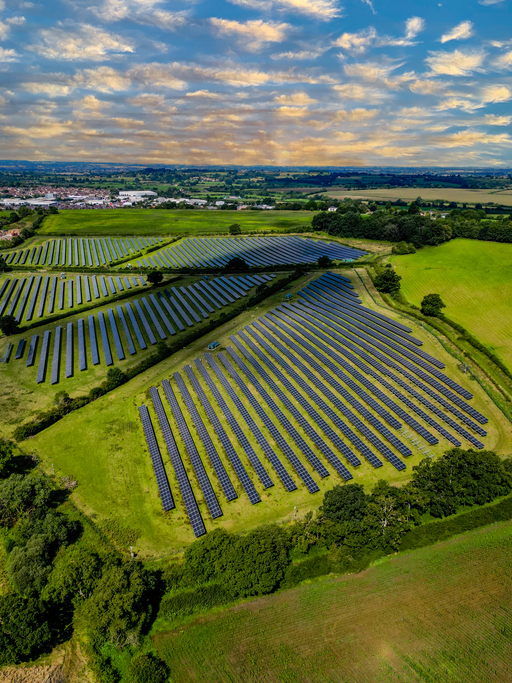
Aerial view of many rows of solar panels in green fields with trees, a small town and clouds at sunset in the UK.
Credit: MarcCha / Getty Images Plus
Related Content
Analysis
Bankable by design: Financing ASEAN's energy system transformation
06 October 2026
Analysis
Renewable Caribbean: towards energy independence
01 October 2026

Analysis
Methane doesn't read the label
30 September 2026

Analysis
Annual coal mine methane emissions are linked to tens of thousands of deaths
30 September 2026