


The electro-fortification of Britain꞉ the next national technology transition | Ember

The electro-fortification of Britain: the next national technology transition

Electrification connects the price-stability and carbon-benefits of clean power directly to households, insulating home energy bills from the risks of fossil fuels.

23 Sep 2026
3 Minutes Read
Download slidedeck PDF

Upgrading and fortifying homes with modern energy technologies – battery storage, electric vehicles, heat pumps and solar panels – cuts costs and carbon.

While the UK has made considerable progress on transitioning to renewable electricity, many British homes still depend on fossil fuels for heating and transport. Britain’s energy security is threatened by every international fossil fuel crisis because of this dependence, while carbon emissions remain dangerously high.

Electro-fortification is the process of plugging in modern electrotech powered by renewables to cut oil and gas dependence. It is the route to clean, low cost energy and stable bills. Plugging in new electrotech connects the price stability and carbon reduction benefits of clean power directly to households. Modern electric homes are ten times better protected from energy price shocks and can have far lower, more stable energy bills.

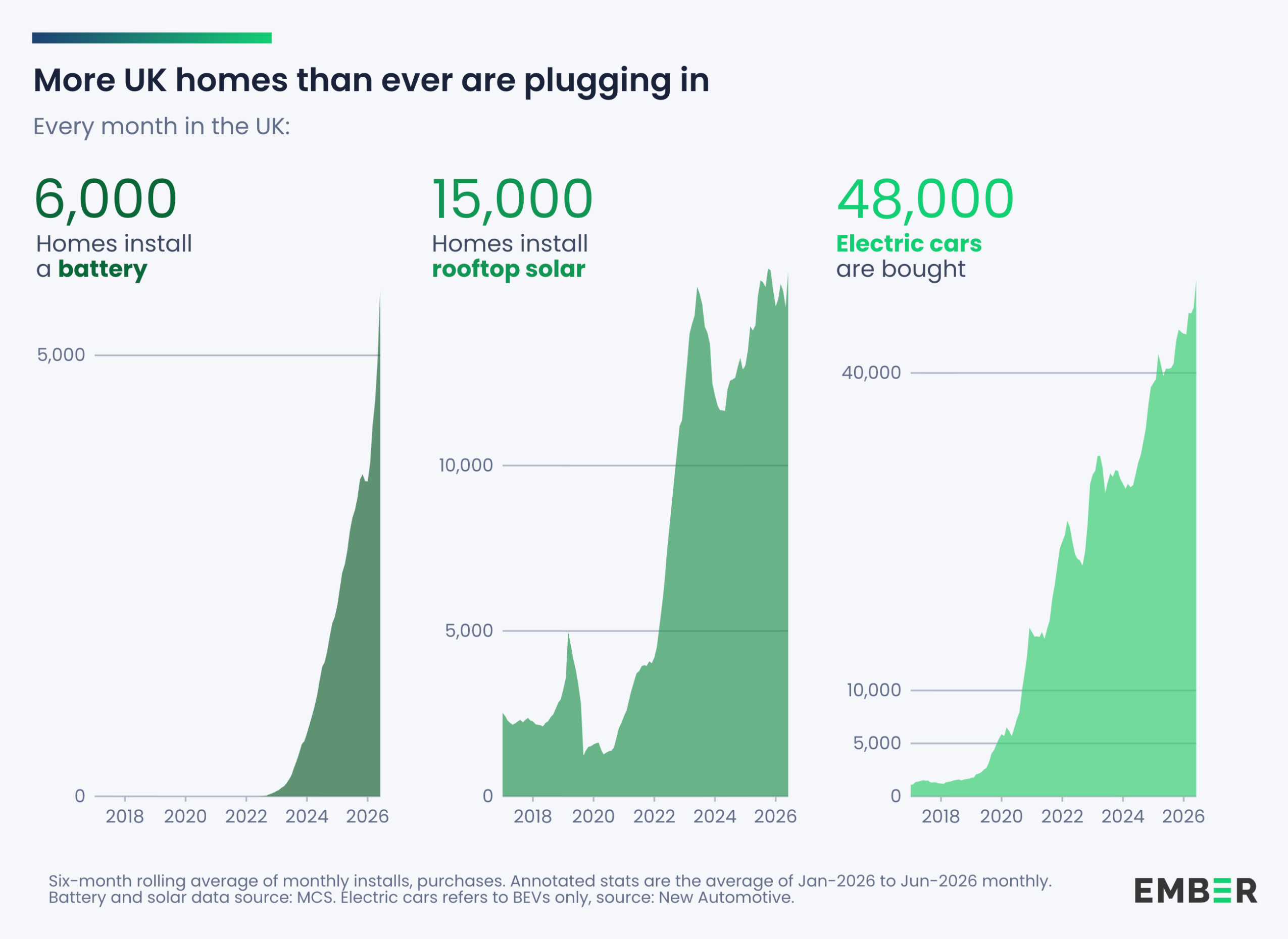
Norms are changing quickly too. Home batteries are present in almost half of all new UK home solar installations, and over 60 parliamentary constituencies already have rooftop solar on over 10% of all homes, up from five constituencies in 2022.

Over the next decade, Britain can fortify much of its energy use as it moves beyond early adopters and electrotech upgrades become commonplace. A place-based approach to electrifying heating and transport will accelerate the transition by identifying the most efficient and impactful interventions, and reducing consumer energy bills at the same time.

British households pay for fossil fuel dependence every day at the pump, every summer through heatwaves and every year through economy-wide inflation. Modern household electrotech such as electric vehicles, rooftop solar, heat pumps and battery storage is protective armour for homes: stabilising bills at the same time as cutting carbon.

Five key factors to understand Britain’s shift to electro-fortification

1. Britain remains exposed to every international energy crisis

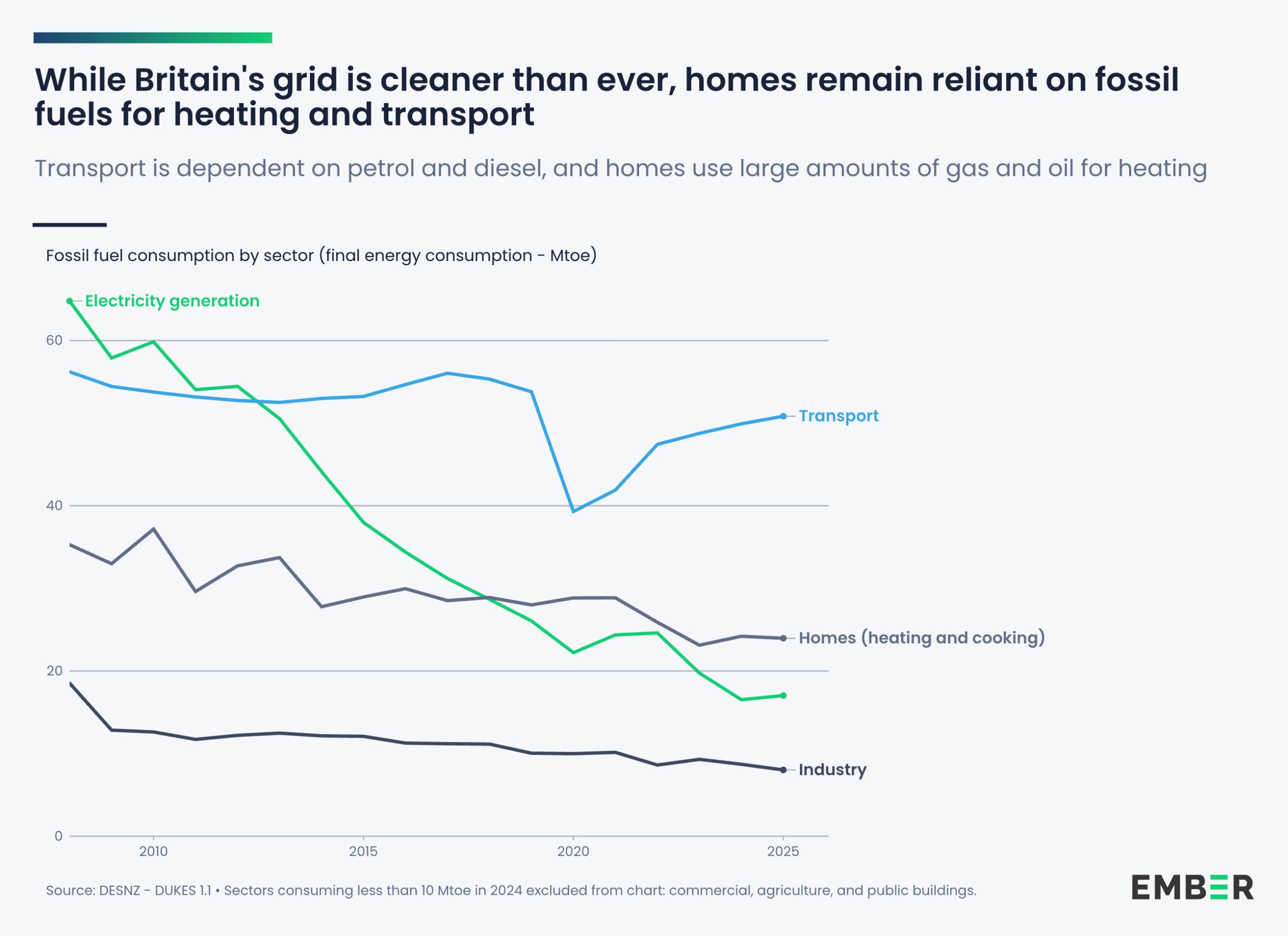
The UK is successfully replacing fossil fuels for electricity generation, but the sectors most reliant on fossil fuels are now road transport and home heating.

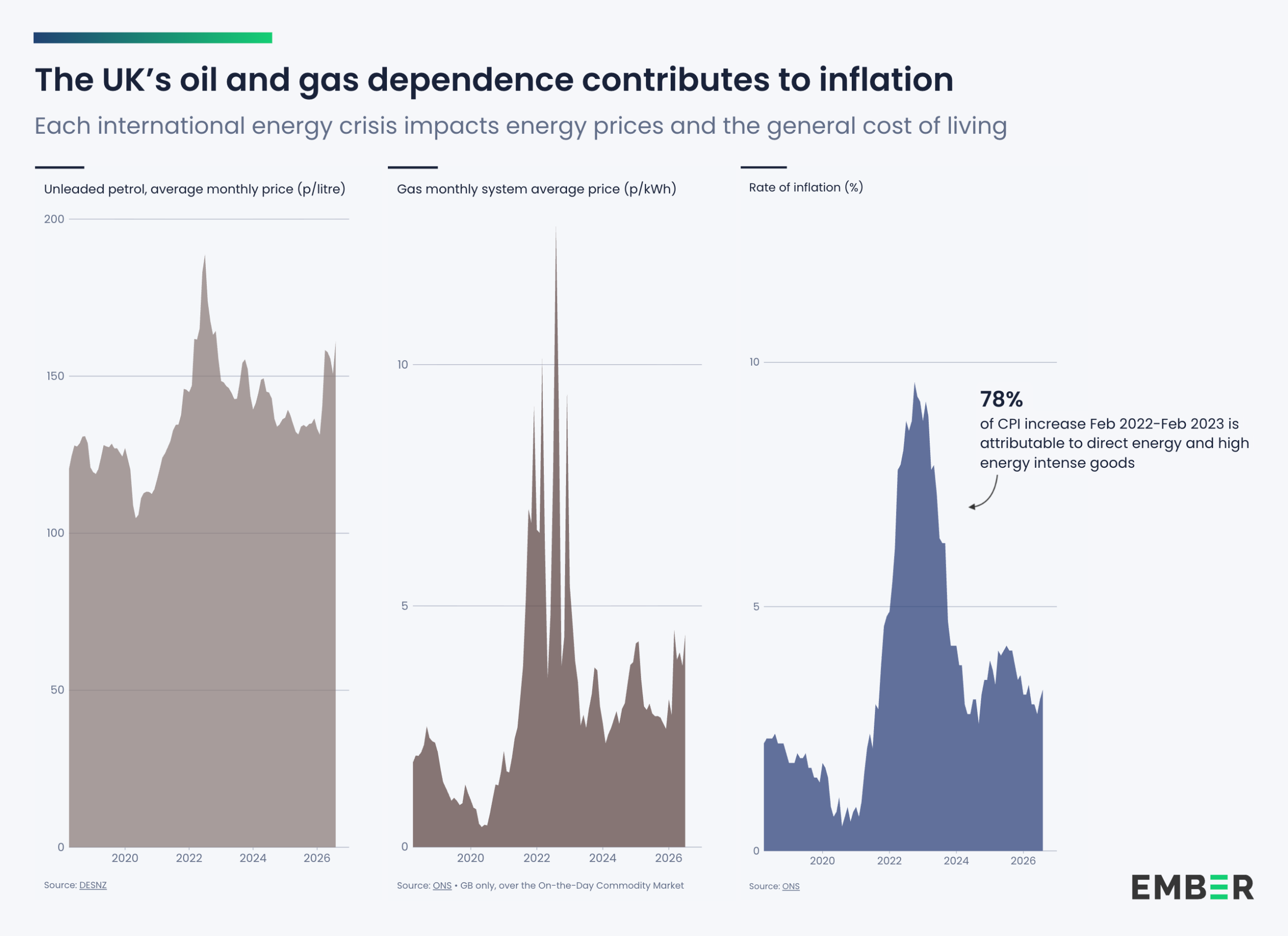
Imports do not inherently expose Britain to price volatility and climate impacts, rather it is total oil and gas consumption which is the lead cause. This ongoing oil and gas reliance exposes homes to price swings, while the UK remains exposed to global instability and the knock-on effects of inflation.

2. Electrotech upgrades offer multiple benefits to households

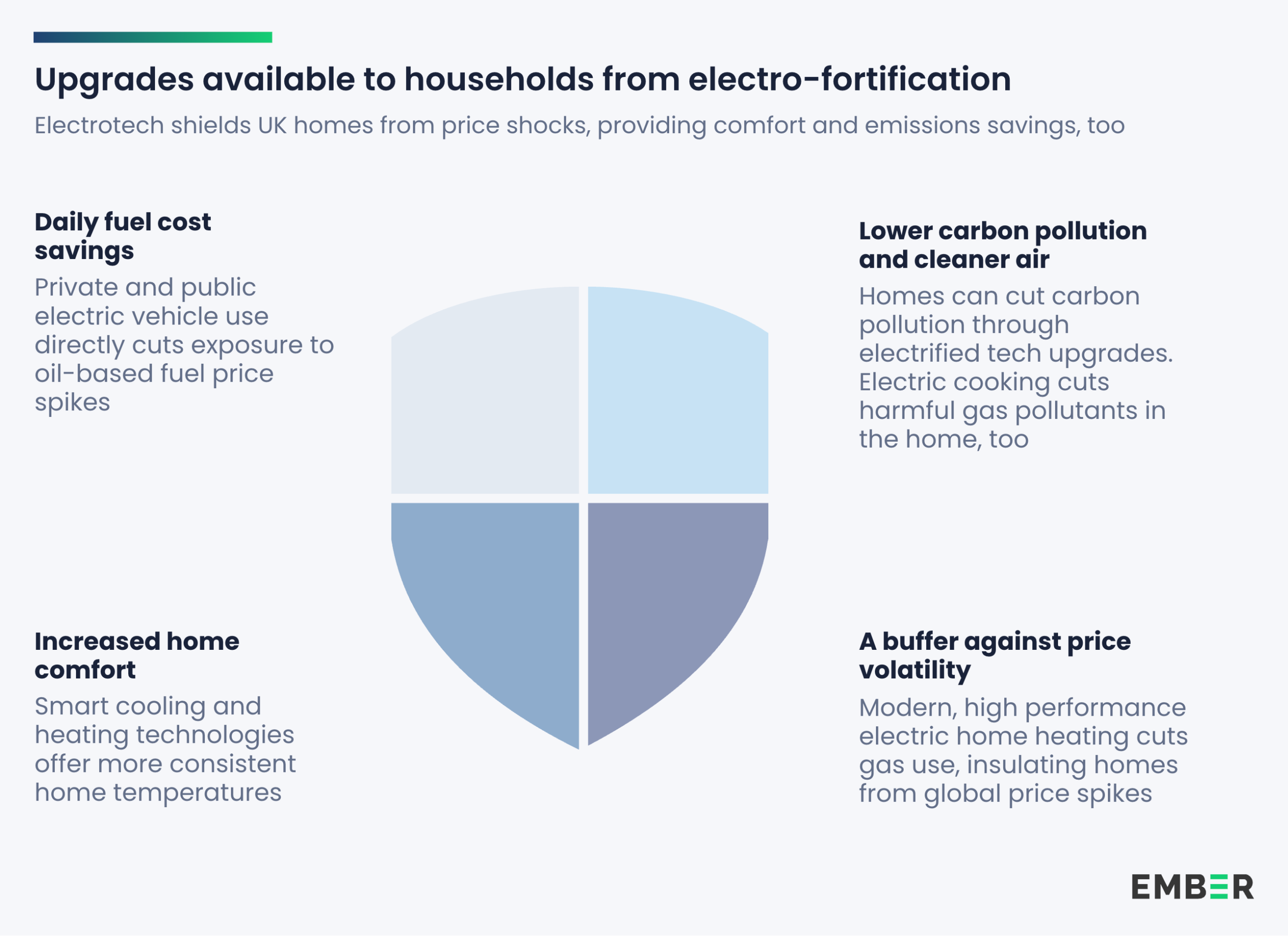
With the rise in renewable power, electricity is cleaner than ever. Modern electrotech such as rooftop solar, home batteries, electric cars, heating and cooling helps fortify a home against fossil fuel price volatility.

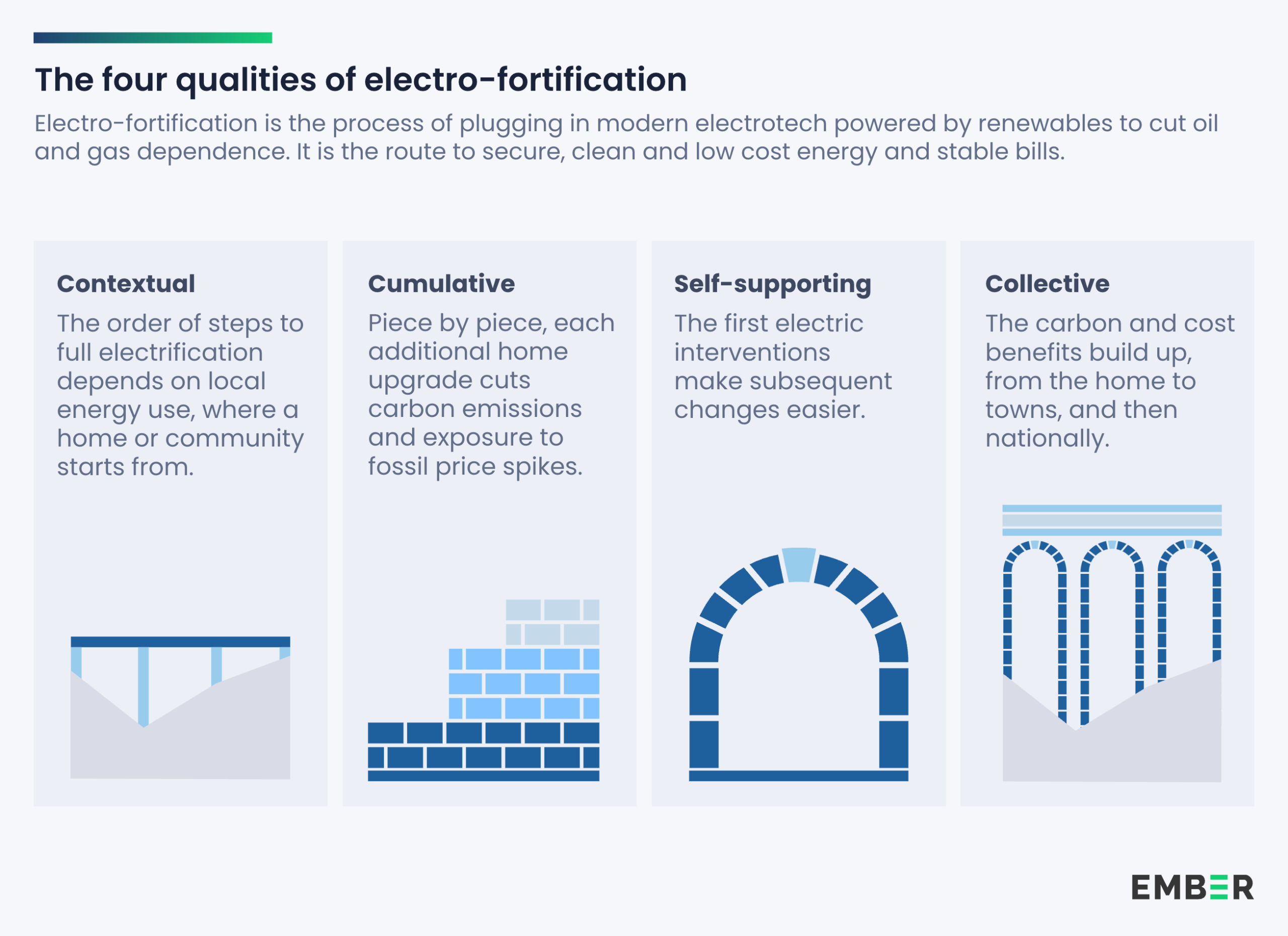
Electro-fortification is the process of plugging in modern electrotech powered by renewables to cut oil and gas dependence. Providing more than just short term benefits, it is the route to secure, clean and low cost energy. Cutting fossil fuel use means home energy bills are less and less exposed to fossil fuel prices, and fossil fuel pollution.

3. Homes are independently transitioning to electrotech already

Concern about energy bills remains high after two energy crises in five years, as well as concerns for the climate given recent extreme weather.

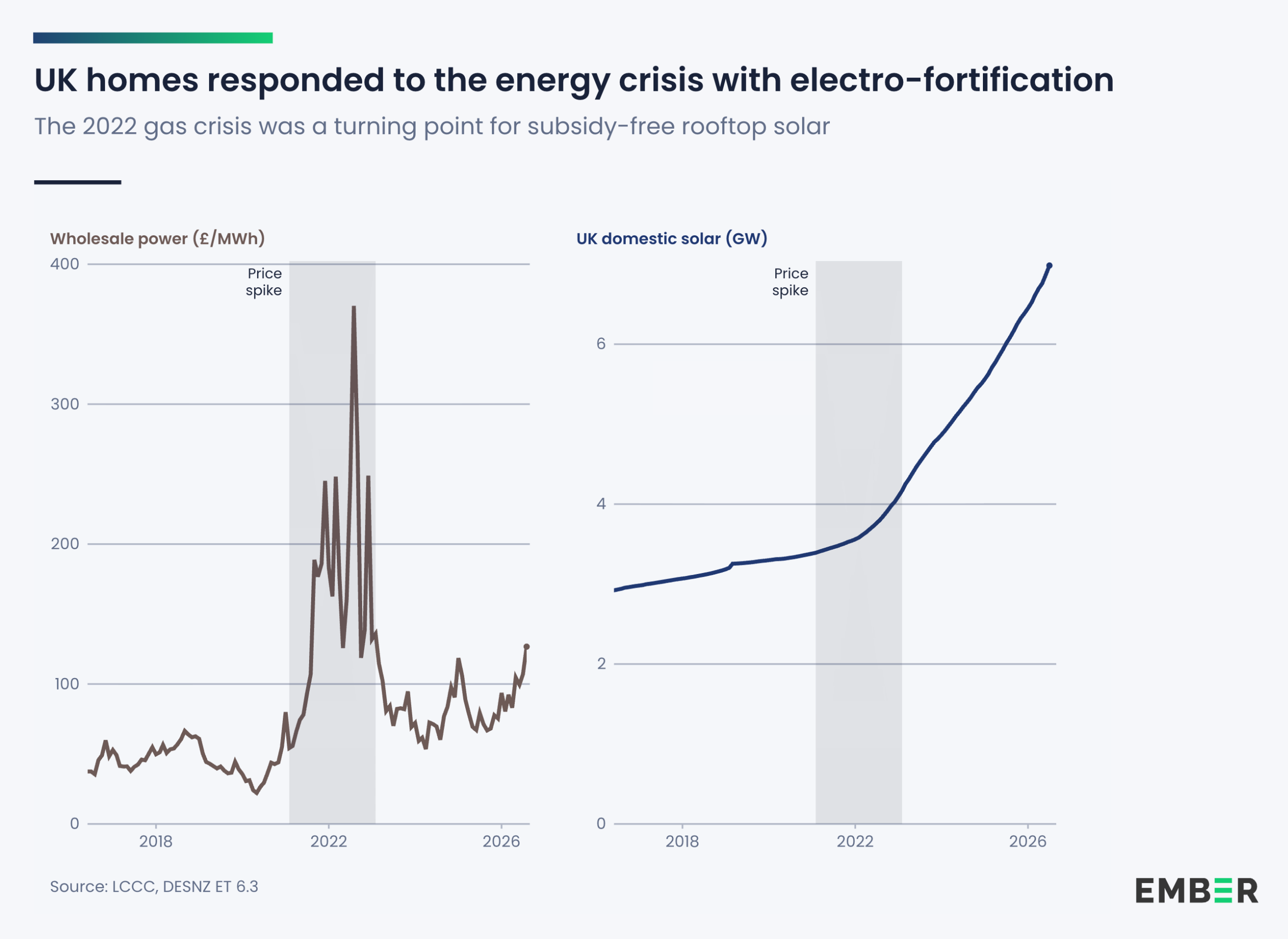
In response to the energy crisis, and without much subsidy incentive, rooftop solar and home battery uptake is accelerating across the UK. This transition offers multiple benefits to households. New electric vehicles, heating and cooling technologies are lower carbon, more efficient and more economical.

4. Regional strengths and characteristics will drive near term electrotech uptake

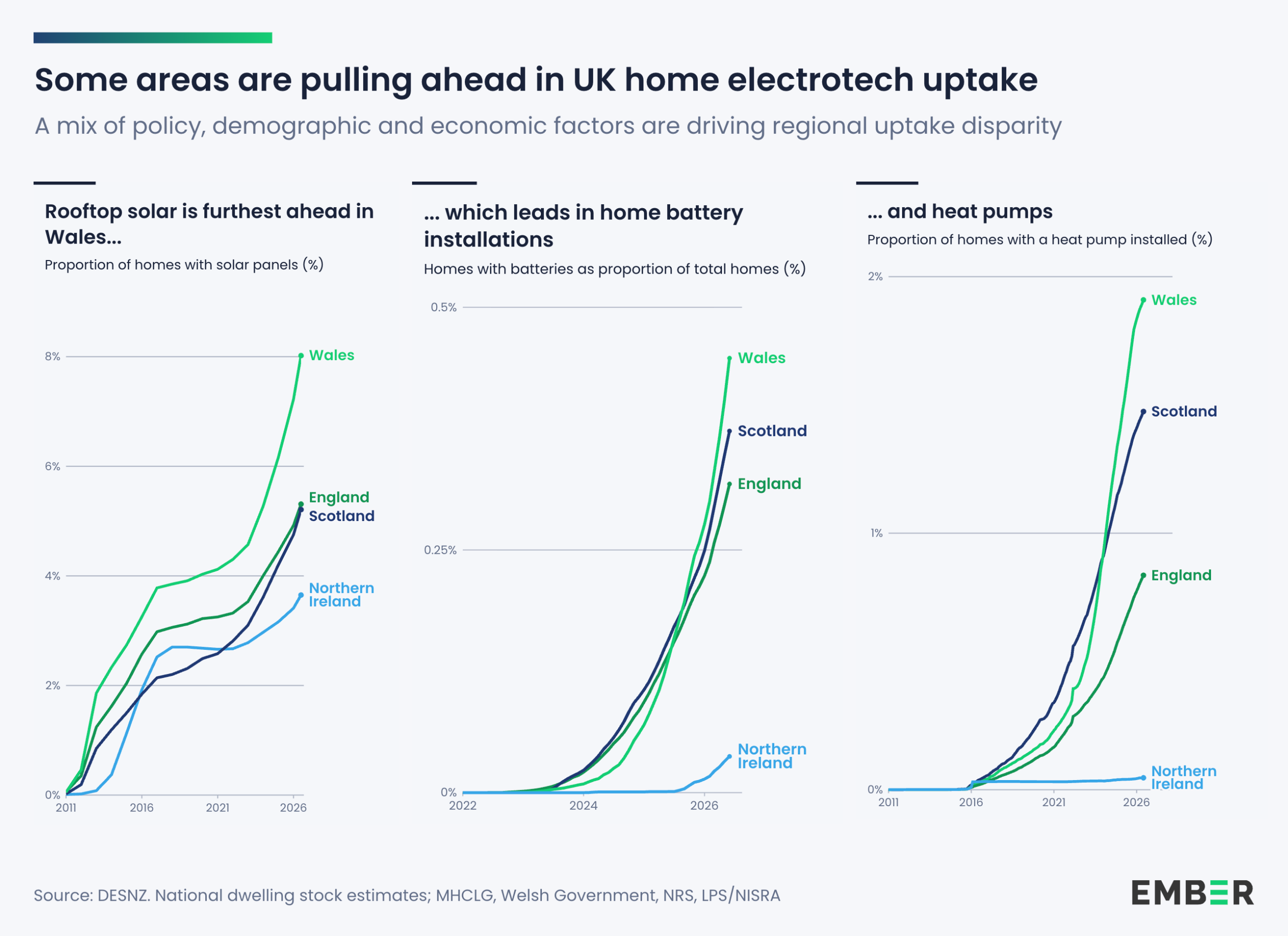
Though uptake is strong overall, some regions are pulling ahead in cutting oil and gas reliance. This is down to a mix of economic, demographic and policy factors.

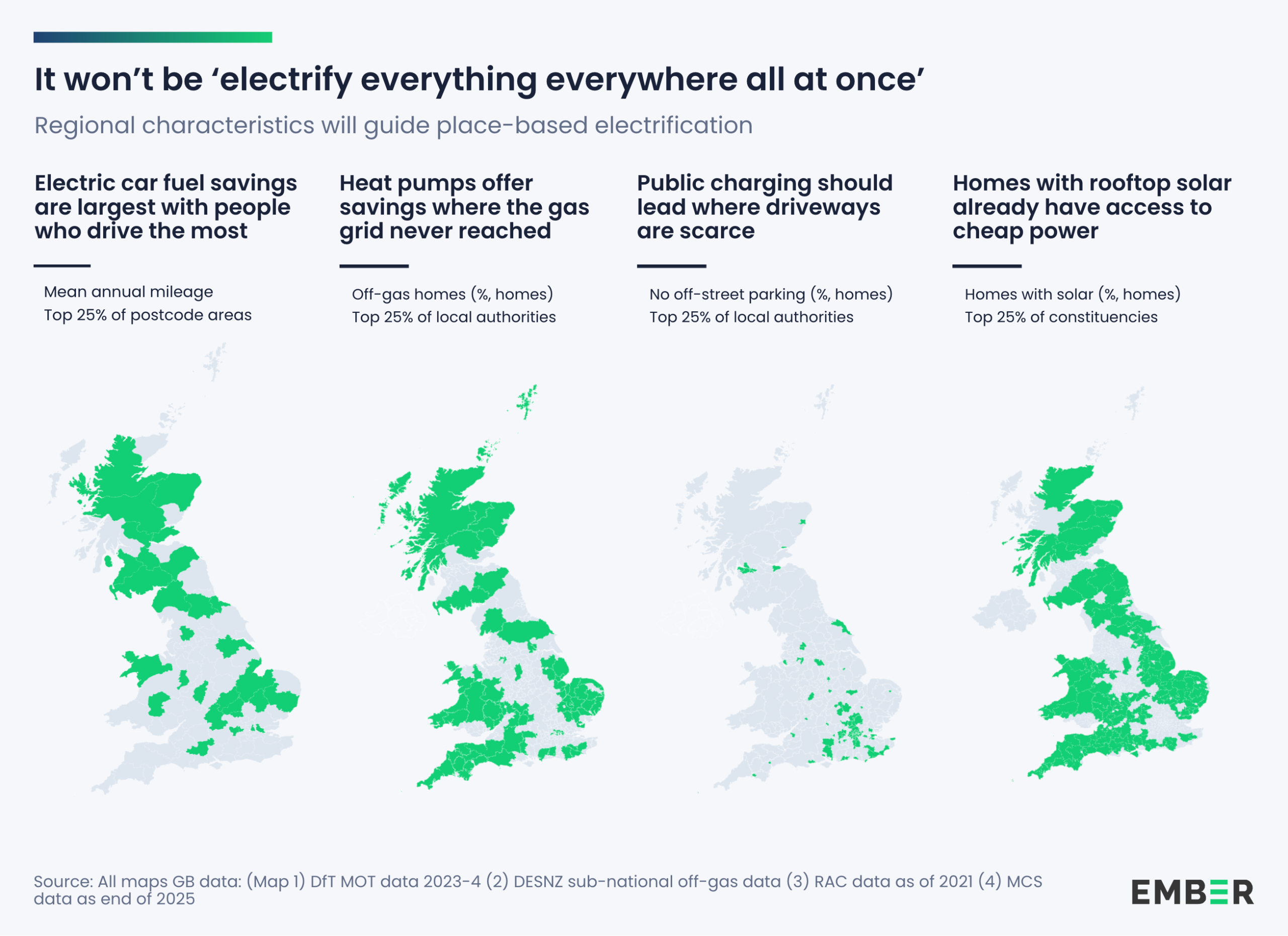
The easiest and highest-impact interventions should come first, indicated by local, contextual characteristics. A place-based approach to supporting electro-fortification means playing to local strengths, unblocking barriers and ensuring national and domestic benefits coincide.

5. Britain is not moving fast enough, but can accelerate electro-fortification to reduce energy bills

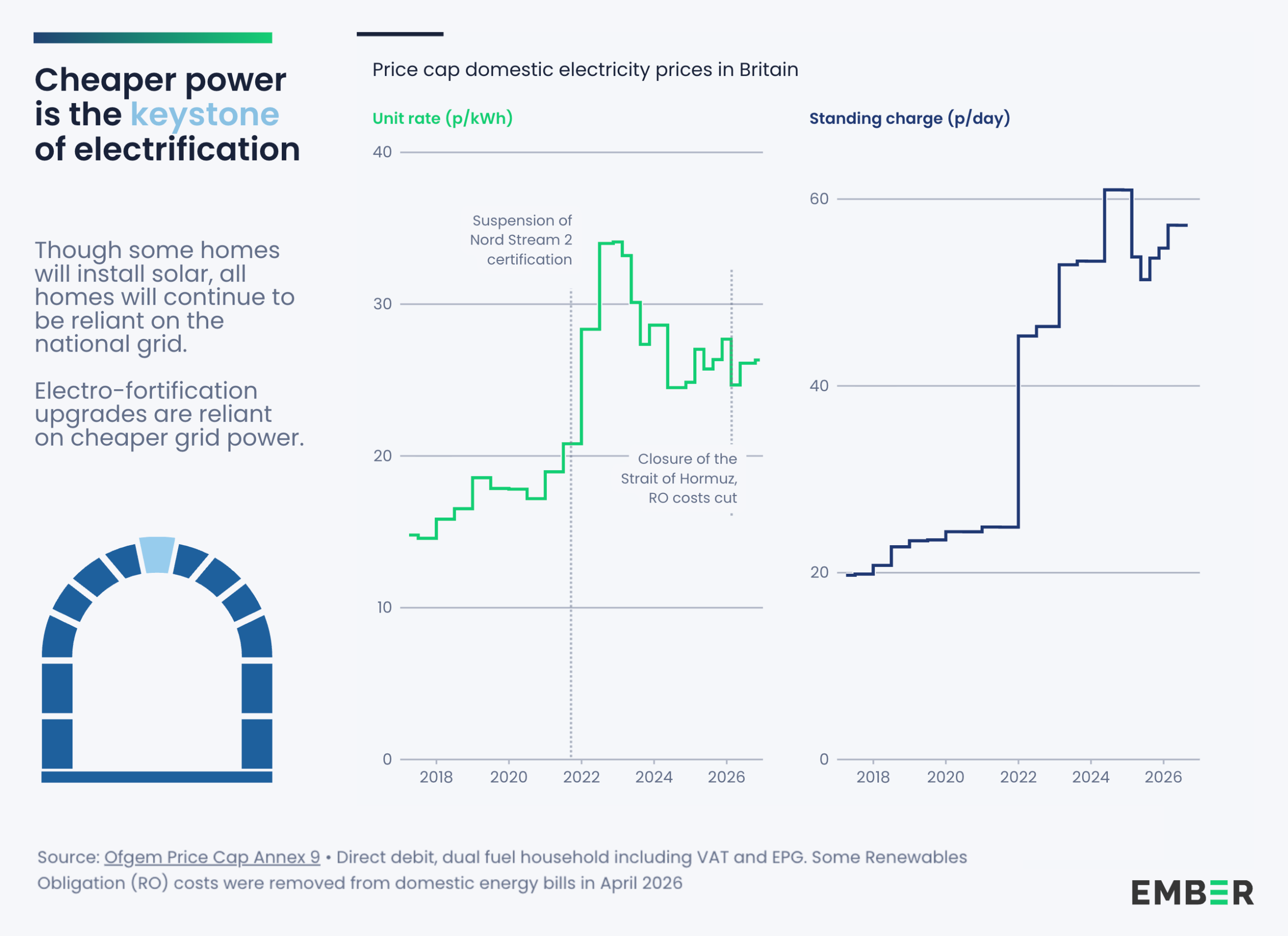
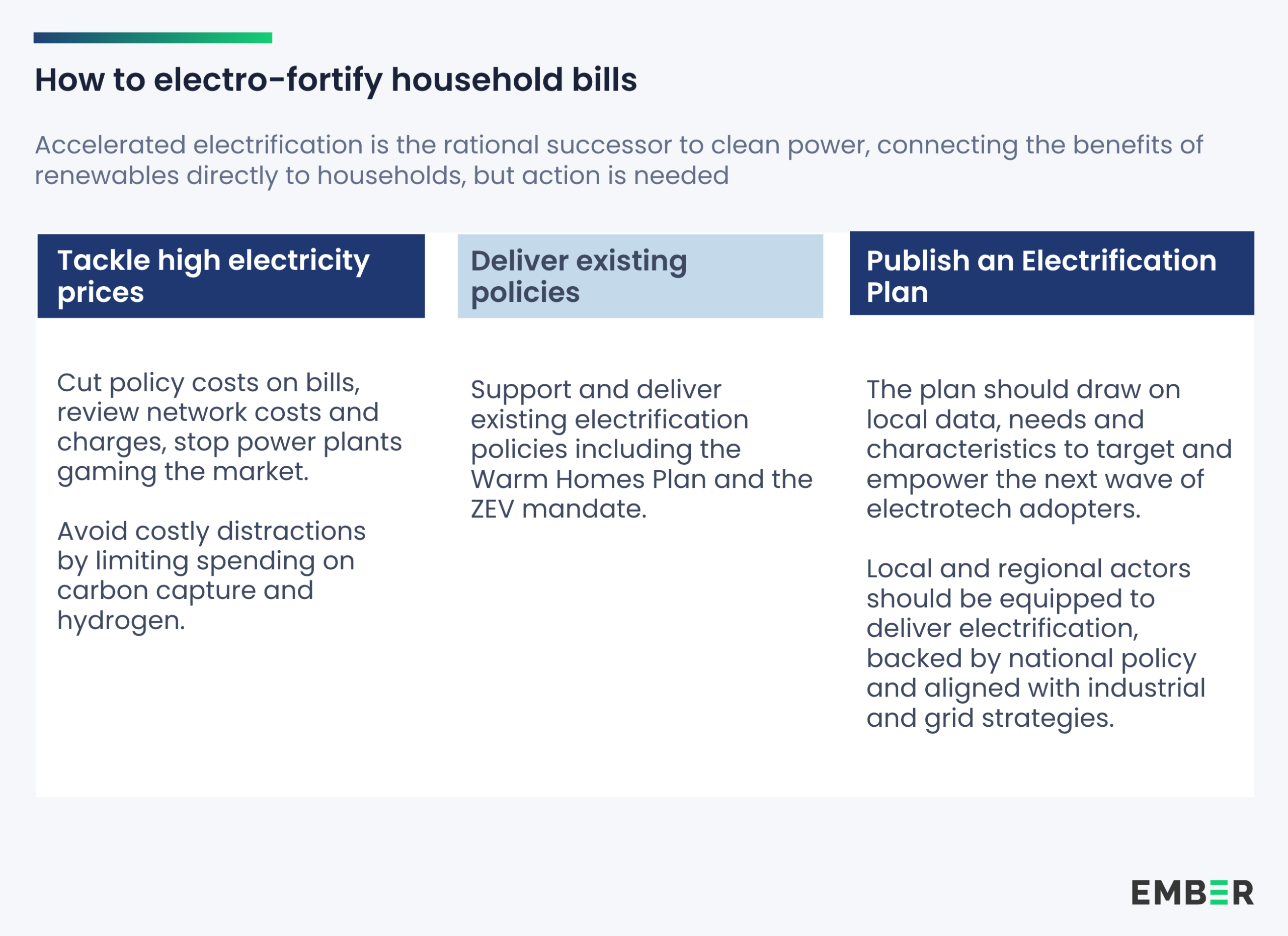
Electrification and cheaper electricity rates are the twin approaches to secure, clean and low cost energy. Energy costs remain too high, but there are local, regional, and national benefits to upgrading homes with the latest electric technology.

Energy bills can be fortified through electrification, and through high electricity prices. However, electro-fortification can be accelerated by focussing on several quick wins.

For example, in the UK there are currently:

  • 1.7 million homes with rooftop solar, which already generate cheaper power, supporting the case for plugging in electric heating or vehicles
  • 4.8 million homes off the gas grid, where a heat pump can make an immediate impact as a buffer against volatile prices
  • 19 million private cars that park on driveways but remain reliant on volatile pump prices, these can transition to cheaper, stable electric charging at home

Over the next decade, the UK has a massive opportunity to electrify households. To get benefits to households quicker, we should tailor our approach to the specific needs and characteristics of communities and regions, tackling the easy wins first.

Supporting materials

Acknowledgements

Thanks to Ali Candlin, Iza Urbańska, Lauren Orso, Claire Kaelin and also to our peer reviewers who provided early-draft feedback.

Cover image

Designed by Lauren Orso.

Share