2.1 Residential sector: distributed solar is overwhelmingly meeting new electricity demand
Residential electricity demand has risen by a third (32%) in just two years, driven almost entirely by distributed solar. Solar generation increased from 7 TWh to 23 TWh, whereas residential grid electricity demand rose just 6%. This suggests that residential solar is overwhelmingly about meeting new electricity demand, which in turn is being stimulated by solar itself.
Renewable First’s “Customer Owned Renewable Electrification” report gives valuable insights into how households are using electricity given the widespread adoption of solar:
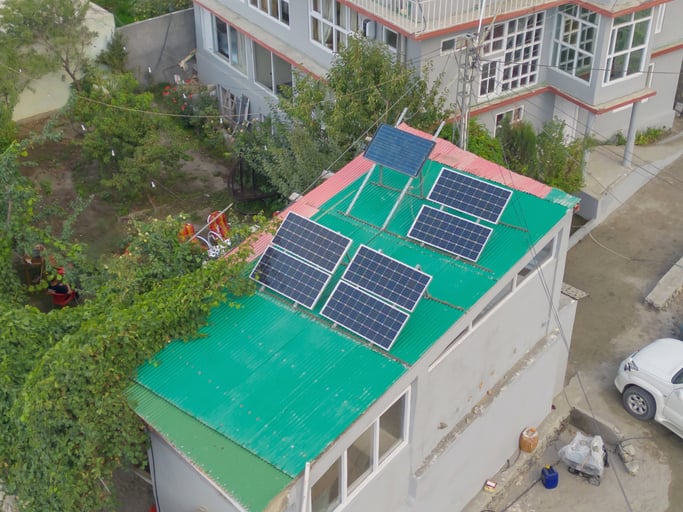
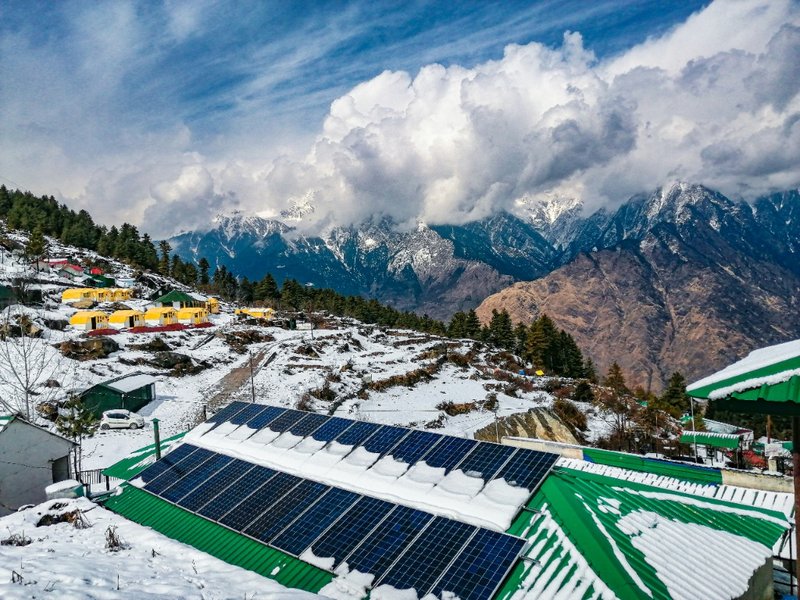
- Almost a fifth (18%) of Pakistani households now have solar: 7 million of the country’s 40 million households, representing 16.9 GW of capacity. On average, this amounts to 2.4 kW per household, equivalent to around five solar panels – more than enough to power much of an average household’s daytime demand.
- Solar ownership is concentrated in rural households. While 60% of Pakistan’s population is rural, 73% of solar-owning households are located in rural areas. These consumers faced the least reliable electricity supply, long outages and in some cases, no grid connections altogether. Adoption has also been concentrated primarily among higher-income households with sufficient financial resources to fund upfront installation costs or access financing.
- What households pay for evening electricity depends on the kind of solar system they have. Those with behind-the-meter systems without batteries pay full grid prices in the evening, losing any daytime solar they do not use. Those on net metering can offset evening consumption against daytime surplus, although the shift to net-billing earlier this year has reduced that advantage. The government’s intent appears to be drawing demand back onto the grid to support improvement in utilities’ financial performance, but this logic may not hold for most residential adopters. Given that the majority of systems are already behind the meter, the more likely behavioural response to reduced export incentives is a push toward building batteries, limiting the expected recovery in grid demand.
The question is, what do they use the electricity for?
A lot more appliances
The rise in distributed solar is enabling more demand for electrical appliances.
Given Pakistan’s climate and cooling needs, solar has helped unlock an increase in the use of cooling appliances. This ranges from fans and evaporative coolers to air-conditioning systems, some of which can connect directly to solar panels without a household inverter. Pakistan’s AC market grew from 5.8% annually in 2021 to 7.4% in 2025, propelled by urbanisation, rising temperatures, and demand for efficient cooling, and is projected to expand at a CAGR of 7.6% through 2032.
For other appliances, the data is sparser. Refrigerators, washing machines and domestic water pumps are all key staples for most Pakistani households. There have been reports of consumers shifting their use to daytime hours to take advantage of effectively free solar electricity.
Less diesel generator use
Many of the same consumers who invested in uninterruptible power supply (UPS) systems and diesel generators during the loadshedding crisis of the early 2010s are also those that have installed solar. Some solar power is therefore likely reducing diesel use. However, official statistics do not report diesel use in generators, making the scale of any reduction difficult to quantify.
Cooking and heating still dominated by gas and biomass
There is very little evidence so far of a significant increase in the use of electricity for household cooking and heating.
Total gas and LPG use is roughly unchanged. Gas use has fallen because of a moratorium on new gas connections, but this has been offset by higher LPG use. LPG is usually available in the form of cylinders, and recent price increases following the Hormuz crisis may create opportunities for cooking electrification.
Much of Pakistan’s cooking and heating demand is still met by biomass. Firewood, animal dung cakes and crop residues are used for both cooking and heating especially in rural areas lacking reliable and affordable alternatives. IEA data shows household biomass consumption is twice that of gas, LPG and electricity combined. Biomass use is not reported in Pakistan’s Energy Yearbook.
Electricity could play a larger role in these uses. Portable induction hobs provide a low-cost option ($20) for cooking, while heat pumps can provide winter heating at a significantly higher upfront cost ($600). There is also a clear pathway for switching household energy use from gas to electricity.
Residential solarisation has been overwhelmingly about enabling more demand, rather than displacing grid electricity or other fossil fuel use.