

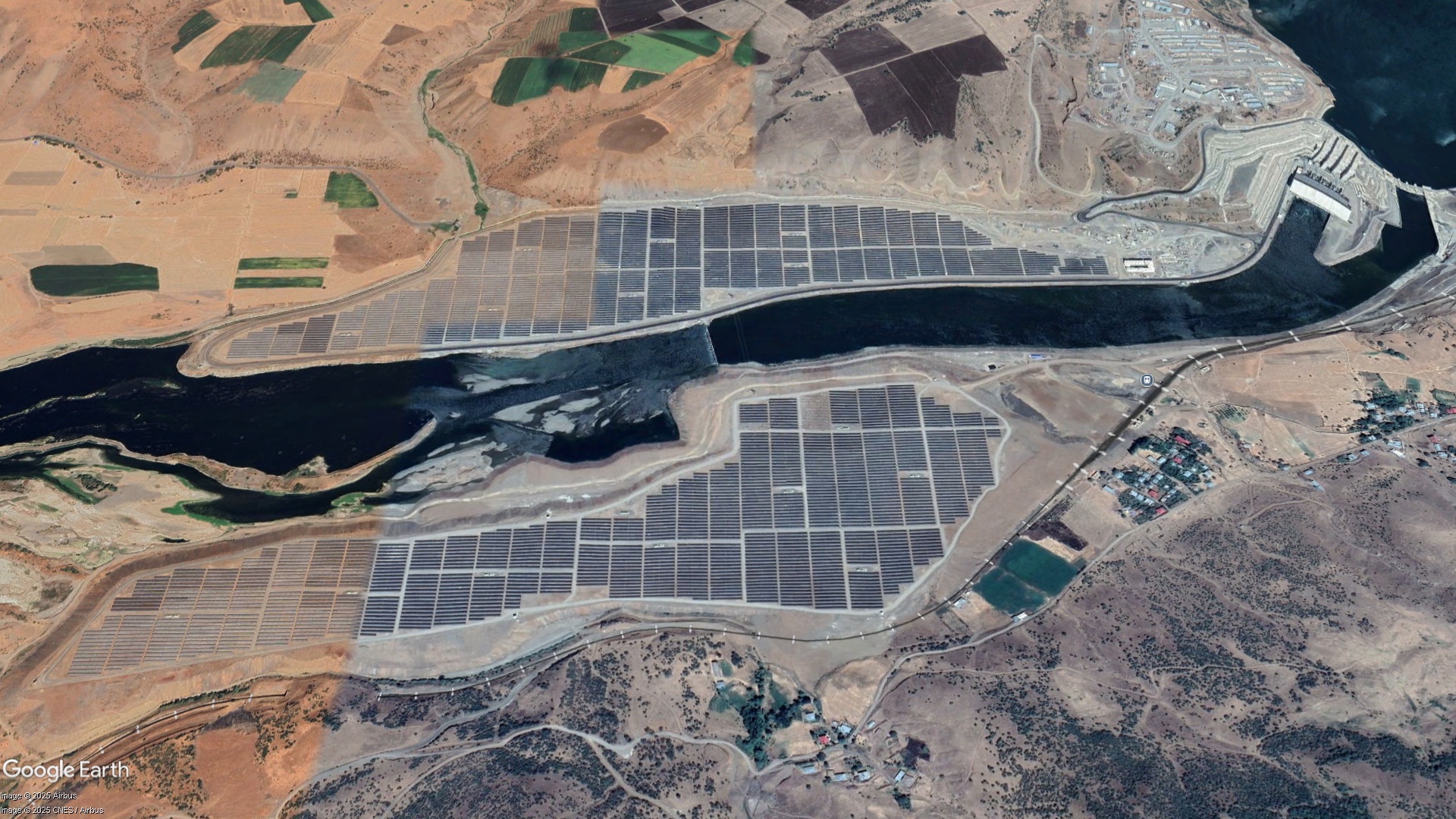
Türkiye can bypass grid constraints with hybrid solar power plants
The rejection of renewable energy projects due to grid constraints is slowing down the energy transition. By implementing regulations for hybrid systems – which do not require new grid investments – it is possible to add 8 GW of hybrid solar capacity to wind and hydroelectric plants, increasing the current solar installed capacity by at least 35%.
Available in: Türkçe
18 Jun 2025
32 Minutes Read

Table of Contents
Executive summary
Read
+
3
Hybrid solar potential in Türkiye
Read Chapter
Supporting materials
Read
Highlights
0 GW
Available capacity for transmission-level connections since September 2024
0.52 GW
Available capacity for distribution-level connections for unlicensed power plants as of May 2025
8 GW
Potential capacity of hybrid solar at wind and hydroelectric power plants with current market conditions

Executive summary
Türkiye can bypass grid capacity constraints through hybrid power plants and accelerate the energy transition
Hybrid power plants, which use the same transmission lines as existing facilities and do not require new grid investments, have the potential to revive the energy transition that has been slowing down in Türkiye due to grid capacity constraints.
In Türkiye, where solar potential is high, removing the barriers to hybrid solar power plants could increase the current installed solar capacity by at least 35%. This would boost the generation capacity of power plants and improve the efficiency of existing transmission lines. Türkiye’s installed solar capacity could quickly surpass the 30 GW threshold, outranking all other sources.
Key takeaways
01
New investments are hindered by grid constraints, yet hybrid solar installations are progressing slowly
Between February 2024 and April 2025, 65% of grid connection applications for unlicensed solar power plants at the transmission level in Türkiye were rejected due to grid constraints. Since September 2024, no new capacity has been announced for transmission-level connections. As of May 2025, only 0.52 GW of capacity remains available for connection at the distribution level in Türkiye. However, hybrid solar systems that use the existing grid connections of hydroelectric or wind power plants can add solar capacity without requiring additional grid investments. Despite this potential, Türkiye is lagging behind in hybrid solar installations: although 3.5 GW of hybrid solar projects have been granted installation permits over the past four years, only 41% of this capacity has been installed.
02
Türkiye’s hybrid solar potential is more than 8 GW
Based on an analysis of hybrid potential, reflecting current market conditions and economic indicators, the hybrid solar potential at privately owned wind and hydroelectric power plants in Türkiye is estimated at 8 GW. In more favourable scenarios with higher electricity prices and lower interest rates, this potential could increase to as much as 25.6 GW. Nearly 46% of the potential is concentrated at dammed hydroelectric power plants. Commissioning 8 GW of hybrid solar capacity could raise Türkiye’s total solar capacity to 30 GW, making solar by far the country’s largest energy source by installed capacity.
03
In 2024, hybrid solar added 14% to the output of hydroelectric and wind plants
Türkiye’s 25 existing hybrid solar power plants added 14% to the generation of the wind and hydroelectric plants they are connected to in 2024. Thanks to the contribution of hybrid solar power plants to generation, the average capacity factor of the primary sources they are connected to increased by five percentage points, reaching 32%. The impact of hybrid solar peaks in summer. Between June and August 2024, hybrid systems increased the capacity factors of wind, run-of-river, and dammed hydropower plants by an average of 7.3 percentage points. Notably, a wind farm with hybrid solar in Eastern Anatolia recorded a nearly 20-point increase in capacity factor in 2024, thanks to the region’s high solar potential.
Hybrid power plants, which do not require new grid investments, should be treated differently from other power plant investments; project approvals should not be contingent on the announcement of new grid capacities. Installed capacity of hybrid solar can be significantly increased by removing the requirement for hybrid plants to be integrated into the primary source’s site and by lifting the capacity cap rule.
Realistic targets can help accelerate the deployment of hybrid solar capacity, and improved data transparency will enable tracking progress toward these targets.
Türkiye’s energy transition journey has slowed down due to grid-related capacity constraints. This obstacle to new projects can be bypassed with hybrid solar power plants that can be commissioned without adding additional load to the grid. They have already proven their contribution to generation and to the efficiency of the primary source’s connection capacity. Since hybrid solar power plants do not require new grid investment, they can be approved without waiting for capacity opening; with simple regulatory changes, such as the obligation to integrate into the plant site of the primary source and the removal of the capacity limit rule, Türkiye could quickly unlock its significant hybrid solar potential.
Although the production capacities of hydroelectric power plants (HEPPs) have started to decrease in recent years due to drought caused by climate change, these plants still constitute the backbone of our energy supply. We believe that the elimination of the capacity allocation problem in most of the applications for hybrid solar power plants, which are almost the only solution to drought in HEPP projects, is a necessity to protect the generation capacity of HEPPs and system supply security. Today, the authorisation processes of hybrid investments can continue for months and even years. However, we believe that the urgent approval of hybrid investments to be made in areas already allocated for energy production is crucial for energy efficiency and system supply security. We believe that solving the hybrid solar power plant capacity allocation and permit process problems and removing investment restrictions are a necessity for the realisation of our sustainable development.

Elvan Tuğsuz Güven
Chairman of the Board, HESİAD
Chairman of the Board, HESİAD

Related Content

Analysis
A quarter of EU power came from solar for the first time in June
14 July 2026
Analysis
UK's largest emitter Drax reports record emissions in 2025
09 July 2026

Analysis
Energy Institute Statistical Review of World Energy
30 June 2026
Analysis
The solarisation of Pakistan’s energy economy
25 June 2026