

Declining emissions in Australia’s coal sector mask growing offset use
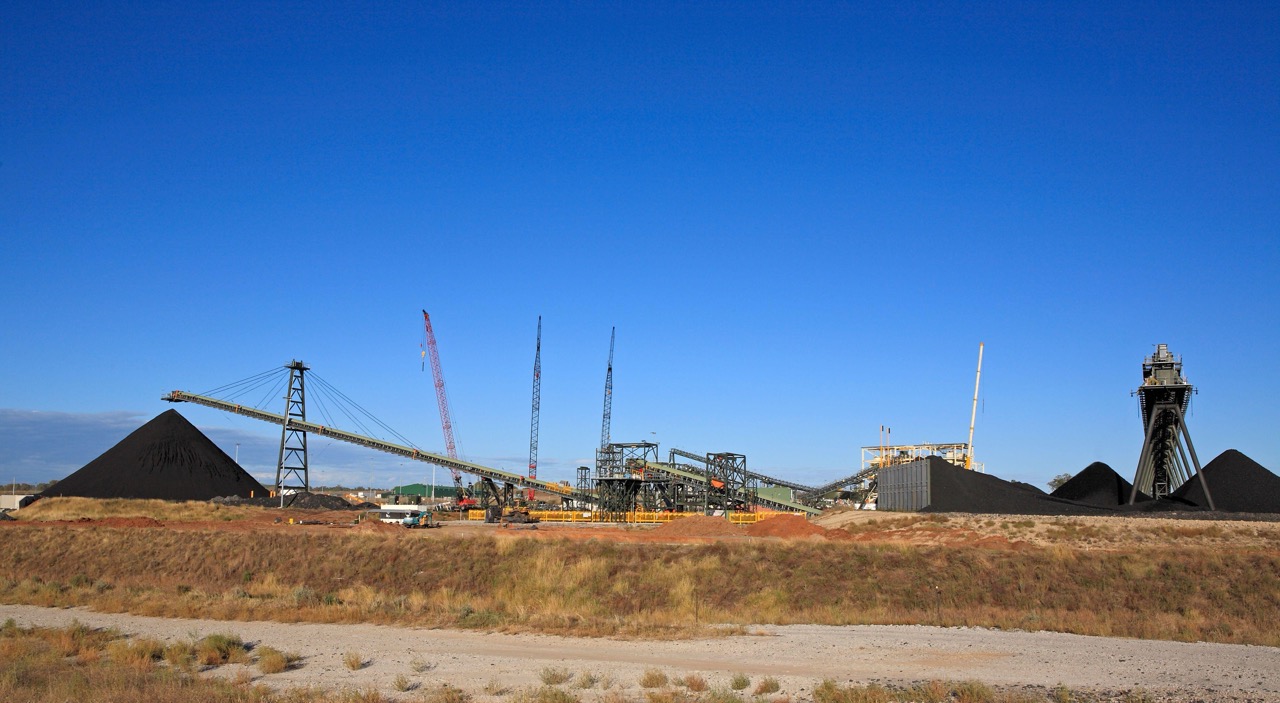
Australia’s coal sector emissions appear to be steadily declining. However, this trend is largely influenced by mine disruptions rather than on-site abatement. At the same time, coal mines are increasingly using offsets to meet their baseline.
29 Apr 2026
7 Minutes Read


Operational disruptions, rather than on-site abatement, drove down emissions in fiscal year (FY) 2025. Additionally, coal mines are increasingly relying on offsets and accounting shifts to comply with the Australian government’s Safeguard Mechanism (SGM).
- Australia’s coal mine fugitive emissions continued their long-term decline in FY2025. However, the findings from Safeguard Mechanism data show that this emissions decline is largely owing to operational disruptions and declining production at major underground and mixed (a mine with both underground and open-cut mining operations) mines, rather than the impact of onsite abatement. For example, there were disruptions at major underground mines, such as Grosvenor and Moranbah North.
- Furthermore, a change in emission accounting methodology has allowed some large open-cut mines to use lower emissions factors and report lower emissions without changing operations to reduce onsite emissions.
- Coal mines are also relying on offsets to comply with the SGM. Coal facilities used approximately 6.3 million tonnes of carbon dioxide equivalent (MtCO2e) offsets to meet their baseline in FY2025, a 40% increase from the previous fiscal year. While declining baseline contributes to higher offset use, similar facilities also recorded higher emissions, suggesting that compliance is increasingly being met through carbon markets rather than direct emissions cuts.
- An increase in safeguard mechanism credits (SMCs) issued to open-cut mines raises integrity concerns. Large open-cut mines, such as Hail Creek and Carmichael, received SMCs in FY2025. However, these mines contributed a significant share of methane emissions from open-cut mines, and a reduction in reported emissions could be the result of a change in emissions calculation methods and baseline setting. This raises questions about whether these credits reflect genuine abatement or accounting effects.
As the Safeguard Mechanism review is approaching, there is a critical opportunity to address persistent gaps in the scheme. Stronger oversight, improved transparency, and targeted methane action are essential to ensure compliance reflects real emissions reductions.

The Safeguard Mechanism should be driving genuine methane cuts at coal mines, not allowing compliance to be met through rising offset use and accounting changes. Without stronger incentives for on-site abatement, Australia risks reporting progress while leaving major methane sources largely unaddressed.
Australia reported lower coal mine methane emissions in FY2025
Australia’s coal mine methane emissions are declining. However, as in the previous year, disruptions at underground mines likely drove the fall in the fiscal year (FY) 2025.
Australia’s coal mine methane emissions are continuing their long-term decline. After peaking in 2007, emissions have steadily declined, reaching 23 million tonnes of carbon dioxide equivalent (MtCO2e) in 2024. Declining emissions from underground mines, despite slight increases from open-cut mines, are driving this long-term trend.
The latest quarterly National Greenhouse Gas Inventory (NGGI) indicates a further decline in FY2025. The March 2025 quarter recorded 5.4 MtCO2e, the lowest level over the past decade. Based on this quarterly coal mine fugitive emissions data, we estimate coal mine methane (CMM) emissions in FY2025 to be between 22.1 and 22.4 MtCO2e, approximately 3.5% lower than FY2024.
However, the decline does not appear to reflect broad structural decarbonisation across the sector. The Department of Climate Change, Energy, the Environment and Water (DCCEEW) suggests that this decline is primarily due to lower production from underground mines. This interpretation is consistent with Ember’s analysis, which finds that declines in reported emissions are mainly due to underground mine closures and accounting shifts, rather than actual emissions reductions.
Underground mines have a significant influence in shaping Australia’s coal mine methane emissions. DCCEEW notes that open-cut coal mines typically have a lower emissions intensity than underground coal mines. Furthermore, ventilation air methane (VAM) alone accounts for about 60% of fugitive emissions from Australian underground coal mines. As a result, disruptions at a few underground mines can substantially affect total emissions.
Safeguard methane emissions fall in underground mines but rise in mixed and open-cut mines
Methane emissions in underground mines covered by the Safeguard Mechanism fell by 1.1 MtCO2e in FY2025 due to disruptions in production. On the other hand, emissions in open-cut and mixed mines increased slightly due to higher output.
Coal mines covered by the Safeguard Mechanism (SGM) account for a significant share of national CMM emissions, at around 85%. Methane emissions from these facilities fell by 3.2% year-on-year, from 19.6 MtCO2e in FY2024 to 19 MtCO2e in FY2025. This slight decline was due to fewer coal mines, lower underground coal production and emissions-factor adjustments within open-cut mines.
The number of SGM coal mines dropped from 70 in FY2024 to 67 facilities in FY2025. Five coal mines, namely Chain Valley Colliery, Ironbark No. 1, Kogan Creek Mine, Norwich Park Mine and Sojitz Gregory Crinum Mine, were no longer in the scheme as emissions fell below the coverage threshold. On the other hand, two coal mines, Blair Athol Operations and Newlands Coal Complex, were added to the SGM in FY2025.
Methane emissions from underground mines fell by around 1.1 MtCO2e in FY2025, mainly due to operational disruptions rather than onsite abatement. The biggest emissions reduction came from Grosvenor, where emissions declined by 1.07 MtCO2e after operations were halted for most of the year due to a mine explosion. Integra mine had already ceased operation due to safety concerns, while Tahmoor faced operational challenges linked to debt restructuring.
At the same time, several underground mines reported higher emissions. This includes Appin, Ashton and Centurion, where increased production contributed to higher emissions.
Diverging emissions trends across open-cut mines
Emissions from open-cut and mixed mines increased in FY2025 by 0.1 and 0.4 MtCO2e, respectively. However, only a few coal mines saw a substantial increase. For example, the emissions increase at Olive Downs was because of a significant ramp-up in production, from around 1.5 million tonnes (Mt) to 5.8 Mt. Curragh mine began its expansion into underground mining. Goonyella Broadmeadow, which continued its open-cut operation in both FY2024 and FY2025, reported an increase in emissions intensity from 0.043 tonnes of carbon dioxide equivalent per tonne (tCO2e/t) to 0.053 tCO2e/t.
At the same time, several large open-cut mines reported a significant decline in methane emissions in FY2025. Hail Creek’s emissions were down by 38% from 1.06 MtCO2e to 0.66 MtCO2e, despite maintaining a similar production level. Hail Creek even generated Safeguard Mechanism Credits (SMCs) worth approximately AUD 9 million (USD 6.4 million). This emissions drop was likely driven by lower methane intensity, from 0.0641 tCO2e/t in FY2024 to 0.0409 tCO2e/t.
The decline in Hail Creek’s methane intensity does not align with independent measurements that suggest significant underreporting. Satellite observation estimated that emissions in 2021 were more than 35 times higher, while airborne measurements found emissions to be around six times higher in 2022, and four to five times higher in 2023. This is also consistent with the Ember report, which discusses satellite-based estimates showing that Hail Creek emissions were substantially higher than reported values, indicating underreporting.
The most recent study of Bowen Basin coal mines also identified major discrepancies, with aircraft-based measurements estimating 3.6 times higher emissions from open-cut mines in the study area. As the study is currently available as a preprint and has not yet undergone peer review, its findings should be interpreted with appropriate caution.
Other coal mines with a decline in emissions are Moorvale and Byerwen, which were caused by reduced outputs. Moorvale’s emissions dropped from 0.11 MtCO2e to 0.07 MtCO2e, mainly due to reduced production from 3.2 Mt to 2.6 Mt. Byerwen reported lower emissions from 0.22 MtCO2e to 0.15 MtCO2e due to reduced production from 7Mt to 5Mt.
Coal mines are increasingly relying on offsets to meet SGM compliance
Offset use rose sharply in FY2025 (up 40%), far outpacing the roughly 13% tightening in baselines. This indicates that increased reliance on offsets is not driven by policy settings alone, but by lagging on-site abatement and persistently high methane emissions, particularly in underground mines. Since most credits used are CO2-based rather than methane-avoidance credits, this trend risks weakening incentives for direct methane reduction.
Coal mining relied heavily on offsets to meet compliance obligations. In FY2025, coal facilities used approximately 6.3 MtCO2e offsets, a 40% increase from the previous financial year. While increased use of offsets corresponds to a declining baseline, the reduction in baseline emissions was much smaller, around 13%. In similar facilities, total emissions were slightly higher, suggesting that on-site abatement is lagging and that facilities are relying more heavily on carbon markets rather than direct emissions cuts.
Australian Carbon Credit Units (ACCUs) represented the majority of offset use, with around 5 MtCO2e retired, accounting for 79% of coal-sector offsets. In contrast, the relatively low volume of SMCs retired suggests that many facilities are choosing to bank SMCs for future compliance rather than using them immediately, anticipating tightening baselines in the coming years.
There is no requirement to surrender like-for-like offsets to comply with SGM baselines. While methane accounts for 61% of greenhouse gas emissions from coal mining, over 58% of ACCUs used for compliance in FY2025 originate from avoided deforestation, human-induced regeneration and savanna fire management projects, which primarily address carbon dioxide. Mitigation actions focused on carbon dioxide fail to address the higher short-term climate impact of methane compared to CO2, creating a mismatch between methane-dominated emissions sources and mitigation actions.
Widening baseline gaps in underground and mixed mines are driving increased use of offsets
The coal sector’s offset use is concentrated in underground and mixed mines, with around 4.2 MtCO2e ACCUs and SMCs retired. This accounts for about 65.9% of total offsets used by the coal sector. Despite several large underground mines reducing coal outputs or entering a closure phase, methane emissions remain a significant contributor to underground mine emissions, leading to increased use of offsets.
More underground and mixed mines are exceeding their baseline or widening their baseline gap. In several cases, this is driven by increased production, resulting in higher emissions relative to the baseline. For example, increased output at Appin (from 3.7 Mt to 4.4 Mt) shifted the mine from previously generating SMCs to exceeding its baseline. Similarly, Ashton‘s increased production from 1.5 Mt to 1.9 Mt resulted in a 154% higher offset use than the previous year. Centurion also widened the baseline gap after resuming underground production in FY2025.
Operational disruptions at several coal mines can also widen the baseline gap. Under the SGM, the baseline is calculated based on production level, emissions intensity and decline rate. When production is suspended or reduced, methane emissions may not fall as quickly as the baseline, particularly if emissions continue during downtime. As a result, emissions can remain above the declining baseline, widening the baseline gap. This pattern is visible in Tahmoor, Moranbah North, Kestrel and Grosvenor.
SMCs’ generation without clear evidence of abatement raises questions about real emissions reductions
Coal mining was the second-largest recipient of SMCs in FY2025, after oil and gas. However, the evidence suggests that a portion of these credits may be driven by emissions accounting and baseline setting rather than onsite abatement, especially in open-cut mines.
During FY2025, issuance of SMCs from the coal sector declined by 29% to 2.2 MtCO2e. While underground and mixed mines still generate most SMCs, the respective issuance of SMCs dropped from 2.5 MtCO2e in FY2024 to 1.4 MtCO2e in FY2025.
On the other hand, open-cut mines increased SMCs issuance from 0.6 MtCO2e to 0.8 MtCO2e over the same period. A small number of large open-cut mines, such as Hail Creek and Carmichael accounted for about 66% of these credits despite limited evidence on dedicated mitigation measures. SMC generation may reflect a combination of factors, including potential reductions in CO2 emissions (e.g. diesel use or electricity sourcing), as well as the effects of baseline setting and emissions estimation methods.
Baseline setting and change in emissions factor may play a role in SMC generation. For example, Carmichael’s baseline emissions have been set relatively high for open-cut thermal coal mines, while actual emissions have remained below the baseline, allowing it to generate SMCs. On the other hand, Hail Creek applies Method 2, which uses a lower emissions factor and results in lower reported emissions for a given level of output.
These trends raise questions about whether SMCs in the coal sector are consistently linked to real emissions reductions, or whether they are, in some cases, driven by accounting approaches rather than on-site abatement.
Way forward
Persistent gaps in the Safeguard Mechanism are limiting real emissions reductions. Ember recommends four key actions to strengthen integrity and ensure compliance reflects real abatement.
Coal-sector compliance under the Safeguard Mechanism should not be treated as proof of genuine methane cuts, while weak monitoring, flexible baselines and broad offset use can still obscure what is happening on site.
As the Safeguard Mechanism enters its next review phase, there is a critical opportunity to address these persistent gaps. Recent trends in the coal sector show that emissions outcomes continue to be shaped by operational factors, accounting approaches and offset use rather than on-site abatement.
Ember recommends the following key actions:
- Improve transparency in emissions reporting. Require more transparent disclosure of emissions estimation methods and baseline setting to strengthen confidence in reported and baseline data.
- Enhance oversight of SMC issuance. Ensure SMCs are generated with clear evidence of abatement, not because of accounting adjustments.
- Prioritise direct methane abatement. Develop targeted mitigation policies, such as specific deployment requirements for gassy mines, where the greatest reduction can be achieved.
- Align offsets with emissions profile. Introduce limits on the use of non-methane offsets in coal mining sectors to reduce the mismatch between emissions sources and mitigation actions.
Supporting materials
About Ember
Ember is an independent energy think tank that aims to accelerate the clean energy transition with data and policy. Its vision is a clean, electrified energy system for all. It gathers, curates and analyses data on the global energy system, publishing this openly and accessibly. It uses data-driven insights to shift the conversation towards high impact policies and empower other advocates to do the same. Founded in 2008 as Sandbag, it formerly focused on analysing and reforming the EU carbon market, before rebranding as Ember in 2020. Its diverse team brings together energy analysts, data scientists, communicators and team-builders based around the world in over 20 countries, including Australia, Brazil, Colombia, Germany, India, Indonesia, Poland, South Africa, Türkiye, the UK and US.
Acknowledgement of Country
Ember acknowledges the Traditional Custodians of the many nations across Australia and their enduring connection to Country and the lands, seas and skies. We pay our respects to Elders past and present and extend that respect to all Indigenous Peoples today.
Acknowledgements
Other contributors
Nishant Bhardwaj, Tito Das, Reynaldo Dizon, Sachin Sreejith
We thank our external reviewers, Brook Dambacher (The Sunrise Project Australia) and Sam Moorhead (Environmental Justice Australia) for providing valuable inputs for this report.
Related Content
Analysis
Plugging storage into India's rooftop solar revolution
21 October 2026
Analysis
Storage target ambition is rising, but not fast enough to reach the goal
14 October 2026
Analysis
Electric energy security: how EVs are reducing oil import vulnerabilities
13 October 2026
Analysis
Bankable by design: Financing ASEAN's energy system transformation
06 October 2026